
|
Analysis Has North Korea moved on from the mass games and its human pixel card stunts?DPRK has not held mass games in two years, replacing card-flipping kids with video projections at New Year’s Eve concert
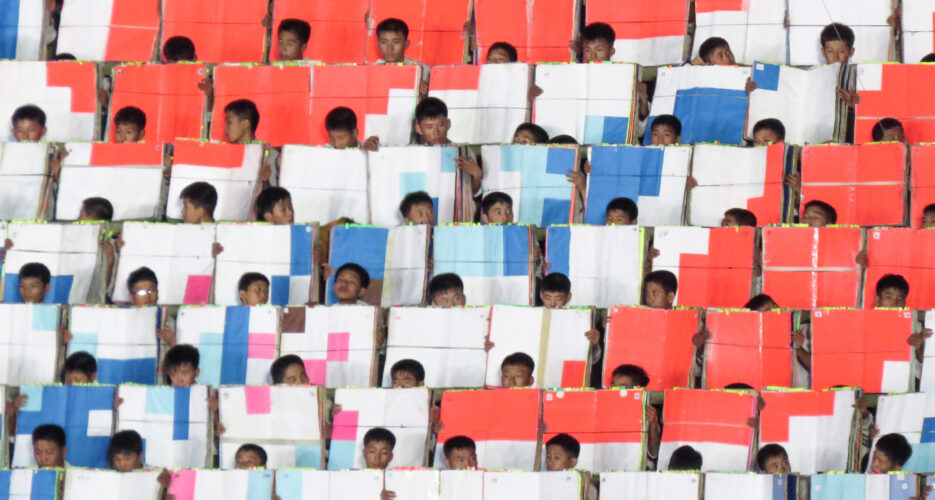 North Korea does not appear to have staged the country’s costly mass games propaganda spectacle in 2022 for the second year in a row, instead turning once again to video projection technology to replace the games’ human pixel animated backdrops for major state celebrations. In place of over 17,000 young children filling up one side of Pyongyang’s massive May Day Stadium and flipping large books of colored cards in unison to form a background of illustrations and slogans, a New Year’s concert held at the stadium on Dec. 31 and Jan. 1 featured videos of similar content projected on a gigantic screen covering the same wide section of seats. In the past, authorities required participating children to construct the large card books and practice their synchronized flipping extensively before performing at the mass games near daily for weeks or months. While an expensive purchase, using projectors allows the state and children to save time and resources spent on such training. 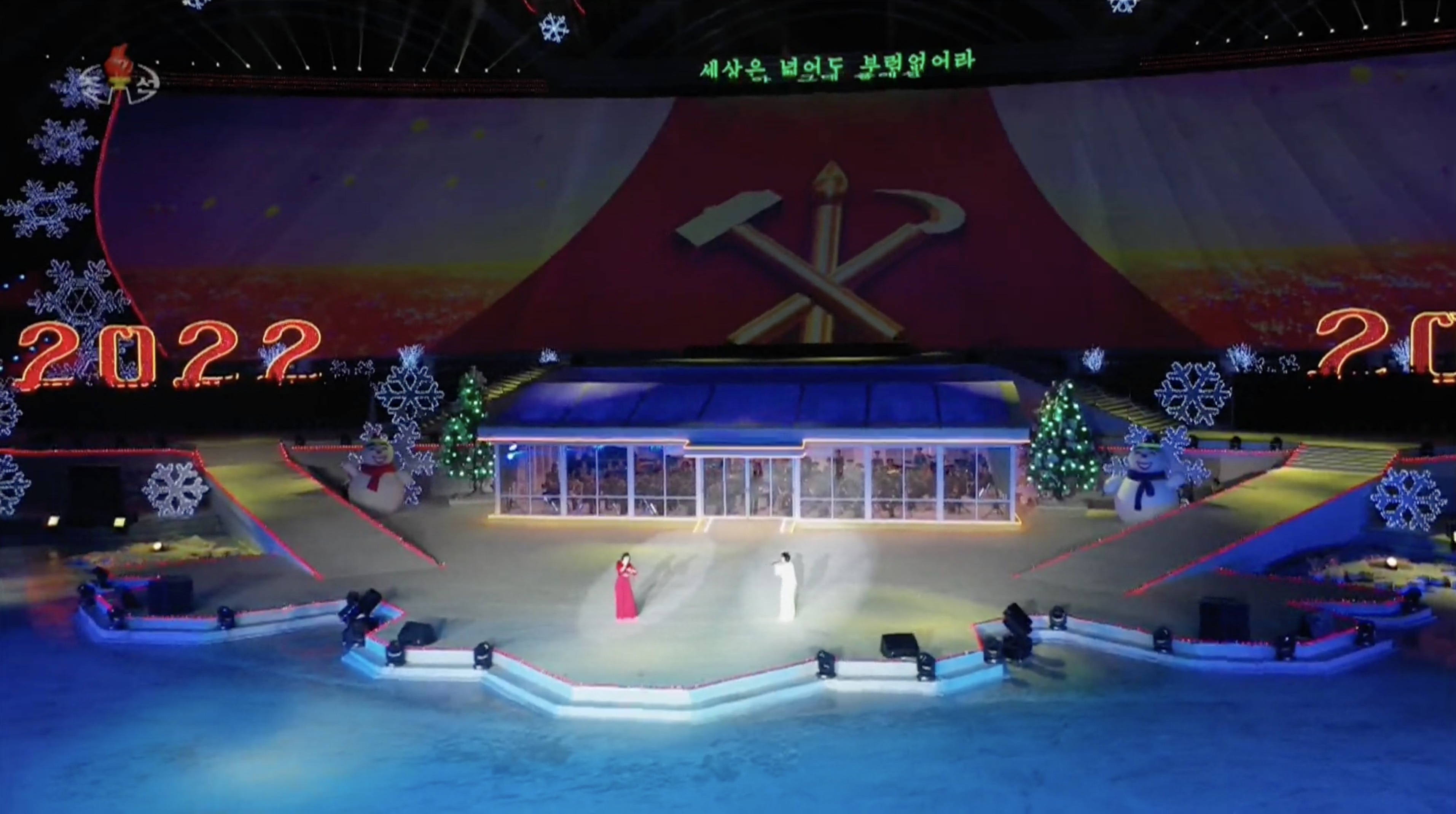 The propaganda show — officially called the “grand mass gymnastics and artistic performances (대집단체조)” — dates back to the 1960s but was widely known as the “Arirang” mass games when it ran for parts of each year at May Day Stadium between 2002 and 2013. Slightly updated versions of the show were titled “Glorious Country” in 2018, “Land of the People” in 2019 and “Great Guidance” in 2020. It is unclear if Kim has now permanently eliminated the mass games or simply put them on pause to save resources amid severe economic hardships and possibly to avoid a COVID-19 outbreak. He similarly stopped the mass games between 2014 and 2017, so the current two-year hiatus is not unprecedented. 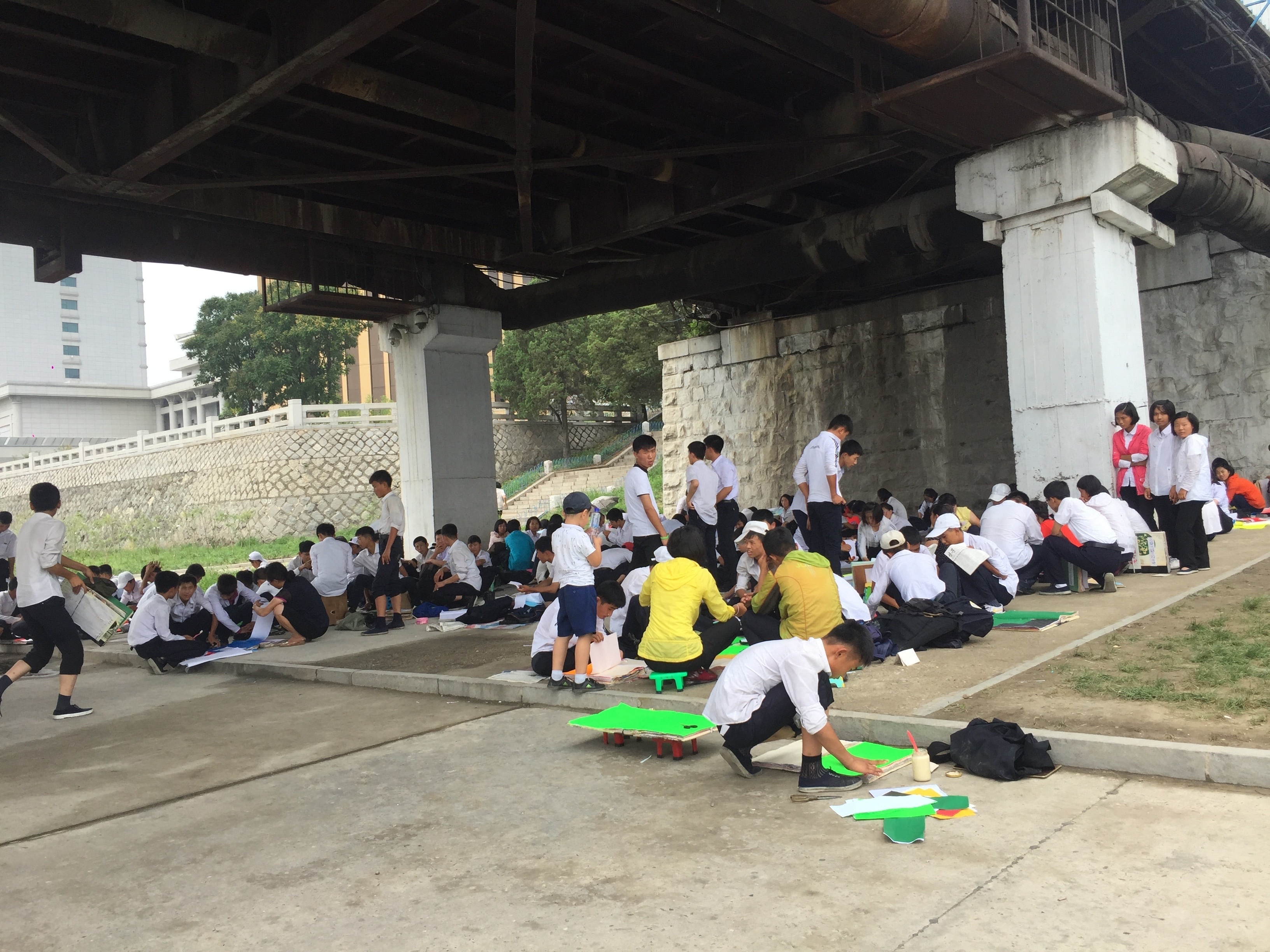 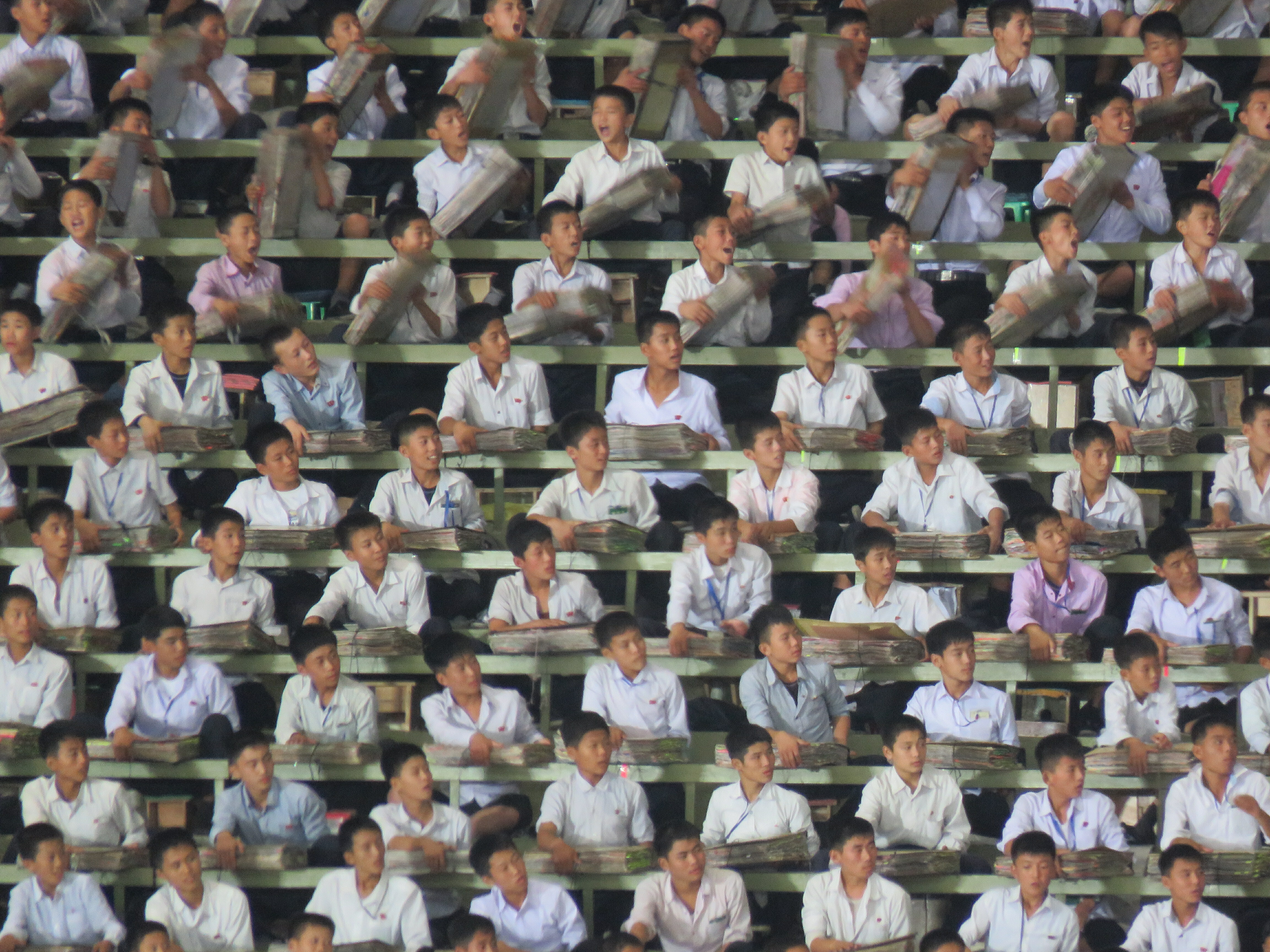 This week’s New Year’s concert marks at least the second time Kim has attended a major performance that utilized a projection screen backdrop instead of the “human pixels” from the mass games. The backdrop at a Jan. 2021 post-party congress indoor concert featured video footage mimicking the look of the mass games’ pixel backdrop and even children flipping cards to transition between scenes. Korean Central Television (KCTV) has yet to release a full video of this week’s May Day Stadium performance, but initial footage released Sunday did not include such artificial flip-card animations. The limited KCTV footage shows a large propaganda slogan on the screen celebrating the country’s “victory” over COVID-19, as well as clips of state construction projects and an animated party emblem. Continuing to demonstrate his penchant for novel forms of large-scale state celebrations — often at night — Kim this year appears to have pushed for holding the New Year’s Eve concert in May Day Stadium in place of the outdoor concert held on the occasion in Kim Il Sung Square for the past four years. In addition to the video projection backdrop, this year’s event also featured fireworks as well as performers skating around an ice rink installed on the floor of the stadium as singers took the central stage. NK News analysis of Planet Labs and Sentinel-2 satellite imagery shows that authorities appeared to begin installing the stage or ice rink as a large white half-circle on the stadium floor around two months before the event. Images taken between Dec. 26 and 31 show that the white rink and stage area changed shape to match the one seen in state media coverage of the New Year’s events. 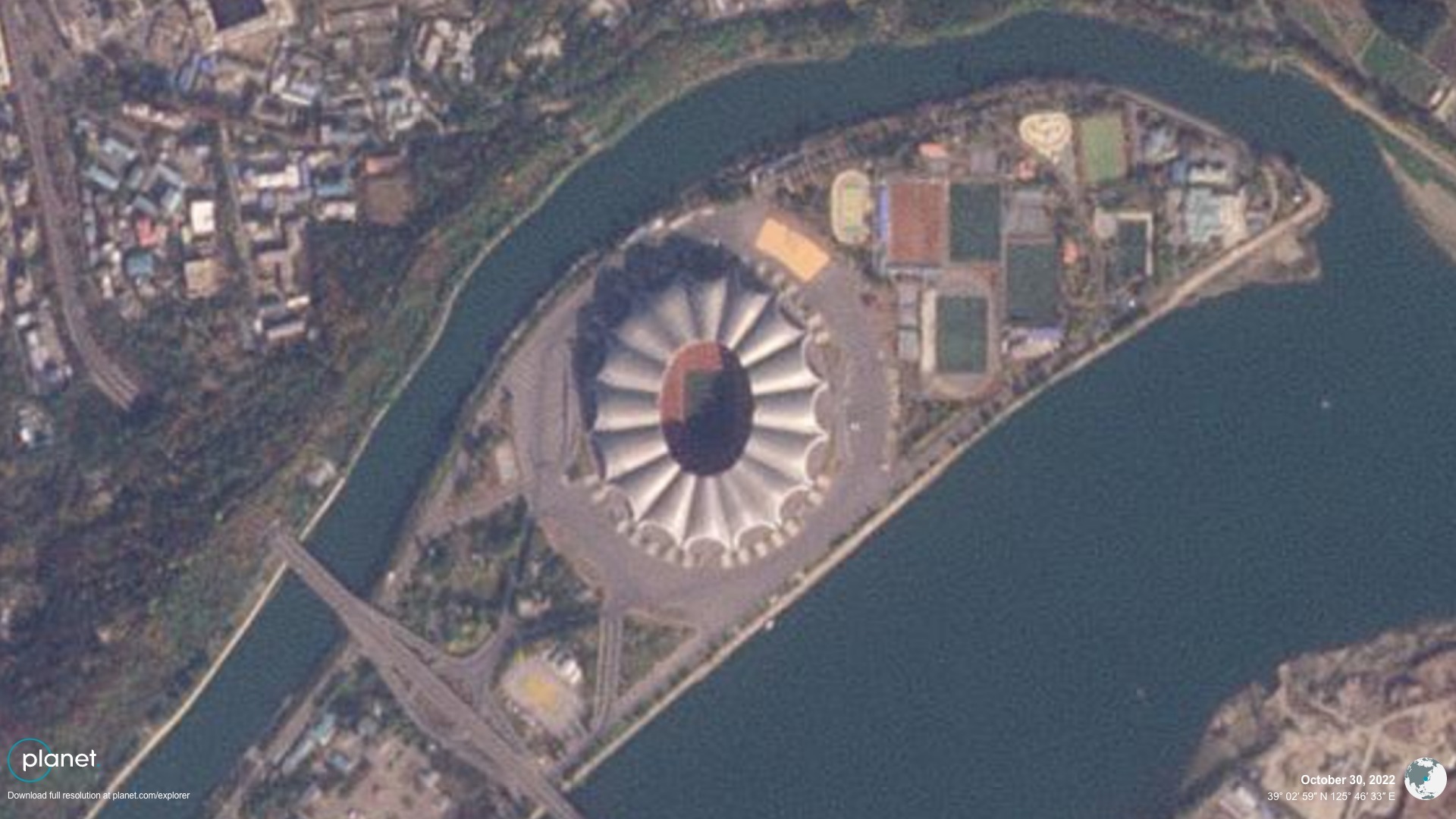 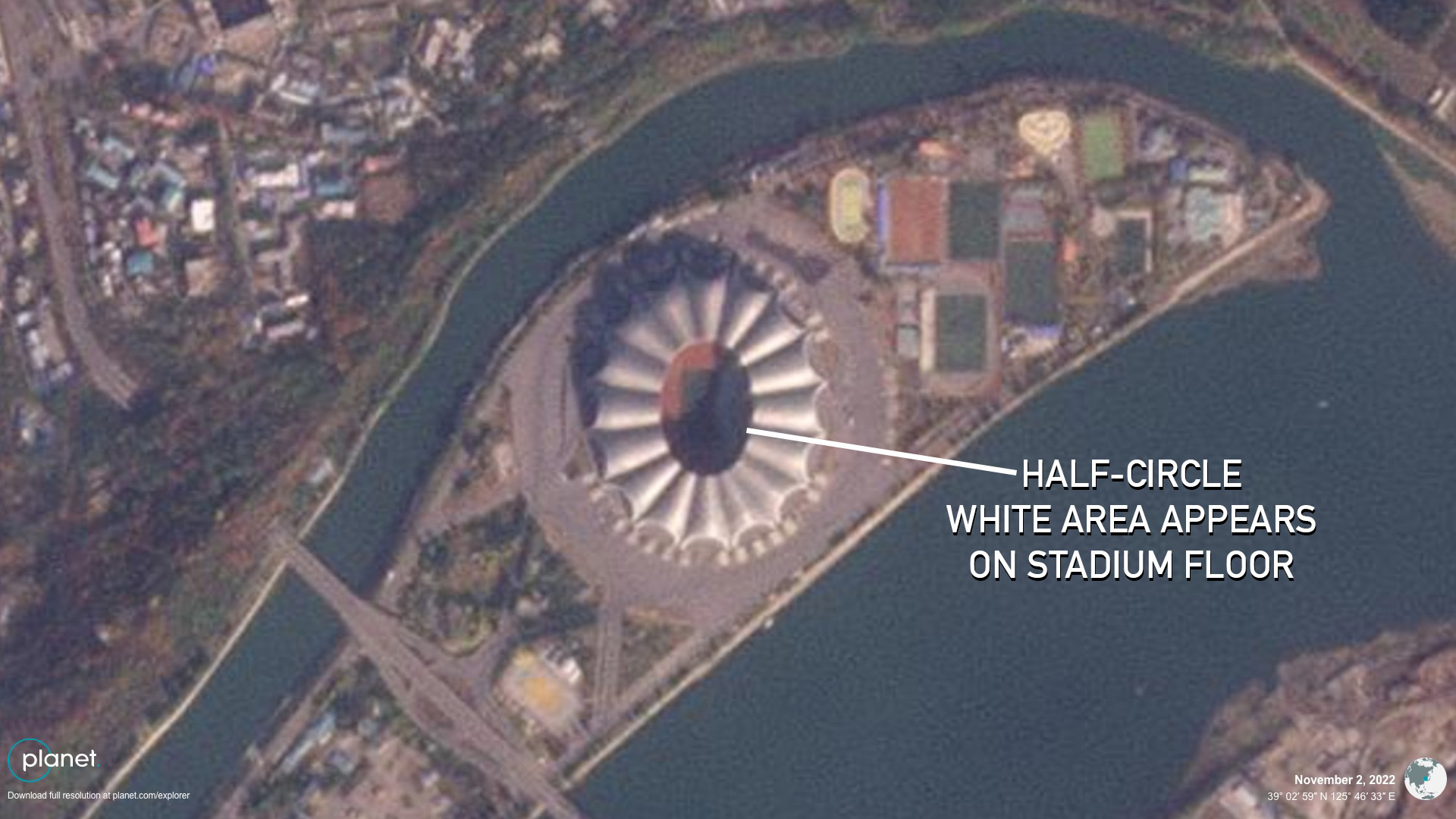 White material appeared between Oct. 30 and Nov. 2 covering half of May Day Stadium’s field, possibly indicating preparations to install a stage and ice rink used for the New Year’s Eve show | Images: Planet Labs, edited by NK News 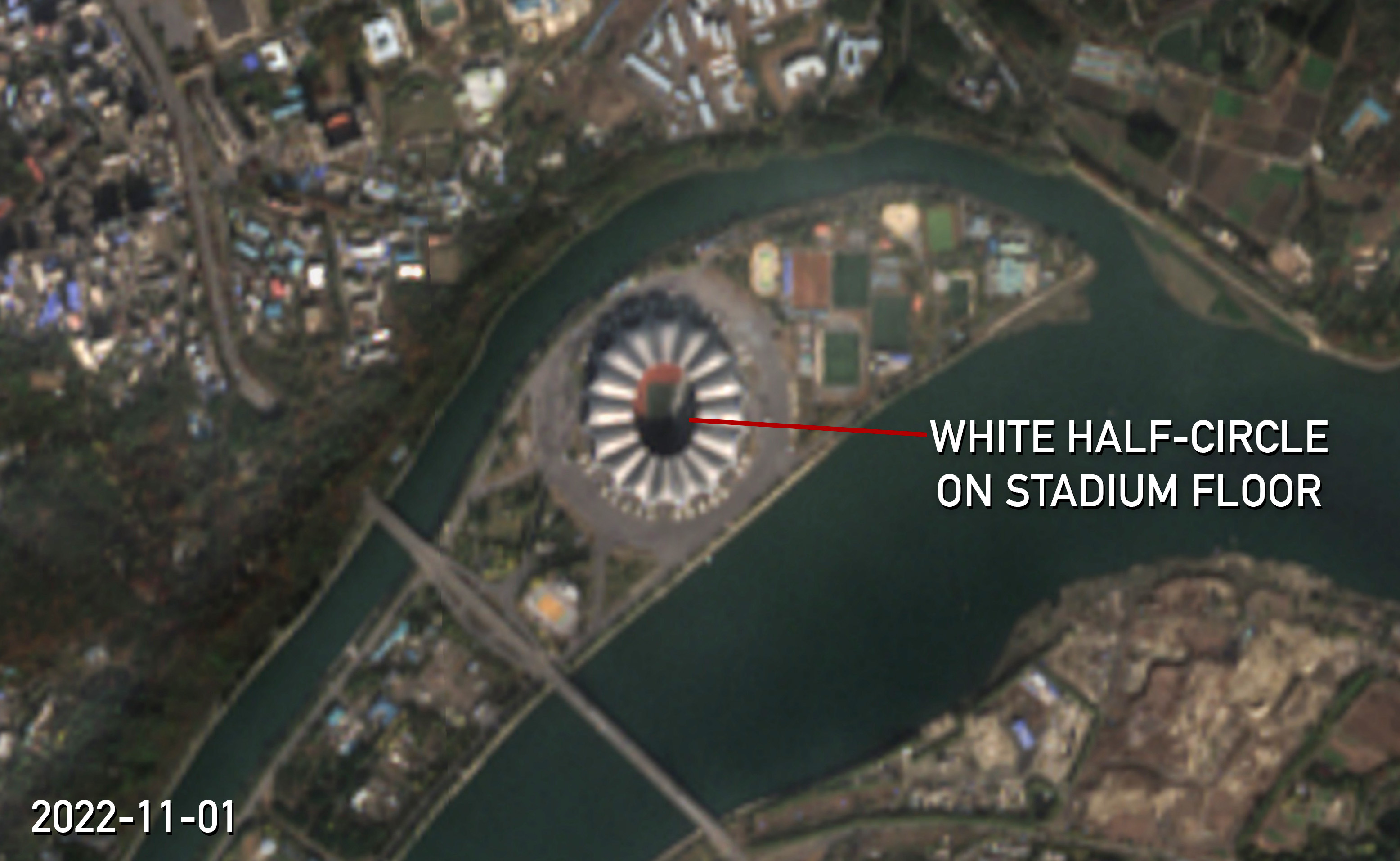 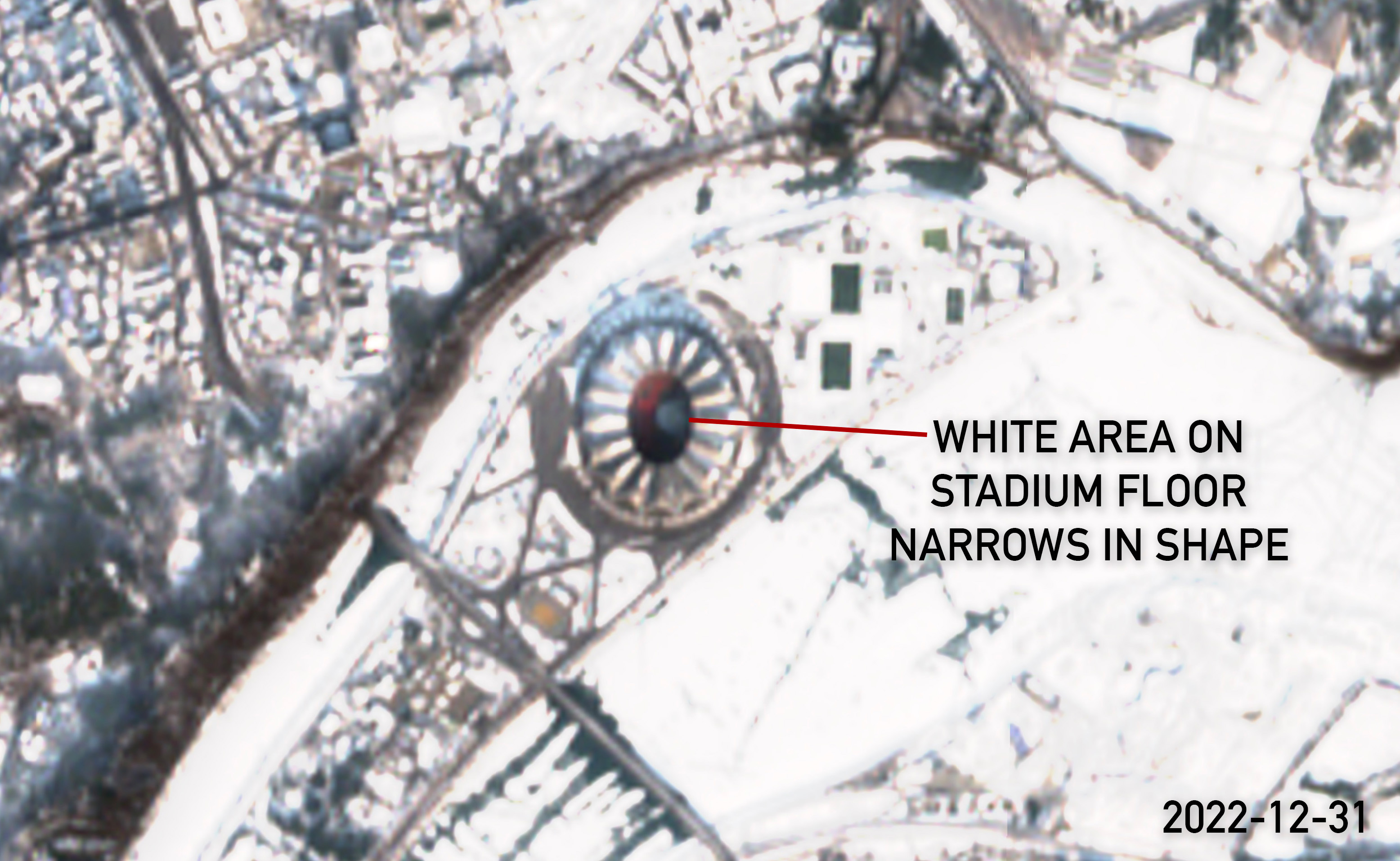 This comparison shows the changing shape of the materials on the stadium floor to match the ice rink and stage seen during the Dec. 31 concert | Images: EOS Sentinel-2, edited by NK News 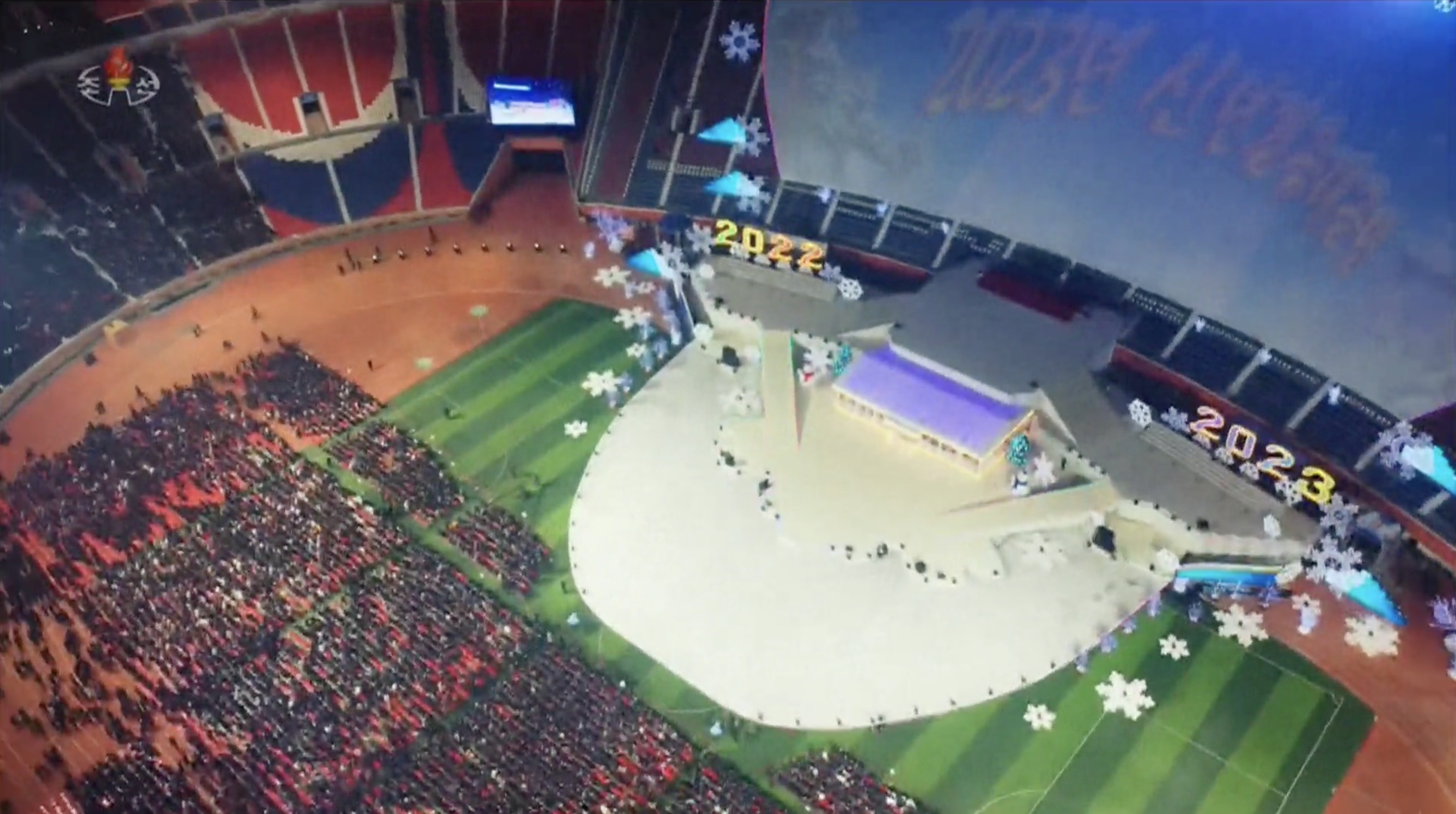 The Korean Central News Agency (KCNA) said officials and children attending last week’s party plenum and Korean Children’s Union (KCU) congress were the guests of honor, and that it featured musical performances praising the ruling party and Kim Jong Un by his favored singer Jong Hong Ran and others. KCTV showed Kim kissing small children, though they are unlikely to have been his own. The kids greeted him with flowers upon a raucous entrance, which took up over a quarter of the 8-minute report. North Korea also used modern projection mapping technology to cover building facades such as the Mansudae Assembly Hall and Pyongyang No. 1 Department Store with intricate video animations for major propaganda events in recent years. Meanwhile, Kim also took group photos on Sunday with thousands of kids who attended the KCU congress. He said in instructions to the congress that all North Korean children must nurture their “hatred” for the “American bastards” and become loyal collective servants of the ruling party. Edited by Arius Derr © Korea Risk Group. All rights reserved. |


 SHARE
SHARE COPY LINK
 X
X MASTODON


Recent Stories