
|
Evergreen Left behind: Despite détente, six South Koreans remain imprisoned in the NorthConvicted of espionage and effectively abandoned by Seoul, it's unclear whether any will ever return home
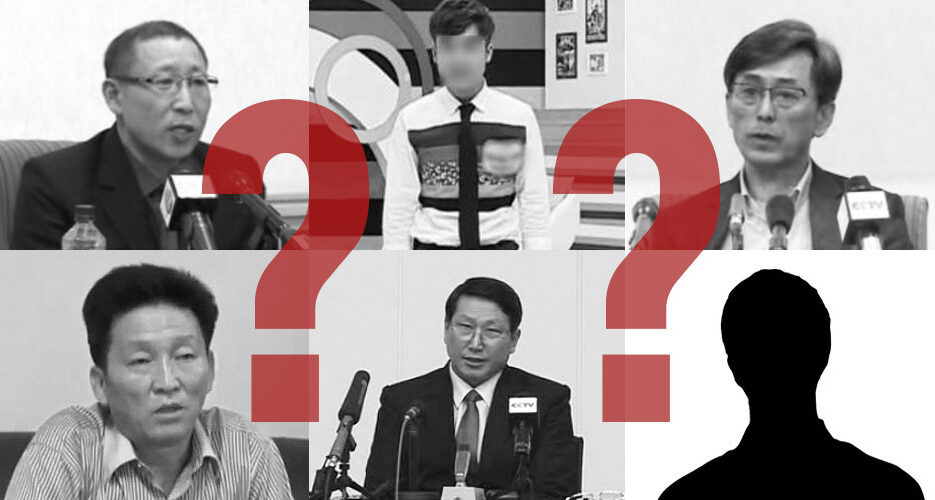 Americans arrested in North Korea like Otto Warmbier, Kenneth Bae, Laura Ling all received major global media attention during their captivity. Years after their abductions, questions about citizens like Megumi Yokota and Hitomi Soga were also a topic of major national interest in Japan. But for the South Koreans detained in North Korea, silence is the typical response in Seoul, despite markedly-improved relations between the two Koreas since 2018. Few in the South know that six of their fellow citizens are currently imprisoned there. Family members seldom speak publicly and the government answers questions only when asked. While Donald Trump was energized to secure the release of three Korean Americans before meeting Kim Jong Un in 2018, there were few calls for President Moon Jae-in to do the same during the three inter-Korean summits of the same year. Their cases are complicated by the fact that neither Korea officially recognizes the legal system of the other — as well as the fact that there may be some truth to Pyongyang’s accusations of espionage, as sources told NK News. And because South Koreans are thought to be kept in conditions far worse than detainees from foreign countries, it’s unclear whether they are even still alive. Even though one man has been imprisoned since 2013, two passed their five-year mark last week, and others have been sentenced in the years following. It appears unlikely that any of them will be released soon. RATIONALE FOR ARREST? Among the six detainees, North Korean state media has reported on only four, accusing all of them of cooperating with South Korea’s spy services. Kim Jong-uk, a missionary running underground churches in Dandong, was first detained in October 2013 and then sentenced to a life of hard labor in May 2014. He was charged with spying, anti-state activities, and illegal entry to North Korea. While it’s difficult to verify the claims Pyongyang made about Kim, his brother – Kim Jong-sam, who currently lives in South Korea – told NK News that some parts match reality. For instance, Kim was said to have met with “Han Ji-min” of the ROK spy service – the National Intelligence Service (NIS) – in September 2013. “That was the time he met me here,” his brother said when asked if Kim had been in South Korea at the time. But while it could be “reasonable” to imagine Kim may have been on the radar of the NIS, his brother said his only real goal was missionary work. Kim Kuk-gi and Choe Chun-gil, also missionaries, were then sentenced by the DPRK Supreme Court to hard labor for life in June 2015. The two were accused of similar charges: state subversion, espionage, and illegal crossing of the border. A KCNA report of their trial on June 23, 2015 focused on claims that they had provided the NIS with information they had gathered “on the supreme leadership of the DPRK and its party, state and military secrets and internal situation.” In a press conference ahead of their trial, the two reportedly “confessed” to these crimes in detail. Kim Kuk-gi said he received money from the NIS to work as a registered spy for around ten years, building a “network” enlisting several locals, private travelers, and Chinese residents in the DPRK. According to KCNA, Kim gathered “important secret information about a railway station which the top leader of the DPRK passed to visit China, photos of its vicinity and his health condition” in 2009. He also reportedly provided the NIS with information on “military bases” and “information about nuclear weapons.” Choe Chun-gil, meanwhile, claimed he had been working for the South’s intelligence agency since July 2011. He was reportedly ordered by the NIS to gather military secrets, send a “radium sample” and a “glass bottle carrying major element particles used in the defense field” to them using his network inside the North. He also ordered his North Korean contacts to “dig out and obtain earth around Yongbyon area” – where the DPRK’s nuclear research reactor can be found – between 2012 and 2013, the KCNA reported. Pastor Kang Jung-sik, a representative of Kim Kuk-gi’s family in the South, told NK News that he met Kim in Spring 2014 — the year he was first detained. Though he confirmed that the date of Kim’s residence in Dandong mentioned by DPRK state media was accurate, Kang told NK News that he had circumstantial evidence suggesting North Korean authorities may have set a trap to “kidnap” his friend. “When we met that spring [in 2014], he told me that he may have a chance to go to the North soon,” Kang said, recalling how Kim Kuk-gi told him that he had been invited there by “high-level” North Koreans. Ko Hyon-chol, the only other South Korean mentioned by name in DPRK state media, is also accused of having ties to ROK intelligence work. In a July 2016 press conference, Ko said that “Kwon O Suk” of the “Association for Saving Defectors from the North” put him in touch with an intelligence agent from the South. Upon Kwon’s order, Ko attempted – and failed – to “abduct” young North Korean orphans into the South, he confessed. During his trial, Ko also referred to Suzanne Scholte, an American human rights activist, and Joo Seong-ha, a defector journalist for the Dong-A Ilbo newspaper. He claimed that Americans and South Koreans had been orchestrating “group defections,” including Joo and Scholte. Aside from the four alleged spies, there are two other detainees that North Korean state media never confirmed, but who have been reported in South Korea. Kim Won-ho, a defector who reportedly became a missionary, was “abducted” on the Chinese side of the border in March 2016, the Chosun Ilbo and other South Korean media outlets reported in 2017. The Ministry of Unification (MOU) also confirmed to NK News in 2017 that another defector detained in the North may be surnamed Park, and had once appeared on a South Korean TV show in October 2015. And although it’s never been confirmed by the South Korean government, there may even be a seventh detainee: Ham Jin Woo, a former reporter with the Daily NK may be there now, the Seoul-based newspaper suggested.  SILENCE IN SOUTH KOREA Despite detailed accusations of inter-Korean spying and espionage, interest in the missing six is almost non-existent in South Korea. It’s possible this stems from a long history of South Korean disappearances to North Korea: The ROK government believes, for example, that 516 of the 3,835 citizens abducted since the 1953 Korean War Armistice are still missing. Figures also suggest that 28 defectors had “re-entered” North Korea as of 2020. In many of the cases, it’s unclear whether these individuals voluntarily went there or not. But the silence could also be general media disinterest, one former human rights official said. “It’s not a question of them not talking. There is just no media outlet for them to talk to,” Lee Jung-hoon, South Korea’s former Ambassador for North Korean Human Rights, told NK News. “All the major media networks today, in Korea, have espoused the government’s North Korea policy, which is very much premised on cooperation and not provoking the North.” As a result, he said it would be difficult to imagine the ROK prisoner issue ever getting much room in local papers. Furthermore, family and friends may be “scared” of detainee repercussions if they adopt a more aggressive and vocal approach to media engagement, Lee said. It’s a stark contrast to the media circus surrounding detained American citizens, but it might explain the absence of sobbing family members in South Korea making regular appeals to a sympathetic public. Regardless of the reasons for this disinterest, defector and freshman lawmaker Ji Seong-ho said he was shocked to see the lack of focus on their repatriation throughout the inter-Korean summits of 2018. “I told the government that the six people should be brought back,” Ji told NK News. “Bringing the detainees back home is something much easier compared to other inter-Korean deals.” Lee, the former ambassador, agreed. “There is a lot that we’ve actually given up and compromised — and we should have, at least, made sure that these six were safe,” he said. Then again, there’s another possible reason why the South Korean authorities are taking a low-profile approach: Some of North Korea’s accusations may be true.  INTELLIGENCE: A KEY COMPLICATION? After details of the charges first emerged, South Korea’s NIS repeatedly dismissed North Korean claims that Kim Jong Uk, Choe Chun Gil and Kim Kuk Gi, and Ko Hyon Chol were working on their behalf. The NIS also said it had nothing to do with Kim Dong-chul – a Korean American accused by North Korea of spying – in 2016. But after his release in 2018, Kim told NK News he had done exactly that — working on behalf of the NIS to acquire sensitive information in the North. For that reason, some observers say there is a possibility that some of the South Koreans detained in the North were indeed cooperating with the NIS, an issue that would considerably complicate things. A source close to the intelligence community, for example, told NK News it is “probable” that the three missionaries had been working with the NIS, even if the information they could obtain was of low quality. “The problem is the missionaries often do not know what they’re doing [or] who they’re helping,” the source said, speaking on condition of anonymity due to the subject’s sensitive nature. That was also echoed by a religious community source, who described the three missionaries as having likely “fallen into a soft-spy trap.” “What happens is that the NIS contacts missionaries not as the NIS, but as ‘Deacon Such-and-Such’ from ‘Such-and-Such Church’,” the source said. “Then they give the missionary small, but decent money with no strings attached.” To South Korean missionaries working on the border with North Korea, that generous “Deacon” is initially just a “nice guy who helps out their ministry.” “But gradually, the ‘Deacon’ asks them to do very soft espionage,” the religious community source continued. “Then it progresses to getting info to NIS contacts in the country, and receiving it back from them – duplicating SD cards, that kind of thing.” “They can’t back out, because the nice ‘Deacon’ won’t let them. So they get in deeper,” the source added. Yet missionary assistance to the NIS is not always unwitting. Kenneth Bae, a Korean American sentenced by North Korea in 2013, said some cash-strapped missionaries in the border were aware of NIS interest in their capabilities, often “knowingly collaborating” with the service in order to “get some monthly support.” This connection might further explain why family back in South Korea are often so quiet about their detained relatives. “All three [families] desperately stay out of the public eye and generally avoid making public statements, since the NIS and some of the churches that help them get worked up when they do,” the religious community source told NK News. “Whether it’s the NIS in the ROK or the MSS/PSB in China, they always tell the family, ‘The best thing you can do is to say nothing.'” Still, even if some of the six detained individuals did spy for the South, that shouldn’t justify Seoul’s current inability to contact them, said Tomás Ojea Quintana, the UN special rapporteur on North Korean human rights. “Diplomatic access and due process of law [is non-negotiable] — inalienable rights,” Ojea Quintana stated. “You’re not allowed to ill-treat the prisoner to obtain a confession. You’re not allowed to torture someone to get a confession. That’s non-negotiable, whatever the charge – even terrorism.”  OTHER COMPLICATING FACTORS Little information exists about the two other individuals thought to be defectors with South Korean passports, let alone the charges North Korea brought against them. Even worse, their status as citizens originally from North Korea complicates an already complex jurisdictional problem. For them – and to an extent the four missionaries accused of spying – the political landscape and inter-Korean relations also pose key hurdles. “Both North and South claim to be the only real legitimate government of all Korea, hence [the] steps they can take are more limited,” said Ambassador Robert King, Washington’s former point man on North Korea human rights. “In legal terms, Southerners are in the North illegally because the South does not allow its citizens to go to North Korea without official permission.” That means “the detainees are mostly people who should not have been going to the North,” King continued, meaning that they are already criminals, according to South Korean law. Meanwhile, from a North Korean legal perspective, any South Korean calls for detainees to be released would be unacceptable. “What benefits the DPRK takes precedence,” King said. “Since the North considers the South an illegal entity propped up by the United States, they don’t take actions that might enhance the credibility or legitimacy of the South.” This is further exacerbated by the fact that detainees with South Korean passports are likely to get the worst forms of detention compared to other foreigners taken into North Korean custody. “Regarding prisoners of Korean ethnicity: Pyongyang tends to regard them as its own and as traitors,” said David Straub, a former U.S. diplomat who was previously based in Asia for decades. Kenneth Bae confirmed these claims, recounting a moment when he asked his prison guards whether Choe Chun Gil and Kim Kuk Gi would be imprisoned in the same camp as him after their sentencing in 2015. “They are not coming here because they are not foreigners,” he recalled the guard saying. “That means that South Koreans and North Korean are the same,” Bae told NK News, implying ROK detainees are kept “in the regular North Korean camp rather than the foreigners-only camp.” This difference, Bae continued, means it’s possible the six detained South Korean citizens may no longer be alive. “So, if you receive more than five years’ prison term, most people will die there,” he said.  PROSPECTS FOR REPATRIATION If the missing six are still alive and healthy, the outlook for their eventual repatriation is no doubt gloomy. Given that tens of thousands of South Korean prisoners of war were never returned following the armistice agreement and thousands more were subsequently abducted, it’s clear that North Korean authorities historically have little interest in sending South Koreans home. Secondly, there is the potential that North Korea wants to send a clear message that South Koreans linked to intelligence gathering and missionary activities will suffer greatly. That message could deter others from conducting similar activities. Thirdly, there is little logical reason for Pyongyang to release three of the defectors thought to constitute the missing six individuals. Not only is defection to South Korea a major crime in North Korean law, but since the DPRK has been working to make it harder to defect under Kim Jong Un, it is difficult for the legal system to show magnanimity on these specific cases. That said, North Korean authorities have released some ROK detainees in the past. Six South Koreans returned unexpectedly in October 2013, with a military source telling NK News that Seoul had not even been aware of their detention. A further two were repatriated in June 2015, and another lone citizen in August 2018. But unlike the six still detained by the North, none of them were ever accused of spying or thought to be defectors – key factors which would have facilitated a relatively painless release. As a result, there are only a few options for Seoul to consider. For one, a prisoner swap could be a practical solution. Several North Korean spies and agents are thought to be in jail in South Korea – one was detained only last year while posing as a Buddhist monk. “The humanitarian release route wouldn’t work well in these cases,” the religious community source told NK News. North Korean authorities would also probably be interested in a swap if there was any possibility of repatriating the 12 restaurant workers some say were brought to South Korea against their will in 2016, though these individuals are not strictly defined as detainees. However, the chances of such prisoner or defector exchanges — particularly of the restaurant workers — appear low, since it would likely stir controversy. Another option would be for Seoul to vigorously highlight the issue in international fora – something it unsuccessfully did to an extent under Park Geun-hye – or if inter-Korean diplomacy picks up again. For now, the ROK government insists it’s still trying all it can to get the detainees home. “The Ministry of Foreign Affairs (MOFA) is continuing to request North Korea for a speedy release and repatriation of our detained citizens,” an official from a branch relevant to the matter told NK News last week. For Kenneth Bae and Ji Seong-ho, Seoul’s current approach is far from enough. “Your next-door neighbor is abusing their children and you just ignore them? Then you are part of it,” Bae said. “Even North Korea is urging the South to bring their citizens back,” Ji added. “The South, in this regard, is even worse than the North Korean regime, isn’t it?” Edited by Oliver Hotham and Kelly Kasulis © Korea Risk Group. All rights reserved. |


 SHARE
SHARE COPY LINK
 X
X MASTODON


Recent Stories