
|
News North Korea introduces peculiar new double-decker bus in anti-taxi campaignPyongyang factory overcame ‘shortages’ to build 11 buses under Kim Jong Un’s orders, state media says
 Pyongyang has introduced new bright yellow double-decker commuter buses as part of ongoing efforts to “normalize” public transportation despite material shortages, according to state media. The Pyongyang City General Passenger Service Enterprise (평양시 려객운수종합기업소) deployed 11 of the new buses this month to cover at least four existing routes within the North Korean capital. They are each fitted with 78 plush yellow seats and feature a peculiar numberless analog clock prominently displayed on LED panels above the windshield — a feature Pyongyang Times said was an “eye-catcher of citizens” in a report Tuesday. 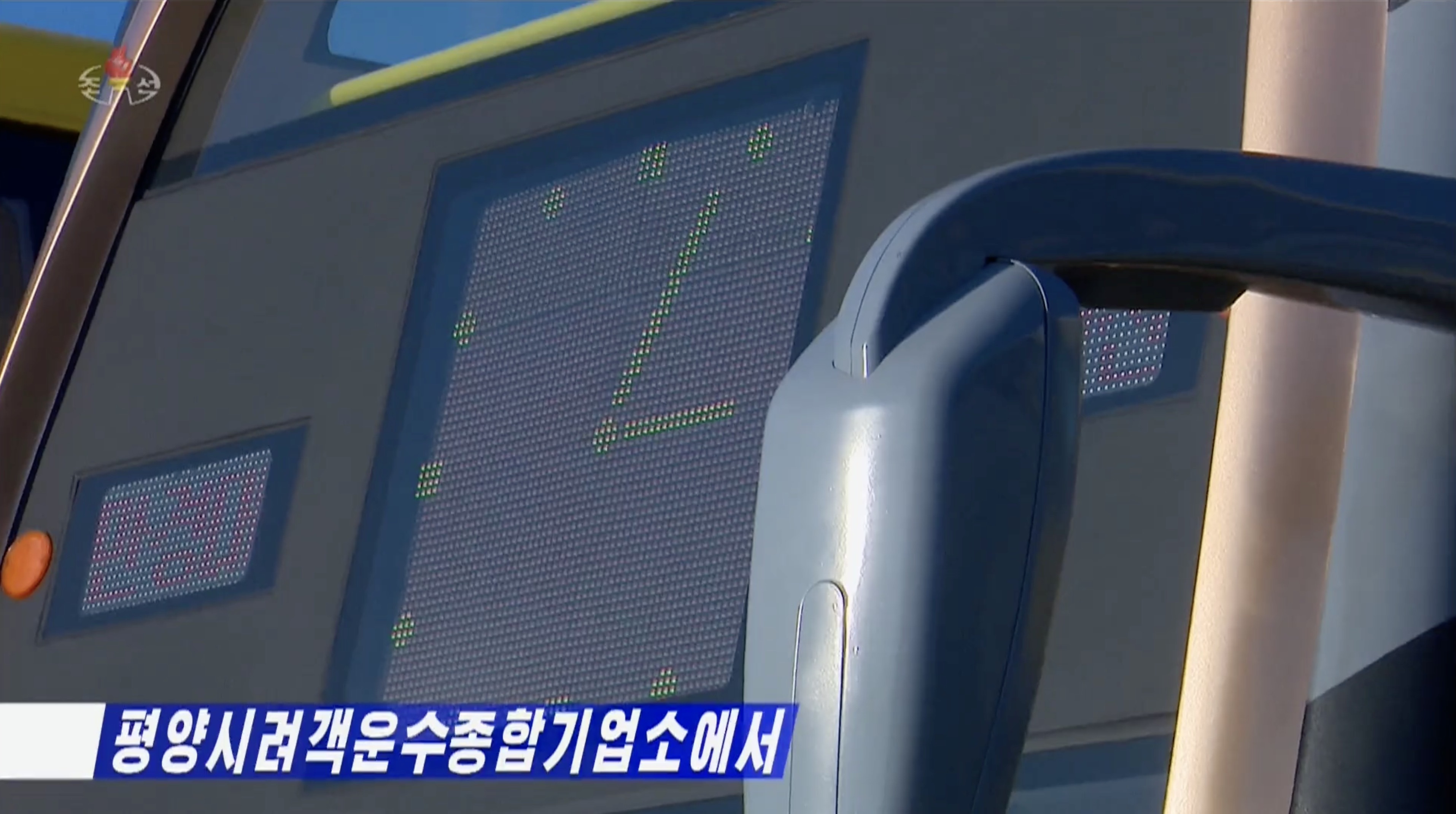 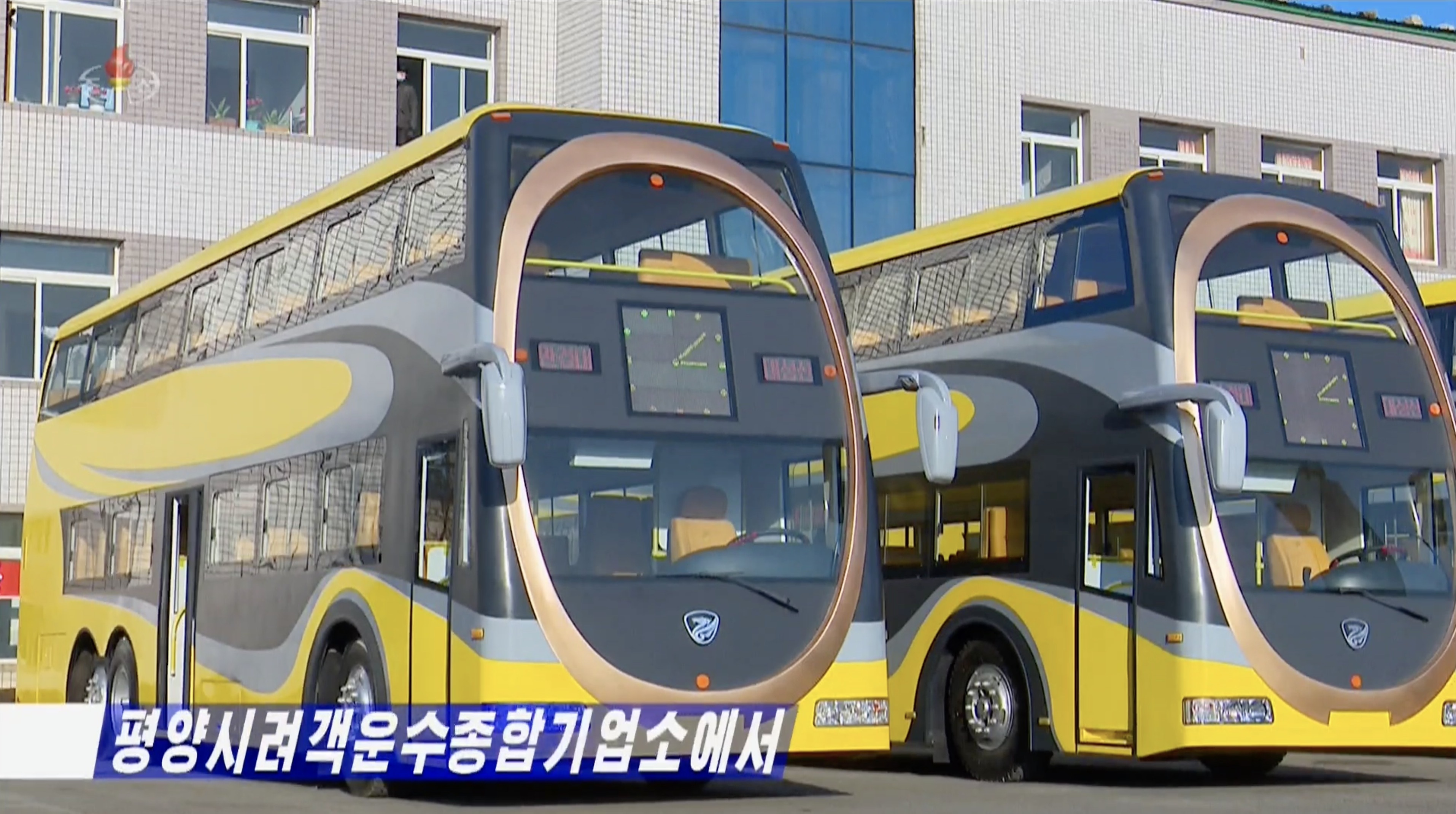 Posters with computer renders of the bus displayed at public exhibitions over the last year claim North Korean leader Kim Jong Un “guided” its design on Aug. 16, 2021. The final product largely resembles the original design, though the factory appeared to ditch its sharp flare headlights for a simpler rectangular design. The change may be due to what DPRK Today Wednesday called the factory’s struggles to overcome “hardships and shortages of all [materials].” The article said production of the 11 buses “within a short period of time” was a testament to workers’ patriotism and devotion to improving “transportation convenience” for Pyongyangites. It follows directives by Kim Jong Un in 2018 to increase public transportation options, lamenting “the number of taxis increasing in the streets” while “old public transport means [gave] inconveniences to the people.” 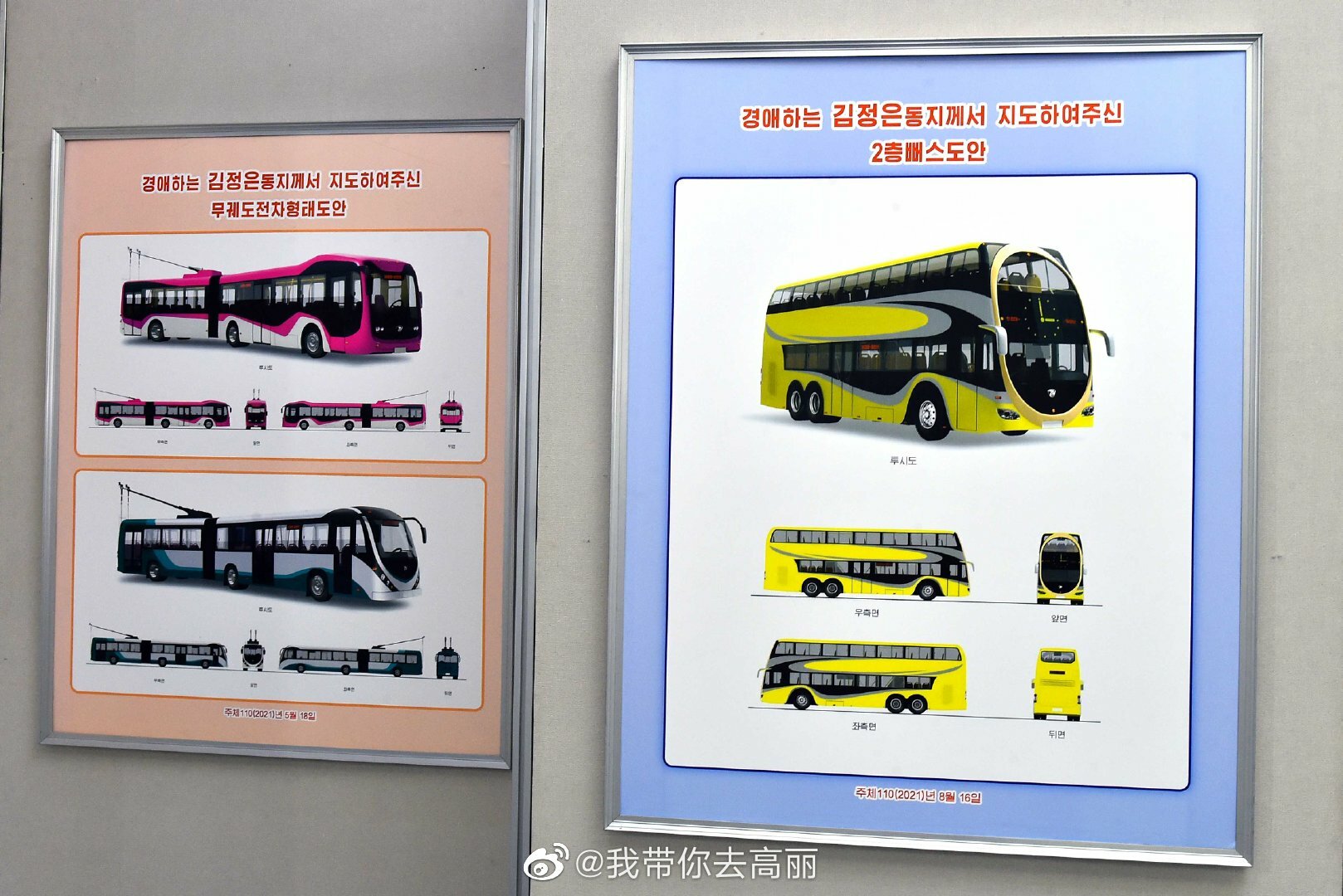 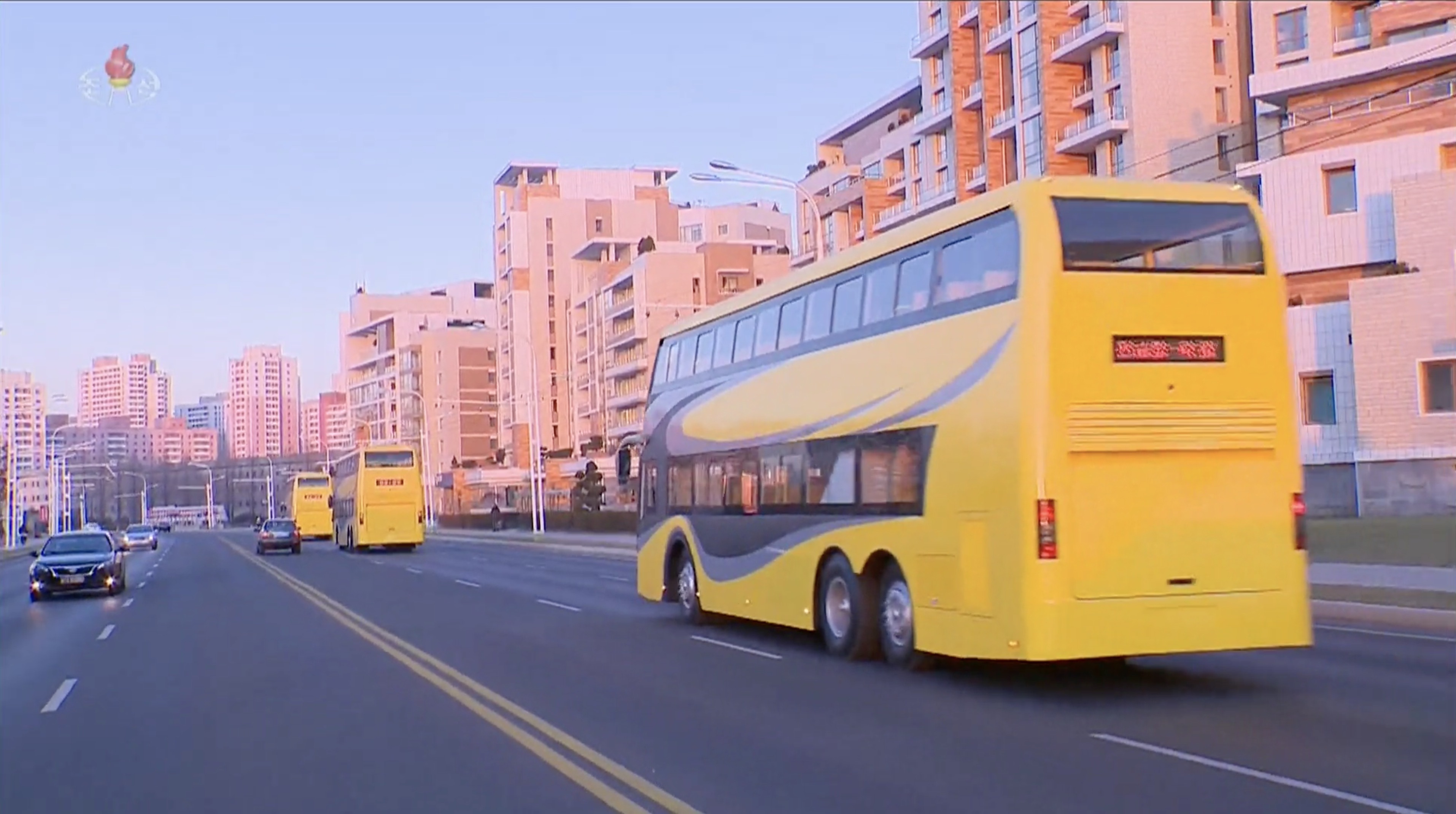 Besides the analog clocks, other LED panels on the front and back of the buses display the names of the route’s starting and finishing points. Routes seen in Korean Central Television (KCTV) footage of the buses include Mangyongdae-Taesongsan (만경대-대성산), Taebo-Munsu (대보-문수), Jonsung (Victory) Monument-Rakrang (전승탑-락랑), and Chilgol-Ryonmot (칠골-련못). A small television appears to be installed at the front of the first floor of each bus, which may display bus stop information or propaganda videos. No other interior LED panels or printed route information appeared to be on display in available footage, suggesting the buses may frequently switch routes. The new buses also do not appear to have safety features that are standard in other countries such as hammer-like glass breakers hanging on interior walls and rooftop or side emergency exits. 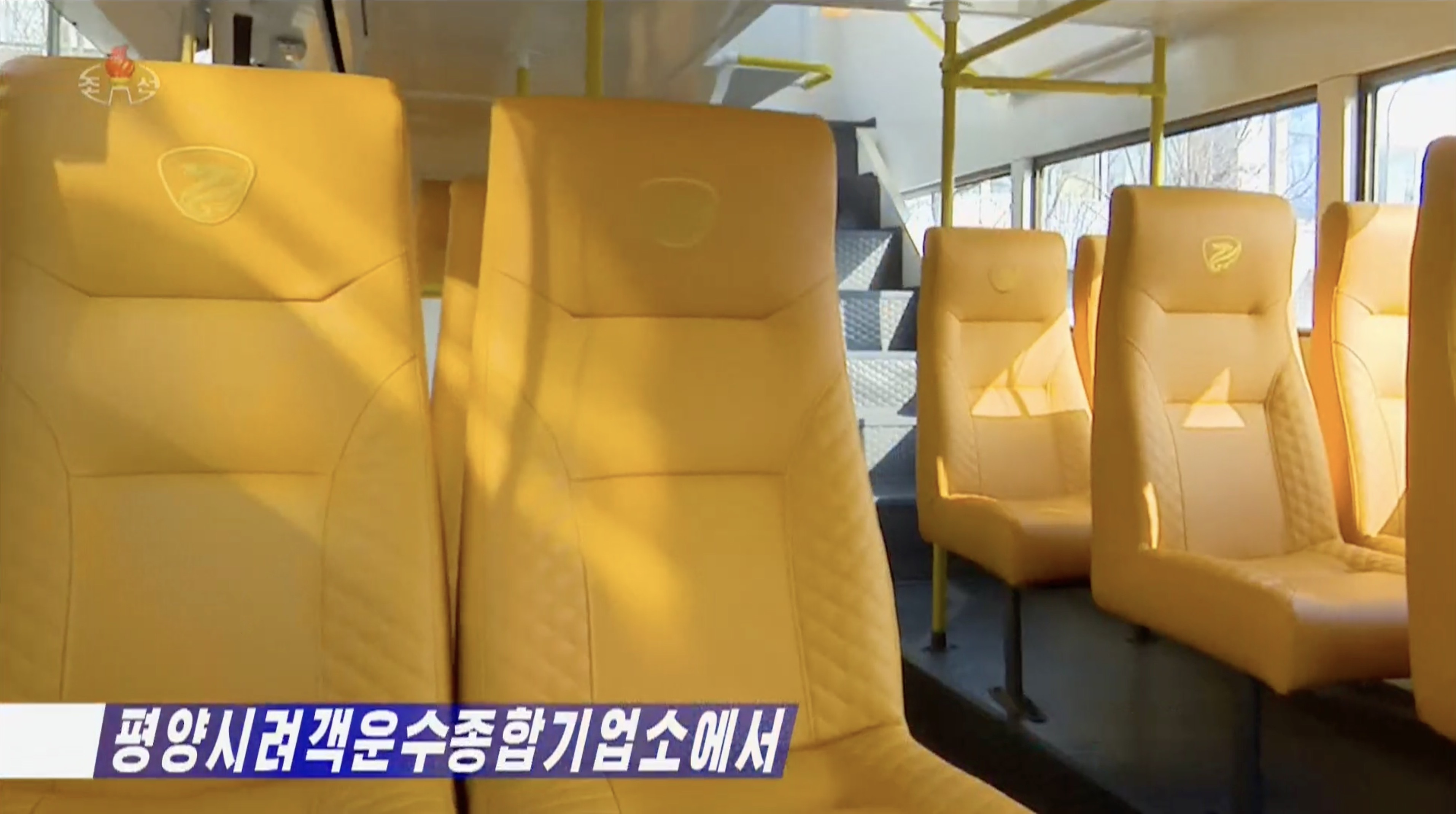 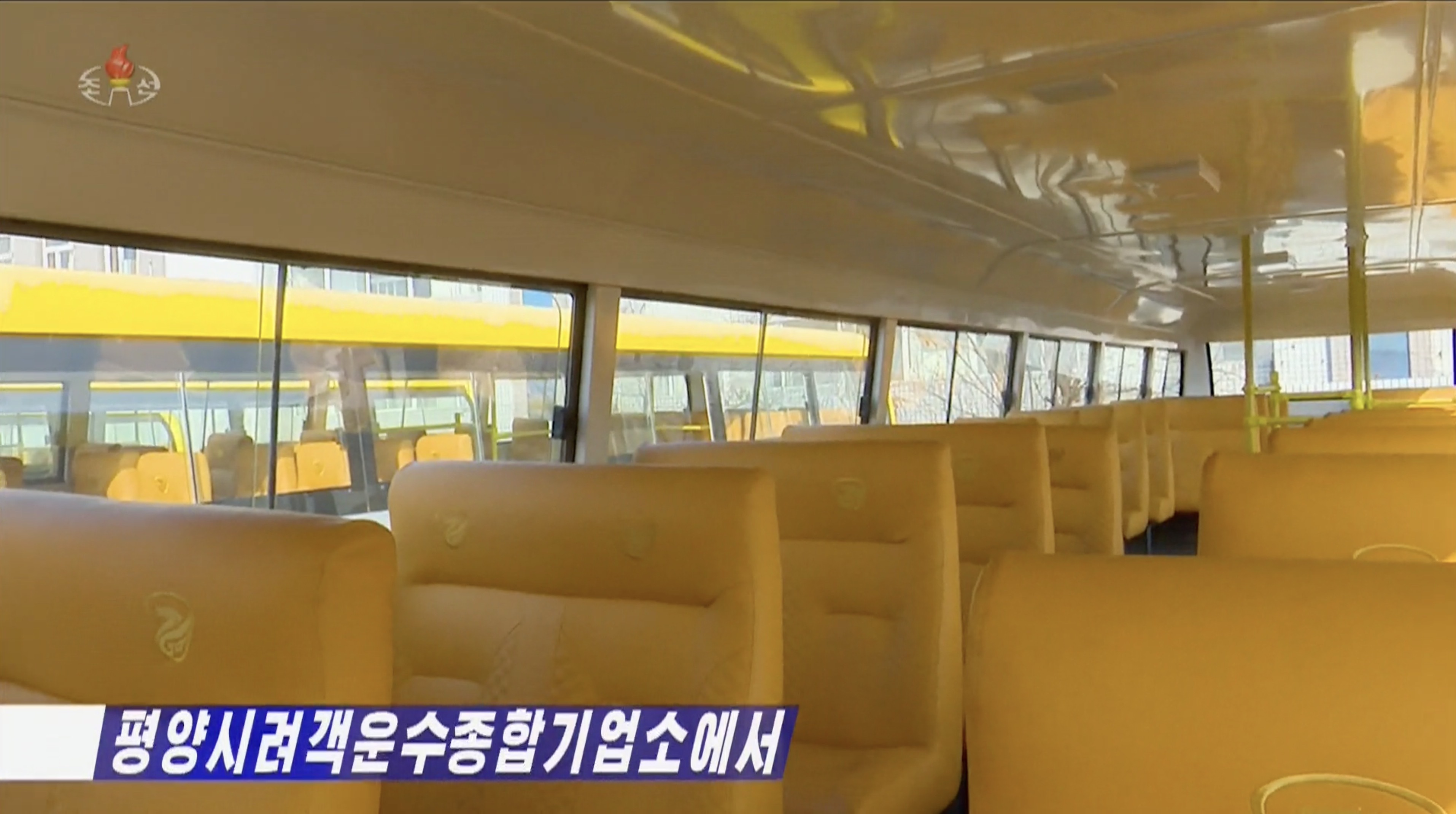 Like all domestically manufactured buses in North Korea, the newest models also do not feature overhead air conditioning vents and instead only offer wind from open windows to stave off the summer heat. The omission may be because air conditioning uses additional fuel. The buses may feature floor vents for heaters, but these are not visible in available state media footage. An article published by state-run Arirang Meari last week said a slightly different new double-decker bus design — made jointly by the Pyongyang City General Passenger Service Enterprise and Pyongyang City Bus Factory and which Kim Jong Un inspected in March 2021 — featured heating. According to NK News analysis of Planet Labs satellite imagery, 11 yellow-top buses appeared in the parking lot of the General Passenger Service Enterprise between Oct. 11 and 23, suggesting they were ready months ago. They reappeared around Dec. 9, two days before KCTV aired its segment on the new buses showing them lined up in the parking lot, and were gone by Dec. 11. Meanwhile, DPRK leader Kim Jong Un and his associates are known to exclusively use foreign-made buses. 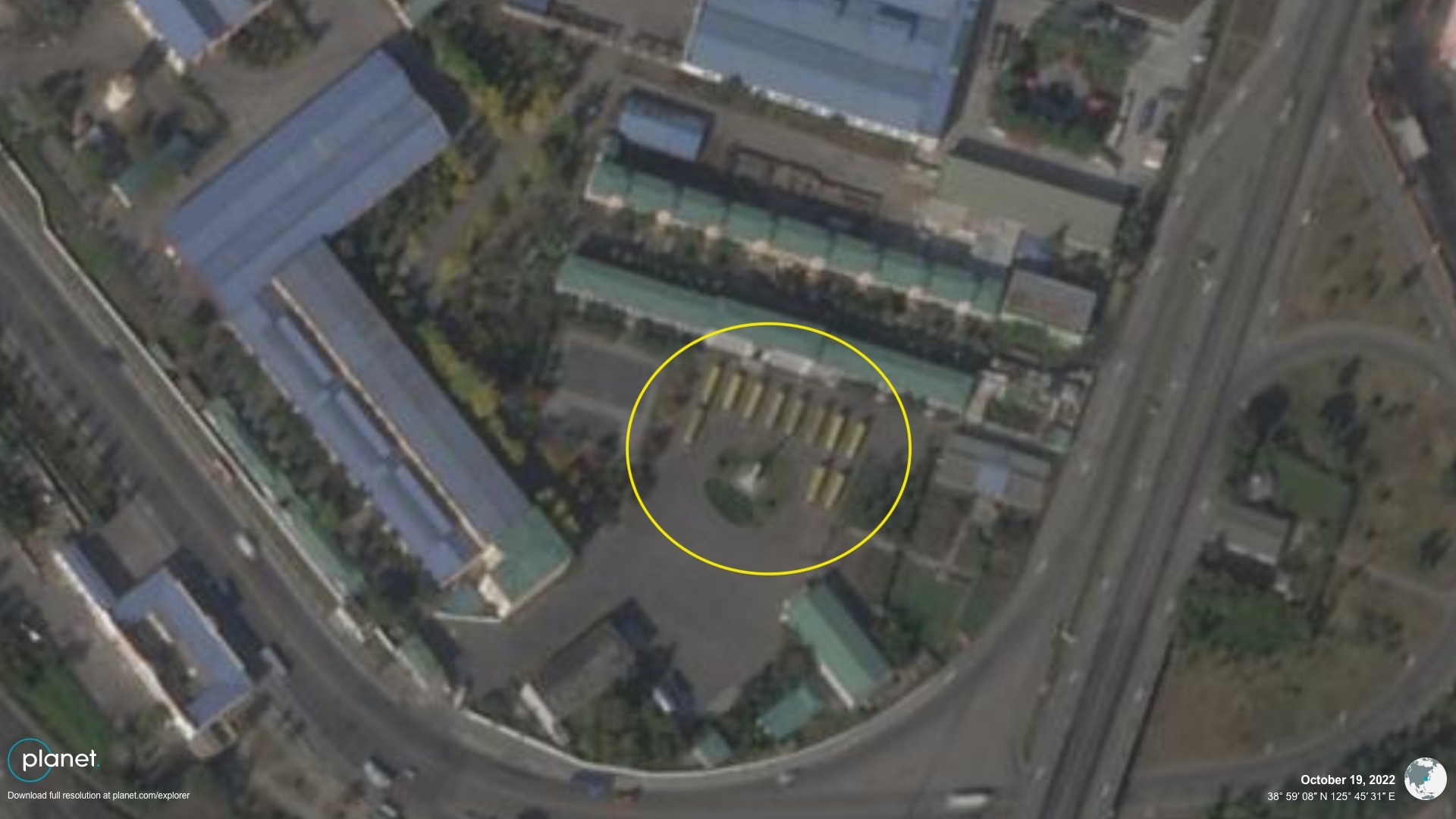 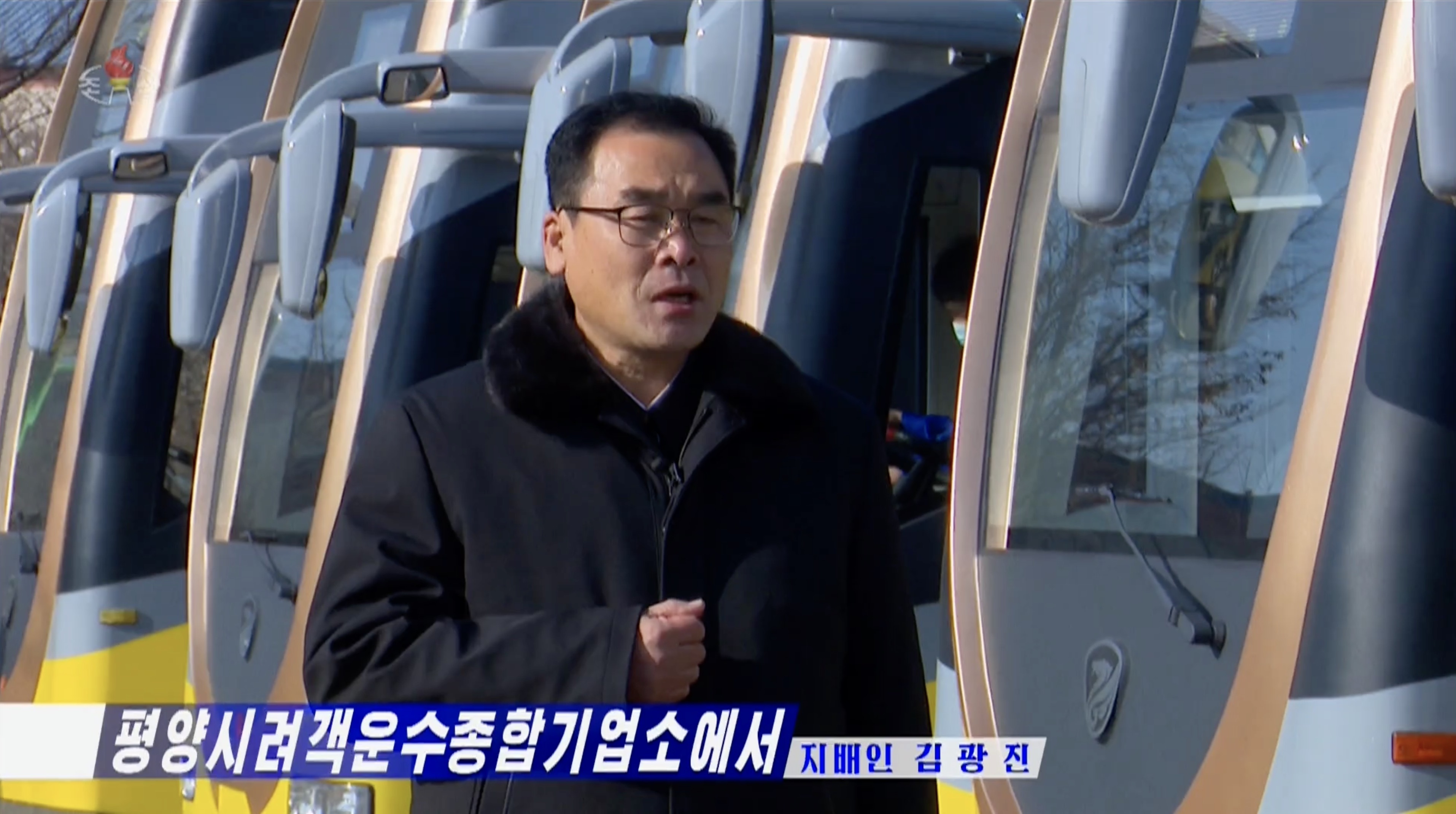 Edited by Arius Derr © Korea Risk Group. All rights reserved. |


 SHARE
SHARE COPY LINK
 X
X MASTODON


Recent Stories