
|
News China, North Korea resume overland trade with first train crossing in 5 monthsUnification ministry confirms first crossing since late April, as two sides report no COVID cases near border
 North Korea and China resumed cross-border rail trade Monday for the first time in five months, according to South Korea’s unification ministry, as the two sides report no COVID-19 cases near the border following outbreaks earlier this year. “A cargo train crossed between North Korea and China today” for the first time since shutting down in late April, ministry spokesperson Cho Joong-hoon told reporters on Monday afternoon. “We believe the reopening [of the operation] follows the North and China completing negotiations.” A Chinese foreign ministry spokesperson confirmed the news later on Monday, saying the two sides agreed to reopen the route in talks over the weekend. The rail trade resumption comes as DPRK leader Kim Jong Un promised earlier this month to address chronic food and consumer goods shortages in the country. However, state COVID-19 policies that require authorities to quarantine imports for around three months mean that the new shipments of goods may not reach consumers anytime soon. Cho said it’s unclear if Monday’s shipment represents the start of sustained trade, and that the ministry needs more time to determine what kinds of goods the two sides are prioritizing in the restart. South Korea’s Yonhap News Agency reported that a locomotive towing “around 10 train cars” crossed the Dandong-Sinuiju bridge into the DPRK at 7:43 a.m. KST on Monday, and that a Chinese source said the route will see one to two shipments per day going forward. North Korea is likely to process new imports at a secure disinfection and quarantine facility near Sinuiju, which was built on a 8,100-foot (2,471-meter) military airport runway. NK News analysis showed officials placed goods in outdoor quarantine at the facility for around 90 days when the route was open between January and April. Before that 14-week period of operation, Pyongyang and Beijing only utilized sea routes to keep trade alive, albeit at record-low levels. While the two sides are only reported to have restarted rail trade, NK News has found evidence that China is also preparing its cargo truck customs port near the border to resume operations. A high-resolution Planet Labs image of Dandong taken on Sunday shows new white parking lines were painted in the open lot where trucks lined up to cross the bridge in the past. The lines appeared to be painted sometime in the last week of August, according to medium-resolution daily imagery. 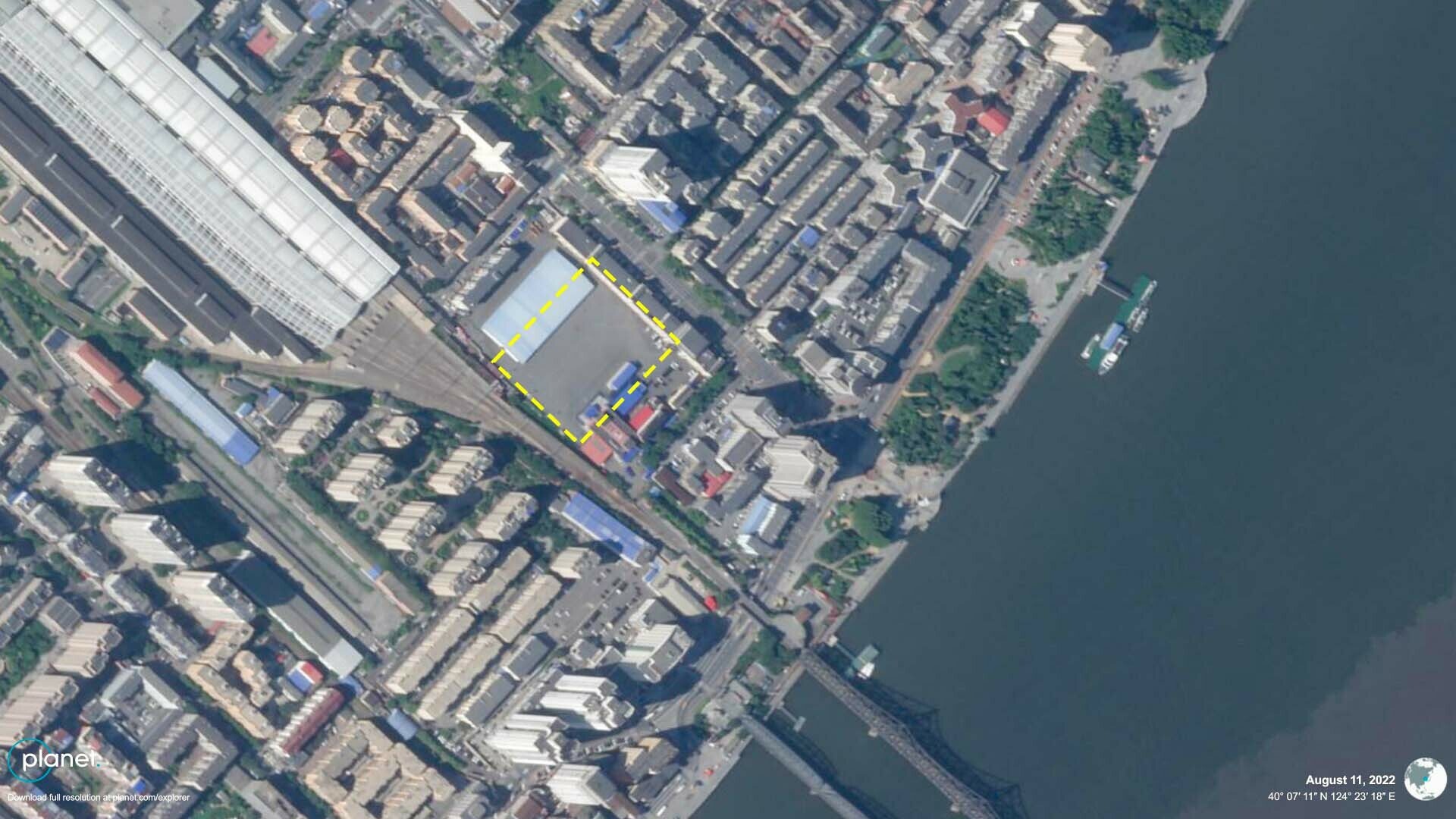 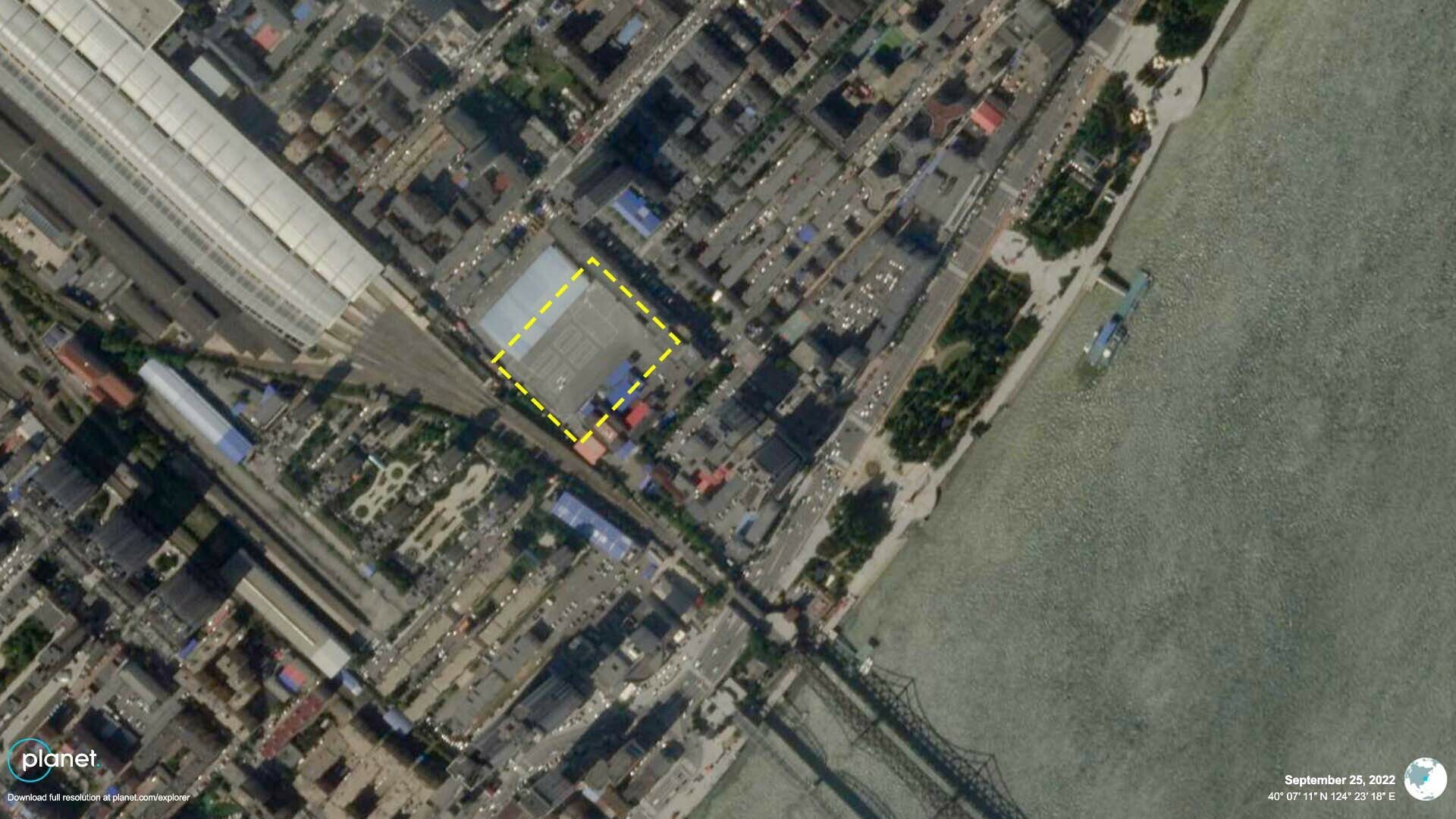 The inner lot of the Chinese border customs facility in Dandong, across from North Korea’s Sinuiju, appeared with new parking and lane lines in recent weeks, indicated inside the yellow-dotted box | Images: Planet Labs PBH, edited by NK News North Korea has appeared hesitant to allow cargo trucks across the border as it introduces more variables or threats to COVID-related policies than trains, which allow a single operator to take a large volume of goods along a set path to the disinfection complex. State media first acknowledged the existence of the airport disinfection center in August, when North Korean Vice Cabinet Premier Ri Song Hak said that its construction was a direct result of DPRK leader Kim Jong Un’s efforts to pull the country out of “economic recession” caused by strict pandemic-related border policies. Kim said his own tough policies led to the complete elimination of COVID-19 from the country by early August, after an outbreak infected millions and killed what outside experts believe is a much higher number of people than DPRK authorities claim. State media has maintained that the virus has not reentered the country, but the Korean Central News Agency (KCNA) reported Monday that strict controls remain in place along the border, such as security at crossings and requirements to wear masks and avoid “strange objects.” Dandong authorities have not reported a single case of COVID-19 since July 17. The two sides previously shut the route down in late April amid what was later revealed to be outbreaks on both sides of the border. Jeongmin Kim contributed reporting to this article. Edited by Bryan Betts. Updated at 6:53 p.m. KST on Sept. 26 with Chinese foreign ministry spokesperson’s confirmation. © Korea Risk Group. All rights reserved. |


 SHARE
SHARE COPY LINK
 X
X MASTODON


Recent Stories