
|
COVID-19 North Korea claims zero COVID-19 cases as top official visits city on lockdownFirst Vice Chairman Choe Ryong Hae inspected Kaesong where controls were put in place due to a suspected infection
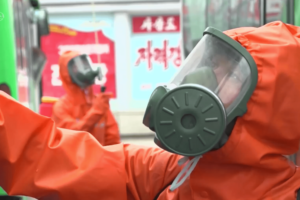
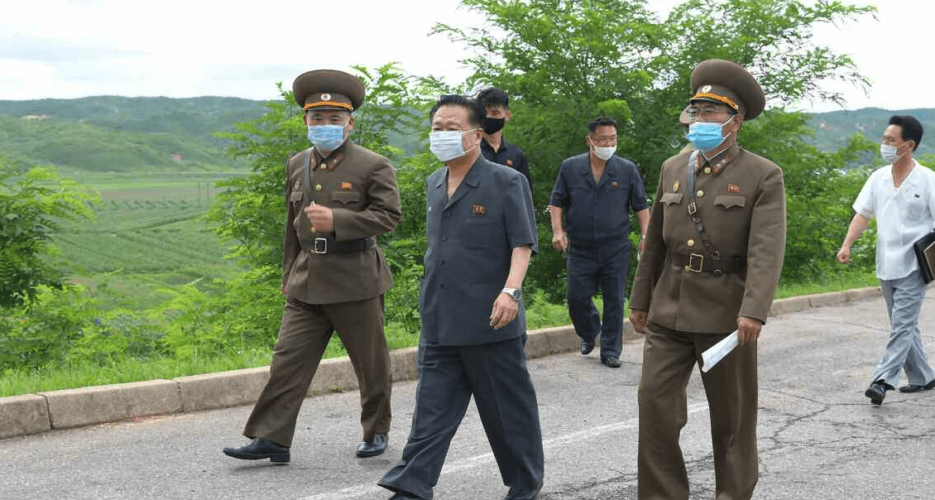 North Korea’s top state newspaper claims that there are still zero confirmed cases of COVID-19 in the country, all while the country’s highest-ranking official under Kim Jong Un traveled to Kaesong City to inspect citywide lockdown procedures. The reported absence of cases comes after Kim Jong Un convened an emergency Politburo meeting over the weekend, where leaders agreed to lock down Kaesong due to a “suspected” infection with inconclusive test results. Choe Ryong Hae, who serves as first vice chairman of the State Affairs Commission (SAC), followed up on the meeting by inspecting checkpoints around Kaesong on an unspecified day, the Korean Central News Agency (KCNA) reported on Thursday. Choe encouraged citizens to comply with official measures to prevent any possible spread of the virus from the city. He also stressed the need to ensure the delivery of proper medical and sanitization supplies to the Kaesong area, without specifying the responsible party.  The KCNA previously reported that “the Cabinet, ministries and national institutions are taking measures to supply foodstuff, sanitary items and fuel necessary for the people’s living in the locked-down areas and thoroughly carrying them out without fail.” The Tuesday report added that “the city is now quickly supplied with materials for anti-epidemic work including testing kits, protective garments, masks and non-contact thermometers and all sorts of medicine, medical supplies and disinfectants.” Only a single picture of his recent visit was released, simply showing Choe walking along a rural road. State media has yet to report any images of the situation inside Kaesong following lockdown, but did show temperature checks and bus surface sanitization taking place at checkpoints outside the city in recent days. Kaesong was reportedly put on “complete lockdown” on July 24 after authorities became suspicious that a former North Korean defector may have been infected when he crossed the border from South Korea back into the DPRK a week earlier. Districts within Kaesong were isolated from one another, state media reported, while citizens have undergone examinations and been placed into quarantine. It’s still not confirmed whether test kits specifically for COVID-19 are available or being used in the city.  DPRK leader Kim Jong Un revealed in an emergency Politburo meeting on July 25 that the re-defector was tested for the virus and is possibly (but not definitively) infected. Perhaps in a bid to push back on the ambiguity, the Rodong Sinmun then reported on Thursday that “there has still yet to be a single person infected with the novel coronavirus in our country.” The same phrasing has been used in state media numerous times in recent months. The report appears to suggest the suspected case in Kaesong turned out negative, perhaps after further testing, though North Korea has yet to release any more information on the person accused of crossing from the South since the July 26 report on the Politburo meeting. South Korean authorities identified a potential suspect and evidence of at least an attempt to cross the river at the western edge of the inter-Korean border. The circumstances around the suspect appear to match North Korea’s story. The Thursday Rodong Sinmun report added that, even though there are still no cases of COVID-19, citizens were nevertheless warned that failure to comply with the new strict measures “could bring about an unimaginable and unrecoverable fatal crisis” for the country. Edited by James Fretwell and Kelly Kasulis © Korea Risk Group. All rights reserved. |


 SHARE
SHARE COPY LINK
 X
X MASTODON


Recent Stories