
|
Expert Surveys U.S.-China relations are in dire straits. What does that mean for North Korea?Experts weigh in on what a "Cold War 2.0" could mean for sanctions and diplomacy going forward
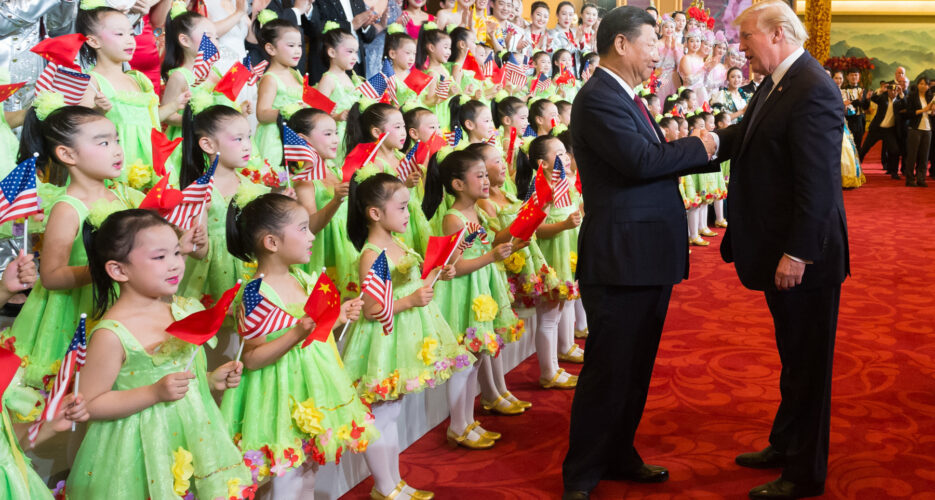 The U.S.-China relationship has seen better days. Since the start of 2020, the two superpowers have confronted each other in no uncertain terms on an overflowing list of grievances: human rights, trade policy, xenophobia, and COVID-19, among others. North Korea seems to be paying attention. Are they taking sides too? On China’s efforts to suppress dissent in Hong Kong — happening while U.S. President Donald Trump threatens to shut down American protests over racism and police brutality with military force — Pyongyang criticized U.S. Secretary of State Mike Pompeo this week for speaking “nonsense” about the issue and affirmed China’s right to control the semi-autonomous territory. On COVID-19, while the U.S. blames China for starting a global pandemic, DPRK leader Kim Jong Un lavished praise on Chinese leader Xi Jinping last month, congratulating him for his “success” in beating back the virus. It’s no secret that North Korea does not trust the United States. But they’ve had a rocky few years with China, too, following the DPRK’s nuclear and long-range missile tests in 2016 and 2017. So what does this new wave of U.S.-China tension mean for North Korea — and how will it play out over the next year? The following experts replied in time for our deadline:
 Washington and Beijing are feuding over a long list of issues: COVID-19, trade, and human rights, to name a few. Is North Korea policy high on that list too?
Chinese and American policy on the DPRK seemed to be aligned at a broad level, because regime collapse and/or proliferation in DPRK would be a direct threat to China’s stability and security environment. In order to achieve the U.S. goal of denuclearization of the Korean peninsula, China’s role is crucial. Given that the U.S.-China relationship appears to be approaching a low unprecedented since the Tiananmen Square Massacre, U.S. policy on DPRK is unlikely to make visible progress anytime soon.
China calls for sanctions relief on the DPRK, but there is little it can do to push the U.S. on that.
Even though North Korean issues remain on the back burner, it’s important to remember that they are still simmering. The same security and human rights concerns persist and they will pose a significant threat to any U.S. administration – present or future. China has risen to the fore, in part, because of its gross mishandling of the COVID-19 response. The world was ultimately less prepared to combat COVID-19 because of the Chinese Communist Party (CCP)’s decision to suppress vital information about the novel coronavirus. This is why the international community should coalesce around an international, independent, apolitical investigation into the CCP’s mishandling of COVID-19. It is unlikely North Korea will play a role in these efforts.
Beijing is pushing hard from sanctions easing, even as Washington talks about ramping up pressure on North Korea. And it is no secret that China is turning a blind eye as PRC entities and individuals violate UN Security Council sanctions. No less importantly, because of the shift we have witnessed in Chinese policy since early 2018 towards a more accommodating, supportive relationship with North Korea, the days when Washington could look to China for help in pressuring Pyongyang are over. As Pyongyang moves to further expand and enhance its nuclear weapons and ballistic missile programs, we can expect U.S.-PRC differences over North Korea to become a major sore point in the relationship.
The story of the relationship between the United States and China on North Korea is one of permanent divergence in priorities and occasional convergence in tactics. Stability matters first and foremost to China; a North Korean nuclear program is tolerable to Beijing so long as North Korea and the broader regional environment is stable. Stability also matters to the United States, but its own security and that of its regional allies drive a more persistent focus on securing North Korean denuclearization, even if that comes through a level of pressure on North Korea that Beijing would consider seriously destabilizing. The occasional convergence in tactics comes when China embraces the U.S. interest in pressure in response to North Korean activities it considers destabilizing, or if the United States takes a turn toward engaging North Korea.  Does Pyongyang have anything to lose when the U.S. and China aren’t getting along?
Given the stalled negotiations with the U.S., the DPRK can try to strengthen its ties with China, and enjoy more benefits, mostly on the economic front.
Pyongyang has more space to breathe and survive if the U.S. and China are not getting along.
That time will, no doubt, be used to shore up its weapons programs and deepen its relationship with China and other actors willing to aid Pyongyang in its goal of evading sanctions and getting its hands on much-needed cash.
The dramatic downturn in U.S.-PRC ties will provide Pyongyang with a major opportunity both to play the powers off against each other and to further ingratiate itself with Beijing.
Pyongyang will want to increase its diplomatic options by playing both countries, while also weakening the resolve and unity behind sanctions enforcement.  After North Korea’s last nuclear tests, the U.S. and China came together to support sanctions. Would that still happen if Pyongyang tested one tomorrow?
In this sense, China could put pressure on the DPRK on its own if Pyongyang did another nuclear test, but I doubt that China would act together to support or impose additional sanctions with the United States for the time being.
But the U.S. and China will not agree on the details of such sanctions.
With or without China, the U.S. should recommit itself to maximum pressure. At the Singapore Summit, President Trump said that there were approximately 300 individuals and entities in North Korea ripe for sanctioning. Chinese banks responsible for laundering money for the regime in Pyongyang are, likely, among them. The U.S. should make pressure truly maximum and not shy away from instituting sanctions against individuals and entities on both security and human rights grounds.
Should North Korea conduct another test, Beijing will likely find it distasteful, but I suspect China’s anger will be short-lived. And as a former senior Chinese official told me, “We are through doing favors for you on North Korea.”
I could see him joining China over his advisors in favoring a weaker response that keeps diplomacy as an option, or if he feels it’s his only option to save face, going in the opposite direction and threatening North Korea with a stronger response. In that case, it’s possible China might go with at least a superficially tougher UN Security Council resolution if Beijing calculates it would forestall a more unilateral “fire and fury” type of response.  If Pyongyang wants money while protecting its sovereignty, is Chinese Belt and Road funding a safer bet than American funding under a U.S. security guarantee?
Until there is American funding under a U.S. security guarantee, which is a long shot, North Korea doesn’t seem to have an option of choice in terms of safer sources of funding other than relying on funding from authoritarian regimes including China and Russia.
North Korea is, financially speaking, in a precarious position. Its only choice is to evade sanctions or to resort to other bad actors around the globe who are willing to risk negative repercussions for doing business with North Korea. China has historically demonstrated a willingness to take those risks by aiding and abetting Pyongyang in its various forms of sanctions evasion. North Korea is less likely to be another peg along China’s winding and often amorphous Belt and Road initiative investments, so much as it will be a fair-weather partner and friend to China in engaging in illegal behaviors that need curbing.
It is impossible for me to imagine that Pyongyang would ever be willing to pay the price — i.e., denuclearization — to obtain U.S. financial support and security guarantees. Over a quarter-century of diplomacy with North Korea has taught us that the North Korean regime values its nuclear weapons more than anything, including financial assistance.
If North Korea could get money from the United States on terms it could accept, I’m sure Pyongyang would see value in getting that additional stream of revenue and enhancing its diplomatic options and autonomy. © Korea Risk Group. All rights reserved. |


 SHARE
SHARE COPY LINK
 X
X MASTODON



Recent Stories