
|
COVID-19 In COVID-19 fight, North Koreans told to avoid alcohol and unapproved medicinesDPRK TV bulletin also tells citizens to frequently change out masks and boost immunity with folk remedies
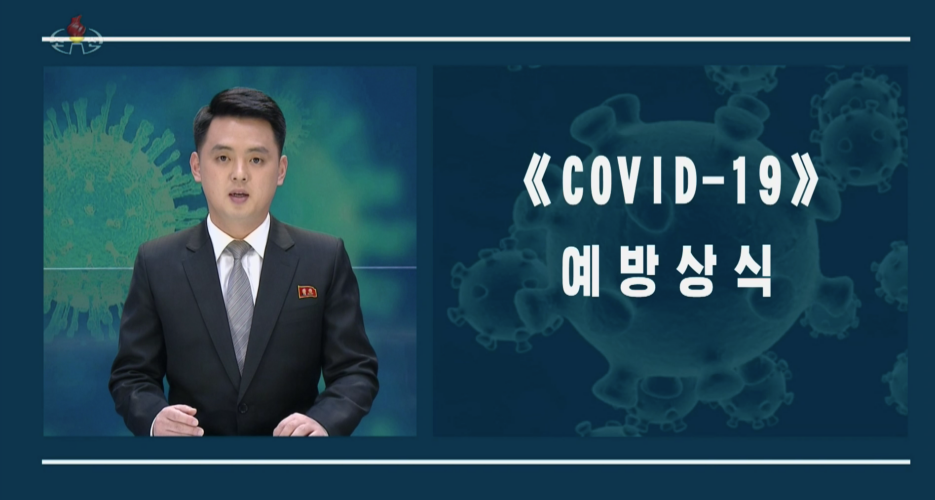 North Korean state television on Monday evening informed citizens of new findings on preventing infections from the COVID-19 disease, including instructions to not drink alcohol or take medicine without a doctor’s approval. Citizens were also told not to use the same face mask for an extended period and to frequently use new ones, as well as to eat certain foods considered to help improve the body’s immune system. The instructions, attributed to “health experts” from an unnamed foreign country, were read aloud and presented on screen in the nightly section in the 20:00 news bulletin on coronavirus prevention measures and infection numbers around the world.  The five “prevention methods” were presented as follows:
The new instructions were not mentioned in the primary party-run newspaper the Rodong Sinmun in recent days or weeks, as it appears to be the first reference in state media to the dangers of drinking alcohol and taking unapproved medicines towards fighting COVID-19. A previous case related to alcohol saw authorities announce in late March that a provincial cadre was demoted for holding a party and “encouraging drinking and delinquent behavior” against quarantine rules. North Korea still officially claims COVID-19 has not entered the country, with health official Pak Myong Su, President of the State Sanitary Inspection Board, telling foreign media in Pyongyang in late March that there was “not one person infected” with the disease nationwide.  But a U.S. military official claimed to have seen intelligence suggesting it is “impossible” the disease has not infected North Koreans, and sources from some news outlets have reported infections and quarantining of suspected cases. There have also not been any confirmed coronavirus diagnostic tests conducted in North Korea — despite some planned and confirmed test kit shipments — making it technically impossible to know if it has or hasn’t infected anyone in the country. Korean Central Television (KCTV) meanwhile delivered a similar set of five “findings” from unnamed foreign health researchers on the dangers of the virus on Sunday as well. North Koreans were told in the segment, also aired in the 20:00 bulletin on the global COVID-19 situation, that the disease’s “transmission ability is strong,” that its “ability to infect the body is strong — 10-20 times higher than the SARS virus,” and that it “attacks various organs.” Perhaps offering a logic as to why the country would still be conducting such strict and comprehensive measures to prevent the virus from spreading despite officially remaining infection-free, citizens were also told that COVID-19 is “difficult to detect: it does not show up well even after numerous tests.”  It is also “difficult to determine the incubation period” of COVID-19, it added, whose “incubation period can be 20 days or even longer in some cases.” The Rodong on Tuesday also provided some additional details on the status of the nationwide prevention efforts and how such findings from international studies are being distributed broadly. “All party departments” are consuming the provided global coronavirus updates and reports on various hygienic methods every morning, and strengthening education for carrying out prevention measures, one article said Tuesday. “The dose of hygienic education is ever increasing” and workers are concentrating on education materials while commuting to prevent the emergence of infections “as the emergency epidemic prevention period continues,” it added. In addition to the daily news briefing on coronavirus, state television continues to air a specific segment outlining hygienic measures all citizens should take to clean their surroundings and prevent coronavirus infection. Most citizens on the streets in candid video from Pyongyang posted online as well as across state media images also continue to be seen wearing masks, as signs have yet to emerge of widespread relaxation of the measures that would eventually lead to the reopening of borders to travelers. Edited by Oliver Hotham © Korea Risk Group. All rights reserved. |


 SHARE
SHARE COPY LINK
 X
X MASTODON

Recent Stories