
|
Opinion Could North Korea really join the International Monetary Fund?The benefits are clear, but meeting the requirements would be too risky for Pyongyang
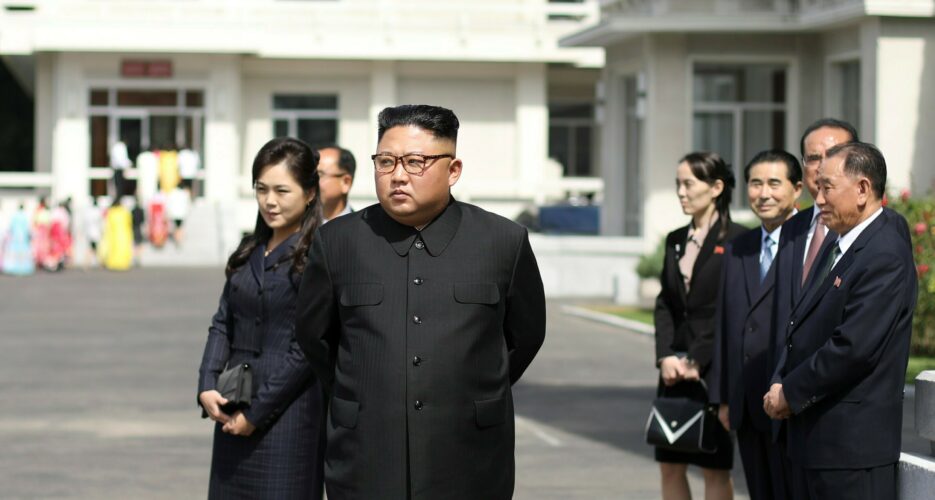 Tuesday saw the South Korean President Moon Jae-in say that North Korean leader Kim Jong Un had expressed an interest in potentially joining the International Monetary Fund. If they do, this would be great news for the North Korean people, the economy, and yes, the regime, giving them access to hitherto imaginable development loans. But can they join the IMF? And is it in their immediate interests to do so? HOW TO JOIN The IMF has 189 members. Aside from North Korea, the only other major nation state (non-tiny European principality or microstate) that is not a member is Cuba. This is not a coincidence: those tiny states have no need for developmental finance, and Cuba, like North Korea, has not yet met the entry criteria or ever had the desire to join a U.S.-dominated institution like the IMF. Unlike North Korea and Cuba, China is a member, indeed, the Republic of China (ROC) was a founding member of the IMF. The People’s Republic of China (PRC), following normalization of relations with the United States, successfully took its place. Vietnam took over from South Vietnam after it was conquered. These two states (Vietnam, China) are hailed by the IMF for their economic policies, but central concerns of the IMF are the free exchange of domestic for foreign currency (monetary freedom), and even more importantly, international cooperation on economic matters of major international concern. Pledging to cooperate in these two areas is essential to joining the IMF. To join, an application must be accepted by the member states, and given that the United States is the most important member (for funding purposes), this means that the U.S. government must approve the application. Thus, joining the IMF, while probably a good idea in the long-run, will not be easy. It is no coincidence that Mainland China only rejoined after they had normalized relations with the United States. For North Korea, getting to the point where relations can be normalized will likely involve some level of denuclearization, if not complete denuclearization as the Trump administration currently demands. This is going to take some time, but is the IMF a good carrot to add to a possible grand bargain on the nuclear issue? BENEFITS OF JOINING The IMF is almost as universal a global inter-governmental institution as the United Nations. Many countries that are far worse economically-governed and far poorer than North Korea are members. Which begs the question, what kind of a banking institution has the United States, China, and South Sudan as members in common? First of all, joining the IMF is a necessary prerequisite for joining the World Bank, as well as other more still important but more minor organizations like the International Centre for Settlement of Investment Disputes (ICSID).  For North Korea, the IMF and its sister organization, the World Bank, are likely to be useful potential sources of developmental loans and logistical support for the development of physical infrastructure (roads, rails, electricity grid etc.) Being part of the ICSID would be good for improving North Korea’s image with international investors. Joining the IMF would also become easier to join regional development banks like the Asia Infrastructure Investment Bank (AIIB) and the Asia Development Bank (AIB). That said, Cuba recently joined the Central American Bank for Economic Integration, and has yet to rejoin the IMF. THE COSTS ARE JUST TOO HIGH The benefits are obvious: cheap developmental loans from the World Bank, technical assistance, prestige, joining the global financial system as a normal member, and a consequent potential bump in FDI inflows. But would it really be such a good idea? In the short-term, probably not. For the United States, the major threat to North Korea, the IMF has long since become a convenient, multilateral vehicle by which to propagate global financial and monetary standards. Given the current output of North Korea’s economics journals, one could argue that they are seriously interested in complying with such standards, but they may not want to openly advertise such a fact to the outside world or to their people. The IMF and its sister organization the World Bank gather a great deal of rather innocuous looking information about member state’s economic performance, monetary and fiscal health. But central bank reserves, interest rates, even trade volumes – indicators included in annual audited reports on each member state issued by the Fund – are all state secrets in North Korea, and for good reason. If they were known, sanctions design could likely be improved, better estimates of North Korean economic capacity could be made, and this could potentially improve the U.S.’s bargaining position in nuclear negotiations. To join the IMF, one must commit to lowering restrictions on exchanging domestic currency into foreign currencies. The DPRK government, for national security reasons, would struggle to agree to such an arrangement. Control over foreign currency exchange has seemingly been relaxed for state-owned enterprises, but if the system were formally relaxed for all North Koreans, this might be rather bad for monetary stability. This is a secondary concern, however, compared to the information/reporting requirements of joining the IMF-World Bank system. Ultimately, so long as the potential threat of international and U.S. sanctions looms in the background, North Korea is very unlikely to join the IMF. The United States would be unlikely to approve such a move, and even if it did, North Korea would not be so foolish as to actually comply with the minimum reporting standards required to join. Edited by Oliver Hotham Featured image: Pyeongyang Press Corps © Korea Risk Group. All rights reserved. |


 SHARE
SHARE COPY LINK
 X
X MASTODON


Recent Stories