

|
News Cargo trucks appear to cross China-North Korea bridge after 12-year delayFootage posted on Chinese social media showed several trucks crossing the New Yalu River Bridge.
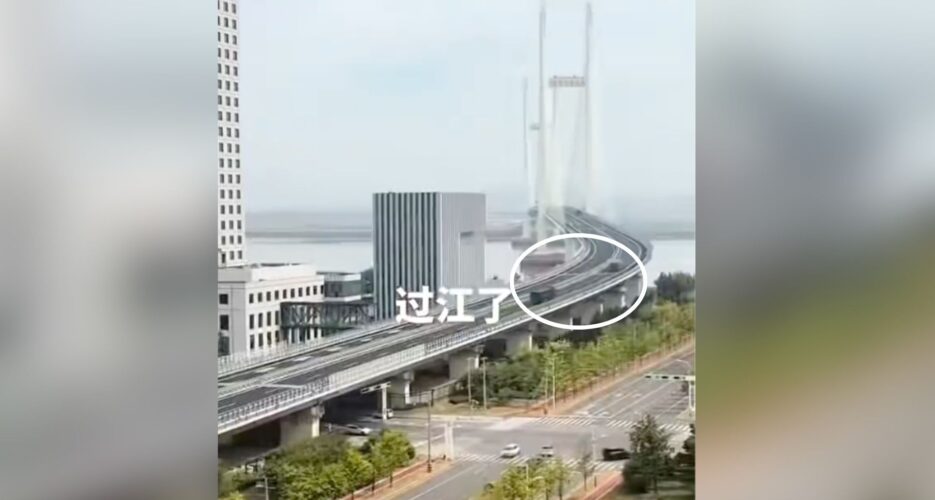 Several heavy trucks appeared to cross the long-stalled New Yalu River Bridge from China into North Korea on Sunday, marking what could be the first confirmed cargo traffic on the 12-year-old bridge as preparations for its opening gather pace. According to video footage shot by a resident of the Chinese border city of Dandong, a truck with its cargo bed covered in dark fabric drove by the Dandong customs area to cross the bridge toward Sinuiju on the North Korean side. Social media footage purporting to show two heavy trucks crossing the New Yalu River Bridge on Sept. 20, 2026 | Image: Bu Yao Zhe Yang via Xiaohongshu, edited by NK News Another blue truck appeared just ahead on the bridge as it headed to the DPRK in the same video posted on Chinese social media. It appears to be one of the first confirmed sightings of heavy cargo vehicles crossing the New Yalu River Bridge, which links Dandong with North Korea, and may have been a trial run ahead of the bridge’s official opening, which some have speculated could take place early next month. Planet Labs high-resolution satellite imagery from the same day similarly shows heightened vehicle activity on the bridge, with several cars appearing on either side of the crossing. 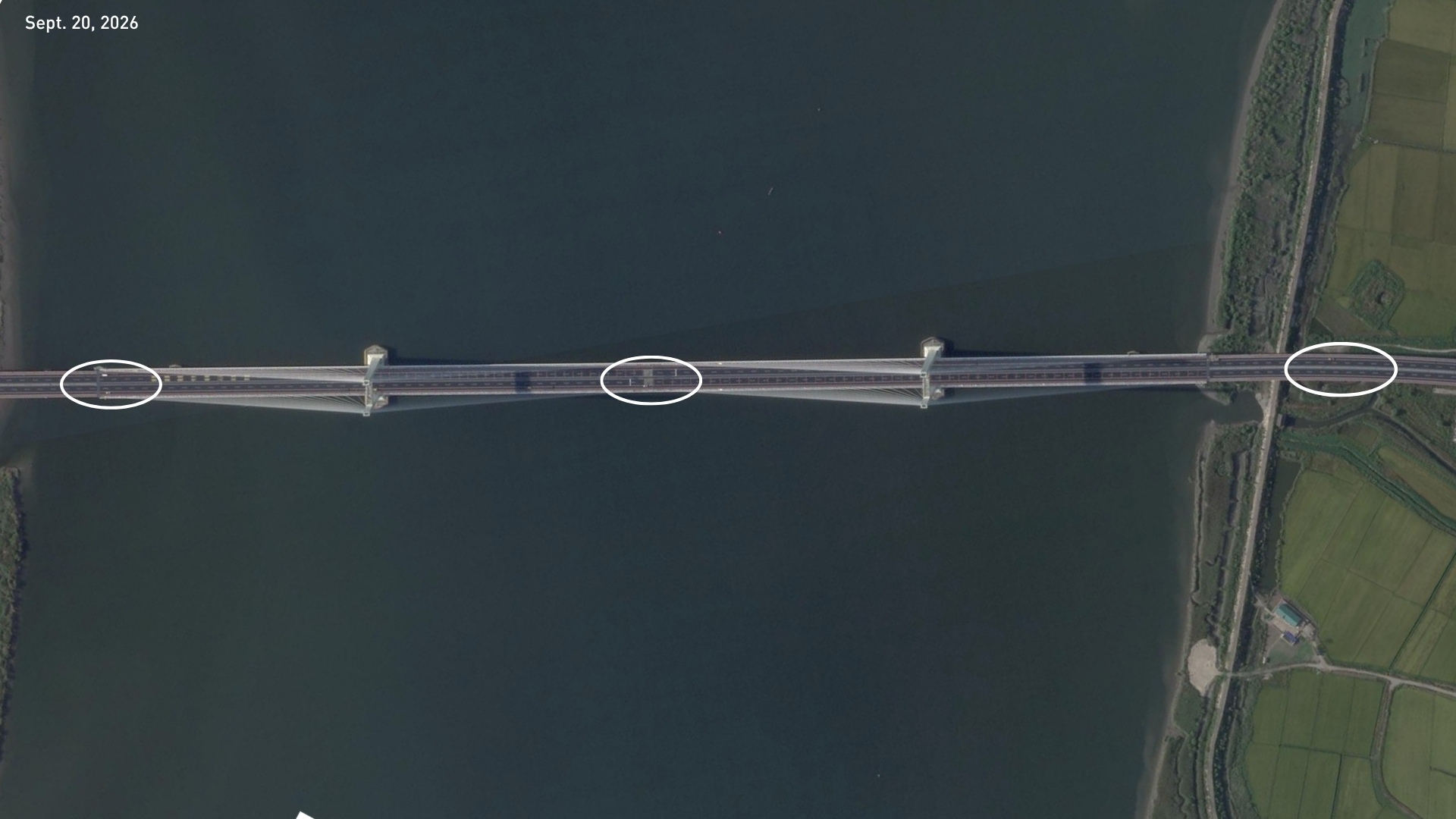 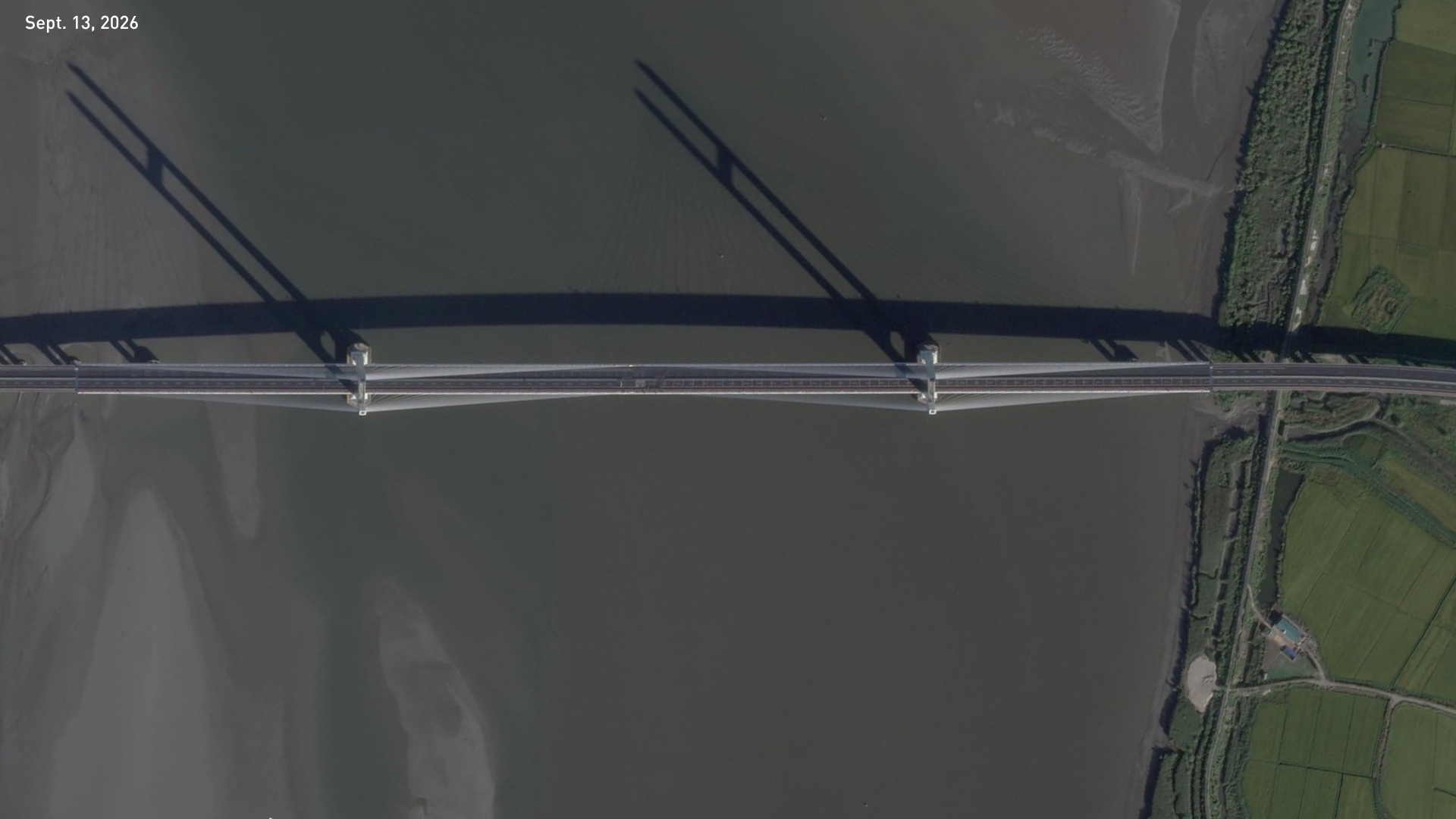 Multiple vehicles visible on the New Yalu River Bridge on Sept. 20, 2026 as opposed to the absence of vehicle traffic on Sept. 13, 2026 | Image: Planet Labs, edited by NK News It was not uncommon for Chinese vehicles to reach the midpoint of the bridge in the past, likely as part of maintenance procedures. Yonhap News similarly reported trucks crossing the bridge to North Korea on Sunday, citing local sources. Other ROK media showed a bus driving to Dandong across the bridge in late June, adding to speculation of its impending opening. ROAD TO NOWHERE The 3-kilometer-long bridge has remained unopened for over 12 years since its completion in 2014, facing repeated delays as the link essentially led to nowhere on the DPRK side until 2020, when North Korea built a connecting highway. But despite the added road link, the DPRK lacked a customs or warehousing facility on its side. The country resumed work on its customs project starting in early 2025 and neared the completion of the facility in recent months, a South Korean analytics firm found. China also added road surface markings on its side of the bridge in May 2025 in a possible bid to prepare for launching the long-delayed crossborder link. Before more recent work on the road and adjacent complex began, local farmers were seen using the highway to dry crops. FROM CONSTRUCTION TO COMMERCE Construction of customs facilities began at Dandong around the same time as the bridge, with structural work appearing complete by late 2024. Both Yonhap News and Dandong residents posting on Chinese social media have suggested the bridge may open on or around Oct. 6, which marks the 77th anniversary of North Korea-China diplomatic relations. Dandong residents also mentioned they hope the new bridge opens soon to reduce the city’s traffic congestion, since it would reroute North Korea-bound cargo vehicles through the city’s outskirts, rather than the downtown streets they currently use. As the main hub for North Korea-China trade, the opening of the new bridge could also add to the growing trade volumes between the two countries. NK Pro found that North Korea-China trade recorded a total value of $238 million in August, up from July’s $229.4 million. So far, North Korea and China have relied on the existing Yalu River Bridge, also known as the Sino-Korean Friendship bridge, which was completed in May 1943. The bridge, which is the main corridor of freight transport between North Korea and China, consists of a road on one side and a rail line on the other and can’t carry vehicles weighing more than 20 metric tons. Edited by Alannah Hill © Korea Risk Group. All rights reserved. |


 SHARE
SHARE COPY LINK
 X
X MASTODON


Recent Stories