
|
Opinion Taking a hard pass on Korean reunificationYoung South Koreans have enough future problems without footing the unification bill
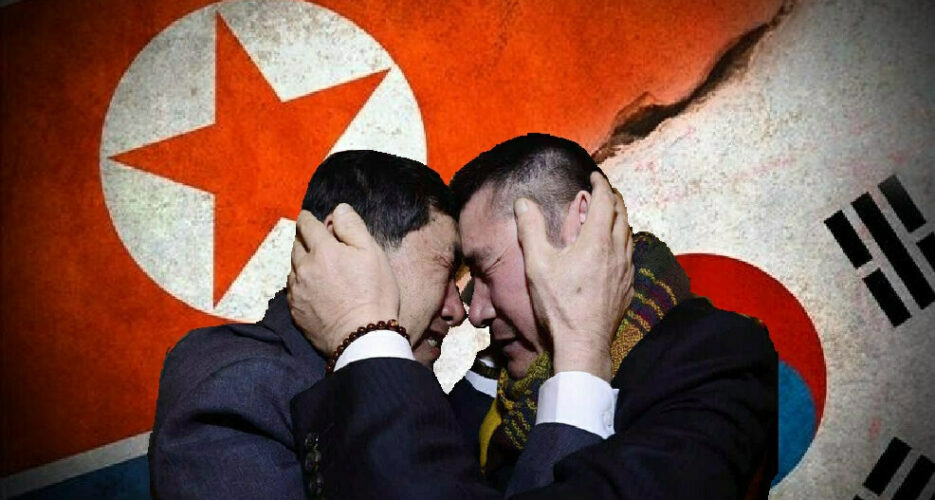 I remember learning to sing “Our Wish is Reunification” (Uriui Sowoneun Tongil) when I was 7 or 8 years old. The music is melancholy and somber; the lyrics are sorrowful and full of longing. I was part of a choir and we received a standing ovation from the audience, mostly our parents, when the song ended. I remember feeling quite proud that night. It has been many years since I first learned that song and now I absolutely hate it. The Republic of Korea Constitution declares that Korea’s territory consists of “the Korean Peninsula and its adjacent islands,” and that “the Republic of Korea shall seek unification and shall formulate and carry out a policy of peaceful unification based on the principles of freedom and democracy.” Be it reunification by absorption by the South (wishful thinking!) or reunification of “equals” (what a joke!), reunification is talked about almost as if it were an inevitability – a foregone conclusion. But why? It is now a cliché to bring up the fact that, prior to reunification, the West and East German economic gap was a mere three to one. But to this day, former East Germans still lag behind their Western counterparts. On the other hand, according to a news article from the Yonhap News Agency in December, the South and North Korean economic gap is a staggering 44 to 1. And to add serious insult to serious injury, today’s South Korea is not as rich as the West Germany of 1990.
If former East Germans are still lagging behind their Western compatriots despite their relative economic parity and even though Germany reunified 25 years ago, and some argue, rather convincingly, why there will never be parity among the two German groups, one can only imagine how long it will be before the North Koreans can come anywhere close to becoming half as wealthy as those of us south of the DMZ. Regardless of how reunification occurs, if it does occur, there is no doubt who is going to end up with the bill – South Koreans. To be more specific, young South Koreans. My question is a simple one. Why should we, young South Koreans, be obligated to pay for this very expensive bill? Why should we have to make such huge sacrifices? And let’s not kid ourselves. No matter how many times President Park Geun-hye claims that reunification will be a bonanaza and no matter how many times South Korea’s Financial Services Commission (unconvincingly) claims that reunification would only cost $500 billion, young South Koreans will bear the brunt of the costs. And what amazing costs there will be! GIVING UP ON GIVING UP We must also be honest about that word – sacrifice. Giving up something now to gain something better in the future is not a sacrifice. By definition, that is an investment. A sacrifice necessarily involves surrendering that which we value in favor of that which we don’t. Considering that today’s youth unemployment rate in South Korea has reached its highest rate in 15 years and, more importantly, South Korea has the fastest-aging population among OECD nations – a prospect far more frightening than North Korea’s frequent threats of turning Seoul into “a sea of fire” – young South Koreans already have a rather bleak future ahead of us without even having to worry about paying for the exorbitant costs of reunification.
So, yes, there will be sacrifices, indeed. Here are the facts: 1) The brunt of the costs of dragging North Koreans into the 21st century will be borne by South Koreans via near debilitating taxes. And that’s assuming that reunification will occur peacefully, which is a rather big assumption. 2) As though supporting an aging South Korean population (our parents and grandparents) weren’t enough, additional tax monies will be spent on people who are effectively strangers, and whose language seems to be getting more different from ours with each passing generation. 3) The so-called bonanza of extracting raw materials and employing cheap North Korean labor will most likely be enjoyed only by a select few corporate interests from the South and the remnants of the Workers’ Party of Korea (WPK) from the North. No matter how loudly the South Korean government, civic groups, religious leaders and academics beat the drums of ethno-homogeneity and compassion for our Northern brethren, considering the fact that the costs of reunification will be staggeringly high while the benefits (if any) will be enjoyed only by a few of the well-connected elites from both sides of the DMZ, at least for the vast majority of young South Koreans, reunification is increasingly becoming the ultimate nightmare scenario. O Father, if it be possible, let this cup pass from us. So I go back to my original question: Why is reunification talked about as if it were a foregone conclusion? It is obvious that sanctions against the North Korean regime ought to be beefed up and it should also be culturally excommunicated from the rest of the free world. However, it becomes clear that that is not enough. Instead of merely finding every possible way to ostracize the North Korean leadership, it becomes paramount to actively support North Korean refugee groups as they will have to become North Korea’s future leaders if/when the current North Korean regime falls. Only then will North Koreans have the leaders that they need and deserve who will help to bring them out of the Dark Ages, toward freedom and prosperity, without having to demand incredible sacrifices from South Koreans to pay for them. Does that mean that under my ideal scenario, the Korean Peninsula would never be unified to form one nation? Not necessarily. In that idealized future, assuming that North and South Korea are no longer mortal enemies but merely neighboring countries that have diplomatic and trading relations with one another, perhaps a political dialogue could begin to form a confederate nation. However, that is too far in the future for anyone to talk about it without sounding like they are engaging in the most frivolous nonsense. What is important is this – South Koreans must seriously begin to talk about whether or not reunification is even desirable. And if more and more South Koreans agree that reunification is neither necessary nor desirable, then we must discuss what other steps that must be taken to reflect that view. © Korea Risk Group. All rights reserved. |


 SHARE
SHARE COPY LINK
 X
X MASTODON


Recent Stories