
Present-day North Korea is a country where a Stalinist facade hides what can only be described as a booming market economy. A recent visitor to Pyongyang told me how surprised he was when he discovered that a North Korean professor has a salary of 6,000 won, while the visitor’s North Korean business partners took him to restaurants where bills would run into the 200,000 won territory (per person!). To his surprise, such restaurants are full. Indeed, it is now clear that a new rich has emerged in North Korea.
Such people run a wide variety of legal, semi-legal and highly illegal businesses. From bus companies and restaurants, to import/export enterprises and even mines, the sectors they are involved in are legion, but the question remains: Where did their start-up capital come from, and how did they start such businesses?
The foundation of North Korea’s nascent merchant capitalism is to be found in the early 1990s as the North Korean state-run economy hit a brick wall. The start of North Korea’s economic decline began in the early 1970s, as growth slowed and structural weaknesses emerged (and, needless to say, were not dealt with). Nonetheless, North Koreans proved highly reluctant at first to get involved in market activities. As many North Koreans have told me (and this is further confirmed by other studies), until the late 1980s, the vast majority of North Koreans really did hold private trade to be contemptible. The proper thing to do was to work for the government and subsist on the rations derived from such work rather than to look for opportunities for individual profit.
Things changed abruptly around 1990, when even the most devoted supporters of the regime saw that rations were no longer forthcoming and that their meager monthly salaries would suffice to buy merely a few kilos of rice. They began to look for alternative ways to get by, and predictably searched for sources of investment capital.
I have talked to dozens of North Korean businesspeople (most of whom are women). I was surprised at how frequently China featured as the place where initial investment came from.
THE CHINESE CONNECTION
…families with relatives in China, hitherto subjected to mild discrimination in North Korea, suddenly discovered themselves to be in a very advantageous position
China plays host to roughly 2 million ethnic Koreans, whose ancestors have moved there throughout the last 150 years, largely in 1920-1945. In many cases, these migrants have managed to maintain contacts with their families back in North Korea. Back in the 1960s, while China was hit by a disastrous famine and North Korea was still the most affluent country in continental East Asia, many North Korean families came to the aid of their starving families in China. In the 1990s it was time to reciprocate, as many Koreans in China have indicated explicitly.
Therefore, families with relatives in China, hitherto subjected to mild discrimination in North Korea, suddenly discovered themselves to be in a very advantageous position. In some cases, they could simply ask their relatives for a gift or loan of a few hundred dollars. In the early 1990s, this was a significant amount of money – sufficient to start a small business (which then could grow quickly).
…money transfers from China were not mere acts of benevolence, but mutually beneficial deals
I know of a family that was exceptionally lucky: their overseas relatives in the late 1980s provided them with a loan of $5,000. In this particular case these relatives lived in Canada, whence they had moved from Northeast China. The amount was a real fortune at the time and the recipient family showed a great deal of business acumen in investing this money. The family’s matriarch began to buy fashionable Chinese clothes wholesale from visiting Chinese merchants in the borderland cities (many of these merchants soon started to work with her closely). She would then move the garments to Pyongyang (with the help of some her family members) where they could sell the clothes while making a healthy profit.
A North Korean street vendor. Eric Lafforgue
In many cases, such money transfers from China were not mere acts of benevolence, but mutually beneficial deals. I remember a story about a woman who was a school teacher in North Korea. Her Chinese relatives asked her to buy dried fish and provided her with the money to finance the purchase. She discovered that in merely a few days she made more money than she would in a year working at school. She used this profit as her venture capital and started a rather profitable business herself.
It helped that from around 1982 it became possible for ethnic Korean citizens of China to travel to North Korea frequently and with few bureaucratic barriers. Ostensibly, such trips were allowed so that families could stay in contact, but much of the time these trips doubled as business trips (often with the families doing business in-house).
Of special significance are hwagyo, a relatively small (some 5,000 people now) group of the Chinese citizens who have permanent residence rights in North Korea. These people can easily travel to and from China, managing a great variety of cross-border businesses. Among other things, the hwagyo control a lucrative money transfer business. In the last few years, it has not been that difficult to arrange for a money transfer from South to North Korea – as long as the sender is willing to pay 25-30 percent commission. Transfers might be expensive and illegal, but they are clearly reliable and relatively fast.
NEIGHBORS TO THE EAST
It is remarkable, however, that there was another group which enjoyed seemingly similar advantages, but failed to benefit from the re-emergence of capitalism in 1990s’ North Korea. I am talking about the ethnic Koreans from Japan (many of whom moved to the North in the 1960s).
For a few decades, until the early 1990s, these people constituted one of the most affluent social groups in North Korea. In most cases, they maintained close contacts with their relatives back in Japan (who were willing to provide them with money and gifts). Families of Japanese returnees boasted quality clothes, electronic gadgets and other luxuries well beyond the reach of the average North Korean. Therefore, at the time one might have expected that they would have been well positioned to make a killing in the nascent market economy. Contrary to such expectations, this did not happen.
…returnees from Japan had grown too accustomed to regular money transfers from Japan and were therefore taken aback by the dual crisis created in the 1990s
When larger business emerged around 2000, China remained their major market. The private entrepreneurs dig coal, catch fish and seafood and make counterfeited tobacco not for local sale but almost exclusively to be imported to China. Among official trade volume, China controls some 75 percent of North Korea’s entire trade volume. With private trade, the share must be even higher.
Actually, the 1990s were a bad time to be a returnee from Japan in North Korea. Most of these families moved to North Korea in the early 1960s. By the late 1980s their relatives in Japan were beginning to die out. The next generation back in Japan had little interest in supporting people who once made what appeared to many of them to be a great mistake – i.e. moving to North Korea. That said, in the 1990s, these people still had at their disposal some resources that could have been invested in market activities. Strangely, though, very few of them made use of such advantages available to them. Many North Koreans whom I ask about this strange failure say that the returnees from Japan had grown too accustomed to regular money transfers from Japan and were therefore taken aback by the dual crisis created in the 1990s by the sudden collapse of the North Korean economy and the almost simultaneous ending of money transfers from Japan. Most of them did nothing and quickly lost out.
The early and hectic days of North Korean capitalism are behind us now, and a few hundred dollars is no longer enough to start a successful venture anymore. It seems that the top tiers of the North Korean economy have become increasingly difficult to crack into for newcomers. Nonetheless, Chinese connections continue to be very important in the activities of North Korean businesses. Most private economic activities are about reselling imported goods from China or buying items to export to China. Connections in the Chinese business world still matter tremendously and one should not be surprised that the new rich are eager to teach Chinese to their kids.
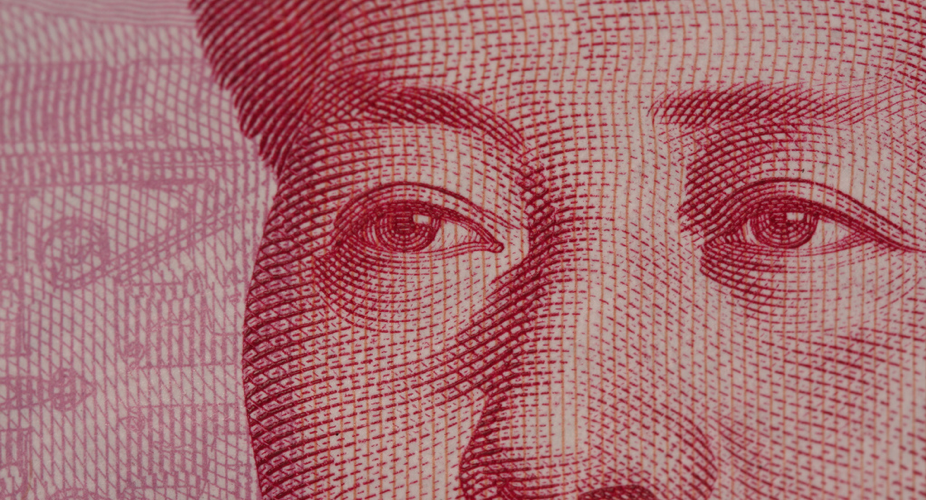
Main Picture: David Dennis, Flickr Creative Commons
Join the influential community of members who rely on NK News original news and in-depth reporting.
Subscribe to read the remaining 1442 words of this article.
EXISTING MEMBER?


');
newWindow.document.write('
');
newWindow.document.write('