
It seems that the “era of dangerous talks” has, at last, begun. Reports coming from numerous unrelated and generally trustworthy sources point to a significant, albeit not necessarily quantifiable, change in North Korean society. Educated North Koreans, including junior members of the elite, have begun to privately and seriously discuss political issues – and these discussions do not usually follow the officially prescribed line. This is a new development: the first signs of this deviance have become visible only since around 2011.
This does not mean that North Korean college teachers, mid-ranking police officers and market vendors are now dreaming of revolution. Nonetheless, they are increasingly aware that their country is lagging behind China, not to mention South Korea, they are becoming more and more inclined to blame their own government and their country’s economic and political system, rather than the notorious U.S.-instituted blockade or other twists of fate – and they are willing to talk about this.
“They are becoming more and more inclined to blame their own government and their country’s economic and political system”
In the past, some educated North Koreans also understood that everything was not right in their land, but only recently it seems that a significant number of them have become willing to raise these topics in private conversations, including conversations with relatively trustworthy foreigners. The latter is not all that surprising, many elite North Koreans are probably well aware that foreigners are among the safest people to share political misgivings with. After all, they have no reason to report you.
So far, it seems that dissatisfied North Koreans do not have much in the way of expectations. In most cases, their dream is for their country to emulate China’s reforms and economic miracle. They also might dislike the late Kim Jong Il, but most of the time they seemingly hope that his young son, the incumbent Supreme Leader will somehow fix things. And, of course, they still usually have great adoration and respect for Kim Il Sung, the founder of the Kim dynasty, even though the policies of the late strongman are actually the main reason why they are in this mess.
WHY NOW?
This change of mind has come about as the result of a combination of factors – most of which have been around for around 20 years. First, the spread of information about the outside world is important, and such information has spread in North Korea through a multitude of channels. Second, it helps that North Korea under Kim Jong Il was much less repressive than that of his father Kim Il Sung. Third, the growth of the black market economy and endemic corruption have made people both more independent of the government and more critical of it. Last but not least, a palpable improvement of living standards over the last 10-15 years also means that people are less stressed and have more time to think about politics and other lofty issues (contrary to what is often believed, revolutions seldom happen when people are really desperate and cornered).
Reports about changes in the behavior of educated North Koreans are too numerous now to be dismissed as merely incidental or anecdotal. However, we should not see it as a sign that the North Korean state is now on the verge of collapse. Of course, collapse may well happen soon, but if we keep in mind the experiences of other communist states, we should not probably not start getting ready for our road trip to Pyongyang from Seoul. In the Soviet Union, for instance, the length of time it took for the emergence of relatively uninhibited political talk to lead to the collapse of the country was some 30 years.
“The talk one can now hear from educated North Koreans is quite reminiscent of the talk that could be heard in Moscow from the mid-1960s”
Indeed, the talk one can now hear from educated North Koreans is quite reminiscent of the talk that could be heard in Moscow from the mid-1960s. In the Soviet Union, this was also a time of moderate economic expansion and relative stability, this was also when the state stopped terrorizing its people (there were very few people going to prison for political crimes after 1953). Needless to say, the liberalization of the Soviet Union after 1956 was far more dramatic than what happened in North Korea after Kim Jong Il took over. The number of political prisoners in the Soviet Union decreased some 700-fold between 1953 and 1964 while in North Korea of the last decade this number merely halved.
Amid this post-Stalin political relaxation, the Soviet Union of the 1960s also began to become more open to the outside world. More Soviets going abroad to travel, more foreigners came to the Soviet Union, and increasing numbers of Soviet citizens began listening to foreign radio stations. The Soviet people began to realize what was all too obvious to their Western visitors: the Soviet Union was increasingly lagging behind the developed world. This spurred many of the Soviet intelligentsia to take up the issue of the country’s socio-economic plight over the kitchen table.
REFORM BUT NOT OPENNESS
People who have reported of growing discontent among their North Korean contacts often emphasize the fact that North Koreans are loathe to discuss revolution or the replacement of the Kim family. Usually, they express hope for reforms, and they are also afraid that in the current political climate, the North Korean government will be unwilling to implement necessary changes. This does not sound all that radical – what the most opposition minded North Koreans seemingly want is the introduction of Chinese-style developmental minded dictatorship, not the switch to a liberal democracy, the wonders of which they do not necessarily appreciate. Indeed, one can even hear North Koreans say that the present-day China is dangerously and unnecessarily liberal and permissive.
In one case, a North Korean businesswoman even said that “North Korea needs Chinese-style reforms but not Chinese-style openness.” She was assuming that proper patriotic discipline should still be instilled into North Koreans and that the North Korean media should provide the people with a wholesome ideological diet, rather than with the frivolous melodramas so frequently seen on Chinese TV.
This does not sound terribly radical, but one should keep in mind that Soviet intellectuals of the late 1960s were also not known for their anti-communism. Most of them wanted a more permissive and efficient government, not a complete or even partial switch to the capitalist market economy. The ideal Russian state as seen from a Moscow kitchen around 1970 would still be overwhelmingly socialist in its nature and would quite probably still be run by the Communist Party. Only in the 1980s would the Soviet public begin to entertain grave doubts about the viability of the entire state socialist project.
“It seems that the North Korean people are now at the beginning of a long and winding road of political self-doubt”
So, it seems that the North Korean people are now at the beginning of a long and winding road of political self-doubt. It is also possible that the Kim Jong Un government will find a way to return a level of repression not seen since the Kim Il Sung era. If this is going to happen, it will put an abrupt end to all politically dangerous talk. Fortunately, however, such a revival of old-school Stalinist terror seems to be quite unlikely because the government does not have the commitment or resources to realize such a project.
Nonetheless, even if history is allowed to take its course, one will probably have to wait quite a few years before one sees the discontented junior members of the elite being able to change the country’s future. At any rate, things are beginning to change, and with the passage of time, the North Korean government is more and more likely to face pressures from within.
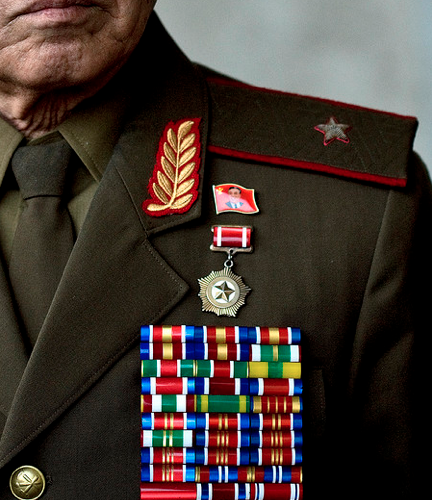
Picture: Eric Lafforgue
Join the influential community of members who rely on NK News original news and in-depth reporting.
Subscribe to read the remaining 1321 words of this article.
EXISTING MEMBER?


');
newWindow.document.write('
');
newWindow.document.write('