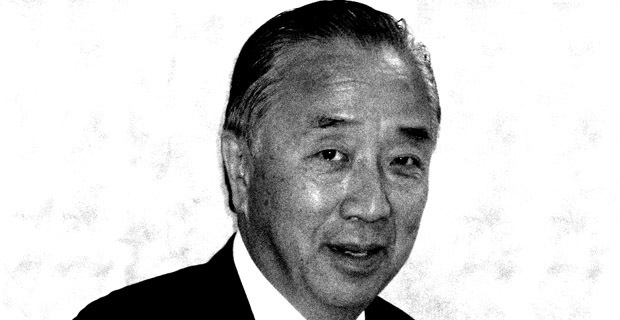

Kun A. “Tony” Namkung was described recently by the Christian Science Monitor as a “mysterious Korean-American” who “plays a behind-the-scenes role that may be more significant than that of the better known actors in the drama.”
Indeed, as a back-channel, so-called “Track II” negotiator who advises senior U.S. delegations on North Korean affairs, Namkung, a longtime confidant of former New Mexico Governor Bill Richardson, has been a central figure in a host of dramatic episodes, including helping to secure the release of journalists Euna Lee and Laura Ling, imprisoned by North Korea for “illegal entry” in 2009.
“The charges that have been levied against Kenneth Bae have nothing to do with proselytization”
In January, Namkung — the owner of Murray Hill Consultants, a firm that works with Asian and American corporate clients on strategy, market access, and governmental relations — accompanied Richardson and Google chairman Eric Schmidt to Pyongyang on what Richardson described at the time as a “private, humanitarian” trip. While there, the delegation pressed the regime to allow ordinary North Koreans access to the Internet and attempted to negotiate the release of Kenneth Bae, a Korean-American tour operator who has been jailed since his arrest in November for what state news agency KCNA described as “crimes against the state.” There has been rampant speculation as to what this means, exactly — best guesses range from getting caught with footage of dissidents being executed to proselytizing. But Namkung says this is not the case.
“The charges that have been levied against Kenneth Bae have nothing to do with proselytization; I don’t think he has been detained on religious grounds,” Namkung tells me. “I don’t know what he did, I don’t believe he was just picked up arbitrarily, but I don’t think it was for religious reasons, I don’t think it had anything to do with the distribution of Bibles. I can only offer you my speculation on the subject, but they did tell some foreigners — and I can’t name them by name — but they did say, some two months ago now, I think, that there were two charges that had been levied upon this man.”
“One, plotting to overthrow the North Korean regime, and two, plotting to kill the leadership — without specifying who,” Namkung explains. “Likely Kim Jong Un, though his name was never mentioned. The story has never been quoted by the outside press, even though I was quoted as saying that those were the two charges, but nobody ever picked up on that. At the same time, it’s true that the North Koreans never announced it publicly until recently, but even then they only mentioned the plot to overthrow the regime, nothing about Kim Jong Un.”
Namkung says he is “sure they will use it to pull the U.S. back into talks.”
“The State Department has already stated that nothing is more important than U.S. citizens who are caught up in this kind of situation. I think it is likely that someone of some stature will go over there to retrieve him. I think he will be found guilty, but don’t think he will be sentenced until someone can come pick him up.”
“That person,” Namkung emphasizes, “will not be Governor Richardson; when we went to Pyongyang for the Google trip, the North Koreans made clear that this was off the table, they said we could not see him or even talk to him, only those with consular authority.”
ON SETTING UP THE AP BUREAU IN PYONGYANG
In January, 2012, the Associated Press opened a bureau in Pyongyang, becoming the first-ever western news agency to have a full-time presence in North Korea. Playing the aforementioned “behind-the-scenes, significant role” was none other than Tony Namkung. Many have applauded the move, though some have posited that the AP is compromising its reportage to stay in the regime’s good graces.
“On that matter, there are some limitations on what I can say because I am still a paid consultant to the AP and there is a clause in my contract that I am not able to talk too much,” Namkung says, “but what I can say is, what do the critics want, no AP bureau? In some ways, the AP’s work in North Korea is one of the very few examples of something that’s actually worked. Let’s take our victories, as small as they are, as they come, and hopefully build on them.”
“My point is, would you want them to be completely in the dark forever?” Namkung asks.
Regarding the working relationship the AP has with the Korean Central News Agency (KCNA), Namkung says he has seen nascent signs of openness.
“I’ve had to try to, when issues have arisen between KCNA, which is the AP’s official host, and the AP, I’ve tried to reconcile those differences, and I can say without going into any specifics, that KCNA has tried its best to meet the AP halfway,” Namkung tells me. “I know that sort of statement calls for backing it up with one or two specific examples, but that’s the sort of thing I don’t think I should get into. At the same time they continue to be extremely ideologically rigid, but they are showing signs of flexibility that bode well for future western media doing work in North Korea.”
WILL HISTORY REPEAT? AND REPEAT?
Namkung says he “thinks the parties will return to the table,” but wonders, “will it be more of the same?”
“That’s my fear,” he says. “The North Koreans, for their part, have to stop using threats of one sort or another to try and scare people into coming back to the negotiating table, which is what I think they are trying to do now.”
However, Namkung harbors no illusions that substantial change will be forthcoming anytime soon.
“We, and by ‘we,’ I mean the U.S., Japan, and South Korea, have to look at North Korea as an extremely resilient society that’s not going anywhere, that cannot be controlled by China, and that has a very rigid ideological system under-girding it, suggesting that it’s going to be around for a while,” explains Namkung. “Secondly, it can’t be simply be bought off, you can’t get them to denuclearize for a handful of trinkets, you’ve got to look at this larger picture — what do they want?”
To answer this, Namkung says we must “look at the larger East Asian situation, the collapse of the Eastern Bloc, the success of East Asian economies in the West, including Japan and South Korea — it’s all part of a much larger picture if you’re going to find a way out of this, avoiding this constant cycle.”
“Having said that,” he tells me, “I’m sure that in a physical sense, the North Koreans will come back to the table much sooner that we think. The question is, will we get to some new modes of thinking about these issues?”
ENGAGEMENT VS. SANCTIONS
Between outright engagement and draconian sanctions lies a middle ground Namkung believes fertile for strategic North Korea policy and cautions against moving forward in a simple, binary manner.
“I think it’s safe to say the North Koreans are going to return to a path of engagement, there’s no question in my mind about that,” he says. “The real question is, will the U.S. and other parties be able to figure out some new ways of engaging, and that I’m not so sure about. Especially after the recent ratcheting up of tensions and aggravations, I don’t think anyone is really ready to define a new path to engagement. What I mean by that is, I don’t think anyone has really thought about what a new pattern of engagement might look like.”
The usual tools, maintains Namkung, “are either sticks or carrots and I’m not sure people are capable of coming up with combinations of the two in one.”
“For example, in the official talks, I’ve always believed that the issue of human rights should be right up there with the nuclear issue, and that if the U.S. were to offer the normalization of relations and a peace treaty, they also ought to put on the table that North Korea’s political camps be opened to the Red Cross as a start, and ultimately at some point be dismantled in the interest of human rights,” says Namkung, “but people aren’t able to think in such terms; they think you either pressure [North Korea] into a collapse scenario, or you reward them.”
Sanctions on their own, Namkung tells me, “plainly don’t work. And they don’t work, not in regard to any other countries — Cuba for example — but they don’t work because people don’t understand the North Korean mentality. One way to look at it is through the people who died during the famine in 1990s. Segments of the population who were loyal [to the regime], would rather that their own people die before they bend to the will of outside powers who are trying to impose their will on North Korea. So, a few sanctions are not going to result in anything there.”
Namkung lists the further, structural reasons he believes straight sanctions would be less-than-effective.
“You have to remember that the border with China is not only porous but incredibly long,” he explains, “and I don’t think there are enough people to man that entire border, which is why it’s so easy for people to slip into China. Why are there two million North Koreans living in the three northeastern Chinese provinces? And why are so many of them from North Korea’s Hamgyong province in the northeast corner of the country? Why are 80% of people resettled in the South from Hamgyong province?”
“It’s the one part of North Korea,” Namkung says, “where there is only rock, no soil, so it has always produced an exodus of people, going back to the 19th century, crossing the border into China.” And, the more severe the sanctions, “the more you will push people across the border.”
“On top of that,” continues Namkung, “most North Koreans believe most of Manchuria is Korea’s. The old Koguryo kingdom — you can still find old monuments all the way up to where Russia begins, so it’s perfectly natural for them to think they can cross the border because this is part of their territory. So, that’s why sanctions won’t work. It’s just very difficult to control that border, and their ideology is just so totally committed to their beliefs — that I believe, of course, to be utterly wrong ones myself.”
Namkung adds that, in viewing the North Korean situation, it is important to remember that “the history of East Asia is just replete with peoples who fought to the bitter end.”
“Why did all those Japanese in WWII sharpen their bamboo spears? If the Emperor hadn’t shown up on the radio and spoken for the first time and said he’s not a divine being — in addition to the two bombs that were dropped — they might have gone on fighting until the last man, literally,” he says.
However, Namkung still doesn’t think the entire country of North Korea is made up of true believers in the Kim Jong Un era.
“How much of the population are behind this government? I’m the first to say I’m sure not 100%,” he says. “It’s not a million hearts beating as one, which is kind of ludicrous, when you stop to think of it, but the regime does seem to elicit the loyalty of large segments of the population — not just a few families who are related to the ruling family. When you look at the crowds of people lining the streets and see people beating their chests and crying like fools, you also see several rows back, people who are not like that, which does suggest that there is some diversity in North Korea, which has 24 million people now and makes it more complex than say, Papua New Guinea. Understanding that would be a good starting point; we can then shape some of our policies around that. If Pyongyang’s population is two million, where are the other 22?”
WHAT DOES PYONGYANG WANT?
One thing that continues to stump western analysts is the seeming lack of any concrete goal on the part of the North Koreans. Over the years, there have been fleeting glimmers of improving relations before some provocation or another by Pyongyang erases any gains that had been made. Is there a method to, as it appears to most of the world, North Korea’s madness?
“I think they’ve always had an end game, that’s not changed over the years,” Namkung tells me. “The only problem is, it’s not the same end game.”
“Basically, in the post-Cold War era, much of the Eastern Bloc has morphed into a combination of Socialist and Communist,” he says. “For 20-some years, North Korea has been trying to find a peace treaty and achieve normal relations — not just with us, but with Japan and South Korea, those countries being North Korea’s principal adversaries — in order to preserve their own system and to try to position themselves in the best possible place between East and West in Cold War terms.”
At times, Namkung says, “they’ll tilt toward China, at times, toward the U.S., at times, Russia — all in a bid to preserve their self-reliance. Nothing is more important to them than the survival of the Korean race. If it takes standing at rapt attention while the Star Spangled Banner is played by the New York Philharmonic in Pyongyang, they’ll do it. Not because they like the Star Spangled Banner, but because they want to preserve their identity.”
“Secondly,” Namkung says, “the U.S. has never really understood this dynamic; the U.S. always thought that this was just another way to extort us for economic assistance or a way to prop up a small family-based regime that seeks to preserve its power at the expense of its own people or a way to buy time to build up a nuclear arsenal and become more of a threat to the outside world. They’ve never really understood the North Korean way of thinking, a seriously nationalistic way. We conveniently ignore this, much like the Japanese imperial army at the end of WWII, they were prepared to die, practically to the last man, for the sake of their spiritual essence, whatever that is.”
The United States, South Korea, and Japan, on the other hand, “care more about their nuclear weapons and long-range ballistic missiles — that’s one issue, that the end games are completely different. All we care about is dismantling their weapons, which is why we never get anywhere.”
The solution?
“We ought to get rid of all the so-called North Korea experts, especially the ones who graduated with degrees in political science,” Namkung says. “They know nothing about social mores; they think the truth is reality that is objective, and out there for you to analyze and describe, when it may be in your head.”
Picture Credit: Calvin College
Join the influential community of members who rely on NK News original news and in-depth reporting.
Subscribe to read the remaining 2561 words of this article.
EXISTING MEMBER?


');
newWindow.document.write('
');
newWindow.document.write('