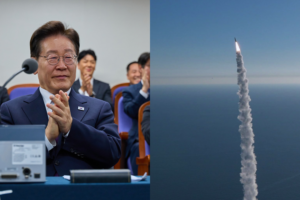

In part two of Subin Kim’s interview with Dr. Andrei Lankov, Kim asks the Russian North Korea expert about potential reform in Pyongyang and how both South Koreans and Russians view the isolated country.
Filing the original interview in Korean with South Korean specialist outlet Defense 21, Kim was kind enough to share the full transcript with NK NEWS so that English speaking readers could benefit from Dr. Lankov’s timely insights.
If you missed Part One of the interview yesterday, click here to read Lankov’s thoughts on Pyongyang’s Nuclear Threat Diplomacy.
Interview conducted by Subin Kim, March 2013.
Translation by Yeseul Loaiza
REFORM IN NORTH KOREA?
Q: What do you think about the possibility of reform and openness in North Korea?
I’m afraid that I think there is little possibility that North Korea will go through with reform and an opening policy because it goes against the long-term interests of the ruling elite there. For the North Korean elite, it’s preferable to stand still as long as the North Korean citizens don’t exert too much pressure on them. If ordinary North Koreans become agitated and the political elite feels the tension, then the ruling elite may feel the need to reform. If North Korean leaders succeed in reforming the country, this will be great. However, even if an attempted reform fails and a revolution breaks out, it still better than maintaining the status quo.
Q: So far, North Korea’s regime has been sustained by Kim Il Sung, Kim Jong Il, and Kim Jong Un without many big problems. It seems though that Kim Jong Un, who became a new leader at such a young age, has a different leadership style when compared to the two former leaders. What do you think about this?
First of all, Kim Jong Un has been trying to model himself on Kim Il Sung, to look like as much as possible as his grandfather. Western influences from his time studying in Switzerland could be another reason for the obvious changes in his leadership style. However, the most important part difference arises from slowly diminishing popular support from the regime. This is the biggest problem he faces.
This is similar to what we saw in Eastern Europe or the Soviet Union. The Russian farmers hated communism from the very beginning. However, the urban working class and intellectuals largely supported communism, in spite of Stalin’s many purges in the 1930s-1940s. They thought the problems were just temporary and that they would eventually build the perfect society they had been dreaming of. However, by the 1960s it had become clear: after many years of hardship and sacrifice, the promised “perfect society” did not materialize. Disappointment was spreading while knowledge about life outside the Soviet borders was increasing.
By the early 1970s, the communist idea died in the Soviet Union. Even those people who were generally positive about socialist ideas hardly believed the official communism which the party continued to teach them.
North Korea is similar too. Kim Il Sung and Kim Jong Il told the North Korean people to endure the problems and said that things would soon get better. But North Koreans have been hearing such promises since 1950s, and over the years the number of people who believe this official line has been decreasing. If Kim Jong Un changes his style by now, he will be able to win popularity – though the problem is, for how long? If economic conditions do not get any better, then any new hopes and expectations generated by this change of style will not last more than three to five years.
Changing leadership style is thus ‘symbolically’ a good way to win short-term popularity. However, to maintain his regime in the long term, Kim Jong Un should considerably improve economic situation in North Korea. But the problem is that even if he somehow fixes the economic situation, there will be scant opportunity to maintain regime stability. With a reform and opening policy there will be some chance for the regime to survive, but the probability of collapse is still much higher. On the other hand, if the regime keeps the status quo and changes nothing, even it lasts longer, it faces a nearly 100% collapse probability in the medium to long term.
Q: Is it not a dilemma that reform and openness, the only plausible way to maintain the regime in the long-term, will actually simultaneously put the regime at great risk?
Let’s put it this way. Let’s suppose I have brain cancer. The doctor says if I have surgery immediately I only have a 30% chance of surviving the surgery, but once I survive, I can cure cancer completely and live for decades happily. Otherwise, without having surgery I can get general therapy that slows down the cancer growth. With such therapy, I can survive the next three or four years, but after that I will certainly die. What’s better: a therapy or surgery? It is a hard choice to make and this is akin to the dilemma that North Korea’s top leaders encounter now.
The late Kim Jong Il and most of his advisers were in their 60’s or 70’s, so they could hope the regime would still stay in power until they die. Actually, this is what happened. But things are different now for Kim Jong Un and his younger executives, who are now beginning to replace the elders. In their shoes, attempting reform and opening is something which makes sense, even though it is very risky. I personally think the reform and openness policy will not succeed. However, even with little hope, from their point of view it makes more sense to take a risk than to just sit and wait for death.
SOUTH KOREAN PERSPECTIVES OF NORTH KOREA
Q: Let’s talk about how South Korea views North Korea – it seems that both progressive and conservative perspectives seem to have some big flaws. Please tell us about the two South Korean views about North Korea.
Politicization has caused ideological debates in South Korea. The study of North Korean history as well as debates about better policy towards North Korea have become subordinated to the internal ideological/politic debates in South Korea. Therefore, both the conservatives and the progressives see the North Korea issue not objectively, but through the prism of their own domestic politics.
In South Korea people are now fiercely arguing about the legitimacy of South Korean’s government, founded in the 1940s.
The leftist scholars insist that the Sungman Rhee government was created by the U.S. While this is exaggerated, it is not an unfounded claim. At the same time, they want to believe that the Kim Il Sung regime was brought about by a spontaneous, popular revolution. The right-leaning historians looking at North Korea in the 1940s and say this was not a revolution but rather the result of an occupation by the Soviet Union.
In fact, it is true that North Korea’s government at that time was actually created and micro-managed by the Soviet Union. The Soviet army and its generals decided North Korea’s politics and economics. North Korea had to copy the Soviet Union’s model. At the same time, most North Koreans welcomed the change and welcomed the policies of the Kim Il Sung administration.
The Soviet Union’s interference in North Korea was much more significant than contemporary American interference in South Korea. At first, the Kim Il Sung regime was nothing but a satellite administration of the Soviet Union. Nevertheless, the Kim Il Sung regime was simultaneously welcomed by many North Koreans. After all, he promised to give land to farmers, punish pro-Japanese collaborators, and to build a society where everyone could live happily and productively. The North Koreans couldn’t help but welcome this attractive program. Now we understand that this was just an illusion. The Stalinist political and economic model did not have a future. However, the North Koreans during the 1940s couldn’t have known this. Nor could have Kim Il Sung.
At the end of the 1940s, North Korea experienced not merely an occupation by a foreign military, but also a popular revolution. There is no contradiction in that. In those days, North Koreans didn’t know how strict Soviet control was over North Korea. For example, it was officially known that land reform in 1946 was planned by Kim Il Sung, while it was actually all planned by the Soviet Union from the very beginning. The relevant archival materials were published some 15 years ago. The only thing Kim Il Sung actually did was to rubber stamp the documents, drafted by his Soviet advisers.
However, had even the North Koreans known this, would the farmers have reacted differently? It is true that Kim Il Sung received instructions from the Soviet Union on issues such as the land reform, but most North Koreans still welcomed those policies. Today, after 70 years, we might say it was mistake. However, our descendants may evaluate much of what we are doing presently as a gross mistake, too.
Q: What do you think of recent South Korean leaders like Kim Dae-Jung, Ro Moo-Hyun and Lee Myung-Bak when it comes to North Korea?
I support the Sunshine policy but at the same time, I also don’t think this policy will be able to change the way of thinking among North Korea’s elite, and in this regard, I differ from a majority of the South Korean leftists. Nonetheless, a Sunshine policy will improve the North Koreans’ life, their ways of thinking and values, and also teach them about useful technologies. They are already learning about modern technology at the Kaesong Industrial Complex, to some extent, even though there were problems like the ‘cash for summit’ scandal during the process of the Sunshine policy. But providing a place in which North Koreans and South Koreans can work together is a much better way than giving money without any certain conditions.
The most important result that a Sunshine Policy can bring is that of increased interpersonal interaction. In 2007 president Ro Moo-Hyun visited North Korea and promised the construction of an additional industrial complex. At the time, I thought it was a mistake, I thought that the so-called ‘progressives’ who had no hope to win the next elections were just trying to force that on the next administration as a promise. However, I don’t think that way anymore. I was wrong back in 2007 and late president Ro Moo Hyun was right.
I hope there will be second and third Kaesong Industrial Complex which together, will bring about more human interaction and spreads ‘dangerous’ things like Choco pies. It will be very helpful for the North Koreans to experience modern production facilities, to learn how to manage and how to apply modern technology. Tourism ventures for South Koreans like the Kaesong city trips would be good too. The Kumgang mountain tourism was also good overall; even there was very little human interaction. The more human interaction, the better.
RUSSIAN PERSPECTIVES ON NORTH KOREA
Q: Most South Korean media view North Korea in a way that reflects the U.S. view. It’s hard to tell how Russia actually sees North Korea.
Russia considers North Korea’s stability as desirable since most people think of North Korea as a buffer zone. If Korea is unified, there is a high chance that American influence in East Asia will increase. In addition, if the North Korean regime collapses, there is possibility that South Korea, the U.S., and China will all be involved. This is a well known fact inside of Russia. For Russia, neither American or Chinese intervention would be good.
However, for Russia, North Korea is not that important. According to 2011 statics, North Korea’s trade volume to China was $5.6 billion dollar, which is not much. The trade volume between China and South Korea is 40 times bigger than this. In contrast, the trade volume between Russia and North Korea is just $0.1 billion dollar. Moreover, the trade volume between China has been growing every year but the volume between Russia and North Korea has been downsizing every year. Just $0.1 billion dollar of trade actually means there is no trade between the two countries.
The food aid volume is the same. Free aid that North Korea has been receiving for the past fifteen years was about 11,800,000 tons. The country which gave the most was of course South Korea, next is China by 3,000,000 tons, the U.S. 2,400,000 tons, and Japan 900,000. Russia donated just 50,000 tons. So if we look at the trade volume or food aid volume, it’s not hard to see how little Russia cares about North Korea.
There are powers who have sympathy with North Korea because of antagonism toward the U.S. and the powers who are mostinterested in maintaining the buffer zone. However, Russia regards nuclear weapon proliferation as a serious problem, too. In that sense, North Korea is a violator who is disrespecting Russia’s long-term state interests. Thus both ideologically and culturally, Russia does not actively support the North Korean regime. However, Moscow still prefers the status quo.
Q: Russia and the U.S. quite often encounter each other in international affairs. Notably during the 2011 Libyan civil war Prime Minister Putin kept criticizing the U.S. backed military intervention, even though he did not exercise Moscow’s veto. If a similar sudden change happens in North Korea, is there a chance that Russia might make their position clearer than before?
It is just my hypothesis, but if that happens Russia will not oppose military intervention like the NATO operation during the Libyan civil war in 2011. South Korea regards military intervention as the best option when North Korea is in a state of anarchy, which I agree. But in a sudden turn of events, that might be impossible to do.
The most desirable situation would be like Germany’s unification, but for South Korea at present, they might not have a strong will to approach unification by absorption. This is especially true with regard to young generations who would like to avoid this because of the high cost. Also, powerful nations like China might resist a South Korean takeover this way. In this situation, it is best for South Korea to internationalize the North Korea issue. To block China’s intervention, it is best for South Korea to arrange for an international peacekeeping operation, approved by the UN Security Council. It would be good if Russia joins the peace-keeping operation, too.
Q: Foreign Policy recently reported that right after North Korea’s third nuclear test, Secretary of State John Kerry called Foreign Secretary Lavrov to ask for cooperation on North Korea, but Lavrov didn’t respond. Russia recently conducted a major drill of its strategic nuclear forces. How is the relationship between Russia and the U.S. today?
The relationship is not great, but also has not been as bad as you might think. There is a little tension between two countries. The elite in Russian politics, diplomacy, the military, and the intelligence services are people that grew up during their youth aware of a fierce confrontation with the U.S. They don’t have that much trust in the U.S, though at the same time they have regrets about the recent decline of Russia’s international influence. It is inevitable then that Russia is critical of the U.S.
Washington’s hegemonic tendencies are one of the reasons Russian elites are not happy. There are already lot of precedents in which the U.S. Government imposed their thoughts, culture, and political system on other countries by force. Many Russians think a major purpose of U.S. policy is in undermining Russia. For me, this opinion appears exaggerated, but not baseless.
However, things have changed since the Cold War era. Elites in Russia are very close to western countries, exchanges of all kinds are flourishing, and the economy of Russia is much more incorporated in the global, U.S.-dominated economy. Where do you think Russia’s rich and senior civil servants send their children to study abroad? And where do you think their vacation homes are?
Western countries including South Korea consider Russia to be a ‘soft dictatorship’. But this is not quite true. Even though there is some authoritarian trend, Russians still have enough freedom and can go to foreign countries if they put their mind to it. There is little censorship of published media and complete freedom of the Internet. A country like this cannot have severe contradictions with the U.S. Russia has its own nationalists, but Russian nationalism is not stronger than that of China.
Interviewer’s Note:
The North Korea issue is so charged from a partisan perspective in South Korea that normally there are just two extreme views on how to recognize and approach it. The conservative perspective demonizes North Korea while the liberals, usually dubbed progressives, still tend to have quite rosy views on relations with the DPRK.
The two extremes encourage and strengthen each other. One has to choose a side and there is not usually much room for a gray zone in South Korea, as is visible through all the Jongpuk witch hunts. While those who are generally considered to be on either side might actually have some gray opinions, few are willing to disclose them publicly in South Korea. Why? Expelled were those who were brave, or should I say naïve, to have previously spoken so openly about their true thoughts.
In such circumstances, Andrei Lankov holds an odd position. He describes himself as “a right-wing scholar and a Sunshine policy supporter,” which would otherwise be an oxymoron for South Korean society. He acknowledges the necessity of aid and economic cooperation with North Korea, but at the same time holds a cool-headed view on the future of the North Korean regime, to which most of the champions of Sunshine policy rarely tend to face up to squarely.
Some of my long-held questions were dissolved during this interview with Lankov and now, new have been born inside my mind: Can there not be any alternative future scenario than a collapse of the North Korean regime? Would the predicted collapse lead North Korea into another Syria or Afghanistan? One thing was for sure: the answers Professor Lankov gave me were so sobering that I was able to move on to the next questions.
Subin Kim, Defense 21+ (formerly D&D Focus)
Join the influential community of members who rely on NK News original news and in-depth reporting.
Subscribe to read the remaining 3096 words of this article.
EXISTING MEMBER?


');
newWindow.document.write('
');
newWindow.document.write('