
|
Analysis What to make of Seoul’s claims about an undeclared North Korean nuclear siteNK News confirms unification minister based comment on decade-old info, though Kusong facility is linked to nuke program
 The South Korean unification minister’s comments about North Korean nuclear enrichment in the northwest city of Kusong have faced growing scrutiny in recent days, after he appeared to offer the first official confirmation of ongoing enrichment at a third location. But NK News analysis suggests that there is not yet enough public evidence to definitively link the suspected facility to nuclear enrichment activity, with Seoul confirming that Chung Dong-young based his remarks on a decade-old report. Speaking at a parliamentary session on March 6, Chung claimed Kusong has been revealed as the DPRK’s third enrichment location, citing remarks days earlier by International Atomic Energy Agency (IAEA) chief Raphael Grossi. However, Grossi only mentioned known facilities at Yongbyon and Kangson. A unification ministry spokesperson clarified to NK News on Thursday that Chung misspoke when he cited Grossi. The minister was referring instead to publicly available information about an unconfirmed site in Kusong reported by the U.S.-based Institute for Science and International Security (ISIS) in 2016. The report’s authors concluded at the time that they “have no information suggesting that this site continues to function as a centrifuge plant.” Chung’s remarks have nonetheless led to renewed attention in South Korean media on the munitions factory ISIS pointed to in the Panghyon area of Kusong and its potential role in the DPRK nuclear weapons program. Analysis suggests that while no specific connections to uranium enrichment have recently emerged, the factory has exhibited links to nuclear missiles and drones in the last decade. THE FACTORY North Korea called the factory the Machine Plant Managed by Jon Tong Ryol in coverage of Kim Jong Un visits in 2014 and 2015, claiming it produced small propeller aircraft. NK News has reported extensively on major renovations at the factory in the last two years, including construction of several large above-ground production halls. 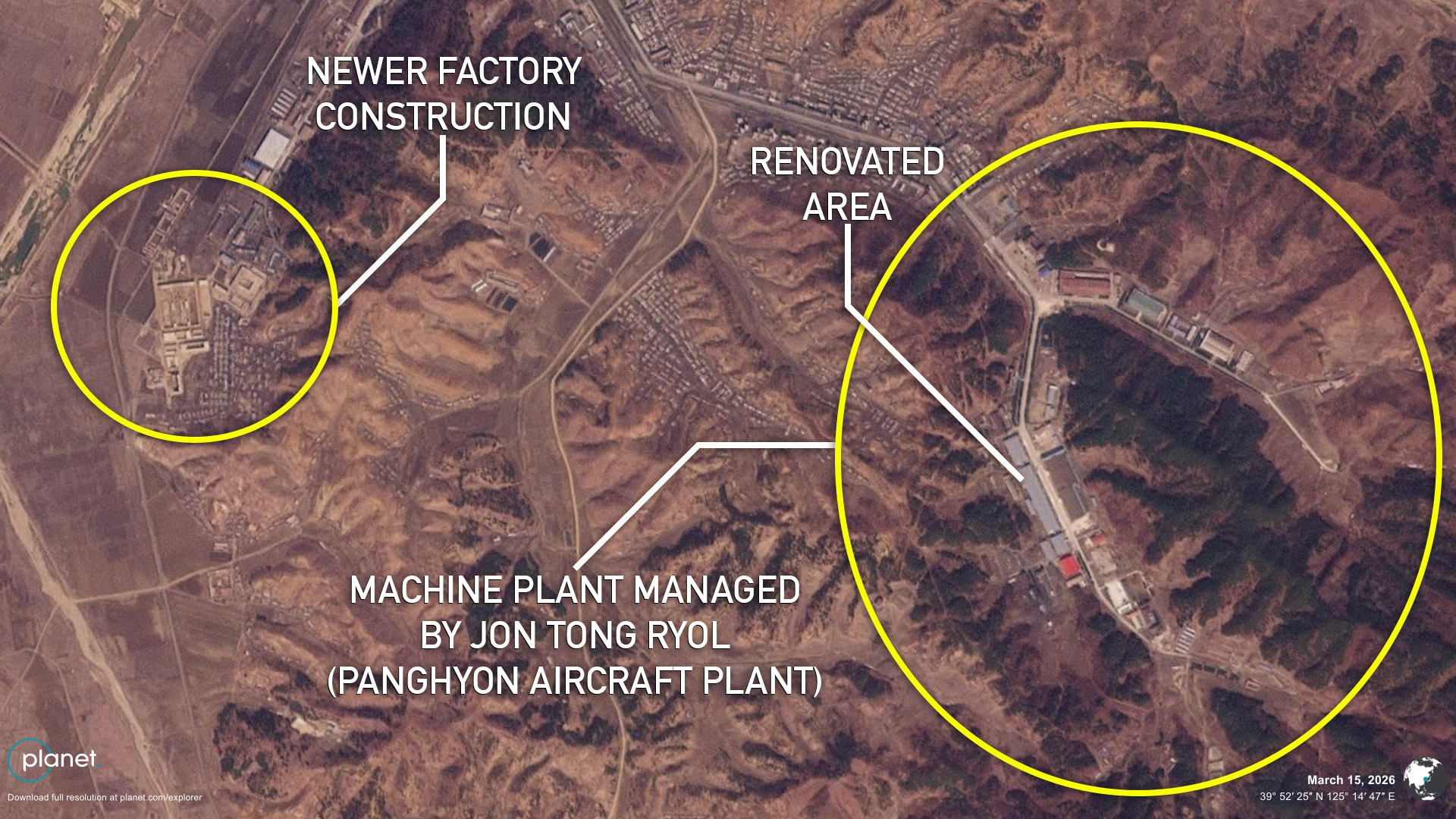
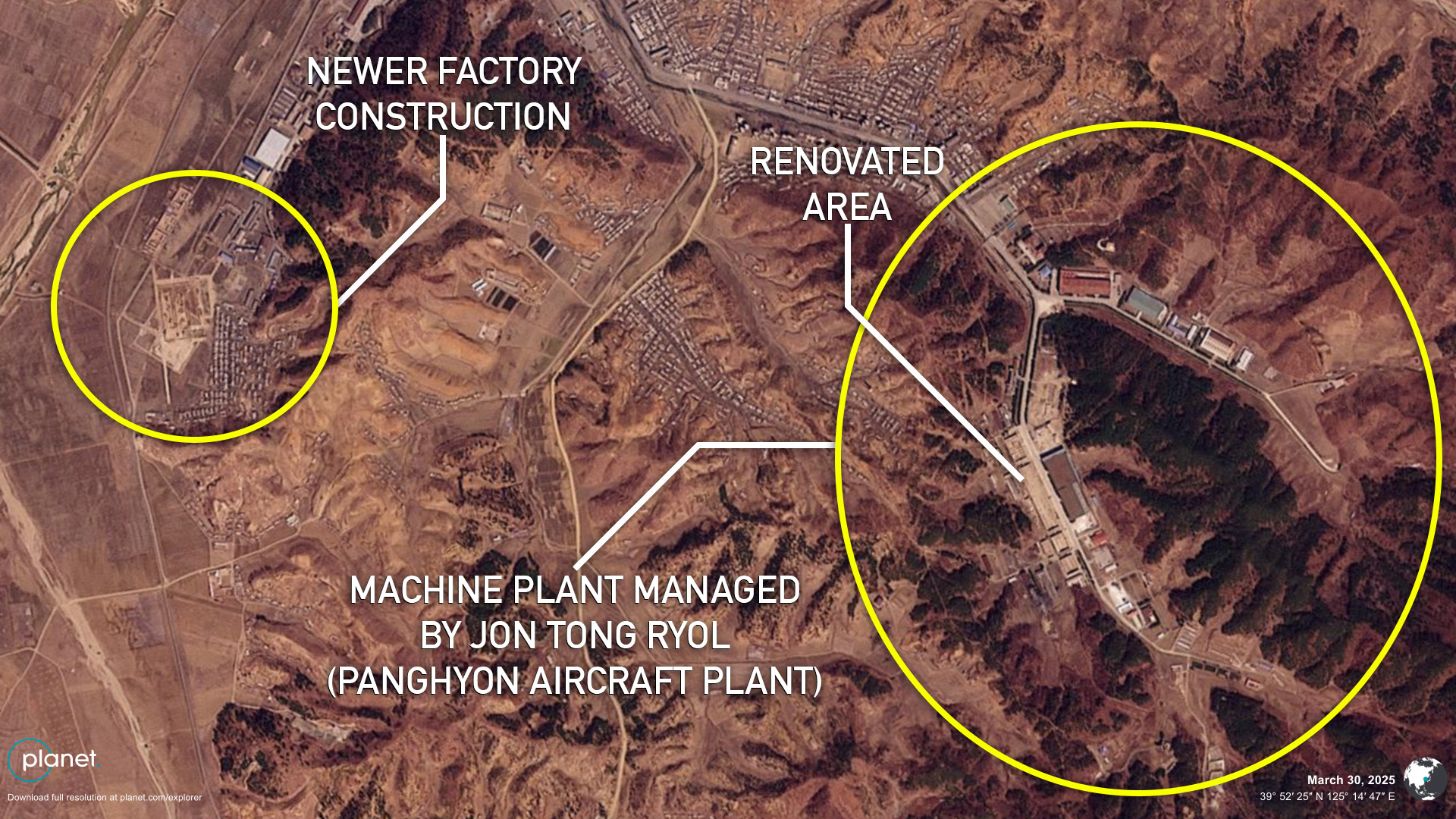
This has occurred at the same time that DPRK leader Kim Jong Un has overseen several rounds of unmanned aerial vehicle (UAV) testing at Panghyon Airbase just up the road, while vowing to begin mass-producing small suicide drones. Evidence that the construction is related to drone production includes U.S. intelligence identifying the factory as an aircraft fuselage plant, similar claims in DPRK state media reports on Kim visits and its close proximity to the airbase, which has been turned into the main base for larger reconnaissance and combat drones as well. But construction of a brand new factory also kicked off nearby soon after, serving as another candidate location for Kim’s drone production goals. The project remains unfinished, with large factory buildings partially built but without roofing. THE NUCLEAR CONNECTION The Jon Tong Ryol factory has also exhibited mysterious connections to the country’s nuclear weapons program over the last decade. NK News has determined that the officials who accompanied Kim Jong Un during the factory inspections, as well as those who joined celebratory group photos in April 2015 reportedly commemorating the factory’s light aircraft production, were top munitions and nuclear weapons officials. 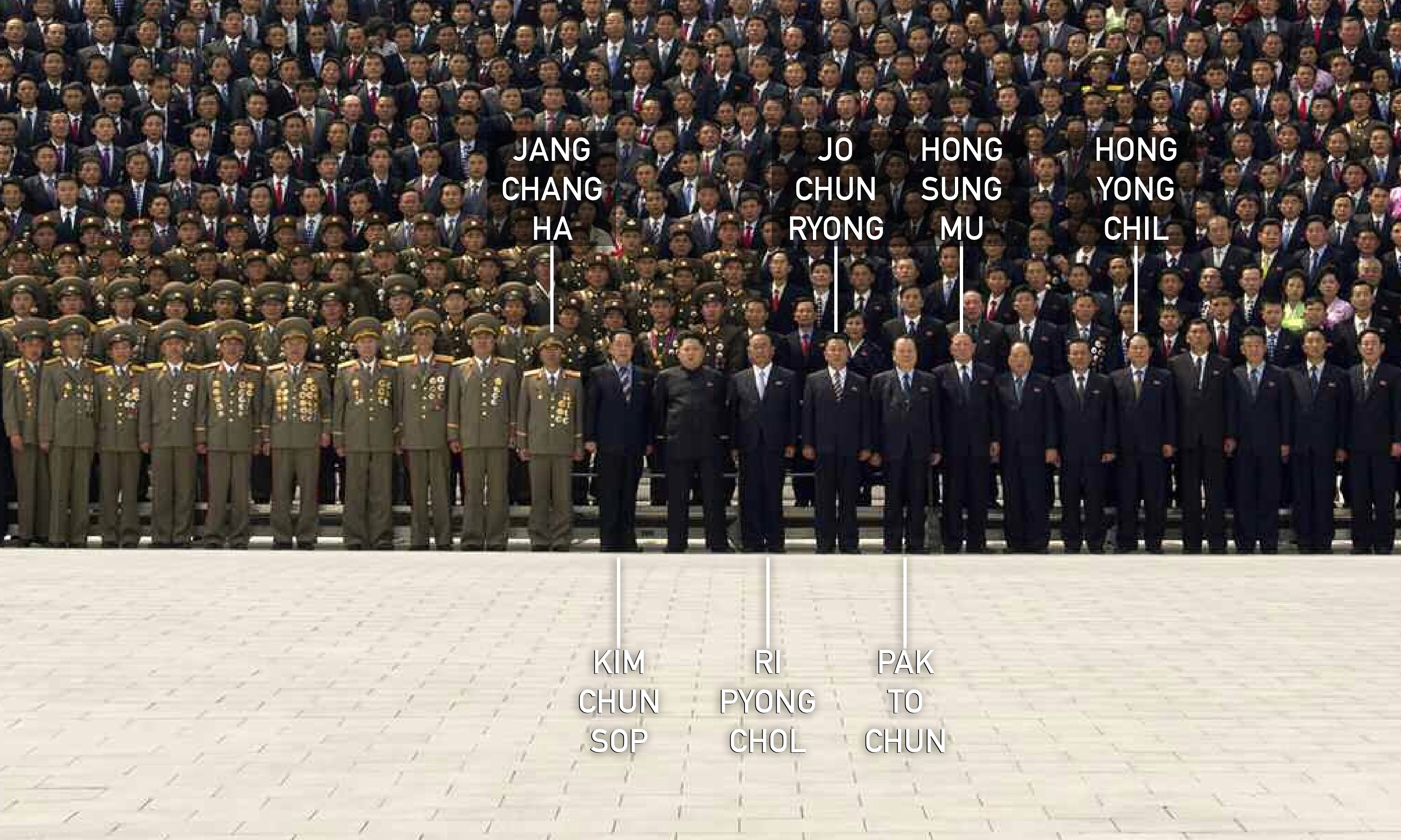 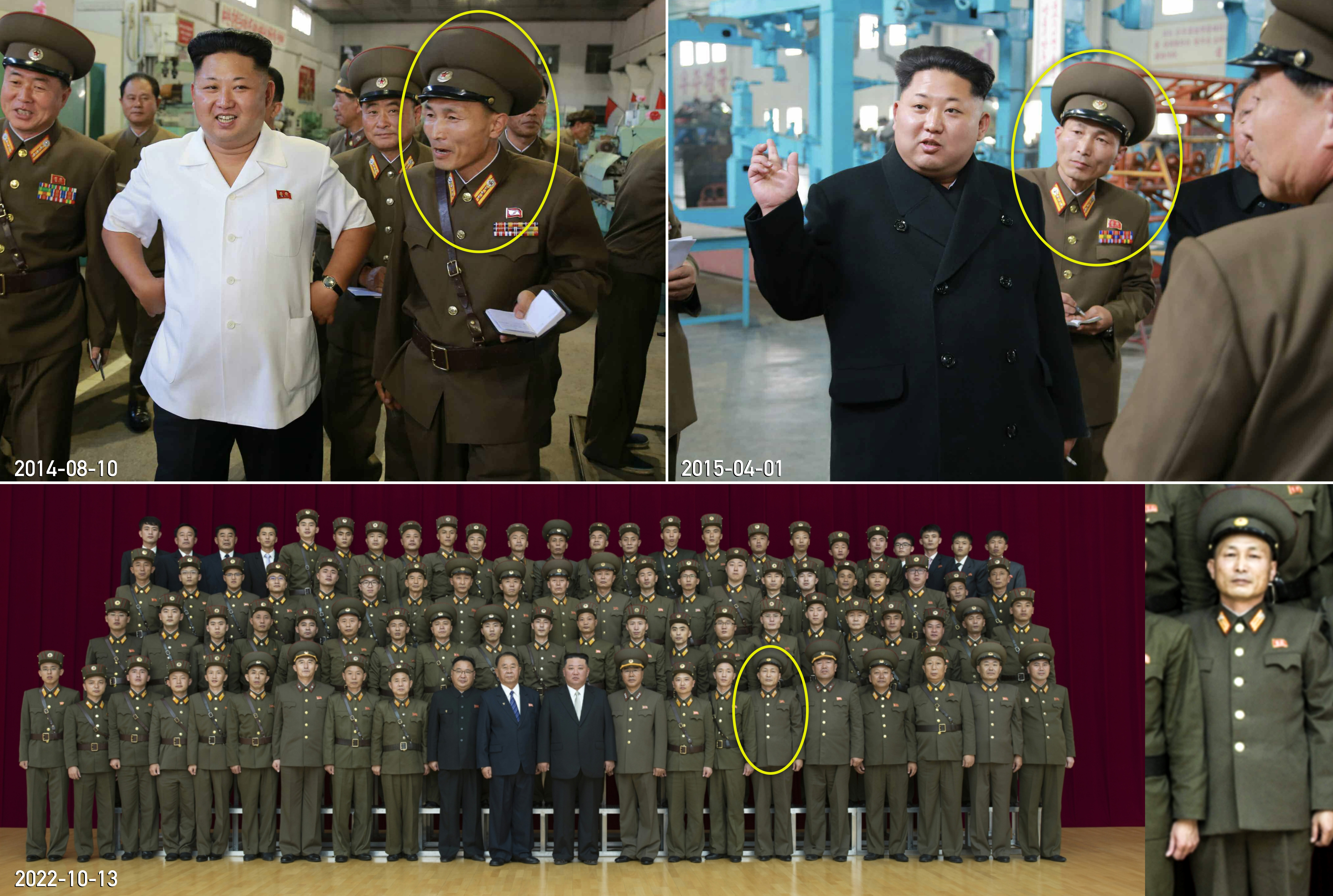 They included Ri Pyong Chol, Jo Chun Ryong, Pak To Chun, Hong Sung Mu, Hong Yong Chil, Kim Chun Sop, Jang Chang Ha and others identified at weapons expos in recent years. State media said the factory produced “various cutting-edge machine products” and “light aircraft” in the 2015 Kim visit report, and connected the group photo to weapons production by referencing the “spirit of Kunja-ri,” a euphemism for producing weapons under urgent threat from enemies. A couple years later, on July 4, 2017, North Korea conducted its first-ever test launch of an intercontinental ballistic missile (ICBM) — the Hwasong-14 — from the factory. A man in military uniform who took Kim around the factory in 2014 also later appeared prominently in a group photo celebrating the reported production of nuclear-capable long-range cruise missiles in Oct. 2022. Another, who may be named Hong Pyong Chol according to a name tag displayed at last month’s Party Congress, has become a central government weapons development official involved in drones. It seems that North Korea was lying about the factory’s light aircraft production at the time, since in hindsight it did not appear to serve this purpose. It may instead be involved in missile manufacturing, as researchers at Arms Control Wonk posited in 2019, while its apparent history with airframes production opens the possibility of involvement with both cruise missile and drones. In short, the factory’s exact purpose remains a mystery, but what is certain is that Kim Jong Un sees it as one of the most important in his weapons industry at present. Edited by Bryan Betts © Korea Risk Group. All rights reserved. |


 SHARE
SHARE COPY LINK
 X
X MASTODON


Recent Stories