
|
Analysis Why North Korean denuclearization will likely take backseat in second Trump termFormer US officials say DPRK is no longer Trump’s ‘most urgent problem,’ though rapport with Kim Jong Un may spur talks
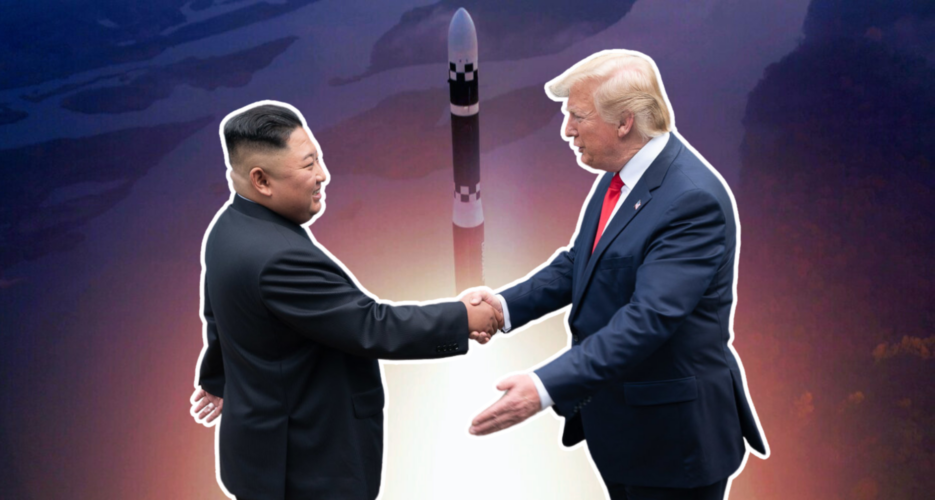 Donald Trump’s election victory has sparked speculation about whether he will renew diplomacy with North Korea, but former U.S. officials say a fundamentally different global situation means we’re unlikely to see a repeat of the 2018-2019 summitry. During Trump’s first term, Washington’s engagement with Pyongyang was marked by extreme highs and lows, as the two sides moved from trading insults like “dotard” and “rocket man” to a series of high-profile summits, before fizzling into non-engagement. But while Trump has repeatedly emphasized his close friendship with Kim Jong Un, North Korea’s increasing nuclear testing will no longer be his “most urgent problem” when he returns to the White House, meaning Pyongyang is likely to play second fiddle to major conflicts in Ukraine and the Middle East. To get a sense of the incoming president’s probable approach to North Korea in his second term, NK News reached out to over a dozen former U.S. officials with knowledge of Washington’s inner workings. In the first part of a two-part series, seven ex-officials weigh in on Trump’s approach to North Korea’s denuclearization and personal engagement with Kim Jong Un.  FACING NEW CHALLENGES The nature of U.S.-DPRK relations has fundamentally changed since the start of Donald Trump’s first term, the former U.S. officials told NK News, calling into question whether the leader will prioritize diplomacy with Pyongyang. “At that time, North Korea was rattling its sabers by testing its nuclear weapons and launching missiles at a rapid pace,” said Edwin Sagurton Jr., a former political minister-counselor at the U.S. Embassy in Seoul. He stated that the Trump administration took his predecessor Barack Obama’s warning that Pyongyang was Washington’s “most urgent problem” very seriously when he took charge and immediately conducted an in-depth DPRK policy review. The new direction did not fundamentally differ much from the Obama administration, but Trump’s personal approach to implementation, including threatening to “totally destroy” North Korea and calling Kim Jong Un a “little rocket man,” spiked tensions on the Korean Peninsula and raised fears of conflict. Robert Abrams, a former commander of the U.S. Forces Korea (USFK), highlighted Trump’s clear policies and statements in his first term regarding strategic deterrence against North Korean weapons, when he warned that DPRK threats toward the U.S. would be met with “fire, fury and frankly power the likes of which this world has never seen before.”  However, Kim and Trump completely reversed direction in 2018 as North Korea embarked on a series of summits with long-time friends and enemies alike, and in June, the two leaders made history with the first-ever U.S.-DPRK summit in Singapore. The follow-up summit in Hanoi in Feb. 2019 stalled as the two sides reportedly failed to see eye-to-eye on crucial matters including denuclearization, and a hastily arranged meeting at the inter-Korean border four months later did little more than showcase their personal relationship. “Unfortunately, and as is often the case with North Korea, the meetings did not result in even an inch of progress in resolving the North Korean situation,” Sagurton stated. Abrams told NK News that nothing materialized from Trump’s attempted outreach in the months after he “rightfully walked away from a bad deal” in Vietnam, and Pyongyang’s “bellicose rhetoric” and ballistic missile tests only increased until it eventually sealed borders at the start of the pandemic in 2020. Former National Intelligence Officer for North Korea Sydney Seiler said it is unlikely either Trump or Kim will return to the direct engagement given all that has transpired since the Hanoi summit. “Kim Jong Un thought he had a way, enabled by the Moon [Jae-in] administration, to outsmart Trump, get sanctions relief for some marginally important actions limited to Yongbyon, and thus lock in permanently his nuclear power status,” he told NK News. “Trump also was fully aware of the dynamics in play at Hanoi, the North’s unwillingness to put anything on the table that could be called authentic or credible, and the fact that Pyongyang’s position on denuclearization has only hardened over time,” he added. Since the failed Hanoi summit, North Korea has eschewed engagement with South Korea and the U.S. and declared its nuclear status “irreversible,” and Seiler said Kim would prefer to be part of an “alternative world order” with “like-minded revisionist” countries like Russia, in which he does not need to worry about denuclearization and sanctions. Former Principal Deputy Assistant Secretary of State for East Asian and Pacific Affairs Evans Revere told NK News that Donald Trump’s outreach convinced many that the nuclear and missile issues were being resolved but said the reality proved different. “Trump masterfully created the ‘appearance’ of progress where there was none. In fact, things got worse,” he said. He stated that the former U.S. president accepted Pyongyang’s preferred language and priorities during the Singapore summit and unilaterally suspended joint U.S.-ROK military drills, but North Korea pushed ahead with missile tests and nuclear development despite Trump’s claims to the contrary. “The Trump-Kim diplomacy ultimately ended in failure at the Hanoi Summit when Trump realized that the North Korean leader had no intention of giving up his core nuclear weapons production capabilities,” he said. Frank Aum, a former senior adviser at the Department of Defense, said the changed security landscape since 2018 and Pyongang’s opposition to negotiations make U.S.-DPRK engagement on denuclearization more difficult. Following reports last year that Trump may seek alternative approaches to encourage North Korea to freeze nuclear and missile testing, the former official said the incoming president will have to weigh various options. These include considerations about which side should make the first move toward engagement, whether “saber-rattling” is necessary to create leverage, the possibility of “unilateral conciliatory gestures” and whether to stick to the goal of “complete denuclearization.”  PROSPECTS FOR ENGAGEMENT The DPRK has consistently rejected denuclearization negotiations with the U.S. over the past five years, and former officials were divided on whether Trump’s self-proclaimed personal friendship with Kim could open the door for renewed diplomacy. “With the caveat that Donald Trump is unpredictable, I expect he would again try to meet with Kim Jong Un and to strike a deal he could claim as a personal achievement,” former U.S. Deputy Assistant Secretary for Non-Proliferation Mark Fitzpatrick told NK News. He said Trump views the Singapore summit as a “huge success” despite the lack of subsequent progress, but that it remains to be seen what he can achieve with a repeat. “Kim certainly won’t give up nuclear weapons, but he might again offer to close down the Yongbyon nuclear center in exchange for lifting U.N. sanctions,” he said. Fitzpatrick added that Trump will be “unfettered, for better or worse,” in his second term thanks to the absence of hawks like John Bolton, who reportedly opposed partial measures at Hanoi. “While North Korea won’t be the top item on his agenda by any means, it would rank higher under him than it has under President Biden,” he said. “The era of strategic patience is probably closing.” Seiler suggested Trump could pursue a surprise summit with Kim, even if it is only “exploratory.” He added that the media will likely blow such moves out of proportion and South Korea will fear the prospect of Washington bypassing it to engage Pyongyang directly, but that ultimately it comes down to Trump. “Would Trump appear to be cheapening diplomacy and the position of the president? Yes, because his view of both is different,” he said. He explained that Trump would take a different track from Joe Biden and Barack Obama’s “strategic patience” approach, and if he downscales military exercises and displays of extended deterrence, North Korea’s leadership may have fewer pretexts for “chest-thumping shows of force.” “If [foreign minister] Choe Son Hui convinces Kim Jong Un to allow some ‘creative’ diplomacy such as attending the U.N. General Assembly, exploring Track 1.5 opportunities, etc., perhaps we will have spurts of dialogue: meaningless, but near-cost-free,” he said. Revere also said Trump’s “penchant for diplomatic showmanship” could tempt him into reviving diplomacy, but added that the former president will soon find that the situation has completely changed. “Kim is likely to see an opportunity to exploit Trump’s naivete and ego and trap him into a deal that effectively accepts the DPRK as a de facto nuclear power by launching ‘arms control’ talks, and also puts U.S. nuclear and conventional assets and the U.S.-ROK alliance on the negotiating table.” The former State Department official said some in the new administration will look to “control” or “limit” North Korea’s nuclear arsenal, but emphasized Pyongyang will not follow through on any promises it makes in return for concessions. “Of course the DPRK has no intention of freezing or otherwise limiting its nuke program,” he said. “Have we learned nothing from 32 years of negotiations?” Aum also said Trump will likely attempt to restart personal diplomacy. “Trump has experience addressing the North Korea challenge, a greater willingness to shun convention and engage Kim Jong Un than most world leaders, and a desire to achieve foreign policy legacies,” he stated.  MORE PRESSING MATTERS Despite Trump’s personal rapport with Kim, several officials said the president could be too distracted by other concerns to focus on diplomacy with North Korea in a second term. Aum suggested Trump will likely have to limit his engagement with the DPRK due to challenges such as China, Russia and the Middle East. Van Jackson, an Obama-era Pentagon official and a professor of international relations at Victoria University of Wellington, said North Korea likely ranks low on the incoming U.S. president’s priority list, but that this does not preclude “reality TV show”-style engagement. “I’m confident Trump doesn’t care about Kim Jong Un, but if Kim is willing to make overtures again — possibly with Russia’s support — it’s possible Trump will entertain kayfabe-type summit diplomacy again,” he said. Jackson said Trump could offer concessions such as withdrawing U.S. forces from South Korea as part of a “peace bargain,” but if tensions flare, there is also a risk of Kim embarrassing Trump with nuclear tests, military incursions or aggressive rhetoric. “There are scenarios where we end up in a nuclear crisis not so much because of Trump but because of the national security state being so readily prepositioned to coerce and meet force with force,” he said, adding that Trump’s probable administration of “ethno-nationalist and imperialist” hawks could impede cooperation with allies. Former USFK commander Abrams said it’s unlikely anyone can predict Trump’s approach, but suggested ongoing conflicts in Ukraine and the Middle East will dominate Trump’s security agenda at first. “I expect Trump to pick up where he left off with North Korea when he left office in Jan. 2021 — which is to say I don’t think it will be a top priority to restart personal diplomacy with Kim Jong Un,” he said. Sagurton agreed that the “unpredictable” leader is unlikely to focus on the DPRK as much as he did the first time around, given other global conflicts and the current South Korean government’s reluctance to engage Pyongyang. “The bottom line is that Trump gave his personal charm and negotiating skills the best shot during his first term and he will be hesitant to try it again,” he said. Based on Pyongyang’s own unwillingness to engage with Washington and Seoul in recent years and its “hostile acts” toward South Korea, Sagurton said it is hard to be optimistic about a change of direction. However, he added that there is still some scope for engagement and Pyongyang could use its support for Russia’s war against Ukraine as a bargaining chip to help Trump address interconnected challenges. “The North has a history of changing course when it is least expected … so it might look at the return of Trump as a tempting opportunity to give engagement another try,” he said. Edited by Bryan Betts © Korea Risk Group. All rights reserved. |


 SHARE
SHARE COPY LINK
 X
X MASTODON


Recent Stories