
|
COVID-19 740 people in North Korea tested for COVID-19, still no confirmed cases: WHONew WHO figures suggest just 31 have been tested since the beginning of the month
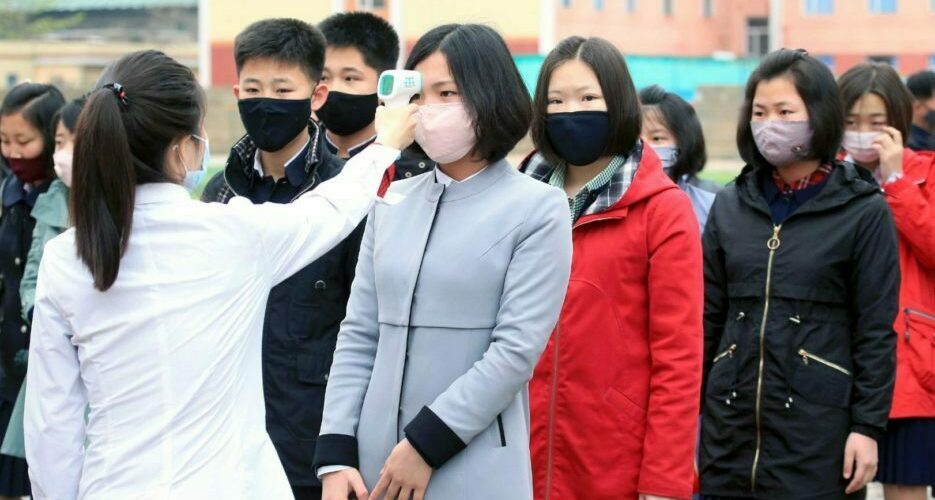 740 people in North Korea had been tested for COVID-19 as of last week, an in-country official from the World Health Organization (WHO) said Wednesday, suggesting only 31 have been tested for the virus since the organization’s last report at the beginning of the month. In an email to media outlets, WHO resident representative in the DPRK Dr. Edwin Salvador said that the North’s Ministry of Public Health has been sharing “weekly updates” with the organization concerning the situation on the ground. “As per the update received on 17 April, so far 740 people have been tested, all were negative for COVID-19,” the official said. “Currently 212 nationals are in quarantine. Since 31 December, 25,139 people have been released from quarantine.” The number brings the overall number of people to have been quarantined so far in the country to 25,351. Among those, 382 foreigners are also known to have been quarantined and released so far. While it remains unclear where the newly-released DPRK citizens are based, state media over the weekend reported that “people under medical observation were all freed in South Phyongan and North Hwanghae provinces and Rason City.” The report also shows that 295 North Korean nationals have been freed from quarantine since the WHO’s last update on April 2. 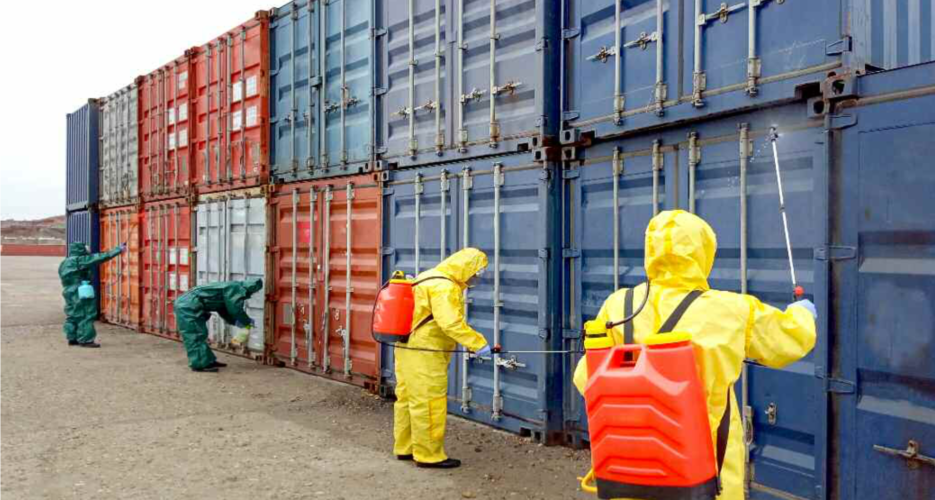 The WHO official on Wednesday also reported that the North’s Ministry of Public Health had “revised” its national preparedness and response plan for COVID-19 on April 2, without detailing what precisely those revisions entailed. However, he reported that “all borders remain closed” and that all supplies, including COVID-19 related aid items, were coming in on ships at Nampho port. A few ships are ferrying between Dalian port in China and Nampo port in the North, Salvador said, a route also used by a U.S.-based NGO earlier this month to send medical and rehabilitation equipment into the DPRK. “Disinfectants are then applied on the goods which are quarantined another 4 days before onward transport to Pyongyang,” Salvador said, adding that while his organization was supporting the delivery of COVID-19 supplies such as PPE (personal protective equipment) and laboratory reagents to the DPRK, that equipment was yet to arrive. “The supplies are currently in Dandong, China,” he added. “WHO continues to engage with the government to bring the items into DPR Korea.” 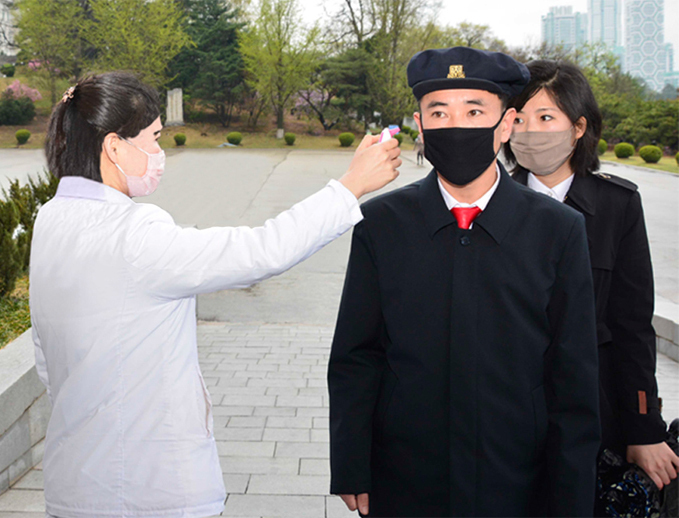 It remains unclear, however, how many testing kits and PCR machines are currently available in North Korea. Russia and China have reportedly sent kits, with the International Federation of Red Cross and Red Crescent Societies (IFRC) previously pledging to send 10,000. The WHO did not respond to NK News inquiries as to whether the over 600 North Korean officials who recently gathered in Pyongyang for the Supreme People’s Assembly (SPA) session had been tested for COVID-19. He did, however, say the organization “has been providing technical support, sharing guidelines and strategies” to the DPRK. “235 rapid response teams (RRTs) are in place, each comprising of five people – an epidemiologist, a doctor, a nurse, a paramedical staff and a representative from Ministry of Livestock,” he said. Three RRTs are based in Pyongyang, with two in each province, and one in each of the DPRK’s 208 counties, according to the in-country official.  Household doctors are also spreading awareness on COVID-19, he said, along with pandemic-related state media segments seeking to keep the public informed on the developing domestic and international situation. Analysis by NK News this week found that domestically-circulated have gone over a month without showing images of domestic pandemic prevention efforts. Internationally-focused outlets earlier this week, however, reported that some schools had resumed operations in a “step-by-step” manner. Edited by Oliver Hotham © Korea Risk Group. All rights reserved. |


 SHARE
SHARE COPY LINK
 X
X MASTODON


Recent Stories