
|
News North Korea destroying Inter-Korean Family Reunions Center at Mt Kumgang: ROKNK News analysis of satellite imagery shows demolition at South Korean-built facility as Seoul urges DPRK to halt action
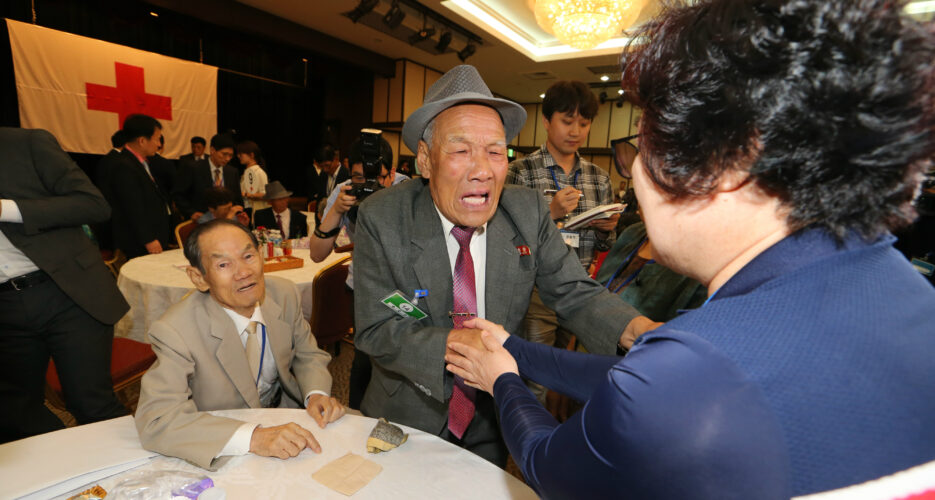 North Korea is dismantling the Inter-Korean Family Reunions Center at the Mount Kumgang tourist region, South Korea’s unification ministry announced on Tuesday. Spokesman Koo Byoung-sam said in a statement that the government confirmed North Korea’s unilateral demolition of the reunion facility, which was designed to host regular meetings between families separated by the Korean War. “We strongly urge North Korea to immediately halt the demolition,” Koo said. “This is an inhumane act that tramples on the wishes of separated families and a serious infringement of our state property.” North Korea will bear full responsibility for the consequences of its actions and South Korea is reviewing potential legal measures and international cooperation in response, the statement added. The 12-story reunion center (이산가족면회소), completed in 2008 at a cost of 50 billion won ($37 million), is owned by the South Korean government and operated by Hyundai Asan and could accommodate up to 1,000 family members from both Koreas. Construction began following the inter-Korean joint declaration on June 15, 2000, which aimed to regularize family reunions between the two Koreas. NK News analysis of Planet Labs satellite imagery shows partial demolition of the “North-side office,” a small three-story administrative building to the west of the 12-story hotel starting in mid-December. A twin building for the South Korean-side office is on the east side of the hotel. Dozens of trailers used as lodgings at the nearby South Korean-built Kuryong Village were moved into the hotel parking lot in mid-2022 as part of the overall removal of ROK-related facilities in the Kumgang area, but these disappeared in December, likely a preparatory step for the demolition. However, most of the small North-side office as well as the main hotel and South-side office were still standing as of the latest imagery taken on Tuesday morning, and it’s not yet clear whether the entire complex is slated for demolition. The unification ministry clarified to NK News on Thursday afternoon that “signs of North Korea dismantling the inter-Korean family reunion center have been detected since the end of last year, with demolition accelerating in recent days.” The ministry said tiles on the lower exterior wall of the main building are being removed, and that demolition has also begun on the walls of both North and South-side office buildings.  


 A prolonged freeze in inter-Korean relations has resulted in no state-level family reunions in recent years, with the last government-organized reunion held in 2018, under the Moon Jae-in administration. Since the 1953 armistice, the two Koreas remain technically at war, leaving millions of families separated across the heavily fortified border. The North’s demolition of the facility comes as the number of surviving separated family members in South Korea continues to decline. New data from the unification ministry released last month showed that 97,350 registered separated family members had died by the end of 2024, including 2,959 in the past year alone. The number of survivors has now dropped to 36,941, with roughly 85% of them being at least 70 years old. While Seoul has urged Pyongyang to prioritize humanitarian concerns over political tensions in family reunions, stressing its urgency as survivors age, the DPRK has yet to respond. Once jointly run by the two Koreas and serving as a symbol of inter-Korean cooperation, Seoul suspended travel to the Mount Kumgang tourist region in 2008 after a South Korean tourist was shot and killed. North Korea’s latest apparent demolition of South Korean government property at the Mount Kumgang site is not a new development. In May 2024, Seoul announced that North Korea had torn down a fire station built with South Korean financing and located just outside the family reunion facility, following North Korean leader Kim Jong Un’s orders to undertake a major renovation of the region in Oct. 2019. Kim said the tourist zone would be better managed without South Korean involvement, referring to ROK-built buildings as “isolation wards.” Similarly, in Aug. 2022, NK Pro analysis of Planet Labs satellite imagery found that North Korea appeared to be dismantling a Hyundai Asan owned resort facility in the area, following the removal of at least five of the company’s other properties in prior months that year. Updated at 1:44 p.m. KST with additional comments from the unification ministry. Edited by Alannah Hill © Korea Risk Group. All rights reserved. |


 SHARE
SHARE COPY LINK
 X
X MASTODON


Recent Stories