
|
Analysis How the Ukraine war could play into Trump’s plans to counter North KoreaFormer US officials say resolving conflict will be Trump’s first priority but could be a way to gain leverage over DPRK
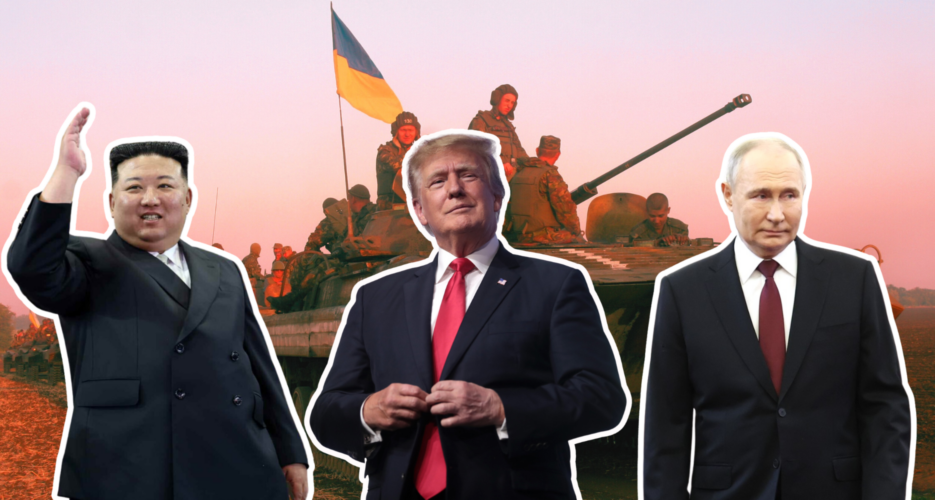 The impending return of Donald Trump and his “transactional” approach to alliances could drastically alter Washington’s approach to combating North Korean threats in his second term, former U.S. officials tell NK News. In particular, continuing reports of North Korean troop deployments to support Russia’s invasion of Ukraine highlight the interconnected global threats that Trump will face, with finding a resolution to the Ukraine war likely to be the incoming leader’s biggest priority. However, unlike his predecessor Joe Biden, Trump’s personal affinity for Russian President Vladimir Putin and Kim Jong Un suggests he could seek a solution that benefits Moscow, according to the former U.S. officials. This would eliminate its need for North Korean support and give him leverage over Pyongyang. At the same time, Trump will likely squeeze South Korea and Japan for additional payments for troops support, though this could empower South Korean advocates for nuclear armament, the officials say. To understand the incoming president’s probable approach to balancing old alliances and new global threats, NK News reached out to over a dozen former U.S. officials with knowledge of Washington’s inner workings. In the second part of a two-part series, seven ex-officials weigh in on Trump’s approach to countering DPRK-Russia cooperation and working with allies like South Korea and Japan to deter North Korea. COUNTERING DPRK-RUSSIA ALLIANCE Since Donald Trump’s first term in office, North Korea has gone down a few pegs on Washington’s priority list due to crises in other parts of the world, most notably Russia’s invasion of Ukraine. North Korea’s support for Moscow’s war efforts through alleged arms exports and troop deployments has now inextricably linked the two challenges, but Trump’s biggest concern will likely remain the conflict in Ukraine, according to Edwin Sagurton Jr., a former political minister-counselor at the U.S. Embassy in Seoul. “While North Korea’s support for Russia in its invasion of Ukraine as well as other North Korea-Russian cooperation are troublesome, addressing this will not be a top priority for Trump, whose focus will most likely be directed at Putin and Zelensky,” he told NK News. Evans Revere, former principal deputy assistant secretary of state for East Asian and Pacific affairs, said North Korea seeks Russian military technologies in exchange for sending munitions and troops. “For Kim, the risks he is taking with Russia are worth the reward of getting the tools, technologies and the support he will need to survive in the hostile environment he anticipates,” he stated, highlighting growing tensions on the Korean Peninsula and shifting alliances across the Indo-Pacific region. “Ironically, a second Trump presidency may offer Kim a chance to buy the time he needs to grow stronger, especially if he can convince the United States to come to the negotiating table and accept, as it has before, Pyongyang’s false and insincere promises,” Revere added. However, some officials believe Trump could see an opportunity in the combined challenge from Russia and North Korea. “Trump probably sees the issue from the demand side rather than the supply side,” former Acting Deputy Assistant Secretary for Non-Proliferation Mark Fitzpatrick told NK News. “If he can stop the Ukraine war, there would be no need for North Korean troops, artillery and missiles in that theater.” Despite Pyongyang abandoning efforts toward “normalization” with Washington in favor of closer Russia ties, the former U.S. official said Kim Jong Un would not be averse to dealing with Trump if he sees scope for “gifts,” such as a halt to U.S.-ROK joint exercises. Revere agreed that Trump could try to counter DPRK-Russia cooperation by trying to bring about an end to the war with a “peace proposal” designed to suit Moscow’s needs. “Trump’s plan may be to bring about an end to Putin’s war against Ukraine on terms favorable to Moscow, thereby eliminating the need to compensate North Korea for its military support in the form of sensitive military technologies,” he said.  Robert Abrams, former commander of U.S. Forces Korea (USFK), told NK News that North Korea’s increasing cooperation with Russia underscores its abandonment of engagement with the U.S. But if Trump can follow through on his bold claim that he can resolve the Ukraine war in a day, it would drastically alter Washington’s dealings with Moscow and Pyongyang, he added. “A cessation of hostilities and movement toward a peaceful settlement between Russia and Ukraine would likely reduce the importance of the North Korea-Russia partnership in the eyes of Moscow,” he said. Former National Intelligence Officer for North Korea Sydney Seiler warned that Trump’s emphasis on ending the war quickly will “inflame concerns he will work out something quickly with Putin while abandoning Zelensky” so that the White House can turn its attention to China. “We sense Trump’s team views the Ukraine crisis as draining and distracting,” he told NK News. “One can imagine Trump as seeking Moscow’s cooperation on curtailing cooperation with North Korea as part of a package settlement to the Russia-Ukraine conflict.” However, Seiler added that the U.S. has little leverage to intervene beyond a deal with Moscow, and is unlikely to offer incentives to Pyongyang to withdraw troops. Trump’s personal support for Putin’s strategy could open the door for greater engagement with Pyongyang, according to Van Jackson, an Obama-era Pentagon official and a professor of international relations at Victoria University of Wellington. “Trump likes Russia, North Korea is aligned with Russia, so it’s possible North Korea is on the positive side of the coming Trump administration,” he said. Jackson suggested Trump could try to broker a deal for North Korean troops’ withdrawal from Ukraine but that he will be constrained by Washington’s existing policies to “monitor, sanction and constrain North Korea.” Frank Aum, a former senior advisor at the Department of Defense, said North Korea’s alliance with Russia gives it greater “leverage” than during the Kim-Trump summits in 2018-19, which it could use to seek greater benefits including sanctions relief. “North Korea has historically been savvy enough to hedge its bets and not put all its eggs in one basket,” he told NK News. “Recognizing that the benefits derived from Russia may not last, North Korea may be open to initial talks with the United States to see whether Trump’s offer has improved in the intervening years.” To reduce Pyongyang’s leverage and incentivize a return to dialogue, Trump would seek a quick end to the Ukraine conflict and then look to make a deal with North Korea to lower tensions and remove its need for military development, Aum added.  TRILATERAL COOPERATION IN DOUBT In addition to distancing himself from his predecessor Joe Biden’s approach to Russia and North Korea, Trump has repeatedly signaled a different direction to cooperation with allies. Biden prioritized coordination with South Korea and Japan to deter North Korean threats, but Jackson said trilateralism will likely “languish, or at least become perfunctory,” under the next administration. He said Trump could pursue a policy of “extortion or abandonment” to convince allies to cough up more money for U.S. military support, particularly from countries he views as “freeriders,” like South Korea and Japan.” Abrams said the likely direction regarding cost-sharing is evident in the Project 2025 conservative road map favored by many in the Trump camp, which calls on U.S. allies to “take far greater responsibility for their conventional defense.” “It is entirely possible for the Trump administration to revisit all existing burden-sharing agreements, not just with the ROK,” he stated. The road map also specifically calls on Seoul to take the lead in conventional defense against the DPRK, but Abrams noted that this is already the case. Aum said South Korea’s move to reach an early cost-sharing deal with the Biden administration may amount to naught as Trump previously pulled out of other agreements. South Korean President Yoon Suk-yeol’s “hawkish” approach advocating stronger pressure on Pyongyang could also conflict with Trump’s vision of personal engagement with Kim Jong Un and give the incoming U.S. president leverage to ask for greater compensation from Seoul, according to the former Pentagon senior advisor. “U.S. diplomacy with North Korea doesn’t necessarily exclude some of these pressure tactics, at least initially, but these will be competing forces at some point that the two allies will have to reconcile,” he said. Revere similarly said that a push to reopen cost-sharing negotiations with Seoul and Trump’s threats to withdraw U.S. forces will concern the Yoon administration. “How U.S.-South Korea alliance ties develop under Trump will largely depend on whether he intends to resume his attacks on Seoul over its contributions to the upkeep of U.S. forces, and whether he still has doubts about the value of the alliance,” he said. The former diplomat added that the future of the U.S.-ROK-Japan alliance will depend on Trump’s willingness to honor the Biden administration’s “unprecedentedly strong security commitments and assurances,” and warned that the incoming president “would be foolish in extreme” to abandon the trilateral partnership in the face of threats from North Korea, Russia and China.  SOUTH KOREA GOING NUCLEAR? Former Acting Deputy Assistant Secretary for Non-Proliferation Fitzpatrick said U.S. officials will likely try to promote continuing trilateral cooperation and NATO-type nuclear sharing agreements, but warned that Trump’s financial motivations could change the nuclear status quo. “Given his transactional approach to alliances, Trump likely will again push both the ROK and Japan to sharply increase their financial support for US forces,” he said. “If they don’t agree, he will be inclined to lessen U.S. commitments and to encourage them, at least implicitly, to defend themselves by acquiring their own nuclear weapons,” he added. The U.S. diplomat Sagurton similarly warned that Trump’s policies could lend weight to South Korean conservatives’ push to acquire nuclear weapons. “The net effect of Trump’s approach would likely lead South Koreans to question how committed the U.S. is to defending South Korea specifically and the U.S.-South Korea alliance more broadly, and will encourage some South Koreans to again call for the South to go nuclear,” he said. The former State Department official Revere also warned that Washington could reduce its emphasis on the alliance as Trump turns his attention to Chinese threats. “Future signals from the Trump administration that it is not prepared to live up to the strong extended deterrence commitments made by President Biden, or signs that Trump seeks to deemphasize the U.S.-ROK alliance, would further encourage those advocating a nuclear South Korea,” he added. Trump could “directly or indirectly” encourage the ROK to go down the nuclear path in order to take greater responsibility for its own defense, Seiler stated. Jackson echoed similar concerns that Trump would support a South Korean bid to go nuclear in order to get U.S. troops out of South Korea. “It would make South Korea look really bad, but it would also be an excuse in Trump’s mind to stop being the sucker providing protection to this country that can obviously defend itself,” he added. Aum stated that any deal between Trump and Pyongyang that falls short of “complete denuclearization” will only add to calls within South Korea to withdraw from the Non-Proliferation Treaty. He added that Trump’s “transactional” approach fuels concerns that the U.S. cannot be counted on to fulfill extended deterrence commitments, while Trump has previously called for more countries to possess nuclear weapons. “Trump has demonstrated a willingness and track record of operating outside of the conventional policy windows,” he said. “The bottom line is that President Trump could open greater possibilities for different deals, but these possibilities would introduce more risk.”  Edited by Bryan Betts © Korea Risk Group. All rights reserved. |


 SHARE
SHARE COPY LINK
 X
X MASTODON


Recent Stories