
|
News North Korea says it tested ‘Hwasong-18’ solid-fuel ICBM for first time‘Successful’ test should cause enemies to ‘suffer from fear and anxiety,’ Kim Jong Un says
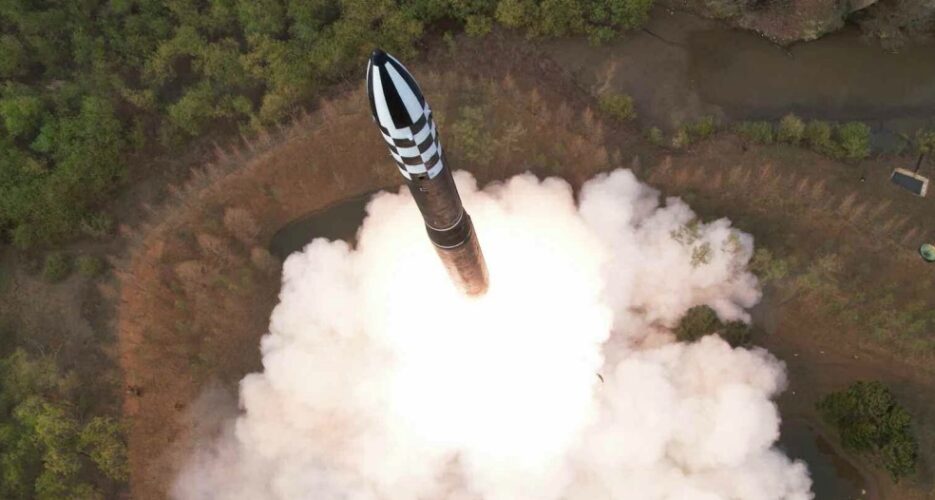 North Korea test-launched a “Hwasong-18” solid-fuel intercontinental ballistic missile (ICBM) for the first time on Thursday, according to state media. The Korean Central News Agency (KCNA) on Friday called the launch a “miraculous success” and an improvement on the country’s ability to mount a quick “nuclear counterattack.” DPRK leader Kim Jong Un reportedly oversaw the test alongside his young daughter, wife and sister at one of his mansion compounds and said it was meant to “make the enemies suffer from fear and anxiety.” It is the country’s first solid-fuel ICBM and comes after years of increasingly frequent testing of solid-fuel short-range ballistic missiles (SRBMs). Solid-propellant missiles do not need to undergo lengthy fueling prior to launch and can thus be prepared and moved into launch position more quickly than liquid-propellant missiles, increasing the chances of evading interception. 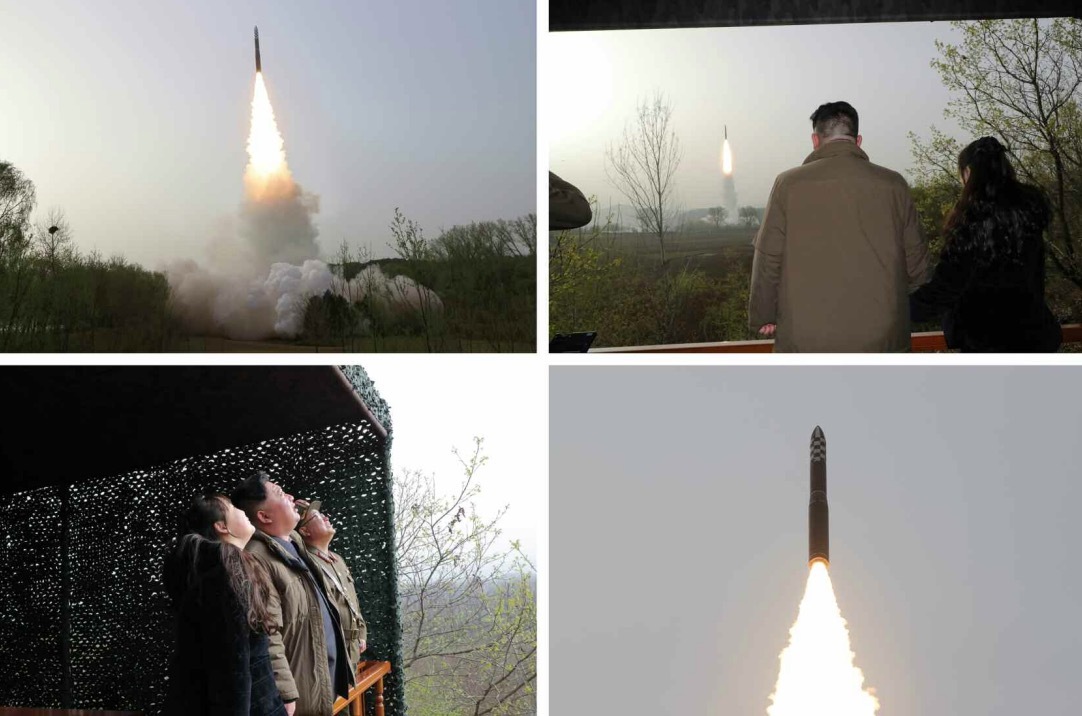 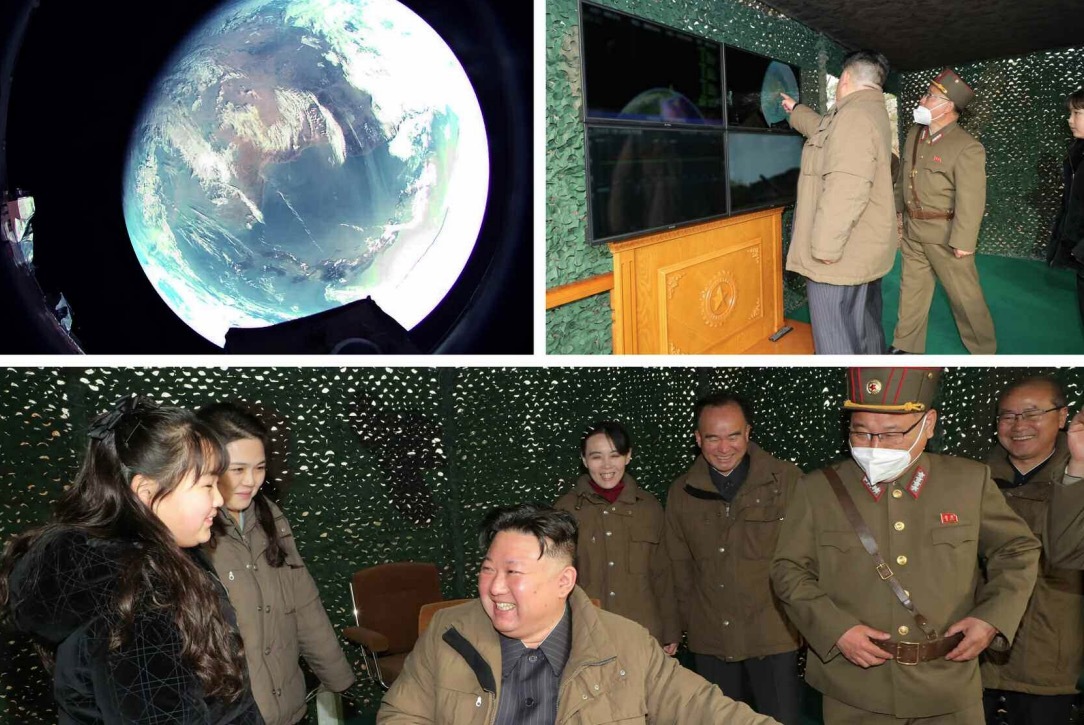 Pyongyang would gain new versatility if the Hwasong-18 is deployed, meaning “any hopes of comprehensively preempting North Korea’s nuclear forces in a crisis are unlikely to be successful,” according to Ankit Panda, Stanton Senior Fellow at the Carnegie Endowment for International Peace. “I don’t think this fundamentally upends the broader deterrence picture,” Panda told NK News, adding that the U.S. “is and will remain vulnerable to North Korean nuclear attack.” Washington, Seoul and Tokyo “strongly condemned” the launch and called it a destabilizing “provocation.” The South Korean defense ministry downplayed the state media report on Thursday’s test, stating the ROK military “has more effective and cutting-edge solid-fuel ballistic missile technology than [North Korea]” and that the Hawsong-18 system is not ready for deployment. According to Friday’s KCNA report, the test was primarily aimed at “confirming the performance of the high-thrust solid-propellant multistage motors, the stage separation technology and the reliability of various functional control systems.” The report defended the launch as having been carried out with the safety of neighboring countries in mind. Japanese authorities issued evacuation warnings for the northern island of Hokkaido Thursday morning but later retracted them after the missile fell, saying the launch posed no danger to residents. The military confirmed “technological features of all the components of the weapon system by restricting the maximum speed of the missile through delayed stage separation and motor reactivation,” KCNA said. It added that the first-stage flight was standard but that the second and third stages were “set on a high-angle trajectory mode” to avoid hitting other countries or even falling on North Korean population centers as it flew from near Pyongyang out toward the East Sea (Sea of Japan). The first stage “fell safely” 6 miles (10 km) off the Hodo Peninsula on the east coast and the second stage into the sea 208 miles (335 km) off the coast of Orang County further north, the report said.
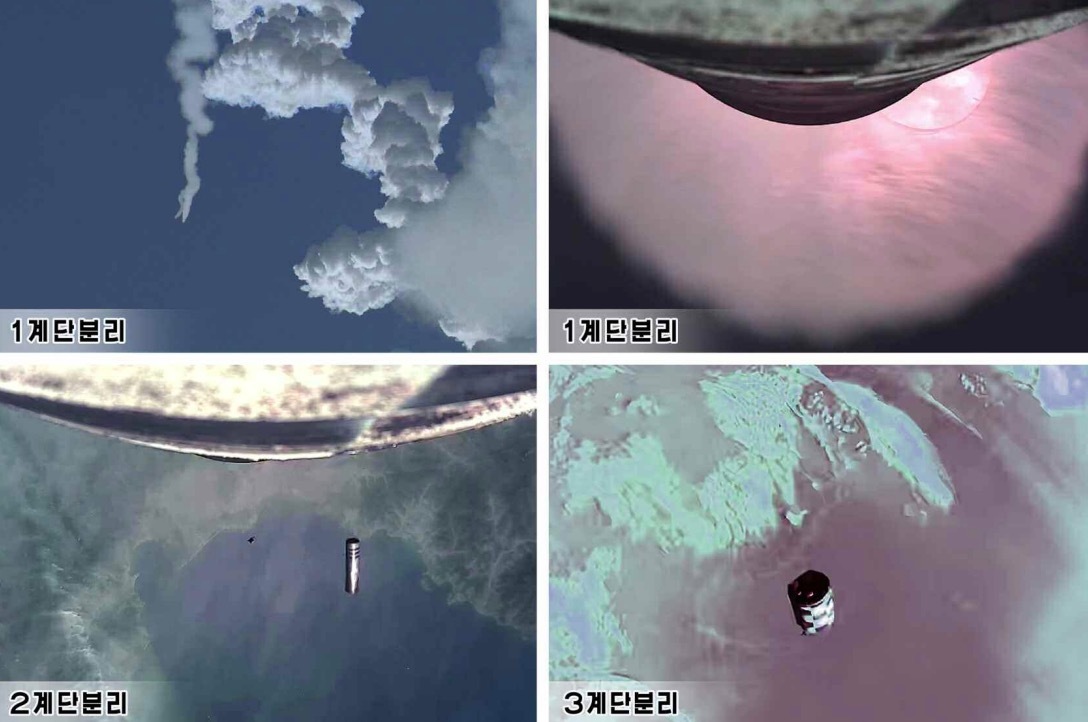
Panda told NK News it remains unclear why North Korea would launch the ICBM on a normal angle before boosting to a more vertical angle, but that it may have been because they were “worried about the missile breaking up if they launched it on a lofted trajectory right from the first stage.” Both Panda and Joseph Dempsey, a researcher with the International Institute for Strategic Studies (IISS), said this reported shift in launch angle could have caused Japan to issue evacuation alerts based on its initial detected trajectory. Kim Jong Un reportedly said after the launch that adding the Hwasong-18 to the country’s arsenal will “greatly reinforce the components of our strategic deterrent, rapidly increase the utility of the nuclear counterattack posture and innovate the practicality of the offensive military strategy.” He also called on the military and defense scientists to “continuously accelerate the development of more advanced and powerful weapon systems in coping with the ever-worsening security situation of the Korean peninsula and prospective military threats.” Unlike in many past ICBM launch reports, KCNA did not provide detailed trajectory information on the Hwasong-18 such as the flight time, full distance traveled and maximum altitude reached.
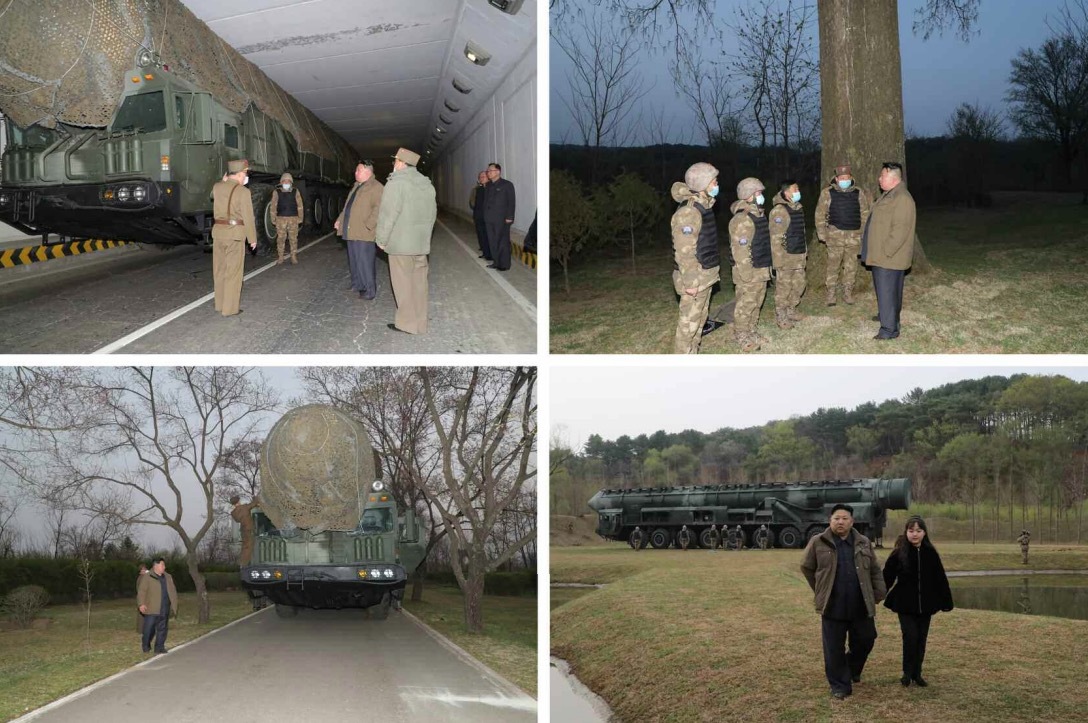
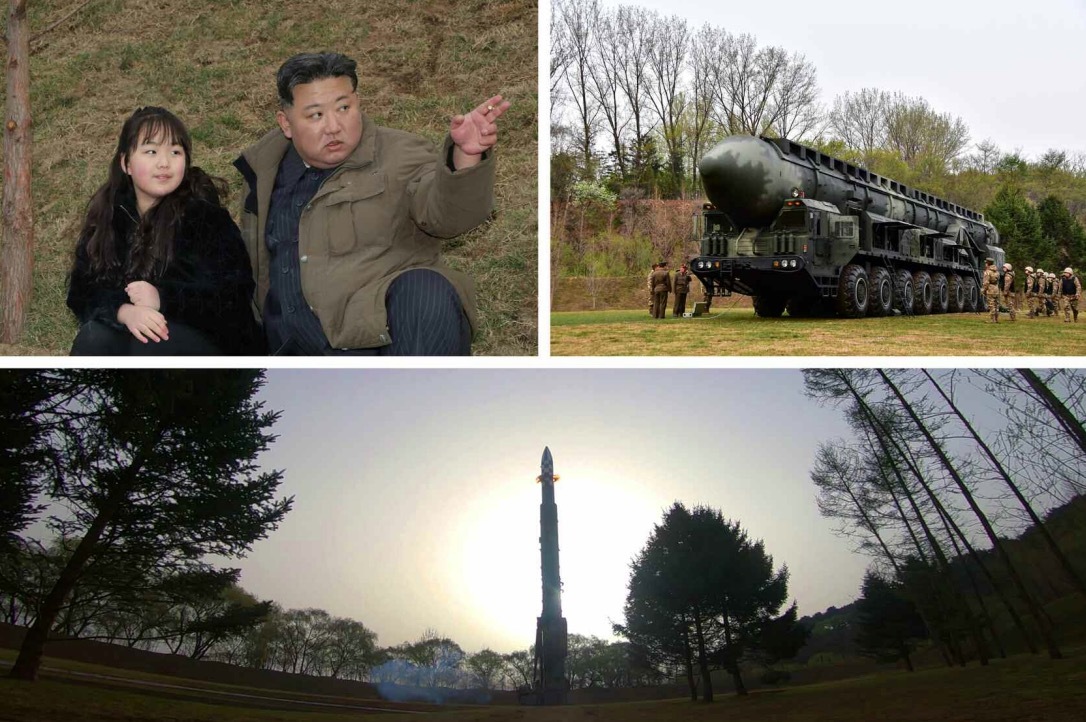 Japan’s military says it detected the launch from the Pyongyang area around 7:22 a.m. KST on Thursday, and South Korea’s Joint Chiefs of Staff (JCS) said the missile traveled 621 miles (1,000 km) before splashing down in the East Sea (Sea of Japan). A JCS official told reporters in a briefing the same day that the missile’s maximum altitude was still being analyzed but that it was less than 3,100 miles (5,000 km). Local media also reported that the military assessed it as less than 1,860 miles (3,000 km). The launch comes days after Kim Jong Un chaired a Central Military Commission (CMC) meeting where he reviewed “attack plans” on South Korea and called for taking more “practical measures” to push back against recent joint U.S. military drills in the region. North Korea first revealed the missile’s launch vehicle, but not the look or name of the missile itself, at the Feb. 8 military parade this year. Kim oversaw the first known test of an engine believed to be intended for use in a solid-fuel ICBM last December. Thursday’s launch was North Korea’s 14th ICBM test overall and 11th in the last 13 months alone. 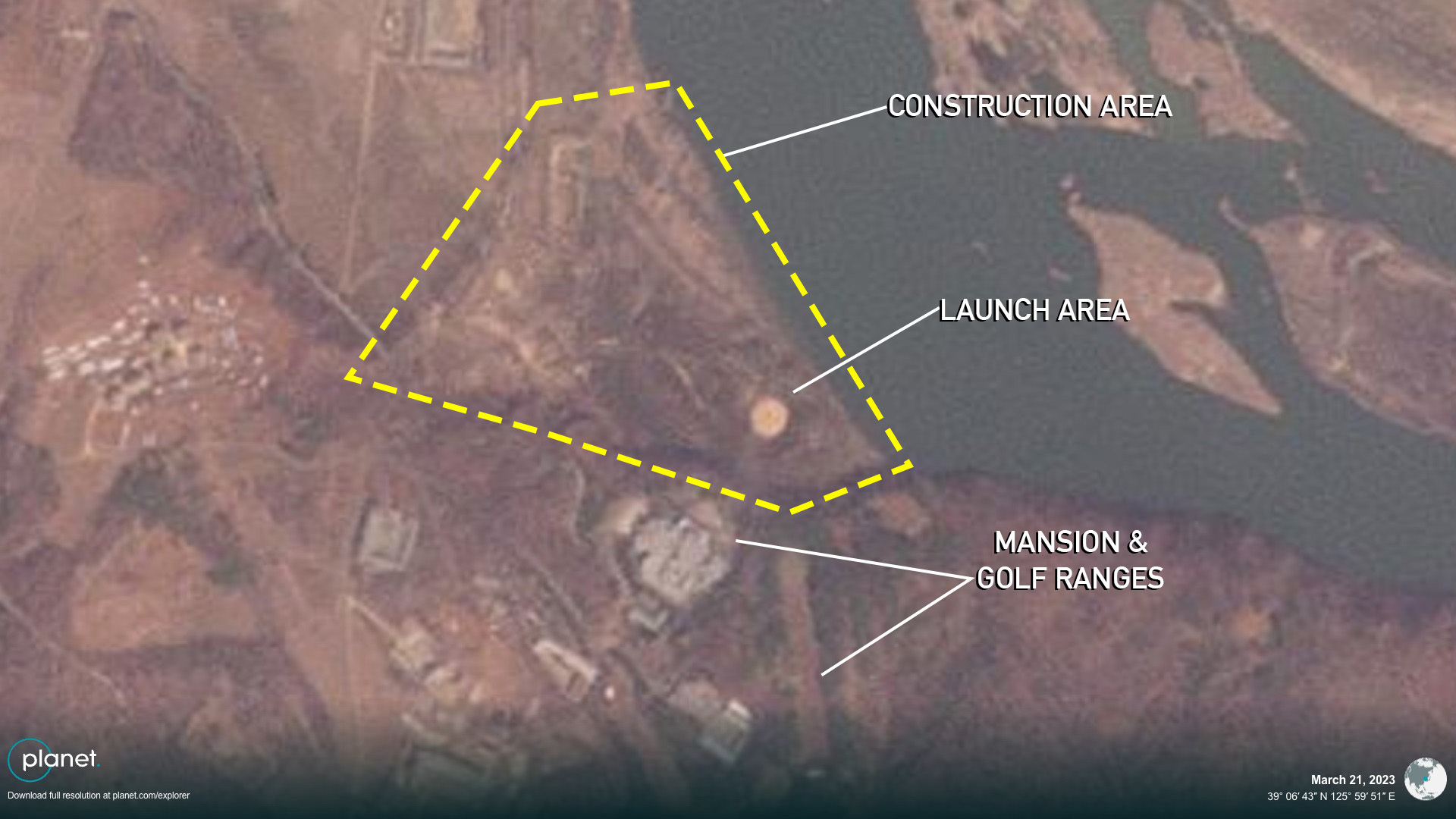 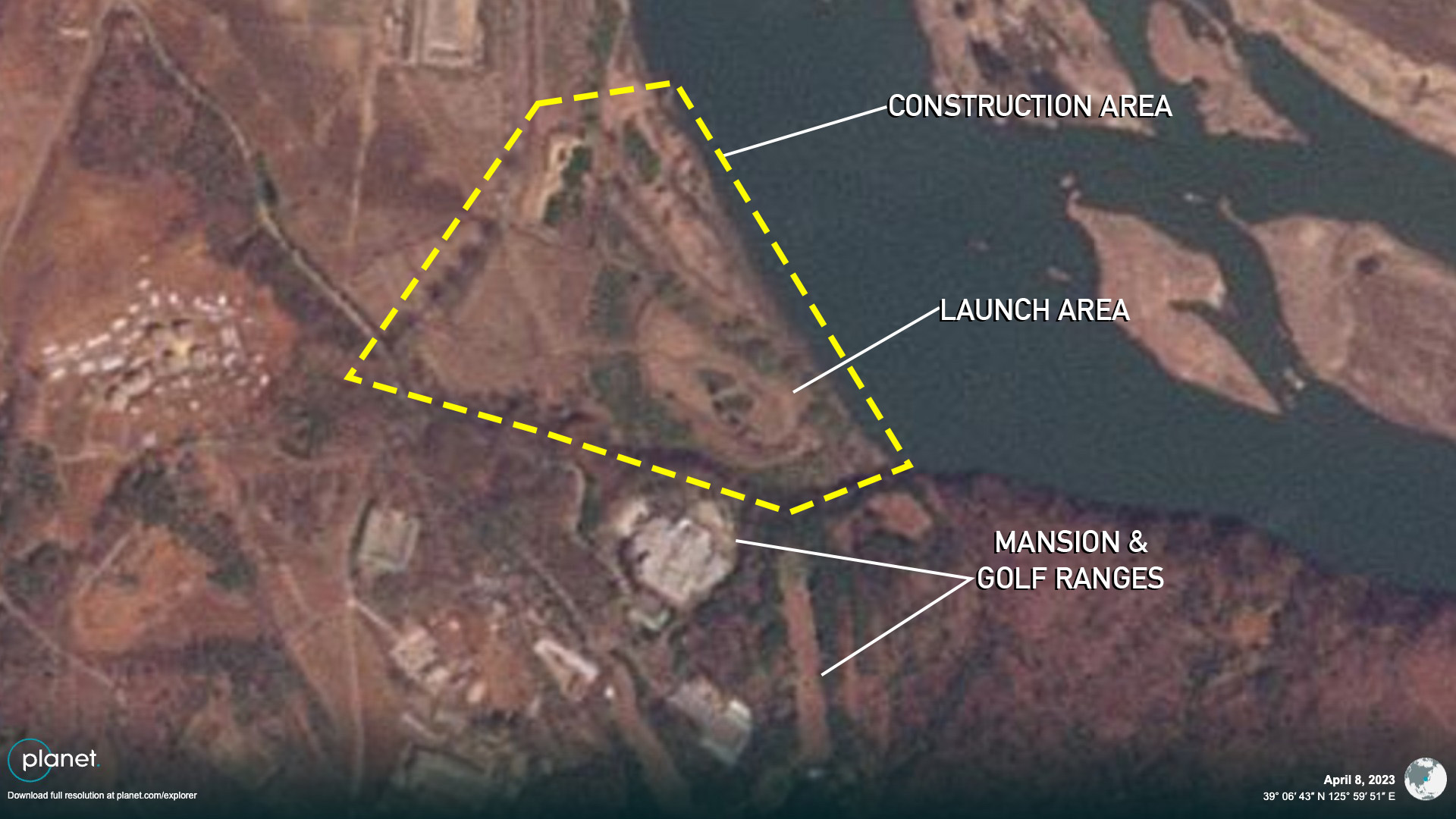 This comparison shows that a light-colored circular area, possibly a concrete pad or other reinforced construction, was built by late March on what researcher Sam Lair identified as the launch site, but that this area was later covered in grass and ponds before the April 13 launch | Images: Planet Labs, edited by NK News 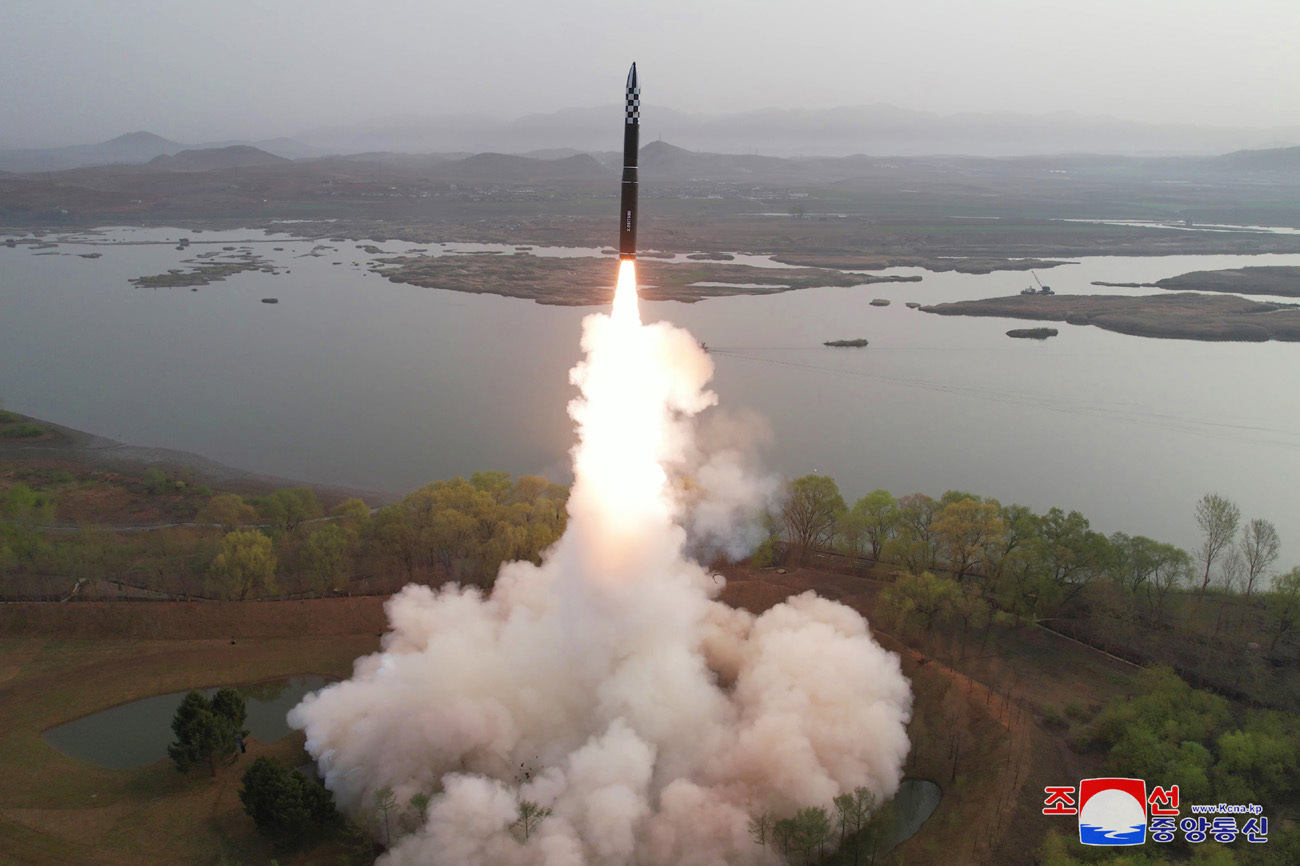 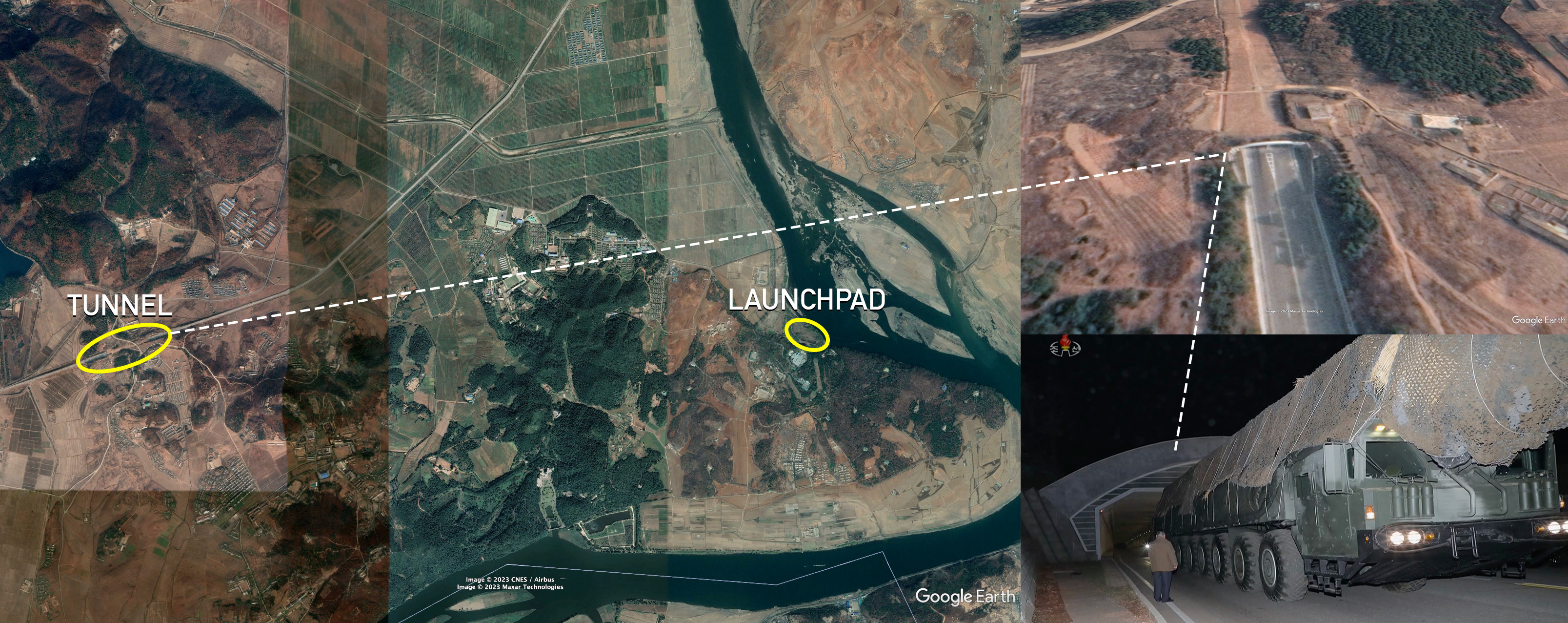 It took place at one of Kim Jong Un’s mansions that features a private golf course east of Pyongyang. Sam Lair, a researcher at the James Martin Center for Nonproliferation Studies (CNS), was first to geolocate the photos published in state media Friday. NK News detected construction activity at the mansion starting between March 13 and 16, indicating preparations for the launch site were ongoing for around a month. The imagery suggests workers may have installed a concrete or otherwise reinforced launchpad before covering it in grass, possibly to make the launch appear to be from grassy and rough terrain and thus a more versatile weapon system. All previous ICBM tests were conducted from concrete roads or pads, and all 10 previous tests since early 2022 were from the Pyongyang International Airport. State media images show Kim and his daughter beside the missile on well-manicured lawns surrounded by newly built ponds and berms, and soldiers walking the missile through a nearby highway tunnel and on roads likely inside his mansion compound. Last month, Kim also oversaw missile launches from a mansion on Lake Taesong to the west of Pyongyang and his private Majon beach on the east coast. The report did not mention his daughter’s name or presence, after state media introduced her for the first time last November at a Hwasong-17 liquid-fuel ICBM test and showed her with the DPRK leader on multiple occasions since. South Korean intelligence believes her name is Kim Ju Ae, but this has not been confirmed. Meanwhile, KCNA also reported Friday that Kim Jong Un promoted Han Kum Bok, deputy director of a Missile General Bureau (MGB) research institute, to the rank of major general (one-star) and awarded Labor Hero of the DPRK medals to more than 10 “important persons” from defense scientific research institutions that helped develop the Hwasong-18. Edited by Arius Derr © Korea Risk Group. All rights reserved. |


 SHARE
SHARE COPY LINK
 X
X MASTODON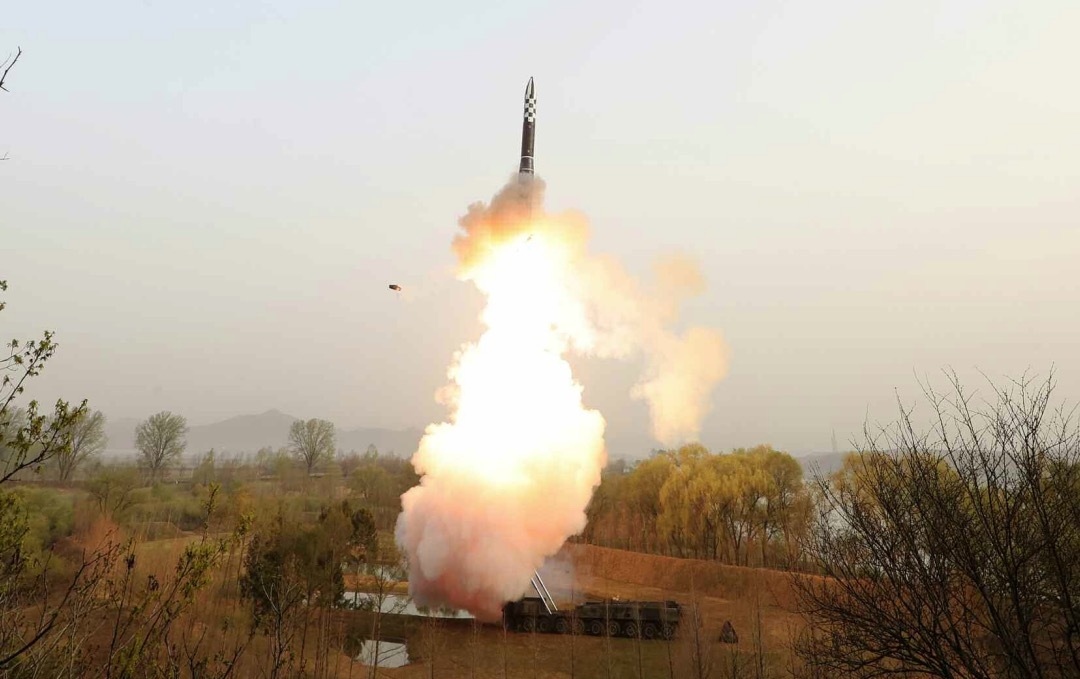



Recent Stories