
|
Opinion Book review: Do North Korea’s markets undercut Kim Jong Un or prop up his rule?Andrew Yeo’s new book explores how capitalist activity can subvert state power while failing to bring fundamental change
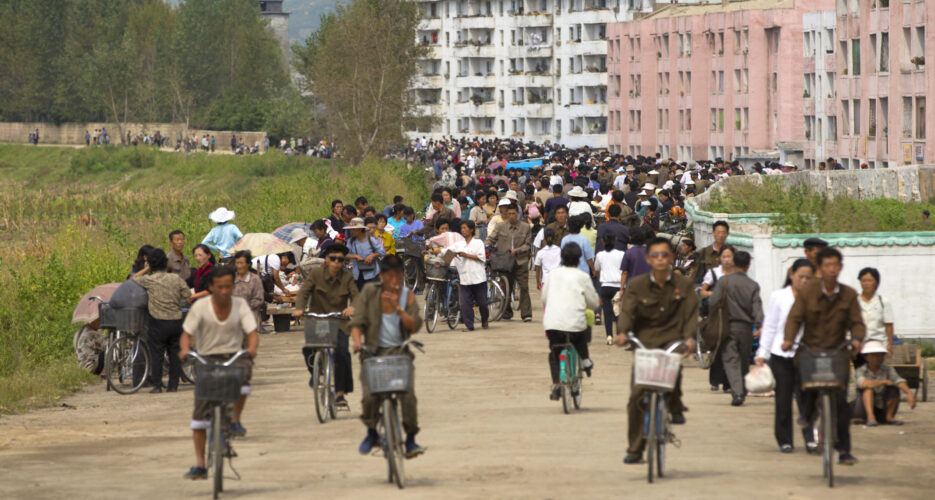 Andrew Yeo’s “State, Society, and Markets in North Korea” asks an important question: How much is the rise of both formal and informal markets in North Korea changing the country’s politics and society? Do networks of black markets, the existence of a new moneyed class (“donju”) and grassroots capitalism contradict the country’s official juche ideology and thus point to weakening belief in the regime? Two prevailing trains of thought exist. One suggests that these nascent markets will engender greater individual responsibility and the birth of civil society, subsequently leading to a decline of state authority. The other argues that any © Korea Risk Group. All rights reserved. |


 SHARE
SHARE COPY LINK
 X
X MASTODON


Recent Stories