
|
News Crises mount in North Korea as major flooding follows drought, food shortagesSatellite imagery reveals flooded homes and broken bridges from severe August rains
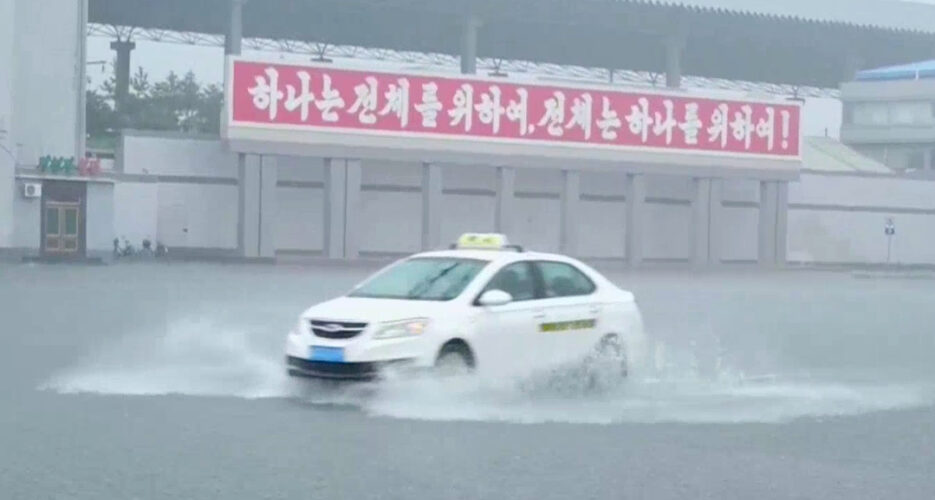 Major flooding washed away homes, roads and bridges along North Korea’s east coast in recent days, according to NK News analysis of satellite imagery, as DPRK state television said that some areas have already seen over 580 millimeters of rain (23 inches). The floods come on the heels of a monthlong heat wave and drought in July that state media said damaged crops and may threaten upcoming harvests. North Korean leader Kim Jong Un admitted in June that the country was facing a “food crisis” after suffering typhoon damage last year. State media has recently reported on widespread efforts to reinforce shores and riverbanks ahead of what it says could be multiple typhoon events in August, but it has yet to report on the latest damages. The latest flooding occurred in small towns along major rivers in North and South Hamgyong provinces from Aug. 1-3, Planet Labs satellite imagery shows.  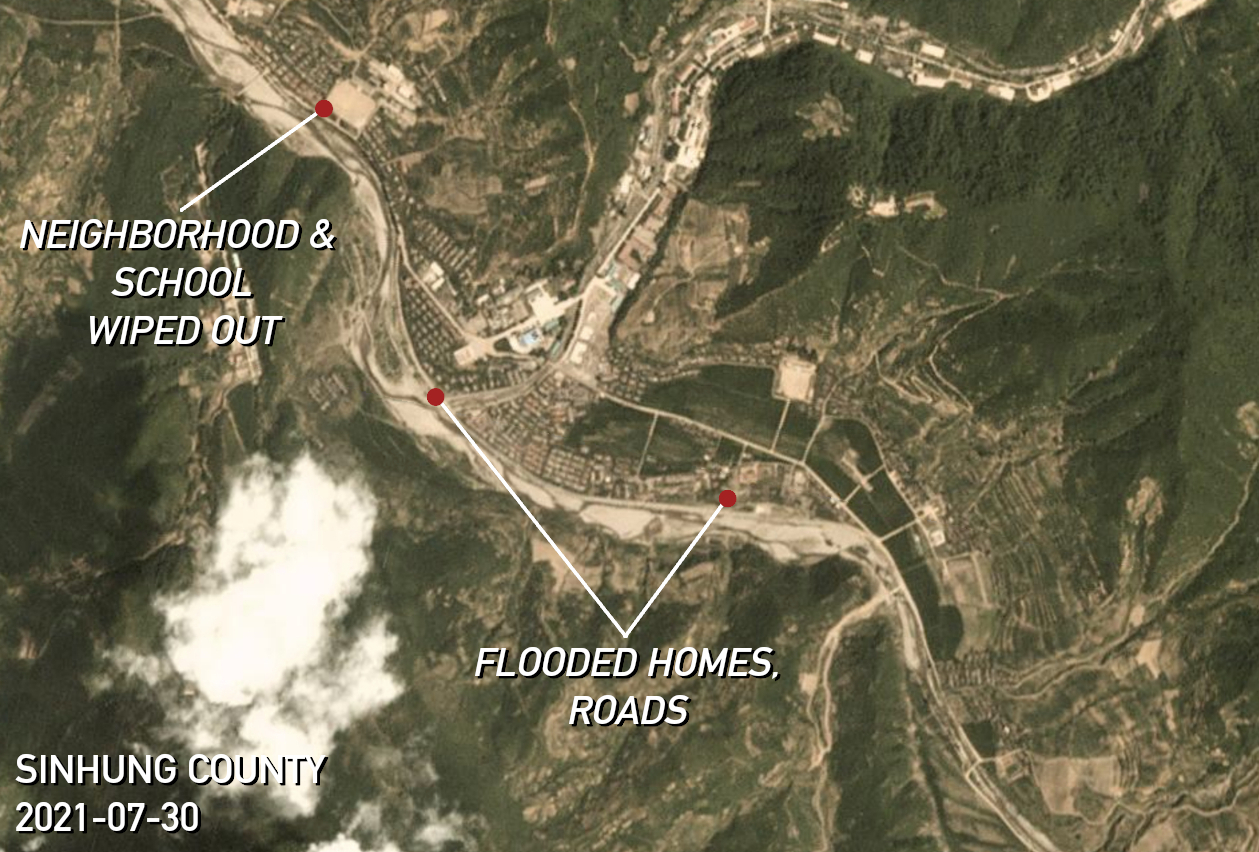 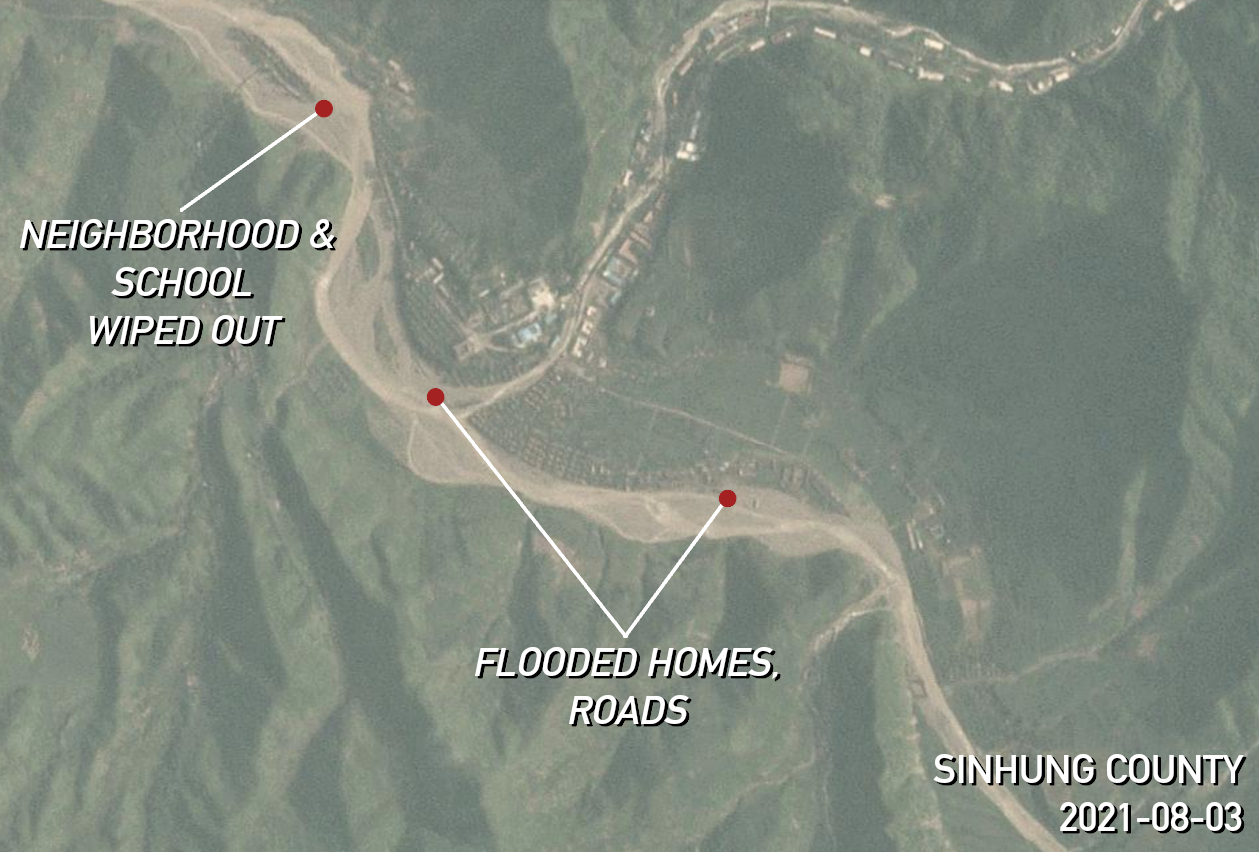 Coordinates: 40.175926° 127.631589° A graph aired on Korean Central Television (KCTV) on Wednesday said Puryong county near Chongjin was hit the hardest with 583 millimeters (23 inches) of rain and Sinhung county near Hamhung with 308 millimeters (12 inches) between Aug. 1 and 3. A map shown on KCTV on Monday (above) said other areas of the country also received from 100 to 320 mm (4 to 12.5 inches) of rain between Aug. 1 and 2. NK News confirmed that the rains were indeed severe, leading to overflowing rivers and what appeared in satellite imagery to be flooded homes, roads and broken bridges in Sinhung and Yonggwang counties near Hamhung, the capital of South Hamgyong province. Similar damage appeared at Toksan Airfield near Hamhung and in Hongwon county to the east, as well as just north of Chongjin, the capital of North Hamgyong province. 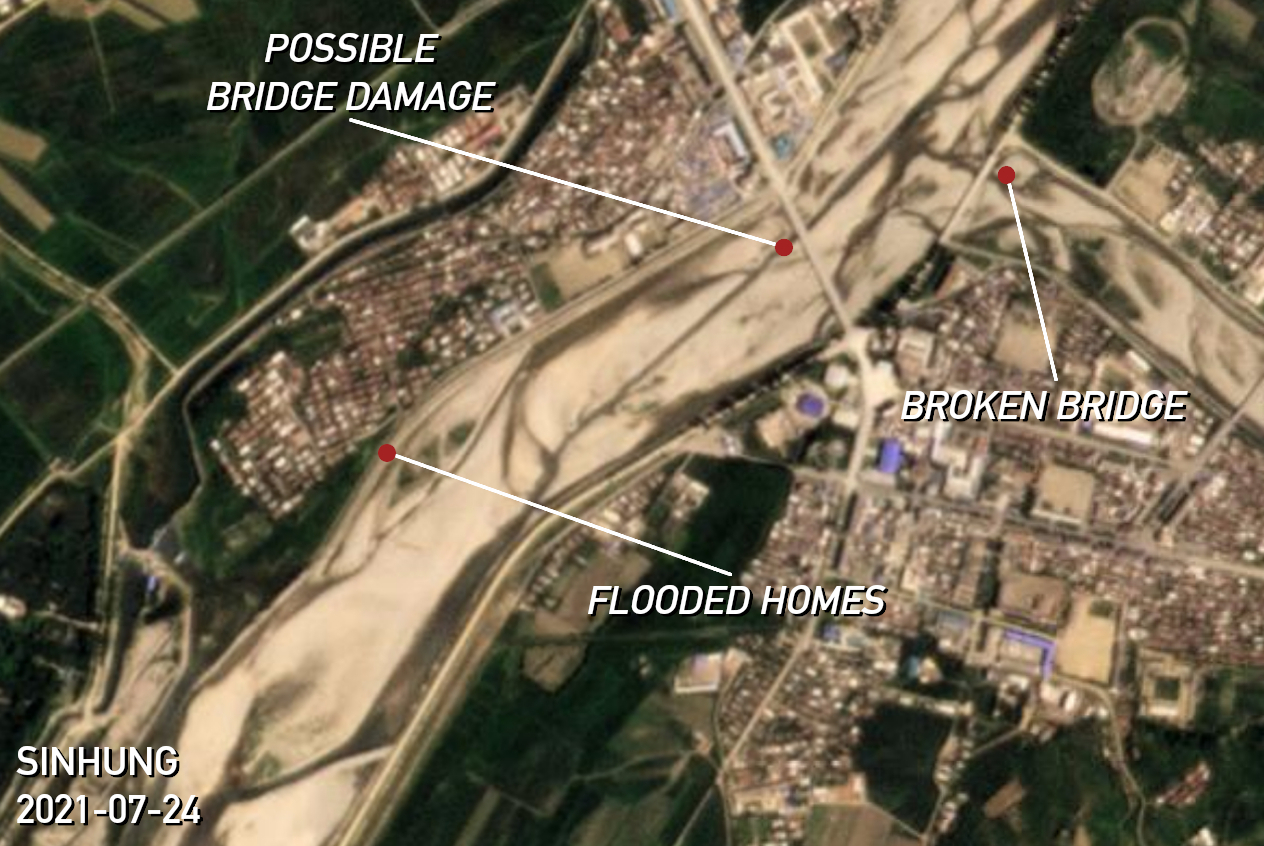 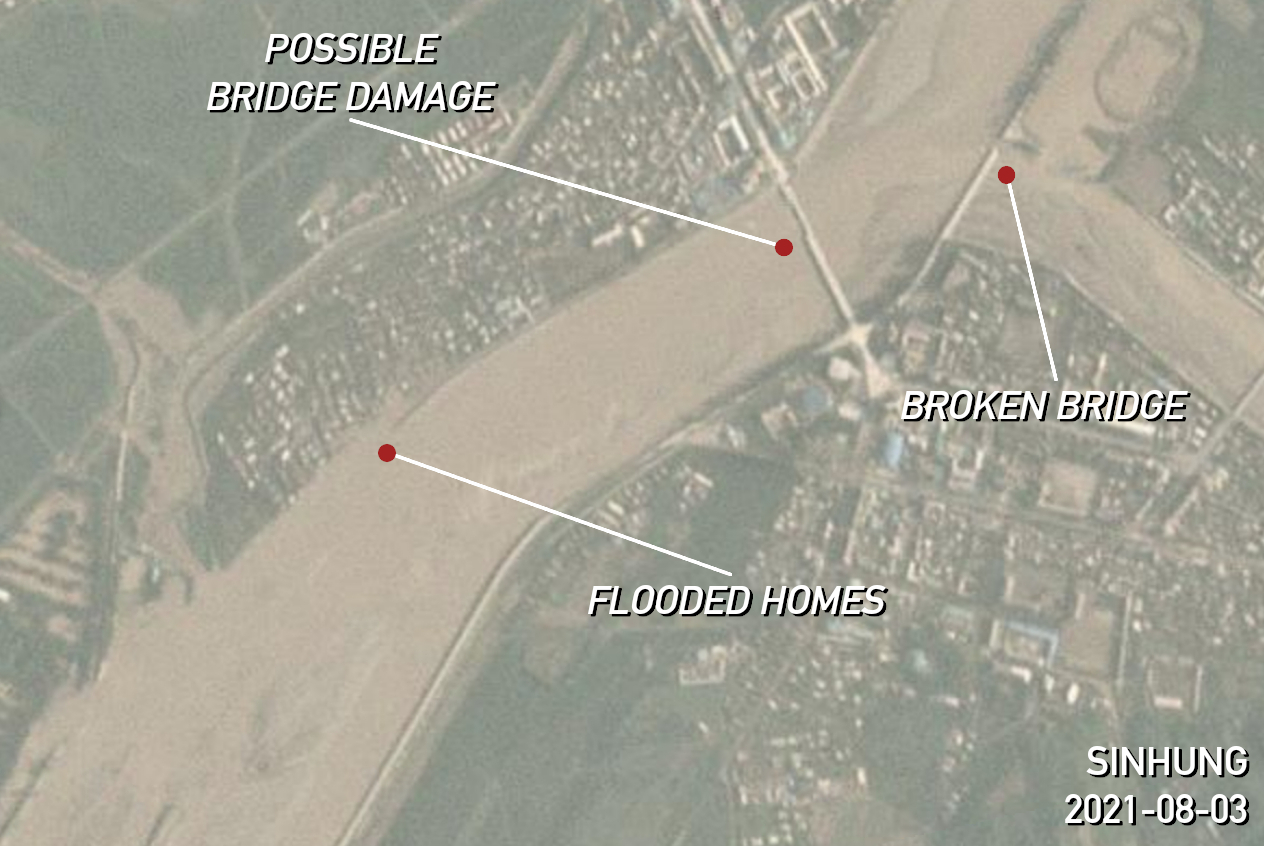 Coordinates: 40.195047° 127.554469° 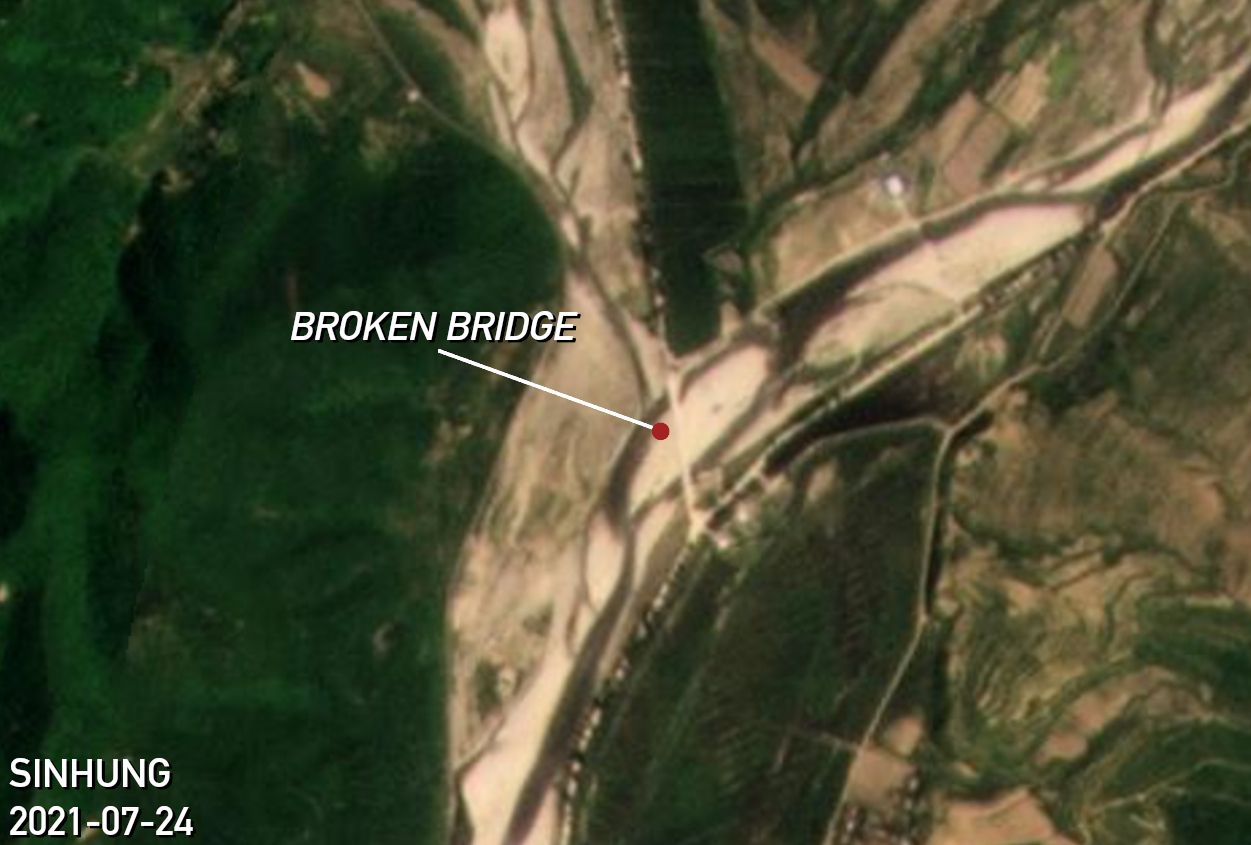 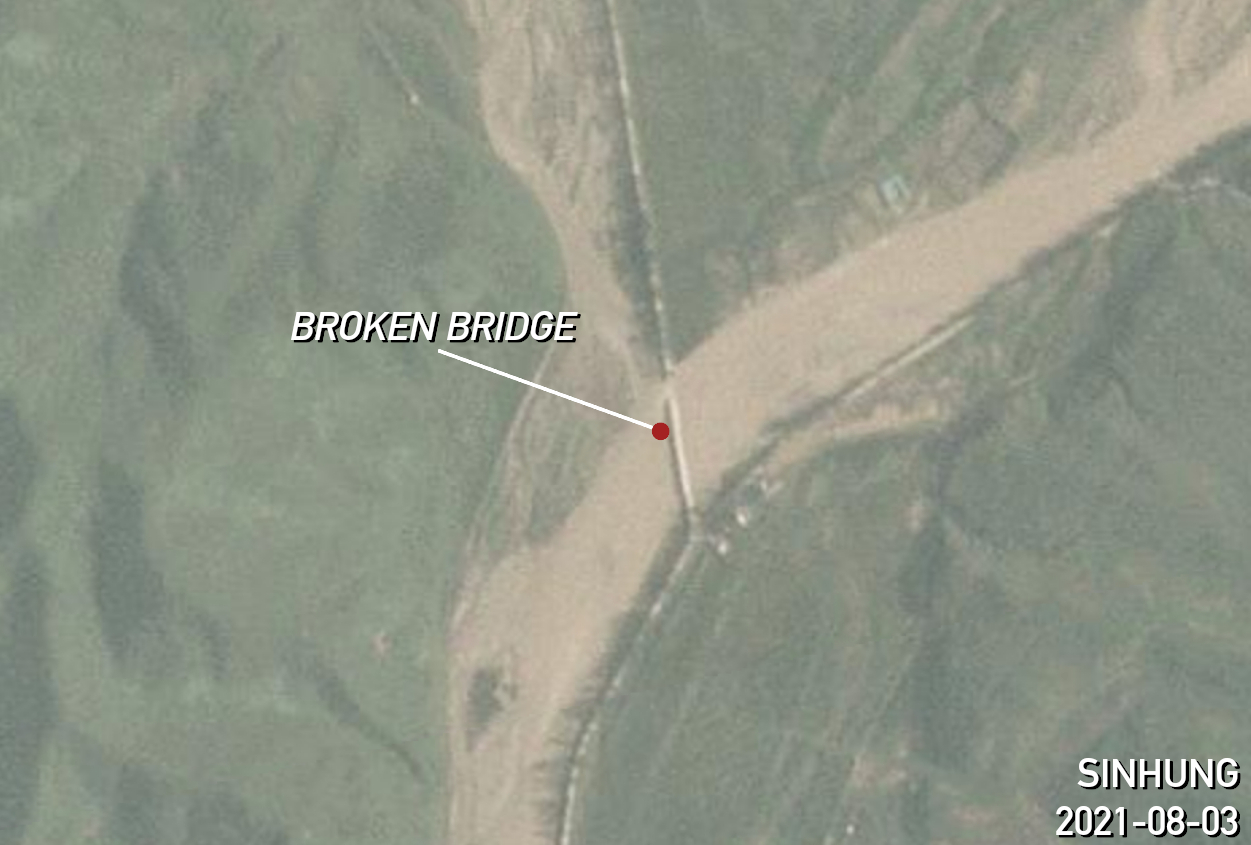 Coordinates: 40.259636° 127.617517° Water levels also appeared to be high in the city of Hoeryong along the border with China, which has been ravaged by floods multiple times in recent years, but the area was mostly covered in clouds and not visible for assessment in available satellite imagery taken on Aug. 3. Meanwhile, KCTV reported on Monday that the cities of Sunchon and Phyongson just north of the capital Pyongyang also saw heavy rainfall earlier that day, but imagery of these areas was not yet available as of Aug. 3. While North Korea’s typically secretive state media has yet to report on the scope of flood damage this week, such coverage may be in the works after KCTV — upon orders from leader Kim Jong Un — provided unprecedented real-time coverage of three successive typhoons in late summer 2020. State media even blamed “dozens” of deaths from the typhoons on negligent officials in Kangwon province on the east coast and reported extensively on damage to infrastructure across the country. 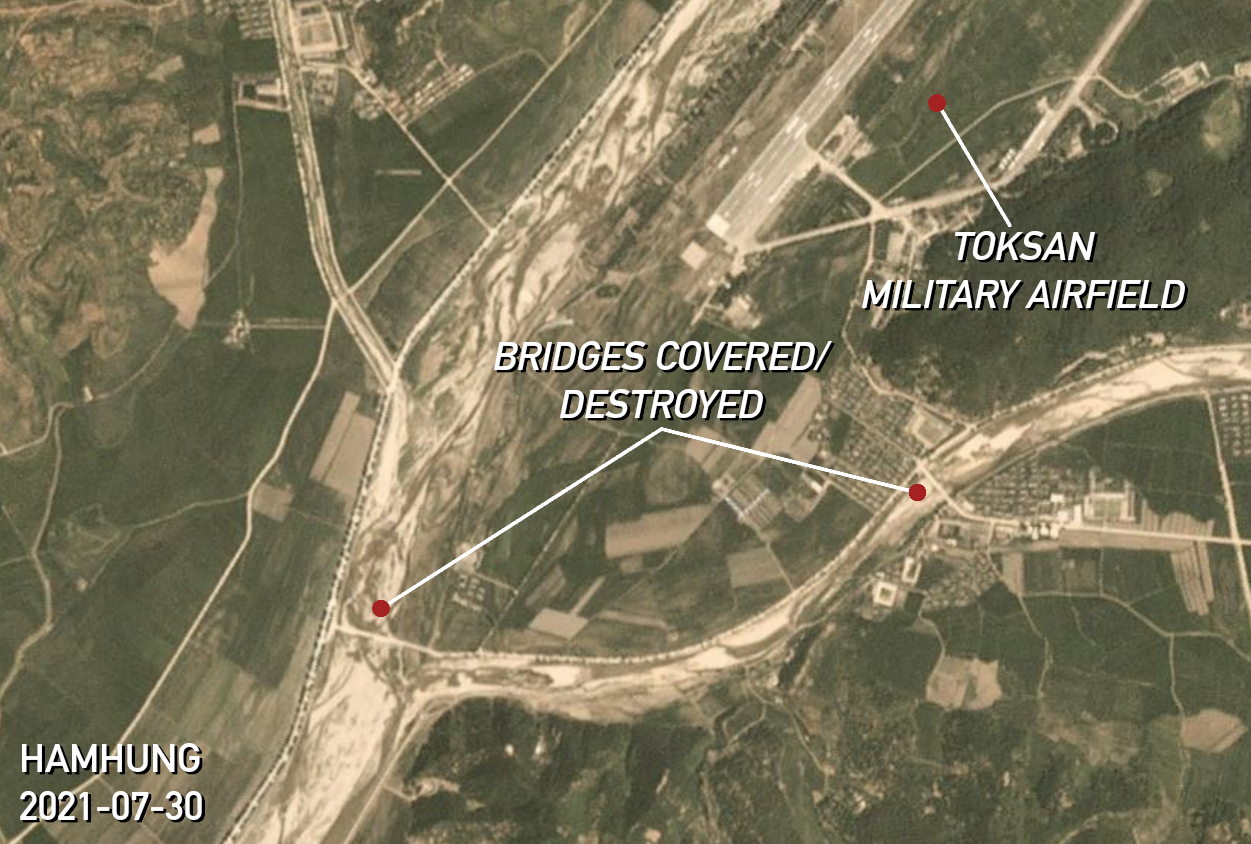 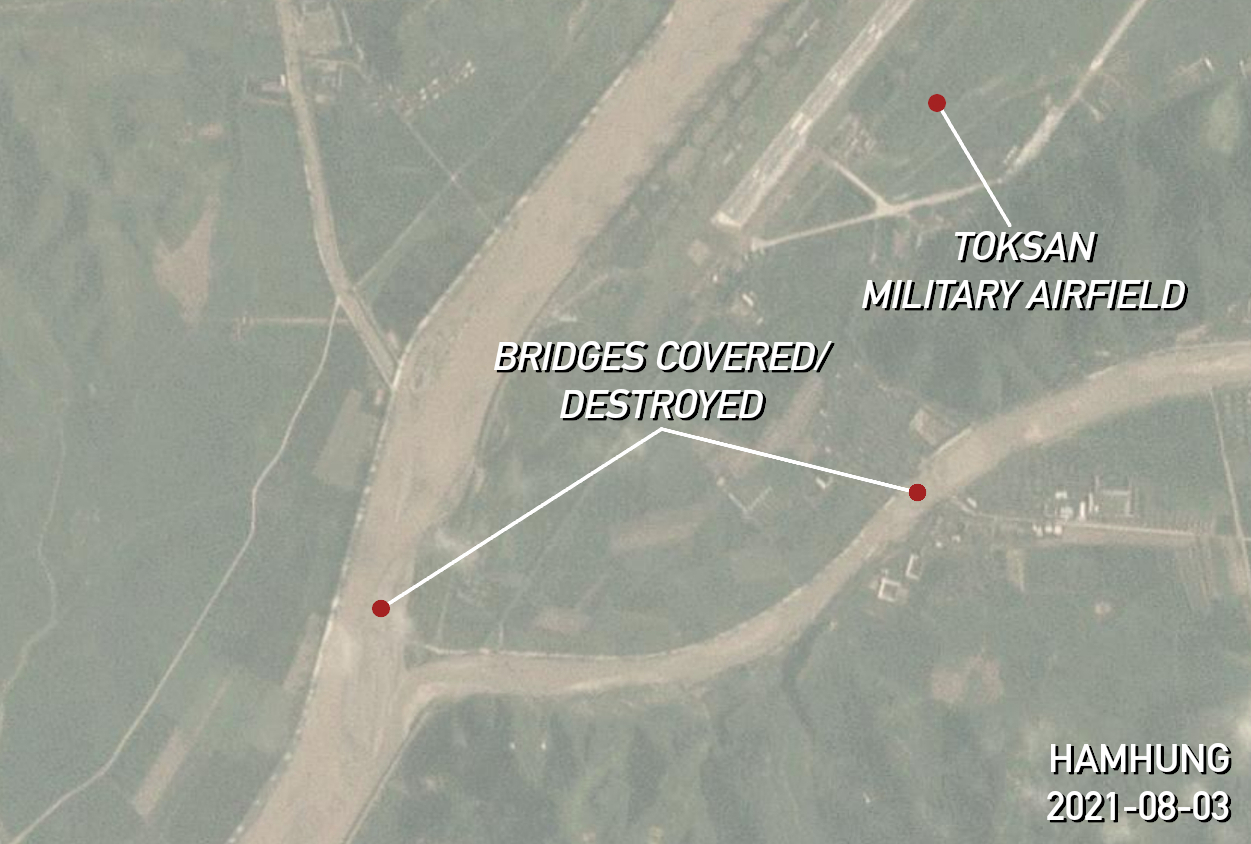 Coordinates: 39.981533° 127.594941° 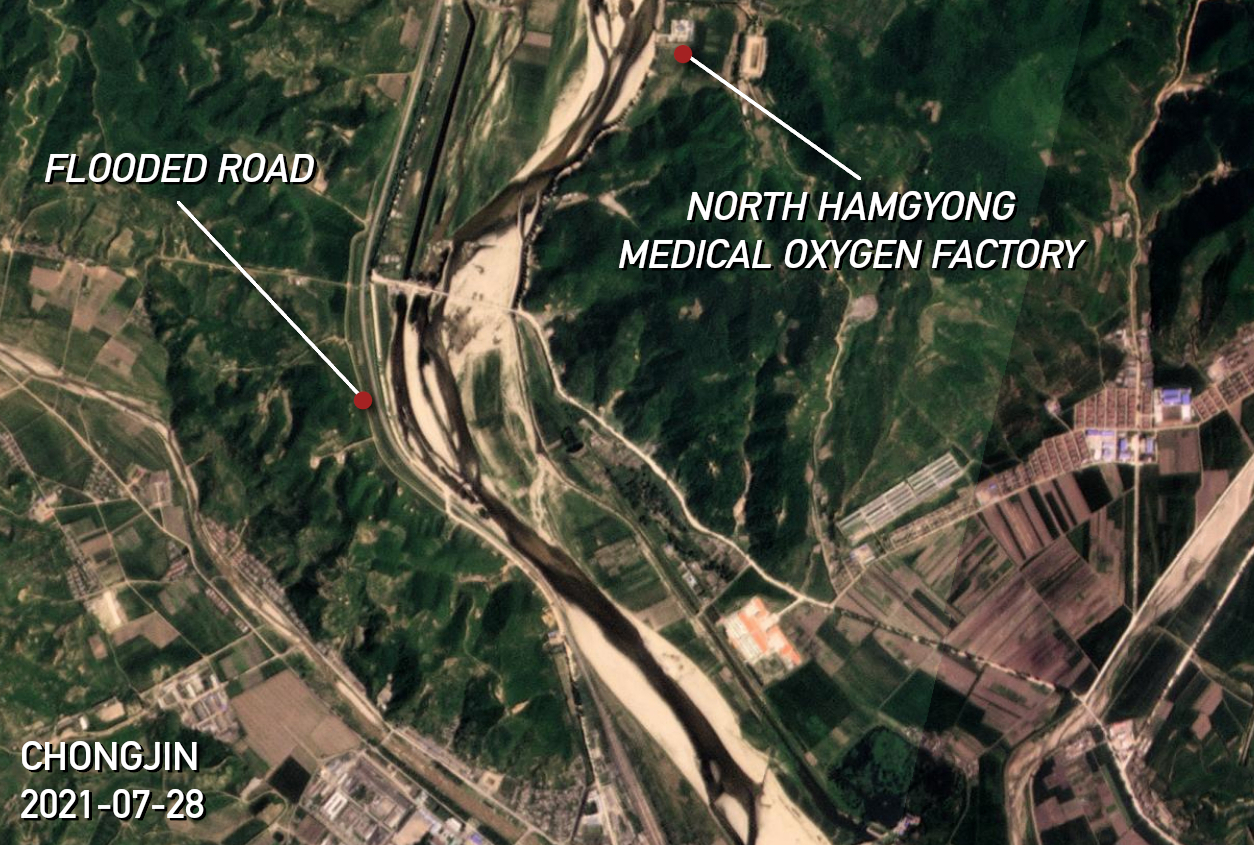 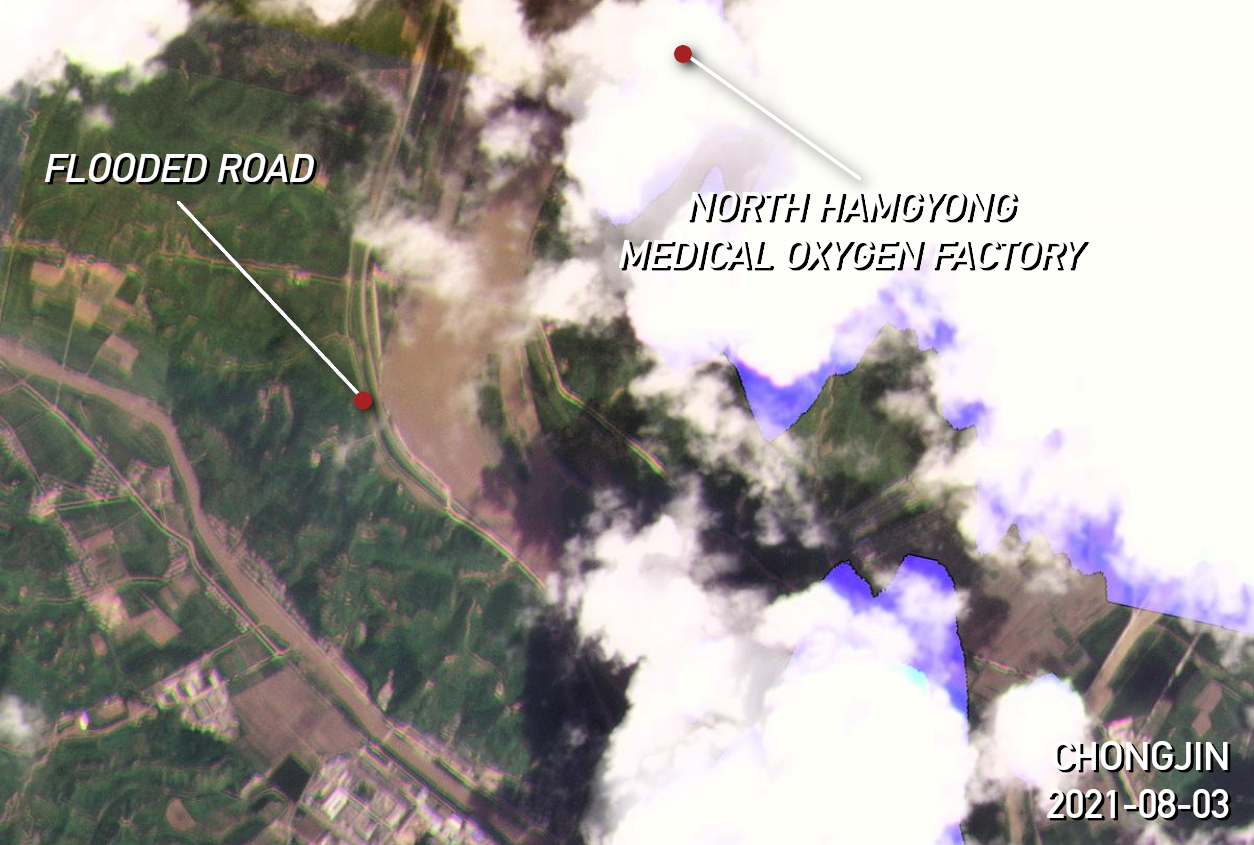 Coordinates: 41.847743° 129.733939° After the storms, Kim dispatched both the military and members of the Pyongyang elite around the country to help rebuild damaged towns, but some areas in the northeast — where heavy rains fell again this week — appeared neglected with no rebuilding efforts for months. Despite the DPRK’s frequent claims of thorough nationwide efforts to prevent flooding and landslides, such disasters have been a mainstay of North Korean life for decades due to poor conditions and lack of investment in infrastructure. North Korea has also shown a preference for quick but temporary rebuilding, often in unprotected floodplains, that has led to rebuilt areas of some towns and cities being re-flooded and destroyed by storms multiple times. Meanwhile, KCTV warned on Wednesday that Sinuiju near the border with China — where a new import disinfection center was recently built to help resume trade and alleviate supply issues — is forecast to see “heavy rain” of at least 100 mm (4 inches) from Aug. 5 to 6. Edited by Arius Derr Updated at 10:00 KST on Aug. 5 with new precipitation totals from KCTV presented on Aug. 4 © Korea Risk Group. All rights reserved. |


 SHARE
SHARE COPY LINK
 X
X MASTODON


Recent Stories