
|
Interviews “Kim Jong Un and the Bomb”: how to live with a nuclear North KoreaAhead of the release of his new book, analyst Ankit Panda discusses diplomacy, deterrence, and the DPRK's future
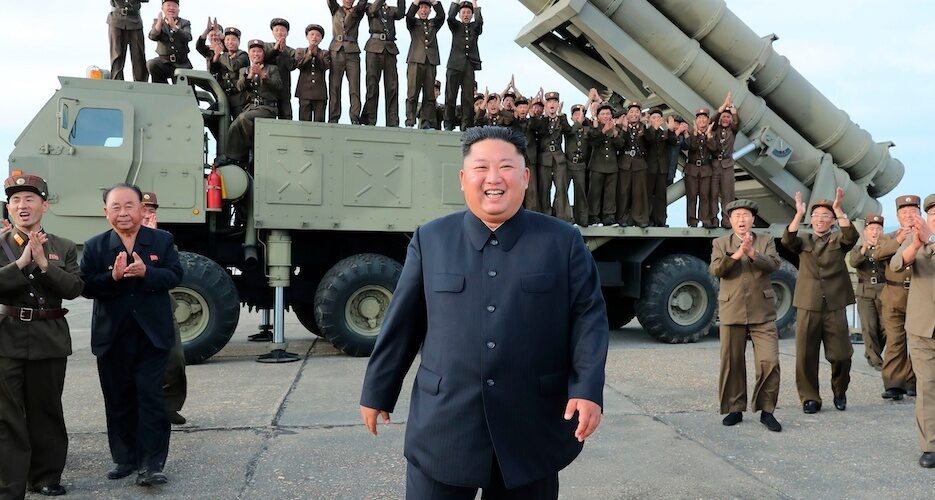 Negotiations between the DPRK and the U.S. have gone nowhere for over a year. Pyongyang is ramping up tensions with Seoul. And a new “strategic weapon” promised by North Korea could likely emerge at an upcoming military parade in October — or even sooner. So where do we go from here? Longtime analyst and North Korea watcher Ankit Panda has long argued that the solution to the North Korea problem lies not in the pursuit of an unattainable denuclearization, but in managing Pyongyang’s ambitions through arms control and trust-building. In an in-depth interview with NK News this week ahead of the release of his new book, “Kim Jong Un and the Bomb,” Panda discussed how Kim Jong Un’s leadership has been shaped by the pursuit of the regime’s so-called “treasured sword,” why the Hanoi summit failed, and how the U.S. can live with a nuclear North Korea. This interview has been edited and condensed for clarity and readability.  NK News: The book is called “Kim Jong Un and the Bomb,” it’s not called “North Korea and the Bomb.” What do you think nuclear development has meant for Kim Jong Un, under his rule? Ankit Panda: First of all, the title of the book, Kim Jong Un and the Bomb, partly, it’s an effort to scope the book and also to avoid reinventing the wheel. There has been a lot of work done by other scholars on the earlier phases of North Korea’s development as a nuclear power focusing on the Kim Il Sung and Kim Jong Il eras. My book recounts some of that history and reflects on previous rounds of negotiations with North Korea. But really the reason it focuses on Kim Jong Un is because, frankly, there haven’t been other work focusing specifically on the era. The missile testing of the Kim Jong Un era is truly unprecedented. I mean, he very quickly overtook, in numerical terms, the total number of missiles that had been tested by his father and grandfather in not too long at all. But I think what we should remember is that the technical, industrial, and scientific processes that lead to something like an inaugural missile flight test are often years or decades in the making. So an example here is, for example, the Musudan intermediate-range ballistic missile, which was first tested in 2016 in April, and it was tested eight times. And it appeared, from the outside, that the Musudan really showed up out of nowhere in North Korea’s Arsenal. At the time it was tested, it was North Korea’s potentially longest range capability that had been successful. But we have evidence that the base technology for the Musudan, based off the R-27 Soviet submarine-launched ballistic missile, had been in North Korea at least from the early 1990s. And we don’t have a good understanding of how North Korea scientific missions had been working on this missile and its particularly odd kind of submerged engine configuration. But what we know is that when it was eventually tested, it was the culmination of years of effort.
Similarly, it was under Kim Jong Un that the world came to get quite well acquainted with the Chinese-manufactured logging trucks that carry North Korea’s ICBMs in multiple military parades, and were used in the launches of the Hwasong-14 in July, in a modified configuration from the original, and of course with the Hwasong-15, which added another wheel to that vehicle. But those vehicles were procured under Kim Jong Il. So it’s important to sort of recall that what we see under Kim Jong Un doesn’t necessarily tell us much about how Kim Jong Un himself affected the development of North Korea’s missile program. But, certainly, Kim Jong Un was the leader presiding over the moments that North Korea accomplished a decades-old ambition, which is demonstrating the ability to hold the U.S. homeland at risk with nuclear weapons and doing so with higher yield thermonuclear weapons. So he presided over many of the most important milestones for a breakout nuclear power. 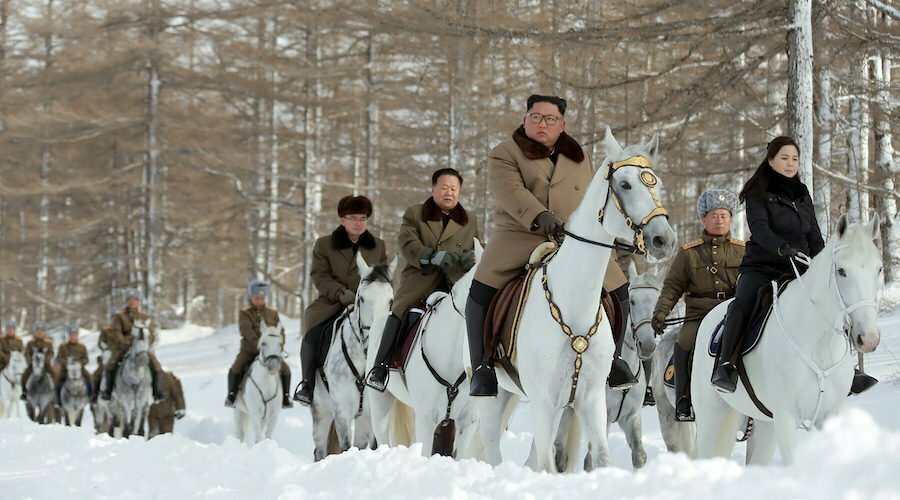 NK News: Let’s talk about the Hanoi summit. Do you think the deal that was offered up in Hanoi was something the United States should have considered at least or was it really the non-starter that Trump, Pompeo, and Bolton considered it to be? Ankit Panda: I think we’ll look back at Hanoi as probably one of the greatest tragedies of the 2018-2019 era. That said, should the United States have accepted the offer as it was presented by Ri Yong Ho after the Hanoi summit collapsed? I think the United States should have stayed in the room. I think Trump and Kim should have gone and enjoyed their lunch of snow fish and spent more time talking. I think the offer that was on the table would have been a very good starting point. After the Hanoi summit, I wrote an article in Foreign Affairs where I made the case that on its face, the offer wasn’t necessarily the ideal bargain, that the sanctions relief that the North Koreans were asking for, it’s hard to quantify how exactly that accounts for the total sanctions pressure on North Korea (at least international sanctions pressure), but you could reasonably describe it as representing around 80-90% of the sanctions pressure because it’s most of the 2016/2017 pressure. And if you think about what Yongbyon means, from a fissile materials’ perspective, it does not account for 80-90% of North Korea’s fissile material production capability. You have covert enrichment sites like Kangson, which accounts for a significant portion and also a third unknown enrichment site in the country. Yongbyon could potentially account for, let’s say, 40-45% of North Korea’s enrichment capability, so should you exchange that for the sanctions pressure that North Korea was asking to have lifted? Probably not. If you stay in the room, you might come to a smaller, more divisible agreement that you accept something that’s going to be a small piece of Yongbyon for a small piece of sanctions relief. And you do that not only to make some progress of getting down the road to reducing North Korea’s capabilities and capping North Korea’s capabilities, but you do that also to build trust fundamentally. One of the issues I think we’ve seen from the North Korean side in the months after Hanoi has been repeated complaints that the United States is not credibly able to follow up with what it says it will do. And they have complained about that in the context of Donald Trump and U.S.-South Korea joint exercises, they have complained about that in terms of apparently pledges that Trump made in Singapore on potentially entertaining the idea of sanctions relief. So that sort of an agreement would have taken us quite a way to making more progress with the North Koreans. I think what we learned from studying the history of negotiations with North Korea is that things really begin to fall apart when you get to verification. This was part of the reason the Six-Party Talks process broke down in 2008/2009. The IAEA was kicked out of North Korea in April 2009 never to return. I would rather have that deal still happen in Hanoi and work through those issues than be where we are now, where we have no diplomacy to speak of, North Korea continues to fully enjoy the possession of its nuclear weapons, continuing to expand its forces, albeit under economic sanctions. And the United States, South Korea, Japan, and the world are no safer for it. NK News: I think you are essentially arguing that while North Korea is unlikely to relinquish its nuclear weapons or engage in full, final, verifiable denuclearization, your case is that there is room for a reduction of North Korea’s nuclear capabilities within this type of framework. Is that right? Ankit Panda: If we cannot eliminate North Korea’s nuclear forces reasonably, we should at least have the power to shape it. It’s a more modest objective. And people object to this objective because of its issues on proliferation as a primary objective. That the moment you sit down at the table with the North Koreans and you shake hands, you conclude a deal that implicitly tolerates their continued possession of nuclear weapons. that is seen as, in a way, accepting their nuclear status. I frankly think that issue is a little bit of a red herring. The damage that we stand to do to the nonproliferation regime by talking to the North Koreans, the downsides of that damage, I think are outweighed by the upsides to peace and security in Northeast Asia that we gain from potentially making inroads with the North Koreans. So it’s, I think, defensible to want to talk to the North Koreans on that pretext. But, absolutely, I think if we can’t eliminate their nuclear forces, we need to think about what it means to manage a nuclear North Korea and to live with a nuclear North Korea. Part three of the book uses the word coexistence to talk about this, which I think is a neutral term. Coexistence doesn’t acknowledge acceptance, it doesn’t mean that you welcome the circumstances under which we find ourselves today, but it does mean a certain degree of realism. That you acknowledge what the North Koreans have and what that means for security in Northeast Asia, and you work off of realistic premises. If you make policy off the premise that North Korea continues to be a short term disarmament problem, you are really going to find yourself getting nowhere.  NK News: How do you incentivize North Korea to engage in this partial arms control? If full denuclearization is a nonstarter — if they are not interested in completely eliminating this treasured sword — how do you get them to maybe blunt the treasured sword a little? Ankit Panda: It’s an interesting question, especially given that arms control really hasn’t been tried fundamentally under the kind of arrangement that we are talking about here, which is the United States, a superpower with thousands of nuclear weapons, and North Korea, a relatively resource-constrained small state with little strategic depth and a very limited nuclear arsenal. But the North Koreans want to possess nuclear weapons because they feel threatened by the United States and they feel a need to deter the United States. I don’t accept the idea that the North Koreans are disingenuous when they talk about the hostile policy or the threats that they face from the United States. Yes, they might be opportunistic when they discuss some of this across the negotiating table, but in the broader context, I think the strategic reasons that the North Koreans continue to possess nuclear weapons are something we need to understand. I have made the case that the amount of restraint that we can bring to bear on the North Koreans’ is the need to recognize this idea that they need to continue to possess a force that is capable of reasonably threatening the U.S. and allied territory, at least at the start of these discussions. Because if the premise for your talks, again, is that you want to deprive them of their ICBM and you want to deprive them of their nuclear warheads, they are going to see that as the first step to disarmament. They are not going to see that as a good faith attempt at arms control. Here we need to think about the goals of arms control in North Korea as well. Traditionally understood, arms control can have several goals. It can reduce the cost of competition between two countries, it can reduce the consequences of a failure in deterrence if and when war does break out. It can also reduce tensions in peacetime and reduce the potential threat that nuclear weapons might be used. These objectives, I think, make a lot more sense with North Korea. We don’t even have to think about arms control really using the very kind of formal means that were used in the Cold War between the United States and the Soviet Union. If we broaden our horizons to more thinking about risk management and reducing the risk that nuclear weapons might be used on the Korean peninsula, even exchanges between USFK and the Korean People’s Army, talking about issues like North Korea’s nuclear doctrine, something as simple as that would actually be very valuable. Something that I’ve learned over the course of research for the book is that before 2017 I believe it was Ulchi-Freedom Guardian 2017, the U.S.-South Korea exercises, that was the first time that the United States and South Korea had actually included nuclear use by North Korea in planning in their computerized war-games. So that tells you the extent to which many of these very real threats simply weren’t being baked into the kinds of exercises that were being done by the alliance. So, better understanding North Korea’s possession of nuclear weapons, why they continue to do this, or why they continue to believe that nuclear weapons are necessary for their national defense helps us get to a place where we can manage these risks. Sadly, none of that is happening right now.  NK News: What would be your response to the claim that North Korea is far too dangerous to be allowed to have nuclear weapons? There is the argument that it’s a proliferation threat, it gives it leverage to threaten its neighbors, it gives it protection to continue to violate human rights. What would be your pitch for living with North Korea as a nuclear power? Ankit Panda: Look, there are no good options here. There are bad options and less bad options with North Korea. I think the John Bolton preference to forcibly disarm North Korea would be disastrous. I think in 2017, it was Senator Lindsey Graham, who said that this could be done and the only people that would really suffer would be the people that live “over there” referencing, of course, the NK News headquarters in Seoul and our friends in Tokyo. That’s something, as an American who supports our allies in South Korea and Japan, I’m not too eager to see. And also, I fully recognize the fact that North Korea, as the only country to have signed the Nuclear Nonproliferation Treaty and then left that treaty and then developed nuclear weapons and an ICBM, represents a unique threat to the normative legitimacy of the nonproliferation regime as it exists. And that is really the primary obstacle, at least, in convincing American policymakers that we need to shift our policy approach to North Korea into a fundamentally different one that doesn’t privilege denuclearization at the expense of everything else. There is also the question of what are we hoping to gain in a negotiation? That when Mike Pompeo was sitting across from Kim Yong Chol in 2018, or Donald Trump was sitting across from Kim Jong Un, or when Steve Biegun was sitting across from his counterparts, what should they have been asking? What should have been the terms of that conversation? I think something that we learned in 2018 and 2019, that I really think we could have assumed going into those talks and maybe made something more out of them, is that the North Koreans are not showing up to those talks to turn over the keys to their nuclear kingdom. They are coming to the talks as sovereign equals of the United States. Action for action, I believe, is the phrase that the Koreans like to use to describe this. The United States continues to insist on an all-or-nothing approach, and the answer, which we could have probably predicted quite reasonably, was that if you ask for all-or-nothing, you are going to end up with nothing. So the proposal that I got is basically quite simple: it’s that you try to exchange something for something and see where that gets you. And we have done this with North Korea in the past. I think that’s particularly one importance of studying the history of negotiations here. It becomes a lot more difficult now to do this when North Korea has more leverage than it’s ever had. We can go back to the September 19, 2005, Six-Party Talks declaration, which remains the gold standard in terms of North Korean political commitments on denuclearization. Singapore did not live up to that. It was a significant regression. Hanoi, I think, showed us why that was the case and I don’t think we are ever going to get another North Korean political assurance at the diplomatic negotiating table that lives up to 2005. And the answer now is, how do we manage and reduce the risks that are apparent for North Korea’s possession of nuclear weapons? I’m glad that in the book I reflected a bit on the more pessimistic understandings that some folks have of North Korea’s possession of nuclear weapons. That instead of being a treasured sword that would remain in its sheath to deter the United States, that North Korea could brandish this treasured sword and seek to extract concessions from South Korea. I’m still skeptical that that’s how North Korea plans to use nuclear weapons, but I’m also humble to the fact that we are quite early in the story that North Korea has really just become a full-fledged nuclear power. What we might be seeing in the coming years is North Korea beginning to take more risks at the conventional level, because it feels that its nuclear weapons allow it to better deter the United States and South Korea from responding above a certain threshold. I’m not saying that North Korea possessing nuclear weapons is going to basically be a non-issue, because they are going to be a rational state capable of deterring, and I do also believe that, but this also does significantly complicate U.S. policy on the Korean peninsula. It complicates the ability for our alliance with South Korea and Japan, to successfully manage the challenges that arise in terms of decoupling, which I talk about a little bit in the book as well. 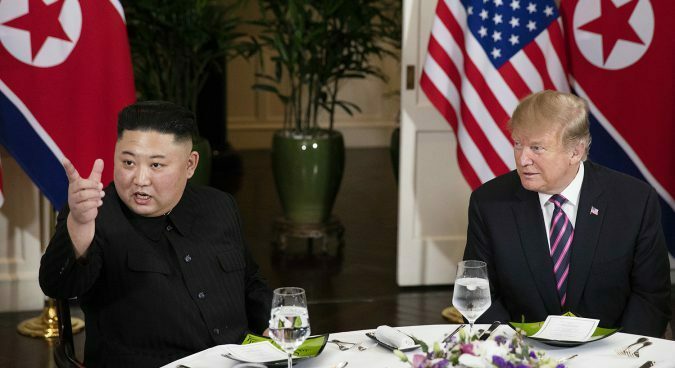 NK News: But if North Korea continues to have this nuclear arsenal, the concern is that you will essentially see South Korea and Japan trying to pursue their own nuclear deterrence, especially with unpredictable actors like Donald Trump. Do you think that is something that we might see in the next couple of decades, a nuclear South Korea? Ankit Panda: Look, this is going to require significant efforts by Washington, Seoul, and Tokyo in the coming years. If Trump wins reelection, I think these conversations will probably grow louder in South Korea, especially given that we still don’t know how disputes over alliance burden-sharing are going to find themselves resolved in South Korea and Japan. We should also recall that the reason that the United States does provide extended deterrence to South Korea and Japan is not born of altruism, but it’s actually a nonproliferation policy. You don’t want your allies to have nuclear weapons because then they start nuclear wars that you have to finish. And one of the consequences of that is that if South Korea and Japan did decide that their defensive needs were better backed by their own autonomous nuclear deterrence, that would effectively mean the end of the alliance. Whether that is a development that North Korea would welcome, I think people would debate that. It’s my view that I think there is a way in which North Korea could potentially tolerate that kind of arrangement in Northeast Asia. But it’s certainly something that, as an American interested in nonproliferation, I’m not too eager to see in Northeast Asia. So I think the calling of the day is to continue to build these alliances, make sure that they are strong, focus on reassurance, and be quite realistic about the threats that arise from North Korea. NK News: We have an American presidential election this year. What’s your view on prospects for either outcome? What do you think a Biden presidency North Korea policy might look like and how might North Korea respond if they find out that they’ve got four more years of Trump? Ankit Panda: As far as I know, the Biden campaign is still working out the kinks of its North Korea policy. That said, I think Biden himself has made a few comments on North Korea, previously, that sounded very much to my ears like the same old strategic patience that we heard in 2016 – that the United States will maintain sanctions on North Korea until North Korea takes the decision that it wants to disarm, which, frankly, is ludicrous in 2020, more so than it was in 2016, when it was already ludicrous. That said, I hope that the Biden campaign will come to a recognition that the threat to the United States and to our allies from North Korea is great enough that we need to fundamentally rethink American strategy towards North Korea.
But I think the North Koreans will be much happier to deal with another Trump administration. Although, as we speak right now, the Trump administration has really, I think, fallen into not strategic patience but strategic apathy in that North Korea is not at the top of the diplomatic agenda. The Trump administration is reactive to issues on the Korean peninsula right now, primarily happy to let South Korea take the lead in dealing with North Korea’s increasing belligerence. But if Trump is reelected, I don’t see a way in which the Trump administration will be able to pull off another four years of disinterest in North Korea. Even if the administration isn’t interested in North Korea, Kim Jong Un will be interested in dealing with Donald Trump again.  NK News: What do you think we should expect to see at North Korea’s upcoming military parade in October? Ankit Panda: I think this October parade is really going to be one for the history books. It’s certainly an unusual set of signatures, it is taking place in the middle of a global pandemic too, which I wonder how the North Koreans are mitigating that. One of the possibilities could be that they are giving pre-selected KPA, basically almost a year or 10 months of quarantine, in and around the Mirim Parade Training Grounds and they are spending the entire year preparing for this parade. There are a few things we could see. We could see a massive quantitative expansion in North Korean transporter erector launchers. One of the things that I reported in the book is that the North Koreans continued producing launchers for the Pukguksong-2 through the diplomacy in 2018 and 2019. And they continued similar activity for their ICBMs. In previous parades, they’ve shown us a handful of these vehicles. And sure, if you’re skeptical of North Korean capabilities, it’s easy to cross off a handful of ICBMs as nothing more than a protective nuclear force. If North Korea were to conduct a parade that included scores of the Pukguksong-2’s and potentially a dozen or more ICBM launchers, that becomes a little bit more difficult for the United States. And I think that actually has consequences, demonstrating a capability like that. Because most of the North Korean debate in the United States, in 2017 and prior, was focusing on qualitative advancements. We were debating whether they had a reentry vehicle, whether they had a missile capable of reaching Washington DC, whether they had a missile capable of reaching Guam. They were content to tick off each and every one of those qualitative milestones, so to speak. So now, they have quantitative milestones to demonstrate. But they also still have qualitative milestones too. Let’s not forget that they could show off solid propellant based long-range missiles, longer range than the Pukguksong-2. They have already shown us that they continue to make fast strides in this regard. In fact, the last time North Korea tested a liquid propellant ballistic missile was in November 2017. Every single missile that they have tested since then used solid propellant, like the Pukguksong-3, which also has the distinction of being the longest range that we’ve ever seen in North Korea. So if you put two and two together, it wouldn’t be surprising to me if they demonstrated a new kind of solid propellant missile at this parade as well. And that perhaps could be Kim Jong Un’s new strategic weapon. Or it could be a new SLBM, it could be a new submarine. I think these are short term, so there’s nothing we can reasonably do, diplomatically, to prevent these from materializing in the short term. But I think it underscores all the more why this huge missed opportunity in 2018 and 2019 will be looked back upon as a real tragedy.
NK News: Is there anything you think that we’ve not touched upon that is really important to understanding this topic? Ankit Panda: One of the parts of the book that I enjoyed researching and writing quite a bit was the section on command and control, which is a little bit less sexy than missiles and nuclear devices. But command and control is really the glue that holds the country’s nuclear forces together. Without command and control, without the proverbial nuclear button, which Kim Jong Un talked about at his 2018 New Year’s Day address, without that, you are not a nuclear power. You need to have the ability to have your supreme leadership issue an order to your field units to make nuclear warheads and launch nuclear weapons. And I think this often gets obscured in the debates that we have in the Korea watchers’ community, especially about North Korea’s capabilities. One of the reasons I emphasize this is because I think a lot of the dangers that actually are apparent today on the Korean peninsula have to do with limitations in North Korea’s command and control systems. These systems will improve and they will grow. But here’s where we get into tricky territory with things like the United States conducting a cyberattack against the Reconnaissance General Bureau in September 2017. The kind of message tells North Korea about the kind of mitigation measures that it needs to put in place to ensure that its command and control will be robust in a crisis. These are things that I think we really need to be thinking about more carefully. And there’s still a lot we don’t know about command and control (and indeed, almost every aspect of North Korea’s nuclear forces), but command and control is, in particular, I think, something that I would draw more attention to. © Korea Risk Group. All rights reserved. |


 SHARE
SHARE COPY LINK
 X
X MASTODON


Recent Stories