
|
COVID-19 North Korean state media goes a month without showing domestic COVID-19 workFrequent updates in text articles continue but directive likely made in late March to halt use of domestic imagery
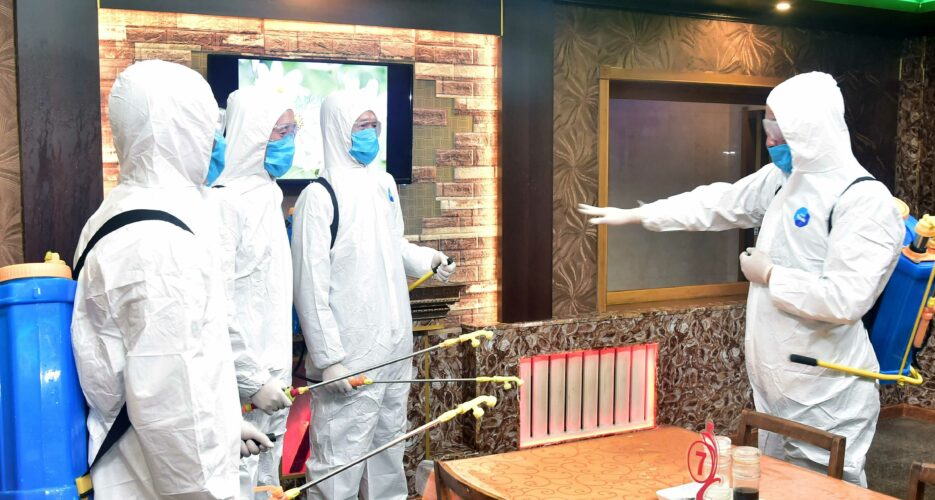 North Korea’s domestically-circulating state media outlets have now gone over a month without publishing images of coronavirus prevention efforts taking place inside the country, analysis by NK News has found. Outlets aimed at internal audiences had since late January been showing scenes such as North Korean medical workers holding meetings on COVID-19, education sessions on the virus, and workers sanitizing public spaces as part of national prevention measures. But such images and video footage disappeared completely after March 21, an in-depth analysis of the country’s four main outlets shows. The outlets analyzed were Korean Central Television (KCTV), the main newswire Korean Central News Agency (KCNA), the government newspaper Minju Choson, and the ruling-party daily — and most widely-circulated publication — the Rodong Sinmun.  These outlets have, however, continued to report on domestic COVID-19 news without images of the efforts. Some other internationally-facing North Korean online publications also released older imagery in the month since, and two outlets, Naenara and Sogwang, posted new photos and video this week of COVID-19-related temperature checks at schools reopening after extended breaks. Images and video of coronavirus news from other countries also continue to appear across most outlets. It is unclear to what extent this kind of imagery of domestic COVID-19 efforts have been circulating in other internal outlets or networks of information distribution inaccessible from outside the country since late March.  But the shift to seemingly disallowing the imagery in the four primary state outlets was stark: the Rodong ran their final images of these efforts on March 20, with KCNA, KCTV, and Minju Choson following suit the next day. The only somewhat related imagery which was released thereafter was of sanitizing products and their production facilities, but such images of coronavirus propaganda sessions or workers in personal protective equipment (PPE) sanitizing areas have not resurfaced. The anchor hosting a segment on the global coronavirus situation in the KCTV news bulletins also stopped explaining domestic efforts after April 3, while the other outlets have continued their text-only reports on most, but not all, days. Possible motivations for what appears to be a government policy change on the use of this imagery include simplifying propaganda messaging, saving resources on gathering such images across the country, or even hiding the COVID-19 situation on the ground.  But as these outlets have not reused older imagery or inserted photoshopped iterations of such scenes, the decision appears to have been related to propaganda strategies or other political considerations. North Korea still claims that not a single case of COVID-19 has been detected in the country, though information on testing is also restricted, making it impossible to assess the real situation. The country has otherwise maintained restrictions on information flows and carefully controlled the narrative on the virus situation nationwide, while there are also no tourists or other foreigners witnessing the state of affairs in most parts of the DPRK at present due to national coronavirus measures. In the latest text reports on the situation, the Rodong on Wednesday said sanitizing liquids continue to be produced and used at hospitals, factories, public places, and elsewhere to prevent COVID-19 from spreading.  Quarantine measures also continue to be exercised, one article said, as another promoted vitamin C as an effective COVID-19 preventative and healing agent. Meanwhile, after the party Political Bureau in an April 11 meeting chaired by Kim Jong Un vowed to “continuously intensify[] the nationwide emergency anti-epidemic services,” KCNA reported Sunday on the redoubled efforts. Guidance has been issued, it said, to carry out “stricter inspection, examination, quarantine and disinfection” of imported items and to improve precautions over “possibilities of inroads of the pandemic … in line with the lockdown of the borders and territorial air and waters.” Edited by Oliver Hotham © Korea Risk Group. All rights reserved. |


 SHARE
SHARE COPY LINK
 X
X MASTODON

Recent Stories