
|
COVID-19 Countries must “clarify” sanctions won’t block COVID-19 aid to North Korea: EUBanks remain reluctant to help aid groups, top European Commission official says
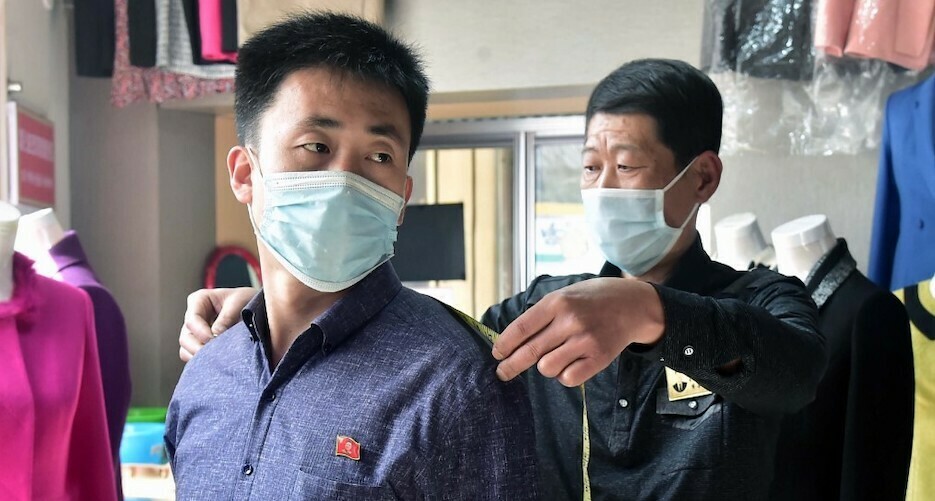 Countries imposing sanctions on North Korea should “clarify” that they do not inadvertently block humanitarian aid from reaching the country, the European Union’s top diplomat said on Monday. The comments, from EU high representative for foreign affairs and security policy Josep Borrell, come as Pyongyang continues to call for sanctions relief amid the COVID-19 pandemic — and continues to deny having any infections at all within its borders. Speaking on a video conference with EU defense ministers, Borrell said the bloc was not necessarily guilty of hurting North Korea with its own sanctions, but stressed that other countries need to make sure their own sanctions were not preventing aid from getting into the North when it is needed. “In the case of the United Nations and the European Union, it’s clear: the sanctions do not pose a problem from the point of view of facilitating humanitarian aid,” Borrell said. “But we ask that those that are done by other countries that have sanctions, that there are humanitarian exemptions to provide medical supplies and equipment to the countries that are subject to sanctions: Cuba, Iran, North Korea, Syria, Venezuela, [so that the sanctions] do not prevent the delivery of humanitarian aid,” he said. Neither UN, EU, nor U.S. sanctions explicitly ban medical supplies, and last week, U.S. Secretary of State Mike Pompeo insisted that humanitarian aid to the country is not blocked by sanctions. But many humanitarian workers have said that the process for bringing aid into the DPRK is not always as simple as it could be. Aid groups trying to bring supplies into the North often transfer them through the Chinese border, and they need to file an exemption request with the UN Security Council (UNSC) before Chinese customs will allow them to pass through into the DPRK. American organizations must also seek approval from the U.S. government, to guarantee that they are not violating any export bans or unilateral American sanctions. One aid group told NK News last year that the U.S. Treasury Department had investigated them for their work in the DPRK — causing them to spend tens of thousands of dollars on legal fees and creating a chilling effect on other humanitarian organizations, the group said. Aid groups working in the North also have no easy way to get money into the country once they are established there.  Wire transfers are not possible because of financial sanctions, and cash-carrying couriers likely can’t come in because Pyongyang shut down its borders after the COVID-19 outbreak began spreading in China. Borrell emphasized that point about access to money in his comments on Monday. “I think it’s absolutely necessary to clarify this subject, because there are financial actors who are very reluctant to participate in the flow of humanitarian aid because they are afraid of falling under sanctions,” he said. “It is imperative that this be made clear, that in these circumstances, more than ever, there will be no sanctions for those who participate in the exchange of goods and services which have to do with more necessary humanitarian aid that is more necessary than ever under these circumstances,” he added. Even if the entire outside world gives an aid group the okay to go into North Korea — for its part, the UNSC panel that oversees sanctions enforcement has not rejected any requests for humanitarian sanctions exemptions during the COVID-19 pandemic — one final hurdle may remain: Pyongyang still has to let them in. As the coronavirus was spreading in China, many humanitarian organizations’ supplies were reportedly stuck in Chinese customs for weeks because of the DPRK’s border closures. Some have finally been allowed in — although it is yet unclear how any coronavirus-related supplies may be used, as the North continues to deny having any cases of the highly-contagious virus. Edited by Oliver Hotham © Korea Risk Group. All rights reserved. |


 SHARE
 COPY LINK
 X
 MASTODON


Recent Stories