
|
Border Controls Reading between the lines: what North Korea’s coronavirus response has revealedThe DPRK's response to COVID-19 shows their health system is highly organized but vulnerable to outbreaks of disease
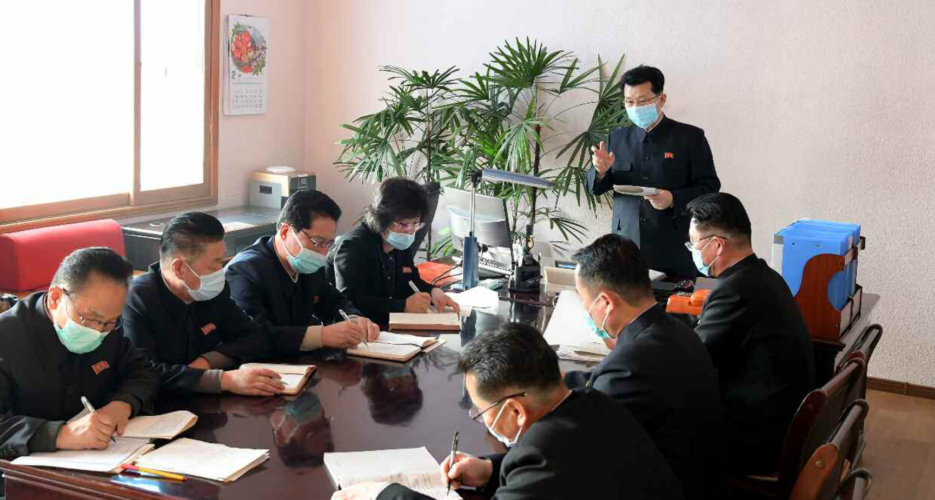 Views expressed in Opinion articles are exclusively the authors’ own and do not represent those of NK News. Unexpected challenges may produce unforeseen reactions, and these unforeseen reactions may hint at hidden characteristics that had gone under the radar for a long time. Recently, an unexpected challenge has arisen with the international spread of the novel coronavirus. Reactions have varied country by country, showing their unique styles in dealing with such a crisis. North Korea’s extreme reaction may provide us with clues that help in understanding what kind of country it really is. Pyongyang has implemented a quarantine and closed its borders to foreign tourists since January 21. This was a surprising development since the North desperately needs foreign currency, and foreign tourists bring in that cash. Additional measures, such as restricting outside activities, have also been taken to prevent the spread of the virus. The North Korean reaction is unique in that they took measures so drastic they would severely harm the economy and their head-on breakthrough campaign. These movements have demonstrated and reminded us of some of the country’s strengths and weaknesses.  A SERIOUSLY VULNERABLE COUNTRY While most countries banned or restricted visitors from certain places entering their territory for a while, North Korea sealed off its borders, in an act of what was basically self-imposed containment. This is very risky because, while it certainly has a negative impact on the economy, it cannot actually guarantee perfectly blocking all movement from across the border. Why did the North implement this self-inflicting measure? A standard explanation is that North Korea is poor and suffers from a shortage of medical supplies needed to fight the novel coronavirus. If there was an outbreak of the contagious disease, they would be unable to stop it. Therefore, they have to consider taking drastic measures to prevent a breakout even if it means bearing an enormous economic loss. North Korea may have reached the conclusion that the consequences of excessive prevention efforts may be less costly than taking the risk of letting the disease spread from the recent outbreak of African Swine Flu (ASF). North Korea only reported one case of ASF to the international veterinary institution in late May last year, but nobody knows for sure how many pigs were actually contaminated or culled. South Korean intelligence estimated that the pigs of at least one provincial region in North Korea were totally eradicated. Some veterinarians in the South said they believed the situation was extremely serious and that almost all pigs in the North may now be gone. The cold, hard lesson learned from ASF may have embarrassed the leadership and led to them taking extreme measures toward disease without any hesitation this time around.  HIGHLY ORGANIZED RESPONSE, WITH AN ELEMENT OF SHOW Measures taken by North Korea demonstrate the country’s vulnerability to outbreaks of disease but also that their system is well organized. There does seem, however, to have been a performative element in their response. North Korea was one of the few countries that banned or restricted the flow of people into their territory at the earliest stage of the coronavirus outbreak. Government institutions functioned properly, and bold approaches to the problem were taken swiftly by veterinary and health authorities. North Korean media has been intensively carrying stories about the coronavirus in which the need for the people to follow the leadership of the anti-virus authorities is emphasized. Scenes on TV showing ordinary citizens and students climbing Mount Paektu wearing masks help reinforce the idea that North Korea is a highly organized nation. However, images shown in state media felt a little too artificial. The photo of the recent military drills showed Chairman Kim not wearing a protective mask despite all of the other observing military leaders doing so. This was rather odd. It’s also strange to compare that image with the photo of nobody wearing a mask during the recent enlarged Political Bureau meeting — a meeting where the Supreme Leader himself was in attendance.  STABILITY STILL STRONG North Korea is a typical autocracy. Such a regime should secure control over three parts of the government: the propaganda sector, the surveillance sector, and the national security sector. Propaganda institutions manage and promote the voluntary obedience of the people to the Leader. The coronavirus doesn’t seem to have caused any problem on this front. Surveillance institutions are oppression machines trying to find and root out malcontents and potential rebels. They try to make people understand that if somebody does not follow the leadership they will be faced with severe punishment. The WPK’s Organization and Guidance Department (OGD) is a leading institution in North Korea’s surveillance apparatus. On February 29, North Korean media reported the dismissal from the Politburo of the head of the OGD because of “corrupt” acts. The dismissal of such a significant figure was very strange and unprecedented. However, the fact that the story was released publicly means that the propaganda machine judged the news would be positive for the country’s stability.
Security institutions try to protect the nation against a potential invasion from outside. They aim to convince the country’s enemies that North Korea has the weapons to protect itself and may well use them. The North Korean military leadership demonstrated that they are having no problems despite the coronavirus crisis and economic sanctions. They fired two multiple launch rocket systems (MLRS) on March 2, which the South Korean Joint Chiefs of Staff estimated was part of a routine military drill. Considering North Korea’s track record, the country probably judged the size of the launch as enough to contribute to internal unity while also not regarded as too much of a provocative action against the outside world. The dismissal of a key official and the MLRS test may evoke two contradictory interpretations: that these events were symptoms of instability, or reflections of stability. However, one may lean further toward the stability interpretation, as we have to bear in mind North Korean actions are minutely calculated under the orchestration of its propaganda institutions.  STATE OF EMERGENCY UNCHANGED The North Korean reaction against the novel coronavirus may look excessive, but there has been almost no resistance or commotion to the measures from the general society. It’s surreal to watch a country close its border and 25 million people simply accept it. This may be the case because a state of emergency is nothing new to the people of North Korea. The country has been in a state of emergency since the end of the Korean War in 1953, bracing itself for the possibility of another war against the United States. The North Korean regime has endeavored to persuade its people that the U.S. could invade at any time and so they must constantly be ready to fight off the enemy. They also argue they have to eliminate the U.S. troops stationed in South Korea in order to liberate the southern part of the peninsula and unify the fatherland. As the American enemy is a formidable military giant, North Korea should be on alert and the whole country should be organized as a watertight resistance unit. Anyone with a dissenting opinion concerning government or party policy will be regarded as a traitor, not only by the regime but also by comrades and friends as well. There has been a series of minor excuses for the country’s long-term state of emergency, such as the Cold War, devastating famine, economic campaigns, and so on. After several decades, North Koreans have come to accept that emergencies are just a part of normal life for them.
Aside from the dramatic measures taken directly against the virus, other actions by the North Korean authorities may expose some hidden — or highlight some already known — points of low-level confidence. Vulnerabilities, the degree of organization, stability, and emergency readiness: these are the factors we should take into account when analyzing the country the next time we have a chance to do so, so that we can form a strategy of engagement that is most effective. Edited by James Fretwell © Korea Risk Group. All rights reserved. |


 SHARE
SHARE COPY LINK
 X
X MASTODON


Recent Stories