
|
Features Almost three years on, Trump’s travel ban has hit North Korean refugees hardThe Trump administration's "extreme vetting" has made it difficult for escapees seeking a new life in the U.S.
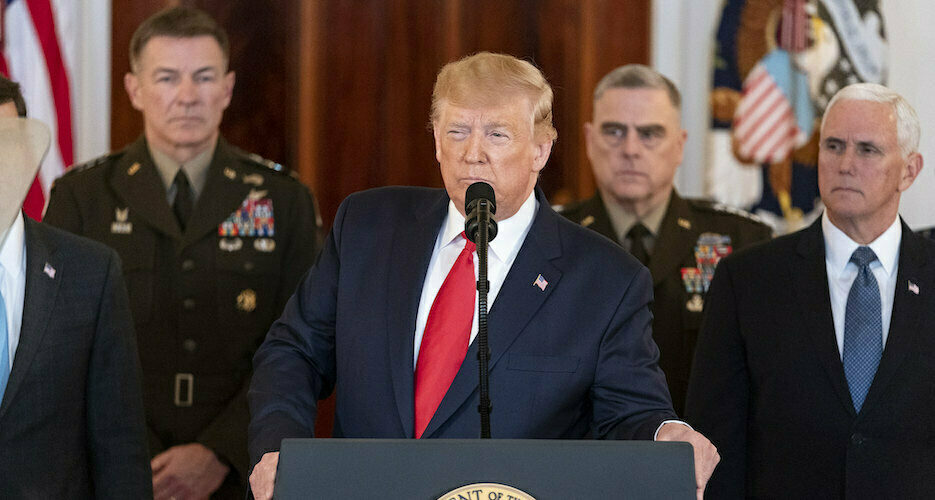 Barely a week into his presidency, officials huddled by his side, Donald Trump signed Executive Order 13769 into law. The bureaucratic title sounds harmless enough, but many Americans quickly learned to call it by another name: the Muslim ban. The law soon sparked protests from JFK to LAX, and led critics to howl that it “legitimized bigotry” against foreigners in general and Muslims in particular. Though the courts eventually quashed Executive Order 13769, its replacement remains in place today and continues to discriminate against citizens from several Muslim-majority countries. Yet even as activists and journalists worry about refugees from Syria or Yemen, another group has suffered too. Already arriving in small numbers, the flow of North Koreans migrating to America has slowed to a crawl, and life is often just as hard for those who do finally make it. No wonder some activists have suggested dumping the old state-run system altogether, instead encouraging citizens to sponsor newcomers themselves. ANY SHELTER IN A STORM? North Korean refugees have been coming to America for over a decade. Eager to help citizens flee the Kim regime, the Bush government pushed the North Korean Human Rights Act through Congress back in 2004. Among other things, the law promised to provide “assistance to North Korean refugees, defectors, migrants, and orphans outside of North Korea” and keep track of the work done to get religious dissenters from the DPRK to the United States. This was bolstered by $20 million in annual funding, and a promise to classify North Korean escapees as proper refugees. Yet even when a Trump presidency was just a fantasy, the numbers of North Koreans coming to America remained low. “Over the past 13 years, there have been a dozen, maybe two-dozen, people coming every year,” says Sokeel Park, the South Korea country director at Liberty in North Korea, an NGO.
He’s quite right: just 212 North Korean exiles reached American soil in the 12 years to 2017, paling in comparison to the 1,127 who were registered entering the ROK that year alone. This divergence is partly a question of geography. With South Korea so much closer than Los Angeles or Chicago, it simply makes practical sense for North Koreans to stay on the peninsula, especially as the South Korean state automatically confers citizenship on most defectors from across DMZ.  Issues of timing hardly help. While the average North Korean in Thailand or the Philippines can expect their transfer to Seoul in just a few months, those targeting America might flounder in a transit camp for a year or more, says Yeonmi Park, a North Korean defector now living in New York. At the same time, these practical considerations dovetail with patriotic feeling. As Thomas Barker, a lawyer who works with North Korean defectors notes, there is a “similar culture and a common language in North and South Korea.” Yeonmi Park agrees, suggesting that wanting to stay on the Korean peninsula is completely natural even for people escaping Kim and his totalitarian regime. “We didn’t leave North Korea because we hated it, we just hated the system,” she says. “We didn’t hate the people, and we didn’t hate our homeland.” Park has witnessed these sentiments first hand: her mother refused to move to America from her new home in South Korea and her father asked her to bring his ashes back for burial in the country. CLOSER TO HOME For Sokeel Park, all this explains why the vast majority of North Koreans plump for a new life in Seoul or Busan better than the vagaries of recent travel restrictions. As Park notes, the numbers involved are so small that trying to contrast change before and after Trump entered office risks missing the wood for the trees. “If ten people come one year and five the next, there may not be anything happening. Sometimes you’ll roll two sixes in a row and it means nothing. If it was 10 million one year and 5 million the next, that means something, but with such small numbers it could just be noise.” Still, there is strong evidence that Executive Order 13769 and its successor really are damaging migration from the DPRK. Regardless of the low totals, that begins with the numbers. According to statistics compiled by the Refugee Processing Centre (RFC), an average of 20 North Koreans refugees were admitted to the United States each year in the decade to 2016. But the election of President Trump marked a striking change. In 2017, only a single North Korean refugee landed on American shores. 2018 saw a slight recovery, back up to six, but that’s still way below the low ebb under the old regime. A search of the RFC website in early December, meanwhile, suggested no North Korean refugees had reached the U.S. so far this year. As a lawyer who keeps an eye on North Koreans moving stateside, Thomas Barker is in little doubt about the causes of the slump. “It’s harder for them to come to the United States because of the travel ban. I think there are a couple of people in the refugee camps in Thailand that want to come here, but are unable to.” It doesn’t help that the new policy of ‘extreme vetting’ towards prospective North Korean migrants has shoved an already creaky bureaucracy into the mud, by one estimate tripling the amount of paperwork expected of new arrivals. All this is compounded by spiraling costs. As Lindsay Lloyd, director of the Human Freedom Initiative at the George W. Bush Institute notes, “the administration has announced a plan to increase the fees for immigrants.” In theory, these challenges are not insurmountable. Though the law states that “the entry into the United States of nationals of North Korea” is “hereby suspended,” the State Department has made noises about making life easier for weary North Koreans. But Barker is quick to dismiss any notion that the current American administration is genuinely interested in welcoming exiles from the DPRK. As Barker dryly puts it, if anyone from North Korea has recently managed to get round the ban, “I haven’t heard about it.”  FREEDOM ISN’T FREE You get the impression Uncle Sam is similarly lethargic when it comes to North Koreans that do finally make it. Unlike the ROK — which has a comprehensive system to ease them into life south of the border, from debriefings by the security services to lessons at a Hanawon re-education centre — the United States takes a far looser approach. Though the State Department mandates private charities to provide food stamps and rental assistance for the freshest arrivals, official support ends after six months. North Koreans are thereafter expected to apply for Medicaid and the like on their own, hardly easy for new migrants who may not speak English. This space is partly filled by NGOs, many of which do great work helping new arrivals assimilate. In Chicago, for example, Emancipate North Koreans recently revealed it was opening a shelter to host DPRK refugees. But other NGOs have been less enduring, as activists struggle to keep going without official backing. Writing in January 2018, Jinhye Jo announced she was closing her NK in USA charity because of injuries sustained in North Korean prisons. Other campaigners are forced to take on projects that should really be the purview of the state. Susie Han, a South Korean studying in California, spends some of her time translating official literature into her native tongue. No wonder she suggests the government should have “better support” for refugees from the DPRK.
All the same, for a few North Koreans, the Land of the Free is just too tempting to resist. Probably the biggest draw is the openness of American life. The Hanawon system notwithstanding, North Koreans in the South can face discrimination from a population that considers them ignorant at best and criminal at worst. This is a far cry from life in America, says Yeonmi Park, who describes how she was accepted as “a victim, a survivor.” Lindsay Lloyd makes a similar point, noting that recent arrivals have made good in a variety of fields, from political science to cosmetology. How do you reconcile the obvious benefits of life in the U.S. with the troubles of its immigration system? One answer might be to look north of the border. Since 1978, Canadians have sponsored around 280,000 refugees, either through organizations or groups of individual citizens. Not only does this approach put responsibility for looking after refugees on passionate volunteers — and away from sluggish government departments — it automatically gives them a community to latch on to.  “The community is already actively engaged at the start, in terms of the integration process,” says Sean Chung, the director of lobbying and strategy at HanVoice, a Toronto NGO that fights for the right of North Koreans to settle in Canada. “It’s not the government that’s telling the newcomers where they should register their kids for primary school. It’s the community, at the very start, that’s organizing the transportation at the airport, bringing them into their homes, and welcoming them.” For his part, Chung highlights what happened when a host of Syrian refugees arrived in Canada a few years back, and were met at the airport by locals carrying bags of food and banners in Arabic. Clearly, the United States has a very different political culture to Canada, but Chung argues that the protests that shadowed the travel ban show that many Americans realize “refugees are fleeing their countries because they have no other option.” Not that a Canada-style approach in America seems likely anytime soon. Lindsay Lloyd thinks it’s an interesting idea but isn’t sure “it’s practical right now” — especially given the current occupant of the Oval Office. Thomas Barker agrees, noting that the majority of people “don’t even think that North Korean refugees could come here.” Given the odds they’ve beaten just to reach American soil, that’s a real shame, even if the travel ban itself does finally get overturned after the 2020 election. Edited by James Fretwell © Korea Risk Group. All rights reserved. |


 SHARE
SHARE COPY LINK
 X
X MASTODON


Recent Stories