
|
News UN approves $752,000 to help North Korea fight climate changeProject is first by GCF with the country, will be implemented through the UN Food and Agriculture Organization
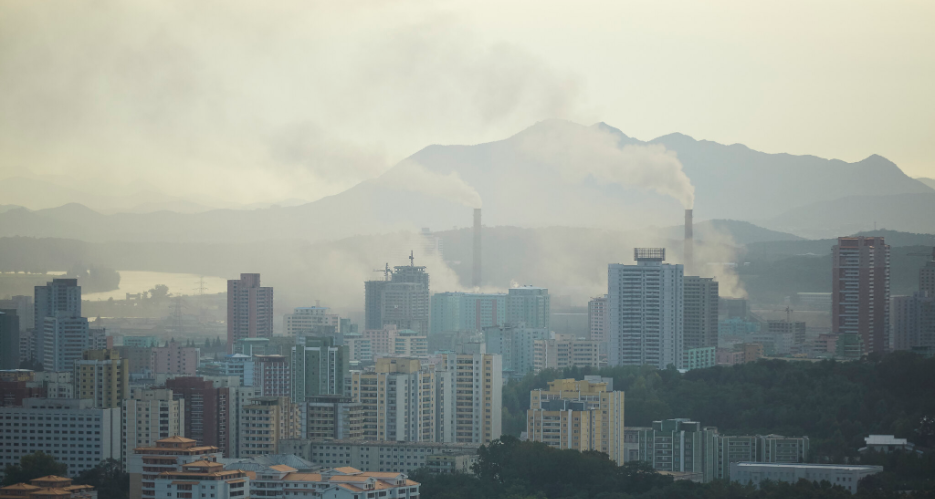 UPDATE at December 28, 0653 KST: This article has been updated to include a GCF spokesperson’s comment on UN sanctions and other details. The United Nations Green Climate Fund (GCF) on December 13 approved its first round of funding for a project aimed at helping North Korea deal with climate change, the agency’s spokesperson told NK News on Friday. The program, titled “Readiness and Preparatory Support for Capacity Building of NDA (National Designated Authorities) and establishment of a National Strategy Framework for engagement with GCF in the DPRK,” will be implemented through the UN Food and Agriculture Organization (FAO), to which GCF will be providing the funding. “Activities under the project will focus on developing a package of training and capacity building exercises to support the NDA to better coordinate and manage GCF and other climate finance as well as better engage with the GCF and providers of climate finance,” the request for funds, first submitted by the North Korean government in August and approved this month, said. The North’s Ministry of Land and Environment Protection was nominated as the Nationally Designated Authority (NDA), the country’s liaison point with GCF, “by a decision of the cabinet” in January 2019, according to the proposal. In August, North Korea submitted its Readiness Proposal, with a total requested amount of $752,090 with an anticipated duration of 24 months, asking for support in building capacity for the country’s engagement with the GCF, managing and prioritizing climate finance, and the formulation of national adaptation planning processes. A preliminary consultative process to “better understand climate change” and “options for low emission,” as well as climate-resilient development will be pursued, says the proposal. The FAO will be the implementing institution, South Korea’s Ministry of Economy and Finance said in a press release, adding that the UN agency will be providing a “roadmap… and education program for building capacity in response to climate change,” to North Korea’s NDA — the Ministry of Land and Environment Protection.  According to the proposal submitted by North Korea in August this year, the country is experiencing “negative impacts related to anthropogenic climate change” such as increasing average temperatures “over the past four decades,” and changes in the timing of the seasons “which has had implications for agricultural production.” John O’Dea, a food security expert, told NK News in a recent interview that international support for North Korea’s food security should focus on “climate-smart” agricultural methods, such as technology to increase soil fertility and resilience against droughts. “This is a country that is suffering more than a lot of other places due to climate change,” he said. Meanwhile, the North raised the issue of CO2 emissions as well. While there are limitations to verifying North Korea’s claims, the proposal disclosed Thursday said that the estimated national emissions in 2020 will be “116.36 million tCO2e (tonnes of carbon dioxide equivalent),” which is “almost double [the] emissions in 2000.” Known as a heavily coal-and-fossil-fuel reliant country, the North specified in the proposal that “the energy sector accounts for around 90% of national emissions.” In February, North Korea’s party daily the Rodong Sinmun cited the “quick development of today’s economy, the increase of energy consumption and the number of cars, and disadvantageous natural phenomena such as yellow dust,” as the cause of air pollution. As recently as mid-December, it was seen that Pyongyang was cloaked in fine dust as the high levels of air pollution affected the southwestern region of the country, with an estimated AQI (Air Quality Index) levels up to around 170 in Pyongyang. However, in the GCF proposal, North Korea argued that it has “contributed relatively little to the overall growth in global greenhouse gas emissions that is driving climate change,” adding, however, that the emission is increasing and that it is “expected to grow by as much as 50% out to 2030.”  The GCF, launched in 2010 by 194 member states of the United Nations Framework Convention on Climate Change (UNFCCC), aims to “promote a paradigm shift to low-emission and climate-resilient development” and pays particular attention to “the needs of societies that are highly vulnerable to the effects of climate change” such as less developed countries (LDCs), it says. “GCF’s approval of the FAO readiness proposal for DRPK follows assurances by FAO the support will not interfere with current sanctions against DPRK, including UN sanctions,” a GCF spokesperson told NK News on Friday. The GCF Secretariat, North Korea’s NDA, and the FAO will be signing a trilateral agreement next month, and the project will start in March 2020 after the fund is delivered to the FAO, according to the press release by South Korea’s economy and finance ministry. Edited by Oliver Hotham and James Fretwell © Korea Risk Group. All rights reserved. |


 SHARE
SHARE COPY LINK
 X
X MASTODON

Recent Stories