
|
Interviews One year since the Singapore summit: what’s changed, and what could happen next?Experts weigh in on the legacy of the historic June 12 meeting
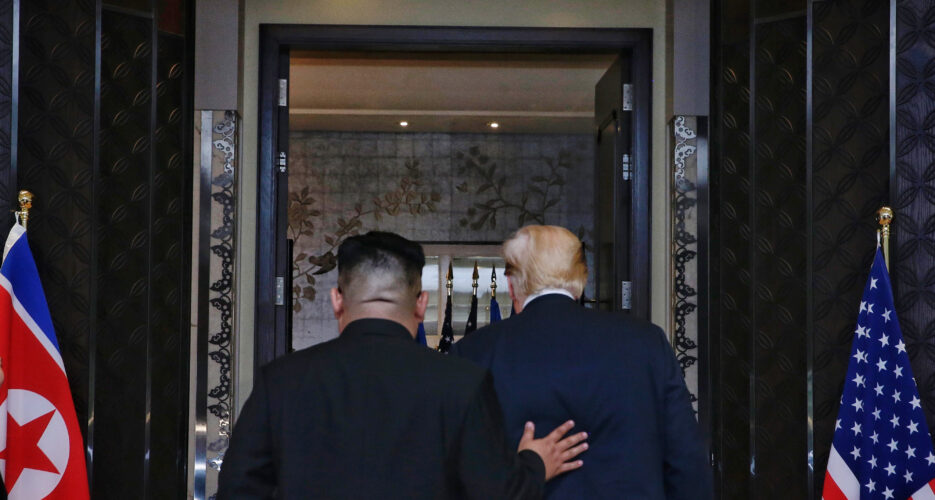 A year ago today, North Korean leader Kim Jong Un and U.S. President Donald Trump sat down at the Capella Hotel on Singapore’s Sentosa Island for their first meeting. The talks were historic: the first between a sitting U.S. President and a DPRK leader, made all the more unusual by the enigmatic characters of the two men and the barrage of insults they had traded just nine months before. Following a day of talks, the two sides produced an agreement, pledging to continue to work towards improved relations and to meet again. But 12 months on, DPRK-U.S. diplomacy has largely stalled: in the wake of the two leaders’ failed second summit in Hanoi in February, lines of communication have faltered — though both sides appear increasingly open to another meeting. So was the Singapore summit worth it? One year later, what did the talks really achieve? And with both sides seemingly at loggerheads over sanctions and the nuclear issue, is it time for the two men to meet again? The following experts responded in time for NK News’s deadline:
 Looking back now, what do you think was the most important achievement of the Singapore summit?
It was symbolically dramatic, of course. And while symbolism isn’t everything, it can create new political spaces: Willy Brandt’s kneeling didn’t bring back the millions of dead Poles, but it did allow countries of central Europe to move past World War II in new ways.
A broader significance of the Singapore summit — one I suspect that will become more appreciated as the event regresses into history — is that it will likely stand as a watershed moment in Kim Jong Un’s broader story of leadership in the DPRK.
Moreover, the holding of the summit opened up a breathing space that was previously unavailable. That space could have been filled with anything that the two parties had wanted, and as such could have led to different and vastly better relations on the Korean peninsula. If that had been the outcome, history would probably have looked rather favorably upon President Trump’s decision to participate.
The summit also put North Korea’s moratorium on nuclear and long-range missile testing on a more solid footing. But in the absence of progress on the four pillars included in the summit’s joint statement, either of these accomplishments could prove fleeting.
The return of American POW/MIA remains was certainly an important outcome, but it was unfortunate that there were no specific agreements on the central issues.
It is not as formal as full-fledged diplomatic initiatives such as the Agreed Framework or Six-Party Talks, but it nonetheless continues to function as a basis for negotiations. The Singapore summit also officialized North Korea’s missile and nuclear tests moratorium. For what it’s worth, Kim’s restraint has lasted more than a year and a half, which is a considerable achievement given how belligerent North Korea was throughout 2017.
Kim’s debut probably also helped the intelligence community glean more insight into his personality and leadership style, so I see that as a plus.
This recognition is the most important achievement of the summit to date because it acknowledges that North Korea’s nuclear weapons program is driven by Pyongyang’s security concerns and that denuclearization will not take place in a vacuum. Establishing this linkage between verifiably dismantling North Korea’s nuclear weapons program and U.S. actions to address Pyongyang’s security concerns lays an important foundation for future diplomatic engagement.
It also established some rapport at the senior level that has kept North Korea from testing its ICBMs and nuclear programs.
Given the short time frame, the summit was unlikely to achieve any major substantive breakthrough. The hope, rather, was that both the lead-up to the summit and the aftermath would involve substantive negotiations. The summit document, however poorly crafted, also appeared the reflect the reality that negotiations could not be “nuclear only,” but would require a widening of the agenda. This fact was simply bowing to reality. 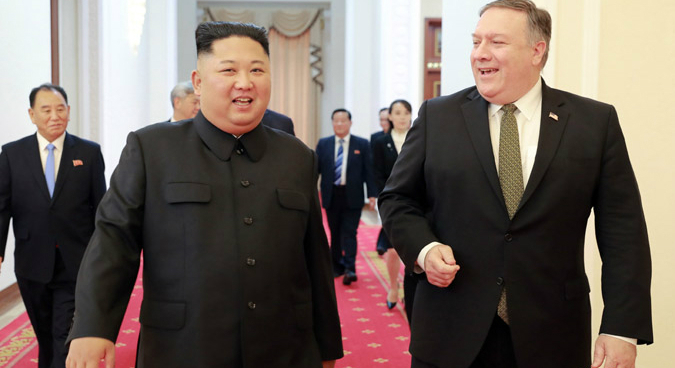 What do you think was its most critical flaw?
Leaving things to be solved at the leader-level was always going to be risky and the North Korean side in particular seems to want to keep things too vague for the Americans to accept. That said, perhaps the U.S. side could have found a way to communicate its need for detailed proposals more elegantly in Hanoi. The way it ended there has clearly caused great consternation in Pyongyang.
25 years later, we’d hardly made much headway with Pyongyang, mostly because the theatrics of the summit itself became the achievement rather than any substantive negotiation process. The critical flaw of the Singapore Summit then was that it offered a misleading glimpse of what a normalized U.S.-North Korea relationship might look like even as the fundamental differences between the two countries remained unaddressed. The vague statement of “complete denuclearization” in the declaration, too, allowed the United States to walk away and issue months of statements misleadingly telling the international community that what Kim had agreed to in Singapore was the “final, fully verified denuclearization of North Korea.”
Conversely, the most serious flaws all came after the summit. Whether due to American and/or North Korean intransigence or just a paucity of sound strategic thinking, that breathing space I mentioned was not filled with creative and credible steps towards the bright future that the summit agreement stipulates.
Summit meetings can set the tone for negotiations and help to break deadlocks, but they can’t substitute for a more in-depth and ongoing negotiation process.
Trump even called them “provocative” and “war games,” which were Pyongyang and Beijing’s words. Readiness declines when soldiers don’t train and exercise, which weakens the rationale for justifying U.S. troop presence from Pyongyang and Beijing’s point of view. Halting them is like dropping a shield before a drawn sword. A smarter bargain would have been to modify the exercises out of good faith by reducing or eliminating some of the more provocative elements (that were incorporated and increased with every North Korean provocation since 2010) such as bomber flyovers in exchange for a halt in nuclear tests and all ballistic missile tests.
Unfortunately, Trump’s emphasis on personal rapport over structure may have led Kim to miscalculate that he could make a handshake deal with him. Trump himself may have believed that, with North Korea being an absolute dictatorship, a genuine change to the country’s policy could only come from the very top. As a result, both leaders ignored the lack of progress at working level meetings preceding the summit in Hanoi, believing their personal relationship could smooth over any bumps along the way. Their wishful thinkings turned out to be wrong, evidenced by the collapse of the talks in Hanoi.
Kim was obligated to do very little, but he was able to pocket the benefits of the summit, including positive international attention and the erosion of the maximum pressure campaign. Given the fundamental weaknesses of the Singapore summit, we should not be surprised at Kim’s apparent confidence in Hanoi that he could manipulate bilateral ties toward getting sanctions relief without taking meaningful actions toward denuclearization.
If the talks had established a regular process for negotiations, it may have prevented some of the misunderstandings that arose as a result of the vague language agreed to in Singapore and capitalized on the momentum of the first summit to produce concrete actions toward meeting the goals agreed to in Singapore.
Because U.S. policy continued to adhere to denuclearization upfront before making concessions on sanctions, this misunderstanding of what “denuclearization of the Korean peninsula” meant undermined the goodwill that had been established at the summit. It also led to the failed summit in Hanoi.
They did. The problem is not only that the summit document reflected virtually all North Korean priorities, it is also that the North Koreans used the document to push off meaningful negotiations.  How much progress would you say has been made towards achieving the goals of the Singapore declaration?
And indeed, they came close on a number of issues that would have helped the two sides push forward on a peace regime, new relations between the countries and more repatriation of U.S. remains (some of which took place in between Singapore and Hanoi). They didn’t get close on defining denuclearization, however, which was necessary to unlock all the other aspirations that came out of Singapore.
The remaining three operational clauses of the Singapore Statement have still not made serious progress.
One can be more positive in terms of the third and fourth bullet points. North Korea destroyed its one and only nuclear test site around the time of the summit. That makes it a great deal harder, though perhaps not impossible, for the Kim regime to return to nuclear testing. In July last year we also saw the return of the remains of 55 UN service personnel lost inside North Korea during the Korean War. However, what is needed if progress is to deepen and ultimately become irreversible is a process of dialogue and reciprocal steps towards the mutually agreed goals articulated in the Singapore summit declaration, and that we certainly do not have.
It appeared that, prior to the Hanoi summit, Washington and Pyongyang had reached tentative agreement on measures related to the improvement of relations and the establishment of a peace regime on the Korean Peninsula: the exchange of liaison offices, an end-of-war declaration, and the resumption of POW/MIA remains recovery operations in North Korea. However, in the absence of an agreement on the core issue of North Korea’s nuclear program, action on these issues failed to materialize.
The Hanoi summit proved that no substantive progress was made in narrowing the gap on the nuclear issue and agreeing on a common end state. The absence of a real agreement with Washington allows Pyongyang to continue developing its nuclear arsenal.
The two countries haven’t made much progress on any of these goals, including the return of war remains which seems rather straightforward to achieve. The biggest stumbling block is again the fact that the two sides cannot agree on sequencing of denuclearization and reciprocal measures. While it is conceivable for the two sides to make progress on advancing dialogue by implementing eminently achievable albeit less central aims such as return of war remains, the top-down approach initiated by Trump and Kim this has trapped the two sides into achieving grand outcomes befitting the occasion of summits, while ignoring the low hanging fruits.
By all accounts, I think it is safe to assess that post-Singapore, Kim had not made a strategic decision to denuclearize. His approach had not changed nine months later. At the Hanoi summit, the two sides apparently made progress on a peace declaration and establishing liaison offices—which could have advanced some aspects of the Singapore declaration–but were deadlocked on the next steps on denuclearization. This is not surprising since the U.S. and North Korea have not been able to agree on the end goal.
The limited steps that both sides have taken—on the U.S. side modifications to joint military exercises with South Korea and on the North Korean side steps to dismantle part of a missile test facility and continued adherence to the long-range missile and nuclear test moratorium—are quickly reversible and do not significantly advance denuclearization and building peace in the region.
As long as the North Koreans don’t engage in further nuclear or long-range missile tests, Trump could well try to finesse the issue. To the extent that Bolton and Pompeo lead on the issue, they are unlikely to adopt a strategy that will work.  What needs to happen now for the two sides to move beyond this months-long diplomatic impasse?
Then, of course, the Korean side would really have to be ready for him and ready to empower working-level negotiators to hammer out some details on denuclearization, particularly the value and definition of Yongbyon, which the Koreans don’t seem to have adequately prepared for Hanoi.
Until that happens, we likely won’t even see the working-level process resume.
The question then becomes: what is that worth? At the second U.S.-DPRK summit in Hanoi, North Korea presented an excessive demand for sanctions relief, requesting that all the UN sanctions resolutions imposed since 2016 be removed. That was not realistic. But there are some things that can be done on the economic front – such as granting a sanctions waiver to permit the reopening of the Kaesong Industrial Complex, which Kim Jong Un has already said he is prepared to do unconditionally – and on the diplomatic front, like signing a symbolically (albeit not legally) meaningful end-of-war declaration.
The U.S. will have to adopt a more internally-consistent policymaking process that empowers its negotiators, and accept the reality that maximalist demands for immediate North Korean denuclearization are not going to work.
If this lull continues, it may require another love letter from Trump to Kim. But that letter needs to clearly state the need to empower their negotiators to do their jobs and ask Kim to give clear guidelines on the nuclear issue so that his negotiator has room to negotiate. Both teams should meet with their own desired version of a denuclearization-peace roadmap and then negotiate one agreed roadmap. Smaller deals can be made in the meantime, but it’s important that any deal contains proportionate tradeoffs.
It seems that the American side is betting that Kim will put a better offer on the table sooner rather than later. But what is more likely is that North Korea walks away from dialogue with the United States, marking the occasion with a ballistic missile launch. If Trump is indeed focused on dialogue as the principal means of solving the crisis then he should focus on more achievable goals at this point. For instance, instead of demanding North Korea to give up all nuclear sites in one go, disclosed or otherwise, the U.S. side could divide up the denuclearization process into a number of stages and negotiate each one separately and in parallel. This way the two sides can figure out what can feasibly be achieved and what can not, thereby creating a sustainable framework for denuclearization.
On the U.S. side, Trump must refrain from undercutting his negotiating team and sending North Korea mixed messages about the U.S. position. The Trump administration also needs to be more flexible and abandon some of its unrealistic demands. Washington should consider economic sanctions relief earlier in the negotiating process and move away from insisting that North Korea agree to a “big deal” on the onset that defines the end state of denuclearization before incremental steps can be pursued.
That will introduce much-needed flexibility and clear a pathway for a third summit.
Is the U.S. willing to relent, for example, by giving more room to President Moon to take initiatives? Second, North Korea clearly overplayed its hand in Hanoi, but is the leadership willing to acknowledge this fact to get back to talks? Finally, the sanctions regime is quietly unraveling, as critics of the summit warned. I suspect this would have happened anyway, but ongoing conflicts with Beijing on trade — and Moscow on nearly everything — don’t make the task of coordination any easier.  How likely do you think a third summit is, at this stage, and what might it achieve?
There’s a lot of variables both before a third summit and after — too many to make a meaningful prediction.
Instead, we risk returning to the tensions of 2017 given Kim’s December 31, 2019, deadline for the United States to arrive a “bold decision” regarding its policy.
Sweep all that aside and both sides seem to have an interest in continuing the discussion from Singapore and Hanoi. To that extent, a third summit is plausible. But it will take significant effort from both sides to bring it to fruition.
If Washington and Pyongyang prove willing to walk back – at least in part – from the negotiating stances they pursued in Hanoi, then there might be space for a modest deal to emerge, and for the two sides to sketch out a roadmap on denuclearization and the normalization of relations.
But another summit won’t achieve anything if Kim returns with the same demand of Yongbyon for UN sanctions relief. Both sides need to find compromises. Because this is a summit process, Trump will still need to hear from Kim that he will eventually put all of his nuclear weapons programs on the table — even if that deadline is ambiguous or distant and comes with many conditions.
Trump could get his third meeting with Kim by agreeing to these conditions. But accepting North Korean demands unconditionally won’t net him more than another audience with Kim. In order to make the third summit more meaningful, the U.S. side should first come up with a multiple stage roadmap for denuclearization with clearly outlined reciprocal measures. It is not an approach that the North Koreans prefer, but certainly a more acceptable alternative to unilateral denuclearization.
The best — but least likely — scenario is one in which there is demonstrable progress in working-level negotiations and Kim takes actions that show his commitment to denuclearization, such as agreeing to halt fissile material production and allowing inspectors to verify the cessation of those activities. The more likely scenario is one in which Kim ratchets up tension and/or privately messages Trump that he plans to revert to testing, citing the “gangster-like” demands of other senior administration officials in an effort to prod the president into yet another summit. In this case, one can envision President Moon appealing to Trump’s vanity by arguing that only he can break the deadlock by meeting with Kim again, even in the absence of progress on denuclearization.
Whether or not a third summit produces tangible results will likely depend on the process leading up to the meeting. If the U.S. and North Korean negotiating teams have a long lead time and the authority to negotiate in detail steps to advance the Singapore declaration’s goals, a third summit could be a win-win for Trump and Kim. But if the meeting is another photo-op that does not produce concrete results, it is likely to set the negotiating process back as it would be even more difficult for Kim to defend continued engagement if he returns from another summit empty-handed.
Meanwhile, Trump is focused on domestic issues in the lead up to the 2020 election. Unless Trump sees the need for a foreign policy victory to shore up his reelection bid, it’s hard to see the U.S. taking the steps necessary to seriously reengage with Pyongyang anytime soon. If, on the other hand, Trump decides NK could provide that foreign policy victory and shifts strategy, a third summit could occur. Provided the concessions both sides would make are worked out in advance and adhered to, a third summit could fundamentally reset the relationship.
The chances that the North Koreans will take a bold step are small, but the U.S. needs to keep working the issue diplomatically even if we are increasingly in a containment world. Edited by James Fretwell Featured image: Kevin Lim/THE STRAITS TIMES © Korea Risk Group. All rights reserved. |


 SHARE
SHARE COPY LINK
 X
X MASTODON




Recent Stories