
|
Expert Surveys Kim Jong Un heads to Russia: why now, and what to expect?Experts weigh in on prospects for the first DPRK-Russia summit in almost eight years
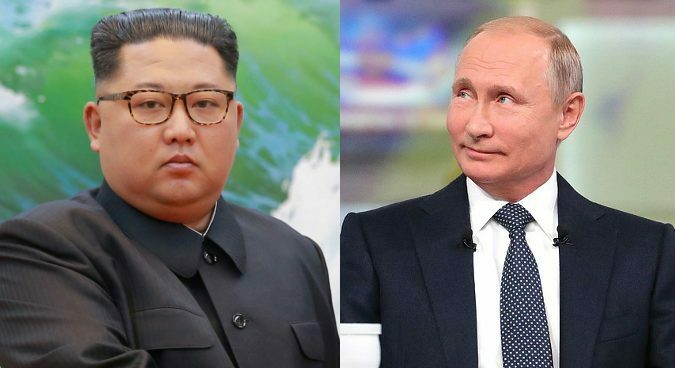 Following months of speculation, the Kremlin on Thursday confirmed that Kim Jong Un will travel to Russia later in the month for a summit with President Vladimir Putin. The planned meeting will take place almost a year after Russia first extended an invitation to Kim Jong Un to visit Russia, and comes at a noteworthy time: with U.S.-DPRK diplomacy currently at an impasse, it’s likely the two leaders will have plenty to discuss. So what to make of the news, and what is likely to emerge from what will be the first DPRK-Russian summit in eight years? The following experts responded in time for NK News‘s deadline:
 Does the timing of this come as a surprise? Why/why not?
Moscow, along with Tokyo, has been a distant fifth and sixth, as the two Koreas, the United States and China have engaged in intense summit diplomacy over the past year. At some point it would only be natural for Russia to re-connect to the process.
Furthermore, meeting with Putin approximately five months prior to this year’s Eastern Economic Forum could allow the DPRK and Russia to make preparations for collaborative economic projects ahead of that multilateral gathering.
That Kim has chosen to go to Russia at this moment looks absolutely logical. He has had a standing invitation since last May when Russian foreign minister Lavrov visited Pyongyang and invited Kim, on behalf of Putin, to come to Russia. However, throughout 2018 and up to the Hanoi summit Kim was too busy pursuing summit diplomacy with the U.S., South Korea and China. He apparently didn’t have much time left for Russia, relegating relations with Moscow to his senior diplomats. Neither was he particularly interested in going to Russia because it was not clear what material benefits such a visit would bring to Pyongyang. Post-Hanoi, when the diplomatic process with Washington – and Seoul – has stalled, Kim’s calculation has changed. In fact, there are few foreign leaders with whom he could have meaningful meetings right now. Washington, Seoul and Tokyo are out of the question, for now. He has already been to China four times and another visit there would underscore Pyongyang’s excessive reliance on Beijing. So Russia looks like an evident choice. He can expect a friendly reception here and probably some chance of getting political and economic support from Putin.
Nevertheless, I was sort of expecting Russia to be the first to announce it and was surprised when South Korean press reported on it first. Apparently, our world is more transparent than I thought.
The timing is interesting because it only came about after the stalemate of negotiations between U.S.-DPRK, not riding with the high tides of summit diplomacy last year.
However, the summit has been planned since last year and the timing seems to be a compromise between the Russian President’s busy schedule and North Korea’s desire to form a coalition of states supporting Pyongyang’s denuclearization approach after the Hanoi summit, as well as both sides’ efforts to work out a mutually acceptable summit agenda. Moreover, after the failure to get sanctions relief from the U.S., having urgent domestic economic goals and not wanting to depend solely on China, North Korea might be expecting some economic gains from Russia as a result of the upcoming summit.
Now that North Korea needs to show it has other options and maintain a strong position as tensions rise with the United States, Russia is a natural partner to cultivate. As North Korea appears to raise tensions in a very calculated way — including through the recent test and its criticism of Secretary of State Mike Pompeo — being able to show unity with Russia shortly after those moves is a smart maneuver.
Russia extended an invitation to North Korean leader Kim Jong Un close to a year ago, so it was a matter of when North Korea would say yes. For Kim Jong Un, it makes sense to do this now as his diplomacy with the United States is stuck.
In fact, I am more surprised that it took so long for Kim to actually agree to meet with Putin who invited him in May last year.
 What message might Kim Jong Un be hoping to send with this meeting?
Most UN measures include language that reads “measures imposed by this resolution are not intended to have adverse humanitarian consequences for the civilian population of the DPRK.” The North Koreans will be saying, “look, this is happening now, as a P5 member, can you help?”
What is interesting is his decision to conduct a missile test just before his meeting with Putin. In doing so, he is potentially sending the message that he can engage in security provocations yet hold normal relations with a recognized great power.
The value of the summit is somewhat diminished by the fact that it is likely to take place in Vladivostok rather than in the Russian capital Moscow. Thus it falls short of a full state visit. It is not clear which side insisted on the summit taking place not in Moscow. At any rate, this is a sign that the Russia-DPRK relationship cannot be compared to the China-DPRK bond complete with a formal alliance. The Moscow -Pyongyang axis is a generally friendly, but much thinner relationship relative to Pyongyang – Beijing.
Even if there is a slim chance that Moscow would persuade Washington to be more flexible or Beijing to unofficially relax some sanctions Kim would want to take it. And of course, it reminds the world that Hanoi or no Hanoi, the DPRK is not facing political isolation.
Kim may aim to send a strong message to the White House to return to the pre-Hanoi summit consensus to implement reciprocal steps. The U.S. is still the main target of Kim Jong Un’s strategy to change the status quo by acknowledging DPRK as an equal partner and in shifting the military balance on the Korean peninsula.
Internally, it helps maintain his credibility as a statesman — which may have been damaged by what happened in Hanoi — and signals strength.
But I also think that North Korea is very much interested in the economic benefits that may result from its diplomacy with Russia. As Kim Jong Un emphasized in his speech again earlier this month, he wants to develop the country’s economy.
Secondly, the North Korean leader is always happy to demonstrate to the world that he’s a “normal” leader who is accepted by other heads of state across the globe. Thirdly, if Russia agrees to issues such as sanctions relief, albeit not that likely, it can obviously come very handy.  What does Russia stand to gain from a summit with North Korea at this time?
Yet the Kremlin has an opportunity to demonstrate to advance its interests on the Korean Peninsula in a sense that it can show China that Beijing is not the only major influencer in the DPRK, as well as demonstrate to South Korea — with which Russia seeks increased economic cooperation — that there are benefits in cooperating with Russia over DPRK-related issues, including diplomacy and economics.
This is why the summit is important for Russian international prestige. The summit will hardly give Putin any leverage over Kim. However, Putin will benefit by gaining firsthand knowledge of Kim and his motives.
Russia’s biggest diplomatic advantage is that while the country is playing nearly the same role in the UNSC as Britain and France – that of a permanent member endorsing the position of another great power, but unlike London or Paris, Moscow is largely perceived as an independent player, whose position just happens to be identical to that of China nearly all the time. This gives Russia some diplomatic credit it can spend in negotiations with the United States. The idea of Russia having an influence on North Korea was tarnished by the fact Kim Jong Un never met Putin, and the fact that it is finally happening will be a pleasant development for the Kremlin.
Kim Jong Un, perhaps, has some specific proposals for Russia in mind that would benefit his economic development plans; while Vladimir Putin would assess North Korean regime’s sincerity and trust in Russia as an alternative strategic partner (to China) after the fallout at the end of Cold War era. Such an expectation is the result of Russia consistent actions for the past decades by writing off most of North Korea’s debt, which may set the condition to restart their bilateral relations with a new ground of cooperation.
So, Russia was not in a hurry to seek a summit and could wait until North Korea would become more interested in it. Now the situation has changed and amid stalled U.S.-NK negotiations Moscow might regain its role in the Korean settlement and offer its mediator services and invaluable experience of dealing with North Korea (for maybe setting up a multilateral structure of proving security guarantees to NK). After all, Russia shares a border with the DPRK and tries to develop the Far Eastern region, which means that Moscow is not interested at all in a new military escalation on the Korean peninsula, should the current peace process fail. Biegun has been in Moscow this week which illustrates that the U.S. values Russia’s support in resolving the nuclear crisis. Cooperation in this area might become a rare sphere where Moscow and Washington can work together for a common goal of keeping peace and global non-proliferation regime.
But with North Korea looking to expand its diplomatic options, Russia stands to become a much more active participant in Korean peninsula matters — and thereby gain more leverage over both North Korea and the United States.
There are economic reasons for this too, as a positive outcome would be good for the development of the Russian Far East.
Even if the revival of the 6 Party Talks is at the moment unlikely, Russia would not want to be out should such a (or similar) format be re-established. And Putin has been enjoying his position of a distractor-in-chief – whatever helps upsets “the West”, he’s keen on doing. It will be interesting to see the reaction, official and unofficial, of the U.S. 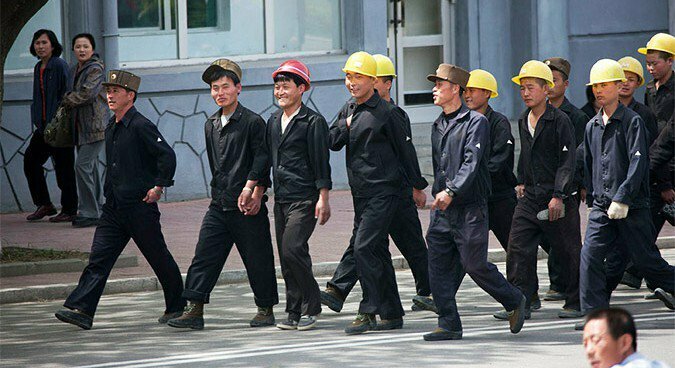 What kind of agreements, official and unofficial, can we expect to emerge from the summit?
Perhaps the Russians will agree to push for waivers from UN sanctions or just unilaterally decide not to enforce some of the measures. Or maybe no agreements. Who knows what is supposed to come out of a summit these days?
In fact, Moscow repeatedly cites its ostensible adherence to international law regarding the DPRK as a reason for loosening sanctions. Even as North Korea has asked Russia for an exception over the expulsion of North Korean guest workers from Russia, Moscow is unlikely to rock the boat in such a way. Official agreements, however, are possible in trade-related areas insofar as they allow the use of the port of Rason-Khasan. It is also possible that the two sides may ink agreements in cultural, educational, and scientific fields. Unofficially, Moscow will likely grant assurances to Pyongyang to continue pushing for sanctions relief.
When Kim meets Putin, he is going to ask for economic assistance and unilateral sanctions relaxation. Moscow is unlikely to grant his wishes. Russian subsidies to NK ended once and for all in 1991. If the Kremlin has any spare money, it is not for Kim. Even if Moscow agrees to provide some economic help to the North, it will be quite limited. For example, Russia could agree to fund the construction of a vehicle bridge connecting Russia and North Korea across the Tumangan River. When it comes to the North Korea sanctions, there is relatively little wiggle room for Russia to relax their enforcement without being in overt breach of the UNSC resolutions for which it itself voted in 2017. Being a veto-holding UNSC member, Moscow can hardly afford to undermine its authority even for the sake of friendship with Kim.
Kim Jong Un is likely to lobby Putin to allow North Korean workers to stay in the Far East despite the fact that by December 22, 2019, they are to be sent home. He has the support of local officials who value North Koreans as highly skilled and cheap workforce and public opinion, as most Russians would agree that North Koreans should not suffer for the fact that their unelected head of state’s weapons may pose a threat to the United States. However, I doubt that Putin will yield. The idea that the UN Security Council should be the top decision-making institution in the world is one of the cornerstones of the Russian leadership’s view of the international politics and the fate of these workers is too small factor to consider when compared to this.
Russia-China alignment on North Korea has always been officially in conforming with each other. Thus, it would be interesting to note the differences and/or highlights, if any.
However, Russia is a responsible permanent member of the UNSC and not a charity, so any projects should have economic rationale and be in compliance with the existing international sanctions regime. Therefore, any economic agreements would be made within the UNSC sanctions framework. As a goodwill gesture, Russia might provide North Korea with some additional humanitarian assistance on a bilateral basis (such as some food or medicine) and promise to keep advocating sanctions relief in the UNSC. The summit may also speed up the process of exploring opportunities to build an automobile bridge between Russia and North Korea.
But I would expect some warm imagery and an effort on both sides to demonstrate unity and good personal ties.
There might be some informal agreements in this direction even if I doubt that Russia would dare to become the main sanctions violator at this stage. Moreover, there is an unwritten agreement between Xi and Putin that North Korea is in the Chinese orbit and sphere of influence and hence Putin wouldn’t do anything which would upset China or would not pre-agreed with China.  How might this summit affect this ongoing stalemate between the U.S. and North Korea?
Furthermore, the broad view among Russia experts who have considered the interplay between the DPRK, the Russian Federation and the U.S. is that Moscow is in no mood to let issues related to North Korea sour the already strained Moscow-Washington relationship. Nevertheless, Russia and the U.S. are in stark disagreement over sanctions, and meeting Putin could prove to be a setback for American attempts at isolating Pyongyang.
First, Putin is too busy with the Middle East where he has established himself as a kingpin figure and, second, Moscow has tacitly recognized the Korean peninsula as China’s area of responsibility. That said, Putin might give Kim some advice on how to deal with the Americans. What kind of advice it will be is anyone’s guess.
As for Washington, while under different circumstances Moscow could have hoped to play a mediator role, public perception of Russia’s meddling in the latest presidential elections makes it nearly impossible – any collaboration with Russia would be met with fury by the opposition to Trump. I think that it would require for both Trump and Putin to go before Russia could be trusted enough to play the role of a mediator.
Thus, if there is a lot of positive traction following Putin-Kim summit, Trump administration will lose more grounds in negotiating with North Korea as the regime will have China and Russia as its fallback options to continue its status as a status quo nuclear-armed state. The United States and South Korea will stand as the biggest losers in this situation if the White House is reluctant to review their negotiation tactics.
The main goal for North Korea now is to get sanctions relief, so it needs to get as much support for this aim as possible. The question is whether the U.S. is ready to respond positively to these efforts.
That is difficult to predict, but it is unlikely that the summit meeting between Russia and North Korea will have an immediate and decisive impact on the stalemate in diplomacy between the United States and North Korea.
I don’t think that Putin can serve as a bridge between the two sides, however. Featured image: KCNA/Kremlin, edited by NK News © Korea Risk Group. All rights reserved. |


 SHARE
SHARE COPY LINK
 X
X MASTODON
 Andray Abrahamian: Russia, while no longer the central player on the Korean Peninsula that was during the 20th Century, still has security interests that they need to look out for.
 Anthony V. Rinna:
  Artyom Lukin:
  Fyodor Tertitskiy: Giving the amount of pestering of Kim Jong Un by the Kremlin, it was bound to happen sooner or later. After all, Moscow sent their foreign minister, speaker of the upper house, and chief of police to persuade Kim Jong Un to come, and the no-deal result of the Hanoi summit seemed likely to push Kim to finally accept the Kremlin’s invitation.
 Hoo Chiew Ping:
  Liudmila Zakharova: First thing to say is that we still do not know if the summit takes place next week, as North Korea has a record of changing its leader’s plans, especially after they become open to the public.
 Mintaro Oba: I’m not surprised. While high-level engagement between Russia and North Korea has been discussed and expected for some time, North Korea largely seemed to prioritize the United States, China, and South Korea before Hanoi.
 Naoko Aoki: I do not find the timing a surprise.
 Tereza Novotná: I am not too surprised about the summit taking place.

Recent Stories