
|
Opinion Trump’s North Korea road trip: no backseat drivers pleaseThe President must make it clear that now is not the time for mixed messaging
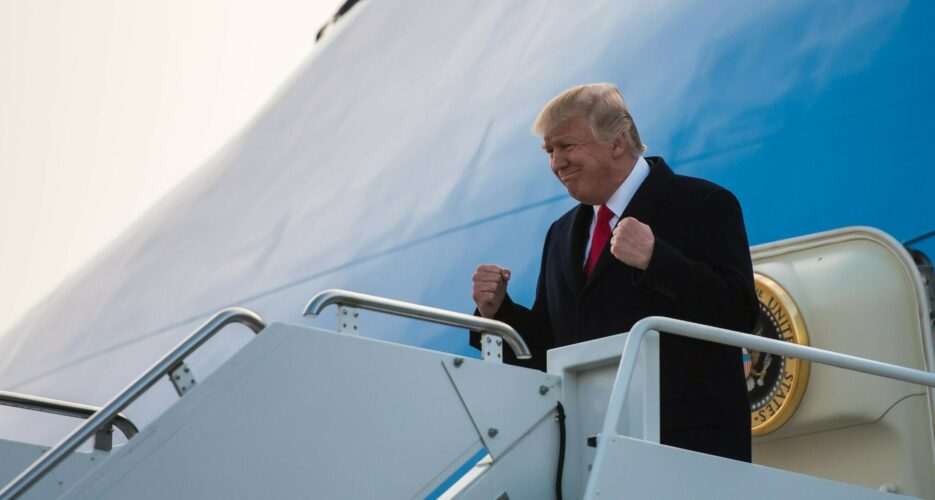 After first prematurely celebrating a historic “breakthrough” on the Korean peninsula, many American analysts and journalists have now made the snap calculation that Chairman Kim Jong Un plans to walk away from the June 12 summit with President Trump, replaying North Korea’s well-established pattern of raising tensions, probing engagement, and dashing hopes. Perhaps. But as veteran radio broadcaster Paul Harvey used to say, what about “the rest of the story”? A massive trust deficit is the operational baseline for U.S.-DPRK relations. The DPRK fears the U.S. intends to overthrow its government, and blames U.S. “hostile policies” for its decision to develop nuclear weapons. For their part, the President, members of Congress, and the American people are frankly exasperated by North Korea’s cycle of provocative behavior, with harsh rhetoric, missile launches, and nuclear tests often followed by seasons of diplomatic outreach. President Trump’s approach of “maximum pressure and engagement” sought to break this cycle – imposing tough, unilateral economic sanctions, complimented by multinational sanctions imposed by the United Nations while using U.S. diplomatic leverage to isolate the DPRK internationally. His pressure tactics coincided with two significant changes on the peninsula: the election of a progressive South Korean President Moon Jae-in, who is leading North-South rapprochement, and the emergence of a more confident, politically secure Kim Jong Un, now commanding a limited nuclear deterrent and willing to explore alternative futures for himself and his country.
HURDLES AHEAD We have arrived at a diplomatic crossroads, but a fog of mistrust shrouds the path forward. North Korean officials aren’t confident that any U.S. President can implement a peace and denuclearization agreement, given the possibility of Congressional interference or a change of government. This is a lesson they learned from both the demise of the 1994 Agreed Framework and the more recent Trump decision to re-impose sanctions on Iran. They also harbor doubts about whether a U.S. President truly has the political authority to carry out an agreement over the objections of members of his own Executive Branch. To put it bluntly, the North Koreans aren’t convinced that U.S. officials long committed to regime change will change course and faithfully follow a normalization roadmap if ordered to do so.  U.S. officials, in mirror imaging, worry that Washington is being played. They have trouble imagining that any DPRK leader, however strong and forward-looking, could really convince the Korea People’s Army to abandon its nukes in the face of overwhelming U.S. and ROK nuclear and conventional military superiority. Overcoming this mutual mistrust requires concerted, disciplined diplomacy. When working with North Korea, process matters almost as much as substance. To their credit, President Trump and Secretary Pompeo have ushered in an era of high-level, secret, authoritative engagement with North Korean counterparts. By relying on Central Intelligence Agency officials as the U.S. front line, Mr. Pompeo signaled to North Korean hardliners that the U.S. was serious and that this was not a mere diplomatic detour. Pompeo brought credibility to the talks. He is the “President’s Man,” often at Trump’s side, and obviously enjoying the full confidence of the White House. The Pompeo process involved quiet communication with those able to make decisions in Pyongyang. In a remarkably short period of time, and with a major assist from President Moon, Pompeo secured an agreement for President Trump and Chairman Kim to meet. Enter the backseat drivers. In contrast to Pompeo’s calmly, private engagement with the DPRK, other members of the administration are screaming for a U-turn. They have repeatedly invoked a rapid model of disarmament that Pyongyang associates with the overthrow and gruesome murder of Libyan leader Muammar Gaddafi. Their admonishments and intemperate demands in the public arena have sown confusion. It is not surprising that Pyongyang has responded with its own admonishment: the DPRK will not be coerced or bribed into abandoning its nuclear weapons.
STAY THE COURSE The appropriate U.S. response to this speed bump in the road is to stay calm and carry on. During our visits to North Korea during the George W. Bush Administration, Vice Foreign Minister Kim Kye Gwan, author of a recent missive from Pyongyang expressing concerns about the upcoming summit, more than once asked us if President Bush was serious about providing security guarantees to Pyongyang. Why, he asked, if President Bush was sincere, were there news reports quoting unnamed Administration sources that the Pentagon was preparing a target list of key military and leadership sites within North Korea? To whom should he listen to understand the “true” position of the United States? While not there to negotiate or speak for the White House, we provided our own assessment that yes, President Bush had made clear his willingness to forswear regime change and live in peace with a denuclearized DPRK. As for the discordant voices in Washington, we could only shrug our shoulders and urge Kim Kye Gwan to pay closest attention to the words of the President.  To navigate the road ahead, the U.S. must be clear about its strategic intentions and explicit about its concrete policy objectives. President Trump has himself sometimes been erratic on North Korea policy. Now is not the time for mixed messaging by anyone in the administration: any Trump official unable to stomach the prospect of a long-term engagement strategy with the DPRK should simply move on.
If the North Koreans come to the conclusion that President Trump is not sincere and the Pompeo initiative is simply a foil – checking the box on diplomacy before proceeding to threats or worse – they may well back out of the summit. Worse, they could conclude that the U.S. was on the road toward launching a military attack to take out their nuclear facilities and consider their own pre-emptive actions. The North Koreans might also reflect on the useful analogy of Pearl Harbor; an attack not launched out of suicidal resignation. The United States should do all we can to resolve our differences with the DPRK peacefully, steering clear of a potentially catastrophic conflict on the Korean peninsula. Those who suggest North Korea would never launch a first strike which would almost certainly result again in the total destruction of their country need a crash course on the internal dynamics of Pyongyang’s thinking. Edited by Oliver Hotham Featured image: U.S. Air National Guard © Korea Risk Group. All rights reserved. |


 SHARE
SHARE COPY LINK
 X
X MASTODON


Recent Stories