
|
Analysis Diminishing returns: heat maps show North Korea’s shrinking trade routesData reveals impact of sanctions crackdown over past five years
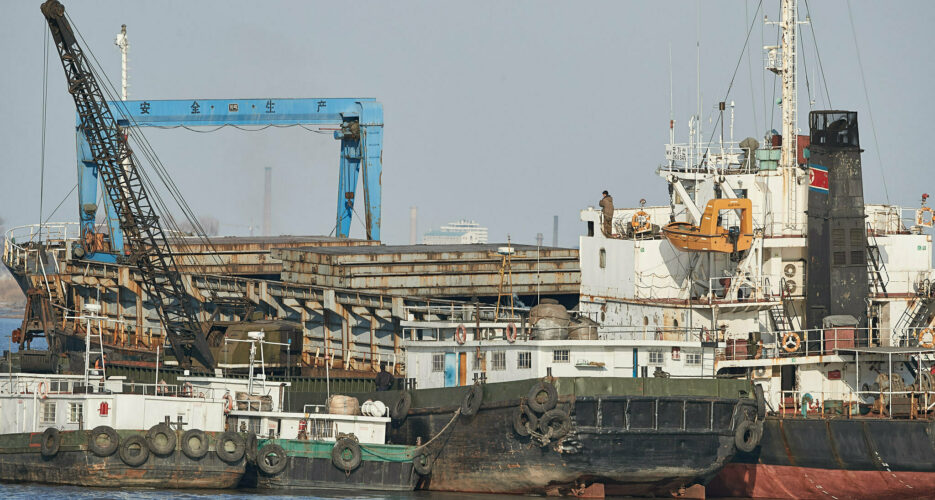 Heat maps showing all North Korea’s merchant vessel movement over the course of the last five years highlight the DPRK’s shrinking trade routes and diminishing global presence, though also reinforce how some of the country’s illicit activity has been farmed out to its sanctions evasion networks. The maps, generated by the NK Pro ship tracker, suggest that, since 2013, foreign ports have gradually become less appealing to vessels sailing under the North’s colors. Each year, the reach of the DPRK’s merchant fleet appears to have receded and voyages to other continents have all but disappeared amid greater scrutiny on the DPRK’s maritime activity. But the visualization also highlights the once-global reach of the North Korean fleet, despite the long-running assumption that the DPRK was completely isolated from the outside world.  Some of the journeys highlighted in the changing map, however, are likely to be false positives, either coming from vessels which were not North Korean but using the country’s flag. The DPRK previously sold its flag to foreign companies, with numerous vessels in the Middle East taking advantage of the service, though demand for North Korean colors waned as the country’s smuggling and sanctions evasion brought unwanted attention. But traffic routes highlight North Korean journeys across the Pacific to Latin America, with ships controlled by the now-sanctioned weapons smuggler Ocean Maritime Management (OMM) visiting Cuba and Mexico – among the more infamous examples. Members of this designated fleet were also seen much more frequently seen around India, Iran, the Middle East, and even Europe in previous years. While not included in the heatmap, in the last decade the now-sanctioned Jie Hye San visited Greece, the Netherlands, Norway, Spain, Iran, Italy, and the UK apparently without issue, though the ship did fall afoul of UK safety standards after it failed an inspection with 38 deficiencies. Yet the more recent journey histories show how North Korean ships almost exclusively sail around a relatively small area of ocean, moving through the Yellow Sea to Chinese ports, or the short distances up to Russia’s far eastern shoreline. WIDER REACH The diminishing number of options for North Korea’s fleet holds true even when vessels are using non-DPRK flags, but which are still likely controlled by, or in cahoots, with Pyongyang. These vessels use foreign registrations backed by brass plate companies in jurisdictions like Hong Kong or the British Virgin Islands to hide that they are working on the behalf of the DPRK. The resulting layers of abstraction provide cover for the ships as they sail into ports controlled by the DPRK’s longstanding enemies, including South Korea, Japan, and even the U.S.  While some of the data picked up by the NK Pro ship tracker from the last five years may represent vessel movements before the ships were folded into the North’s network, other instances show how the DPRK’s sanctions evasions techniques continued to work even as international pressure on Pyongyang grew. One of the more obvious examples highlighted by the heatmaps is the Harmony Source’s round-the-world trip after it was acquired by one of the key nodes in the DPRK’s sanctions evasion networks in 2013. Under the management of the Hong Kong-based Sea Star Ship Company, which also looked after another vessel suspected of smuggling weapons, the Harmony Source sailed to two ports in the southern United States in late 2013 and early 2014. NK News previously contacted one of the port authorities, who said they had no record of the visit, while the U.S. Coast Guard did not reply to requests for comment on the issue.  But as with their North Korean-flagged counterparts, the reach and frequency of such trips also appear to have fallen as time wore on, with many journeys now confined to Asian waters. The non-DPRK flagged ships have greater access to ports around South East Asia and generally appear less bound to Chinese ports than their more clearly North Korean cohorts. One potential reason for this activity could be ongoing coal shipments to various countries in the region, which, despite UN measures, continued last year as the DPRK found creative ways around the new restrictions. A recent report from the UN Panel of Experts (PoE) tasked with monitoring North Korean sanctions enforcement said the North’s ships employed numerous deceptive practices to continue the trade. “The Panel investigated more than 30 cases of exports of coal from the Democratic People’s Republic of Korea to at least four Member States in South-East Asia, including several cases that involved the trans-shipment of coal via Russian Far Eastern ports,” the report reads. And occasionally members of this shadowy fleet still appear from time to time in unusual locations. The most recent heatmaps still show some apparent activity in the Middle East, and on March 24 the Tanzanian flagged Asia Bridge broadcast its location near Iran. The ship has no previous voyage information to show how it arrived at its current location and has registered no port calls in the region, two telltale indicators it was traveling without broadcasting its location, in breach of maritime laws. The Asia Bridge’s appearance in the Middle East is a good reminder that even though the trends are not in the DPRK’s favor, its sanctions evasions mechanisms are still ticking over. Edited by Oliver Hotham © Korea Risk Group. All rights reserved. |

October 23, 2026Oct 23, 2026


 SHARE
SHARE COPY LINK
 X
X MASTODON