
|
Opinion War Games: who is responsible for tension on the Korean peninsula?In refusing to talk to Pyongyang, the US and S.Korea must hold the blame for the rise in tensions
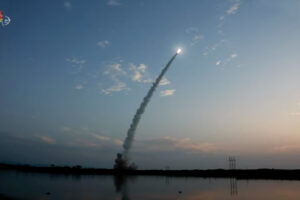
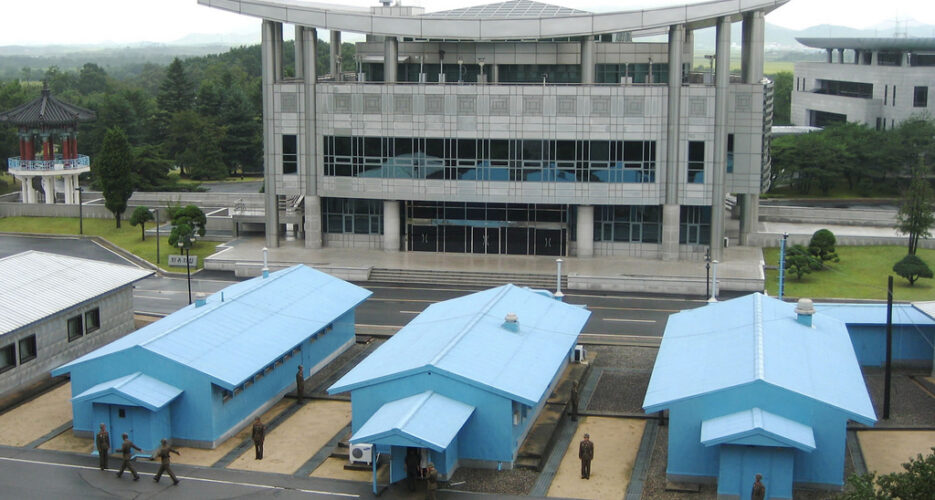 The fifth nuclear test conducted by North Korea on September 9 was, in many ways, a culmination of the troubled security situation that’s been growing for much of 2016. On the eve of nuclear exercise, the military-political situation in Korea was so precipitous that there was no end to the bad news coming from the peninsula. Let us recall some of the events. From August 22 till September 2, one of three major annual U.S.-ROK maneuvers, “Ulchi Freedom Guardian”, were conducted. The military games were attended by 50,000 South Korean and 25,000 US (2,5 thousand of them are deployed outside of Korea) military personnel, as well as representatives of the nine countries which fought Pyongyang in the Korean War. Their task scenario included preparations for a preemptive nuclear attack and a phased plan of a future North Korea occupation. On August 24, Pyongyang carried out a successful launch of a ballistic missile from a submarine, which flew for roughly 500 km. On August 26, the UN Security Council adopted a press statement condemning the move, as well as three more DPRK missile tests conducted by the North Korea earlier in July and August. On September 5, Pyongyang launched three more missiles.  WHERE TO LAY THE BLAME? It is often difficult to know who is the initiator of these escalations. All parties declare their actions to be purely defensive, a response to the aggressive steps of the other side. The war of nerves and the heat of PR campaigns additionally complicate this task, but let us try to understand the essence of what is happening. Of course, the U.S. and ROK argue that the “Ulchi Freedom Guardian” is a regular, routine drill which does not threaten anybody. To an impartial observer, it is hard to believe to such peace-loving rhetoric.
Incidentally, the two other largest maneuvers, held annually by the United States and South Korea in March and April (“Key Resolves and “Foal Eagles”), are also described as “routine” and “defensive”. In the past scenarios have included landing on the enemy coast and moving to capture a major administrative center (obviously Pyongyang). At the same time, the idea of pre-emptive “decapitation” (i.e., eliminating the supreme leadership of the DPRK) has become so popular in some military circles in Seoul that it has begun to disturb American allies. WAR GAMES We should also note that in recent years there has been a tendency for both horizontal and vertical escalation parameters in these war games. For example, “Key Resolve” was unprecedented in scale: 300,000 South Korean and 15,000 U.S. troops; representing all branches of the U.S. nuclear triad. The U.S.-ROK alliance explains the phenomena as a proportional response to North Korea provocations, but it hardly serves to calm the opposite side. Under these conditions, the North Korean response looks to some extent reasonable, and the rigidity of its statements and warnings becomes more understandable. Furthermore, it should not lose sight of another important feature of the military-political situation on the Korean peninsula – one which is often forgotten by Washington: that relations between the DPRK and the U.S. are subject to the terms of the Armistice Agreement, that is, the temporary cessation of hostilities, signed in 1953.   In other words, both states are de jure at war with each other. In these circumstances, any maneuvers by the opposite side send a fundamentally different message and have different consequences compared with the usual practice of military exercises in other countries.
It is no coincidence that the expanding scale and offensive nature of U.S.-South Korean maneuvers is causing growing concern in neighboring countries. Take the related evaluation of the Russian Foreign Ministry that “we are seriously concerned over the major U.S.-South Korean military exercises started a few days ago, which immediately caused an extremely negative reaction from North Korea.” “We fear that, given the worsening of tensions on the Korean Peninsula, such military exercises can act as a spark that could ignite the situation in the region.” ROOT OF ALL EVIL Let us consider another important aspect of the complex equation of security on the Korean peninsula, which the West wants to present as the cause of all ills and evils: the continued development of North Korea’s nuclear missile potential. Of course it’s natural that the USA is not pleased with the fact that, despite UN Security Council resolutions, including the latest 2270, North Korea conducted in 2016 about 30 missile launches, including ballistic missiles both from surface and from submarine, which, undoubtedly, contributes to the growth of tension on the peninsula.  But for all the formal legal validity of the approach of the UN Security Council, it is hardly reasonable to totally ignore North Korea’s perception and position. The reality is that Pyongyang has from the outset declared that it does not recognize the decisions of the UN Security Council and does not consider itself bound by their requirements, and is convinced of the need to strengthen its national nuclear deterrent for the survival of the state and the “hostile policy” of the U.S.
As part of this perception of reality, the DPRK leadership has repeatedly and publicly declared its intention to continue to develop missile and nuclear programs. You can disagree with this position, but ignoring it, as well as not trying to understand the factors causing it, while expecting Pyongyang to respond to resolutions, is not rational. THE ROLE OF THAAD Recent appeals by Moscow and Beijing to consider this issue comprehensively, taking into account the full set of factors and legitimate security concerns of all stakeholders, look reasonable. But the number of sources of anxiety, unfortunately, is increasing.  Among them, the final decision of the United States and the ROK to deploy the American THAAD missile defense system in South Korea ranks high. As is well known, military experts and politicians in Russia and China are not convinced by the American explanations that this type of weapon is designed only to neutralize North Korea’s missile capabilities and do not constitute a threat to anybody else.
So what does this mean for North Korea’s nuclear tests? Firstly, the solution to this problem lies in negotiation, not confrontation. Numerous North Korean missile tests this year would not have taken place if the United States had not rejected out of hand Pyongyang’s proposal on a package deal to Washington, put forward in January 2015, to stop large-scale regular U.S.-ROK military maneuvers. Secondly, the failure of the course of forcing Pyongyang to renounce nuclear missile potential by increasing pressure and isolation unilaterally is becoming more and more obvious. North Korea has repeatedly reaffirmed that it is open for any negotiations, except those who call for unilateral surrender. The fact that the economic sanctions do not work is now acknowledged by an increasing number of competent experts – including American ones.  Thirdly, the Washington and Seoul course aimed at regime change and the elimination of the DPRK, which in recent years they have focused on almost entirely, has played a significant role in undermining efforts for peace. All attempts at isolation and economic strangulation, have not only not resulted in the collapse of North Korea, but have not even prevented moderate but sustained economic growth and living standards improving. BURDEN OF RESPONSIBILITY To the surprise of many observers, statements predicting the upcoming imminent collapse of North Korea on the basis of a few cases of North Korea diplomats defecting in recent months, seems not only unconvincing but wishful thinking from policymakers. The key reason for the current security crisis on the Korean peninsula is the conscious refusal of the US and South Korea to engage in substantive dialogue with the North Korea. Without a return to meaningful negotiations in bilateral and multilateral (possibly on the basis of restarting the Six Party Talks), the real prospects of stabilization of the military-political situation are unlikely. © Korea Risk Group. All rights reserved. |


 SHARE
SHARE COPY LINK
 X
X MASTODON


Recent Stories