
|
Opinion Once again, North Korea is the Hermit KingdomPyongyang increasingly isolates itself, even from old allies, through its refusal to change course
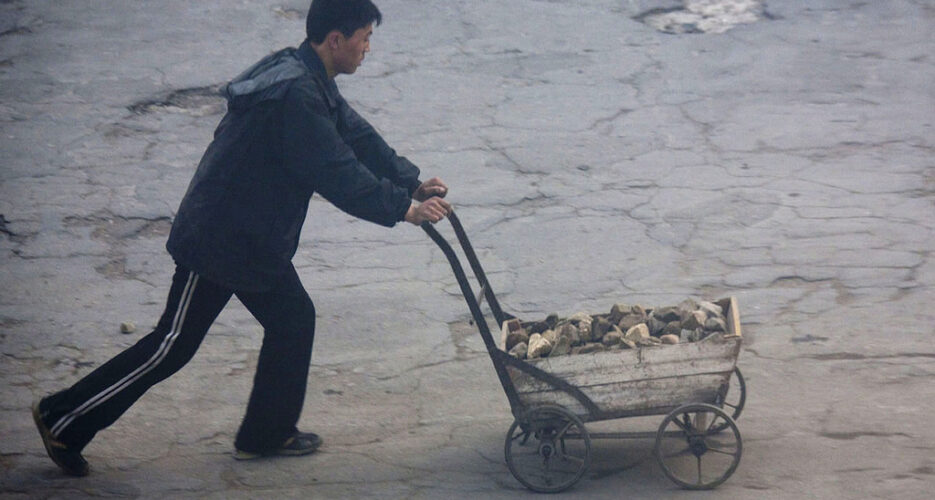 John Donne once said that no man is an island and this truism applies to everyone, including the so-called Hermit Kingdom. The North Korean government’s mouthpiece typically likes to extol the virtues of Juche (whatever that means) and of self-reliance. To a casual observer, it would seem that North Korea is willing to take on the entire world all by its little self. But can it really? Upon a little further inspection, the truth turns out to be a little more complicated. It turns out that despite its affinity for talking about self-reliance, North Korea still needs friends, partners and allies; considering its economic standing (or lack thereof), it cannot afford to be all that picky. Of course, its most obvious friend, or frenemy as it seems lately, is China. But there are a few other countries that have at least been cordial with North Korea. Unfortunately for North Korea, but rather fortunately for the rest of the world, North Korea is losing those precious few friends. As a direct result of some of the strongest sanctions to have been imposed on North Korea for its fourth nuclear test and subsequent missile tests – and not to mention South Korean President Park Geun-hye’s diplomatic blitz around the world, bringing to mind images of The Little Engine That Could – the first friend that North Korea lost recently was Uganda. Shortly thereafter, Namibia announced that it would cut all ties with the North Korean regime as well. Even Iran, which is widely suspected to have had close relations with the North Korean regime, particularly in regards to WMD programs, recently said that it would “completely” comply with UN resolutions. Admittedly, the world might need to take a wait-and-see approach to see if there might be a reality gap between that particular Iranian diplomat in Seoul who said that and what the mullahs in Tehran think privately think. But for the first time in a very long time, the term “Hermit Kingdom” might actually mean something again. So it comes as no surprise that Kim Jong Un, rather belatedly, seems to have realized that maintaining friendships might be important. Just days ago, Kim Jong Un publicly met with Cuban officials for the second time to express “his feelings about Pyongyang and Havana as allies against Pyongyang’s enemies.” Never mind the fact that Cuban relations with the United States appears to be mending followed by President Obama’s visit to that island nation.
More interesting, however, is the fact that Kim Jong Un has also announced his “willingness to improve ties with China.” That is understandable. Despite China’s protestations and refutations, North Korea’s survival depends almost entirely on Beijing’s good graces. When even United States officials have to watch what they say and do around China, it goes without saying the tantrums that Kim Jong Un has been throwing at China lately cannot go on indefinitely. But can North Korea improve ties with China? More specifically, can the relationship between Beijing and Pyongyang ever go back to what it was like when it was still fashionable to say things like “close as lips and teeth?” The short answer is that it is not at all likely but, once again, the truth is little more complicated. On the one hand, it seems rather apparent that the Chinese government is doing everything it can to cheat on its promise to uphold UN-imposed sanctions when we see North Korean coal being sold on Chinese online shopping malls. Gold and kerosene also appears to be being traded like as though business were going on as usual. On the other hand, however, satellite imagery does show that trade over the China-North Korea border has dropped dramatically since the beginning of the year. And considering how significantly cross-border trade has dropped so quickly, it’s hard to explain it away simply as a sign of China’s economic slowdown. WHITHER THE MIDDLE KINGDOM So it may be safe to say that China’s compliance with UN sanctions are more fluid and based on one thing only – whether they might or might not benefit China’s interests. After all, China’s long-term goals in relation to Korea has always been no war, no instability, no nukes and precisely in that order. It would not be too farfetched to assume that China will do as it pleases, whether or not that might violate UN resolutions, in order to pursue that goal. So it is not unimaginable for China to indefinitely prop up the North Korean regime. Within that framework, it is altogether possible for relations between Beijing and Pyongyang to eventually thaw. However, actual improved relations beyond that is not likely precisely because of North Korea’s unwillingness to reconsider its “permanent” policy of expanding its nuclear arsenal while striving to rebuild its economy. As long as this dynamic remains unchanged, it is not possible for China or North Korea to ever see things eye to eye. As long as the North Korean regime insists on expanding and developing their nuclear weapons and missiles, the incentive to deploy the THAAD system in Korea will only keep growing. Despite Seoul’s rather transparent effort to hedge between the United States and China, there will come a time when North Korea’s destructive capabilities will be so great that even Seoul will be forced to realize that merely teasing others that it could decide to deploy the THAAD system is no longer a viable option.
As has been pointed out numerous times before, especially by Bruce Klinger, the THAAD system does not pose a threat to China. However, in politics, perceptions of the truth have always mattered more than the truth itself. And so China (as well as Russia) vehemently opposes the deployment of the THAAD system in Korea. Should Seoul decide to go ahead with it despite China’s opposition, there is no doubt that Sino-South Korean relations will indeed suffer. But at the end of the day, the Chinese leadership knows who will ultimately be to blame for such an outcome. Seeing how North Korea is acting as the perfect excuse for the United States to strengthen its alliances with Japan and South Korea, right at China’s doorstep nonetheless, there is little reason to hope that China’s resentment toward North Korea would ever wane. Even if the THAAD system and the US-ROK alliance were a non-issue, China’s long-term goals for itself is to be the economic powerhouse of the world. To do that, it needs trade partners and as long as South Korea is (much) wealthier than North Korea, and a more reliable trade partner, that alone compels China to be pulled toward Seoul, not Pyongyang. Assuming that North Korea refuses to change its behavior, at best, all North Korea can realistically hope to be is an economic vassal state that China won’t neglect too often. Although this certainly does not mean that China would suddenly be more accepting of drastically changing the status quo, for all intents and purposes, the North Korean regime is right to feel practically alone. The ball is in Kim Jong Un’s court. He can either choose to dismantle his WMD programs, reform his government, liberalize the economy and grant his long-suffering subjects their freedom in order to be embraced by the international community as an honorable leader or he can choose to keep his country on its self-destructive course and live out the rest of his (hopefully short) life as a beggar king feeding off of Chinese scraps. © Korea Risk Group. All rights reserved. |


 SHARE
SHARE COPY LINK
 X
X MASTODON

Recent Stories