
|
Evergreen What happens at a North Korean Party Conference or CongressWhat, based on history, are the chances of reform being announced at the Seventh Congress?
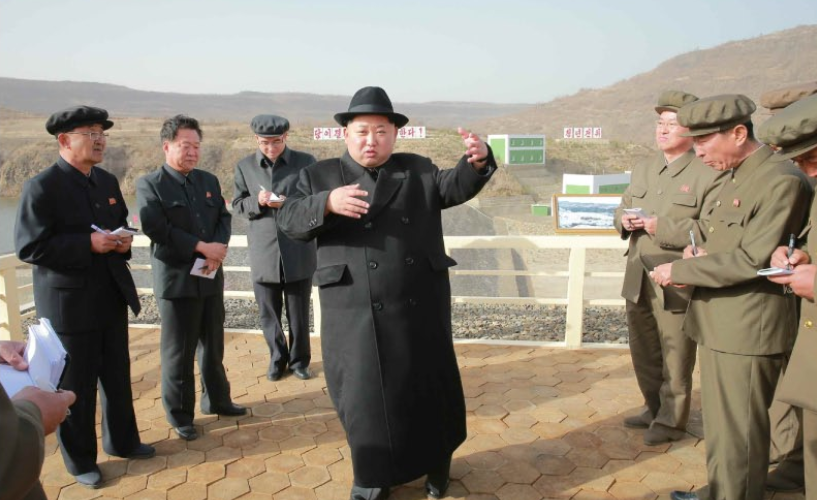 In May 2016 North Korea is scheduled to have its Seventh Congress of the Workers’ Party of Korea. In theory the Congress is the highest ruling body of the Party, electing the Central Committee, the Politburo, the Standing Committee and the First Secretary. However, this is just a theory, and in practice the highest ruling body of the Party is called “Kim Jong Un.” Why then would he convene the Congress? What is it, and why it is needed? Since the Party’s structure in the DPRK is largely copied from the Soviet Union, it would be reasonable to look at the Soviet original. In the former USSR, Congresses were convened every few years, and each of them was preceded by an ideological campaign: an upcoming Congress was called a “historical event” and an organization conducted a “labor watch” – a session of intense work dedicated to the glory of the Party.
At the Congress itself, the General Secretary would give a speech, followed by a “discussion” – speeches by other high-ranking party members in which they expressed total support, then the pre-approved list of members for the new Central Committee and other ruling organizations was voted for, the final speech by the General Secretary was given and everyone went home. All the Congresses in the Soviet Union can be divided into three categories: ones where the Party leadership attacked the opposition, ones where nothing of any importance happened and finally the ones conducted under Nikita Khrushchev. The most important of the latter was undoubtedly the Twentieth Congress, in which the Soviet leader boldly denounced Stalin. As the readers will see, North Korea clearly had Congresses belonging to the first two categories. The question is: Might the WPK’s Seventh Congress resemble something like the Twentieth Congress of the Communist Party of the Soviet Union, or not? THE FIRST CONGRESS August 1946 The First Congress was not actually the first meeting of North Korean communists after Japan’s defeat, but it was considered first, since it was at this meeting that the Communist Party of North Korea merged with the New People’s Party, forming the Workers’ Party of North Korea. The Rodong Sinmun was also established as the Party’s organ at this Congress. All this was largely cosmetic; at that time all these organizations were controlled by the Soviets.  Seen above is seemingly the only surviving photo of the First Congress. The symbol in the front likely is an “I” (the Roman numeral), signifying that this the Congress is the first one. THE SECOND CONGRESS March 1948 The Second Congress was conducted when the division of Korea was about to produce two independent states, so the speeches were mostly about North Korea being good and South Korea being bad. Meanwhile, Kim Il Sung used the Congress to attack one of his subordinates – O Ki Sop, a member of the Communist Party since 1920s. O Ki Sop was subjected to repeated criticism, forced to make a public confession, and was subjected to the humiliation of being the only person not to be elected to the Central Committee unanimously.  The second Congress was the first to feature the Party’s emblem, consisting of hammer, sickle (the Korean one, which look more like a scythe) and a brush. Before that, in February, one could have observed a very strange emblem consisting of a sickle, hammer and another sickle, as if it had symbolized the union of farmers, workers and farmers. However, since March 1948, the Party’s emblem remains unchanged. This Congress was also the last one to feature the old Korean flag of Great Extremes. Since this is now the national flag of South Korea, all the photos featuring it have been doctored by the DPRK. THE THIRD CONGRESS April 1956 The Third Congress was convened very soon after Nikita Khrushchev denounced Stalin at the 20th Congress of the CPSU. It was a time of great unease, and Kim Il Sung was afraid that he might lose power. As he should have been – Leonid Brezhnev, the CPSU representative to the Congress, gave a speech in which he mentioned the “restoration of Leninist norms of collective leadership,” which was a veiled attack on Kim Il Sung’s one-man authority.  Meanwhile, as the Congress went on, the DPRK’s ambassador to the USSR Lee Sang Jo started to talk to the delegates, criticizing the personality cult of Kim Il Sung. The Great Leader was infuriated and started to consider not letting Lee to leave the country, but eventually was persuaded otherwise by Kim Tu Bong. Given that Lee Sang Jo later defected to the USSR and was granted asylum, Kim Il Sung had every reason to be suspicious of Kim Tu Bong. However, the attack on the authority of Kim Il Sung came later – in August – and the opposition was swiftly defeated. THE FIRST CONFERENCE March 1958 The first Conference was the culmination of the purge which started after the defeat of the anti-Kim Il Sung opposition in August 1956. Kim Il Sung expelled them from the ruling circles immediately after the attempt on his power, but was forced to cancel his decisions by the Soviets and the Chinese. However, when Moscow and Beijing’s attention was no longer focused on Pyongyang and relations between the Soviets and the PRC began to deteriorate, Kim was free to act as he pleased – and the opposition was, once and for all, purged. Peter Ward, who to my knowledge has studied this conference more deeply than any other scholar, suggests that North Korea was probably influenced by China for choosing a conference as a model for purge. In 1955, the Communist Party of China purged Rao Shushi and Gao Gang for opposing Mao Zedong – and it was conducted at a Conference, not a Congress.  THE FOURTH CONGRESS September 1961 This Congress was the first after the purges and after the DPRK became politically independent from the Soviet Union. Logically, the Party’s ruling institutions were now composed of Kim’s old friends and followers (largely former Manchurian guerrillas). The personality cult as we know it was yet to be constructed, but the age of factions was gone by 1961. THE SECOND CONFERENCE October 1966 The second Conference was perhaps the most enigmatic major Party event in North Korean history. No transcript of it exists in public domain. Reports about it from foreign embassies in Pyongyang remain quite murky, and even East German diplomats, despite serious efforts, failed to obtain the transcript. Their report to East Berlin simply stated that some high-ranking politicians were seemingly purged. One of the people not re-elected was Kim Chang Man, seemingly the person who coined the phrase “Juche idea.”
It was also seemingly at this conference when the DPRK announced its new line of militarization of the economy. Various sources say that Kim Il Sung was considering a second attempt to invade the South in the late 1960s and testimonies from the people who lived at that time say that it was a time of intense drills for both military personnel and civilians. Fortunately, the war never began and the plan of invasion as eventually abandoned. This conference also started the process which led to the dramatic rebirth of the personality cult of Kim Il Sung. Kim purged some of his loyal comrades, known as the “Kapsan faction,” and in April 1967 announced the creation of the “monolithic ideological system.” In his speech on May 25 Kim gave more detailed instructions, then it all began: North Korea became a much more autocratic and repressive state than before. THE FIFTH CONGRESS November 1970 The Fifth Congress was perhaps the least important of all Party events in the DPRK. Kim Il Sung delivered a speech about the “three revolutions” – ideological, technological and cultural, which had to be implemented. This showed that the DPRK’s concept of a revolution was no longer a Soviet, but a Maoist one, in which the revolution is not a people’s uprising to overthrow the regime, just a regular activity of the Party. North Korea claims that it was at this Congress that Kim Jong Il introduced the iconic Kim Il Sung badges, which all North Koreans have to wear. This is likely true, since the pictures showing the Northerners wearing the badges started to appear from roughly that time. THE SIXTH CONGRESS October 1980 The Sixth and to date last Congress of the WPK convened in 1980. Its main purpose was to present the heir to the throne – Kim Jong Il – urbi et orbi. However, this was not officially stated and Kim Jong Il’s name was only the fourth in the list of the elite, preceded by Kim Il Sung, vice presidents Kim Il and Lee Chong Ok, and General O Chin U. In was not until 1981 when Kim Jong Il came to be presented as a successor to his father openly in publications. The Congress begin on October 10 – the official birthday of the North Korean Committee of the Communist Party of Korea (in reality, in was created on October 13). Speeches were given, a new Central Committee was elected – nothing really major happened. Many foreign guests attended the Congress – mostly from African countries. Perhaps the most notable guest was Robert Mugabe, who, 36 years later, still rules Zimbabwe. THE THIRD CONFERENCE September 2010 In many ways the Third Conference mirrored the Sixth Congress, since it was also the first case, when the anointed successor – Kim Jong Un – appeared in the Rodong Sinmun. Initially announced to be convened in the “first 10 days of September 2010,” the Conference only began on September 28. We do not know why it was postponed, but to the present day this was seemingly the only such case in North Korean history. Kim Jong Un was given the rank of a four-star general and appointed vice chairman of the WPK’s Central Military Commission. Like Kim Jong Il in 1980, the young Kim initially did not have a personality cult of his own in open publications. Eventually, it would have probably changed, but since Kim Jong Il died in 2011, Pyongyang had to rush – and by the next month the youngest Kim was already “the unsurpassably great man” and the “Sun of the Nation.” THE FOURTH CONFERENCE April 2012 Like its predecessor, the Fourth Conference was mostly about the ascension of Kim Jong Un. By April 2012, the only formal positions in country he held were that of supreme commander of the KPA and vice chairman of the Central Military Commission of the Party. At the Conference, Kim was promoted to first secretary of the party and the chairman of the Central Military Commission, while simultaneously “elected” first chairman of the National Defense Committee. Kim Jong Il, meanwhile, was proclaimed the eternal chairman of the NDC and the eternal general secretary of the Party, mirroring his father’s position of eternal president, which Kim Il Sung has held since 1998, four years after his death.
This was, of course, a purely symbolic action. When it comes to the supreme leader of North Korea, it is not his position that makes him a leader, it is the person who makes a position one of leadership. Kim Jong Un may be called supreme commander, first chairman or even God-Emperor – it does not matter, he is in charge by right of bloodline. THE SEVENTH CONGRESS Scheduled for May 2016 The major question for the upcoming Congress is whether North Korea will announce political and/or economic reforms. One could of course write out multiple scenarios – like “major reforms,” “minor reforms,” “no reforms” and “counter-reforms,” but it would be honest to simply say that we do not know. However, there is one conclusion we might come to after the Congress – if they will not announce reforms on the Congress, it is quite unlikely that the DPRK will follow the Chinese or Soviet way in the near future. In has been more than four years since Kim Jong Un came to power. Since that time the only reforms he has implemented have been letting the farmers in collective farms have a part of their harvest and giving autonomy to some state-run enterprises. If these were compared to Khrushchev, Deng, Kádár, Dubček or any other communist reformer, the results would be laughable. Meanwhile, Kim Jong Un has antagonized China for no reason, deteriorated inter-Korean relations to the point of shutting down the Kaesong Industrial Complex, united the American politicians in a single hawk formation in their North Korea policy and irritated Moscow to the point that the Russian Ministry of Foreign Affairs said that Pyongyang should understand that its behavior “gives international right-basis to use military force against it, according to the right of a state to self-defense, as it is stated in the UN Charter.” This is very bad from investment perspectives.
Other specifics of the young Kim’s policy include a crackdown on foreign information, including death sentences for watching South Korean movies, and continuous executions of members of the top leadership. Other policies – censorship, pervasive propaganda and a personality cult, a total ban on the Internet and foreign media for the common people, closed borders and concentration camps in active use – remain as they were before 2011. Considering all this, only a die-hard optimist would still say he is a reformer in his heart. However, let us imagine for a moment that die-hard optimists are actually right. Kim Jong Un wants to announce reforms, he is just waiting for the right moment. What would be the right moment? Obviously, a grand event like the Party Congress – the first in 36 years. So in May we will be given an answer as to whether the DPRK will pursue the path of reform or not. If yes – good for all of us. If not, we should be prepared for the really bad things to happen. Main image: Rodong Sinmun All other images provided by Fyodor Tertitskiy © Korea Risk Group. All rights reserved. |


 SHARE
SHARE COPY LINK
 X
X MASTODON

Recent Stories