
The North Korean leadership is pursuing foreign investment and trade in a variety of ways, through larger projects like special economic zones (SEZs) and smaller-scale policy adjustments, Bradley Babson told NK News.
Babson, a former World Bank official who serves on the Executive Committee of the National Committee for North Korea, addressed some doubts about the status of two SEZs along the North Korea-China border – Hwanggumpyeong and Wihwa Islands – in the aftermath of Jang Song Thaek’s purge. Jang’s absence, he said, is not the main issue now that North Korea is increasing foreign investment. Rather, there needs to be “a clear agreement about how to create the underpinnings for successful investment and infrastructure.”
“Only when you have the infrastructure platform will investors feel that it is worthwhile to start building factories and bringing inputs across the border,” he said.
Still, Babson believes that North Koreans are willing to experiment with different economic policies by using SEZs as a controlled space to test reforms. He states that in places like the Kaesong Industrial Complex there is a real potential to build up businesses, jobs and normal business practices. He adds, though, that North Korea may look to smaller countries like Vietnam as a better model to attract foreign investment, train workers in modern manufacturing methods and so on than the Chinese model, which is designed for a much larger economy.
Apart from these larger scale state initiatives, North Korea is earning foreign exchange quickly by promoting their tourism industry. Babson, calling tourism “a low-hanging fruit,” states that it’s a lot easier to get tourists to come spend money than to get foreign investors to come and invest.
On the other hand, Babson does not think that the North Korean leadership’s construction of amusement parks and luxury resorts are a prudent economic strategy.
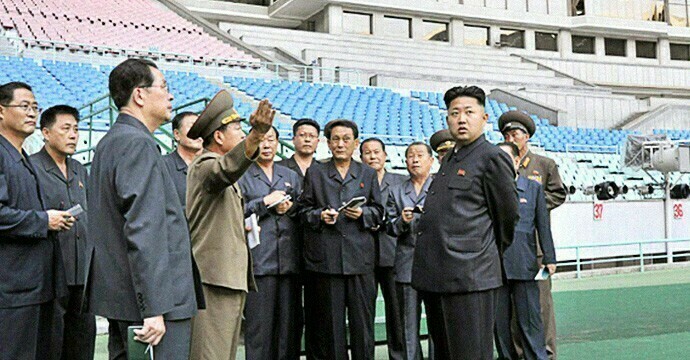
“They don’t have any great economic value to the country” and “obviously are playing out (the) whims of Kim Jong Un,” he said.
And this, Babson believes, reflects the larger dilemma of institution building that North Korea faces right now. The leadership’s unwillingness to create financial policies does not address the reality of the emerging market economy in which “people are trading rights for property.” At the same time, the state’s tolerance for “expanding, private initiative within the umbrella of the existing framework of state enterprises” has accelerated the North Korean market.” As a result, market enterprises are largely unregulated, making it “one of the freest, (most) unregulated economies in the world.”
‘Only when you have the infrastructure platform will investors feel that is worthwhile to start building factories and bringing inputs across the border’
NK News: What do you make of the (non)development of SEZs on Hwanggumpyeong and Wihwa Islands on the DPRK’s northwestern frontier in the aftermath of Jang’s purge? Jang was charged with these SEZs two years prior to his death.
Babson: Jang was certainly instrumental as the co-chair of the join committee with China, overseeing the development of these new SEZs on the border, and his departure has led to the need to rearrange the way the two countries are cooperating at the more senior political level. At the technical level, when the North Korean government created the State Economic and Development Commission, which is now being reorganized again, they did set up a mechanism of central management of the development of all of these new SEZs. The one on the China border plus the other ones that they decided to proceed with (are) rather orderly and (have) the potential for developing those zones in reasonably modern ways.
My own view is that laws that were written for the new zones in the China border are pretty good laws on paper. The obstacles for being able to proceed have to do partly with the fundamental question of how to get infrastructure (and) to create the platform for investors to build factories and to do business.
(For Kaesong) the South Koreans provide the infrastructure platform. The issue with the ones on the China border is (the matter of) who’s going pay for the infrastructure. In the case of Rason, it’s slowly being provided by China and, to some extent, by Russia, at least on the transportation side. But, there is still a gap on the energy side. (There) isn’t yet an energy platform (or) an electricity platform that’s adequate for attracting significant manufacturing. On the Western border, the issue still is how does this infrastructure get put in place. (W)ho’s going pay for it and own it and manage it? I think the expectation is the Chinese will do that, but the framework for that is not very transparent and much less advanced than on the Rason side.
So, to me, that’s the primary obstacle. It’s not so much the fact that you don’t have Jang around anymore, but (that) there doesn’t seem to be a clear agreement about how to create the underpinnings for successful investment and infrastructure. Only when you have the infrastructure platform will investors feel that is worthwhile to start building factories and bringing inputs across the border.
The other problem with the SEZs on the China border is the fact that they’ve opened up sending North Korean workers into China on worker visas. There are a large number of North Koreans now working in factories on the China side of the border. If you are a company and you want to set up a factory and hire North Korean workers, would you rather just have them come across the border under these visa arrangements and hire them directly in China where you know how to do everything, or do you want to set up in a very uncertain North Korean SEZ (situation)? Now, if I were a Chinese business, I would think hard about what choice to make because it’s obviously a lot easier to deal with North Koreans in China if they are willing to come over there and work than put all that manufacturing (and) investment inside North Korea.
This change in the visa policy for North Korean workers in manufacturing activities in China does have an impact on the SEZs on the North Korean side of the border. Just from a purely business point of view, the (Chinese) businesses are going to look at where their risks are and where they’re going to make the most profit. When they do (this) calculation, they’re discovering it’s easier just to take the workers rather than putting the factory in the SEZ.
NK News: You’ve stated, “SEZs are a practical way to introduce (economic) changes in a controlled space…SEZs have played this role in other countries transitioning to market economies, notably China.” Are there differences between the North Korean use of SEZs and Chinese use of them? Can China serve as a model for North Korea?
Babson: The big difference is the Chinese economy is huge and the North Korean economy isn’t. There are limits as to what you can look at (for) China as a model for a small country like North Korea. Countries like Vietnam, which used SEZs to attract foreign investment, to train workers in modern manufacturing methods and management and this sort of a thing (may be) a better model for North Korea than the China case.
But, (using SEZs to introduce economic change is) similar. The idea that you create an enclave then use that, not only to create jobs for people, but also to train local managers in local management techniques, to (then) build backward linkages so that supplies and materials or services are coming from the local economy. (These are) disciplines of doing business in a contractual way that are (driven) by business motivations rather than political ones, which have a backward impact on the rest of the system. There’s real potential in North Korea for that.
We haven’t seen that in Kaesong. Kaesong was set up as an enclave. There are almost no backward linkages to the North Korean economy, except through Choco Pies. But, the reality is that there is a real opportunity there to build up business and jobs and (the) discipline of doing business in a normal way with smaller medium-size enterprises on the North Korean side, if the North Korean government wants to use the zones as a way to introduce more modern business practices and give opportunities for local businesses to grow.
‘It’s in North Korea’s interest to diversify its economic relations as much as it can, and that’s part of the motivation for their current diplomatic engagement with Japan’
We don’t know yet how that’s going to play out. We just haven’t seen enough movement on the SEZ front to see (the North’s) intent or willingness to experiment. We’ve seen (it) in Rason for years. (The North Koreans) said we’re willing to do things in Rason we’re not willing to do in the rest of the country and see how it goes. If we become more comfortable with that, then we might think about it.
I do think that that represents a willingness to experiment, to try things out, and then to apply them more widely. I think (this is) a reasonable way to proceed, but then you want to take advantage of these experimental opportunities and really explore the art of the possible, and, as they get more confident that they can manage things, then they can expand it. I do think that’s a road for reform in a kind of step-by-step way as opposed to trying to do everything at once.
Picture of Rason: Ray Cunningham
NK News: What do you make of the DPRK and Russia signing an economic development protocol agreement with the goal of increasing annual bilateral trade to $1 billion by 2020? How about development projects in the Russian Far East?
Babson: It’s in North Korea’s interest to diversify its economic relations as much as it can, and that’s part of the motivation for their current diplomatic engagement with Japan. From a North Korean point of view, the more economic relations they have in the neighborhood, the better for them. They’re less dependent on China and South Korea, so it would be a natural direction for policy for them to want to deepen their economic relationship with Russia. Now that they have the infrastructure – the rail connection – it makes trade easier to manage across the border between Rason and the rest of Russia. How that develops remains to be seen. I mean, Russia’s got a lot of natural resources in the Far East, including the Sakhalin gas, and whether that develops into these pipelines and things remains to be seen.
There are also a lot of North Korean workers moving in (or) have been in Eastern Russia doing various things, so the labor aspect is another dimension of the relationship because Eastern Russia is deficit of labor, so being able to attract workers is good for them. (As such), there’s some benefit to both countries in deepening the economic ties. How that develops and how robust it will be compared with China or South Korea or even, eventually, Japan remains to be seen.
NK News: Recently, North Korean newspapers and other media have been advertising tours to the DPRK. What impact does tourism and hotel services have on the North Korean economy?
Babson: It’s a relatively easy way to earn foreign exchange, and you’ve seen that also in Burma, or Myanmar, where tourism has been a very rapid aspect of (it) opening up to the world and being able to attract a lot of foreign exchange and foreign interest in the country. It’s stimulating a real estate boom and a lot of hotel development.
From North Korea’s point of view, if they can build a tourism industry, particularly with Chinese, that’s a way for them to earn money fairly easily in a relatively controlled way because the people come in on buses or whatever and you run them around for a couple of days and then they go back. It’s relatively benign in impact on the system, but they get the benefit of all that cash. So, you can see why tourism would be a low-hanging fruit from a North Korean strategy of expanding ways to earn foreign exchange that, in the current international environment with sanctions and everything, it’s a lot easier to get tourists to come spend money than to get foreign investors to come and invest.
NK News: What do you make of amusement parks and luxury resorts? Does they serve any economic purpose outside of co-opting the North Korean elite?
Babson: I’m pretty skeptical about those investments. They don’t have any great economic value to the country. They obviously are playing out (the) whims of Kim Jong Un – that this is something that he thinks would be nice. I don’t think it does an awful lot for the majority of the North Korean people. It may make a few people in the elite feel that they have some nice places to go and have fun, but it’s not going to address the fundamental needs that they have of having secure incomes over a longer period of time. It’s a bit of a waste of money, and has a little bit of political benefit domestically, but not a huge amount. It’s more a reflection of the mentality of Kim Jong Un and the sort of protective life that he’s had growing up in the inner circle. That these are projections of what he likes on the rest of the country, which I don’t think is particularly realistic.
NK News: The regime’s dilemma of opening up the North Korean market to foreign investors is that it allows for “external influences” that it can’t control. However, there are already investors, traders and services, especially in the black market. You could say that commodities, especially in the technology sector, are a type of foreign trade. Can technological spillover occur from grassroots?
Babson: This has been happening for some time with the growth of the market economy and the tolerance for the emergence of a lot of private entrepreneurship, access to knowledge, and new technology to do things differently. There has been rather a dramatic change in the internal environment of permissiveness of these activities in the last five years or so, really since the terrible period in late 2009 or early 2010 when they had the currency reform. They tried to push back the market. Since then, the policy of tolerance for an expanding, private initiative within the umbrella of the existing framework of state enterprises and things like that has accelerated transformative change inside the country.
(This) goes back to my question about institutions. Because (North Koreans) have this tolerance, there’s much more openness to ideas, to knowledge, to new technology, willingness to send people for training, willingness to have foreigners come in and (train) its entrepreneurs, and all the things you see going on there right now, which are rather good and very positive.
‘The irony here is that the marketization of North Korea is bottom-up’
The mindset of the people and the younger generation – the people who see the opportunity for themselves in all of this – is very real. It does have political implications because there is a new source of wealth…and a new sense of a way to succeed in life, which is not linked directly to the patronage system or joining the military.
These changes are actually moving ahead rather quickly and the reluctance of the senior leadership, Kim Jong Un and the people around him and the senior military, to acknowledge the reality of these changes and to build institutions that can manage and deal with them is part of the dilemma that they face right now. The unwillingness to have more apparent policies on taxation, on the financial system, on property rights (have led to these) happening underneath the surface in the emerging market economy where, in effect, people are trading rights for property. Even though it’s illegal, or doesn’t have formal legal status, they’re still finding a way to do it.
(For example, people) purchas(e) houses or apartments or trad(e) state-owned properties that are officially state-owned but unofficially are being traded by private individuals. So, they’re in this sort of netherworld between the old state system and the reality of the market economy, which keeps growing and functioning more and more like a market economy but without the regulatory frameworks and institutions that most market economies build.
The irony here is that the marketization of North Korea is bottom-up. It’s largely unregulated and, in that sense, it has one of the freest, unregulated market economies of the world. (This is) because the government’s unwillingness to regulate changed the system, but the fact that the market economy is growing and the new dynamics mean that it’s even more unregulated than Hong Kong or Singapore.
Main picture: Rodong Sinmun
Join the influential community of members who rely on NK News original news and in-depth reporting.
Subscribe to read the remaining 2885 words of this article.
EXISTING MEMBER?


');
newWindow.document.write('
');
newWindow.document.write('