
|
COVID-19 Why North Korea’s leadership has little to fear from an outbreak of COVID-19The coronavirus epidemic, even if it gets out of control, would not constitute a major threat to the regime stability
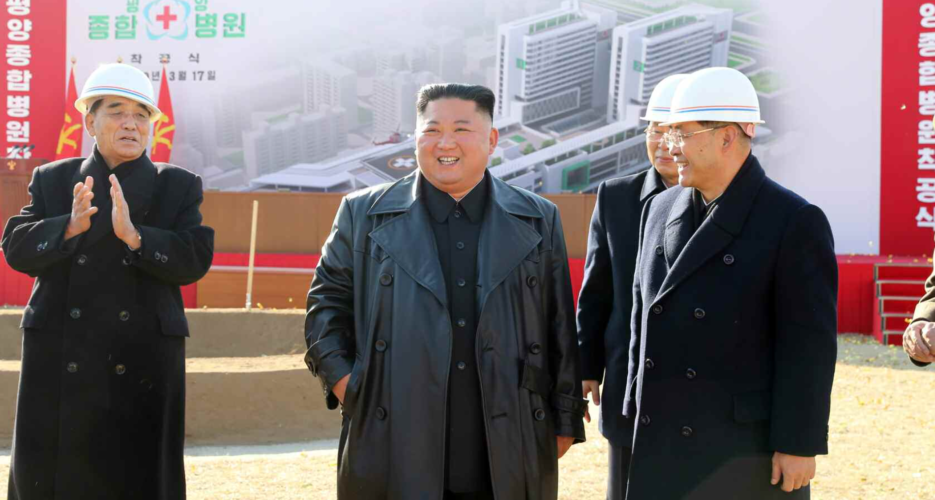 Views expressed in Opinion articles are exclusively the authors’ own and do not represent those of NK News. While most of the world appears to be increasingly in the throes of the COVID-19 pandemic, North Korea appears to be the exception, at least for now. Official claims of the complete absence of COVID-19 in the country may be wrong. Nonetheless, there is little reason to doubt that, as of the time of writing, the North Korean government has been able to successfully prevent a dramatic spread of the disease within its borders. One should not be surprised by this success. North Korea is one of the world’s most authoritarian governments; its bureaucracy and law enforcement work with remarkable efficiency and follow orders from above quite well. When it comes to quarantine and control, vital during any epidemic, such regimes have an advantage over democracies. There is a chance, however, that sooner or later, North Korean defenses will break and the country will be the next in line to experience a full-scale outbreak of the coronavirus. Such an outbreak would bring with it serious political and economic consequences. …or would it? North Korean society is structured in a way that will help it to cushion the coming blow. North Korea, when compared to other low-income countries, has a relatively efficient medical system. The country’s hospitals are poorly equipped, but they are numerous and staffed with an impressive number of doctors and nurses. As we know, the vast majority of COVID-19 patients develop a relatively-light form of the disease. Such North Koreans can count on some basic medical assistance.  But a sorry fate awaits those who develop heavier cases of COVID-19. Most likely, only a handful of North Korean hospitals have ventilators, and these hospitals are completely off-limits for the vast majority of the population. This treatment will be reserved for the top elite, while others will probably be left to die. I understand that the previous statement will sound outrageous to many readers, who are likely to start fuming about the cruelty of the regime. Yet, as a sobering remark, I would remind them that a similar sorry fate is likely to fall upon the vast majority of COVID-19 patients in other poor countries. If your country is seriously poor, it doesn’t matter whether you live under a democracy, a mild authoritarian regime, or a hard authoritarian regime. At the end of the day, the low-income majority have little chance of getting access to ventilators. Such machinery is very rare in poor countries and will be available only to a select few who will, overwhelmingly, come from the local elite. The North Korean situation, however sad, will not differ much from what we are likely to see in other poor countries – assuming, of course, that many of them will not be protected by their warm climate. If the disease first hits some relatively-remote areas, the North Korean government will likely take dramatic internal quarantine measures, completely cutting the infected areas off from the rest of the country.
The regime is able to implement a level of domestic quarantine which would be virtually unthinkable in nearly any other country in the modern world. Frankly, I would not be surprised if the guards protecting the perimeter of such infected areas are allowed to use lethal force against possible escapees. However, North Korean regions tend to be largely self-sufficient. A significant part of its population are subsistence farmers, and even urban people usually have some semi-legal plots on the mountains surrounding their towns. North Korean agriculture, technology-wise, is largely on the pre-modern level, with muscles of human and oxen remaining the major source of energy. It needs little fuel or other inputs, with the possible exception of fertilizer. In other words, many a North Korean county may be cut off from the outside world completely and continue to function more or less as if nothing has happened, at least for a few months. Such autonomy has been the strategic goal of the North Korean government since the 1960s, when it began to emphasize the idea self-reliance spirit. The experience of the 1990s famine merely strengthened these trends. The North Korean population, even if it finds itself under serious pressure, will hardly be able to express its discontent. We have seen, some 20 years ago, how half a million North Koreans died quietly in their houses and on the streets of their towns without challenging the government. North Korea has changed since then, so another lasting famine would likely constitute a threat to the government. However, a short period of difficulties caused by quarantine is far less politically dangerous. And, after all, if discontent gets out of control in a particular remote county, it can be put down efficiently and brutally, with the outside world learning about events with great delay, if at all.  But what will happen if the COVID-19 epidemic spreads to the heart of the regime, the privileged city of Pyongyang, where the vast majority of the North Korean elite dwells? It’s not going to be good news, of course. But as long as the Supreme Leader himself stays healthy, even a massive outbreak in Pyongyang will have only a limited impact on the political situation. As we know, the majority of the COVID-19 victims are likely to be elderly, and the North Korean top elite consists of people of advanced age. Contrary to the expectations of many observers, for some unknown reason, Kim Jong Un chose not to replace his father’s officials with people of a younger generation. The first years of his rule were marked by frequent and large-scale purges, when many top officials, and, especially, military commanders disappeared. However, these people were not replaced by the next generation: the new appointees are also overwhelmingly people in their 60s and 70s. So, if the disease spreads in Pyongyang, these people will be under great threat. Some lower dignitaries will likely not even get access to lung ventilation systems, which are in short supply (a few pieces of this precious equipment will definitely be held, just in case, for use by the Supreme Family). So, it’s quite possible that few top dignitaries will die, if COVID-19 strikes really hard. But, will their deaths have a massive impact on how the country is run? Almost definitely not. Gone are the days when some observers speculated that North Korea was actually run not by the alleged “young and inexperienced” Kim Jong Un, but some secret clique of senior officials, presumably centered against the Organization and Guidance Department of the Central Committee. Now, we can be certain that North Korea is indeed run by Kim Jong Un, for better or worse. So, if COVID-19 kills top personalities like Pak Pong Ju, the chief economic manager (in his late 70s) or Choe Ryong Hae, the leader’s closest lieutenant and adviser (just turned 70), it will not take much time to replace them. In North Korea, political heavyweights — with some notable exceptions — do not typically have their own powerful and coherent cliques which are able to concentrate much power. If the boss is gone, due to a purge, or traffic accident, or COVID-19, his support group will disappear with little trace – we have seen it before many times. No North Korean dignitary, save the Leader himself, is irreplaceable – and this is how the entire system is deliberately designed. The Kim Family does not want to deal with too powerful officials who can fancy themselves independent political players. This has been the case for decades, and Kim Jong Un seemingly takes this approach particularly seriously. 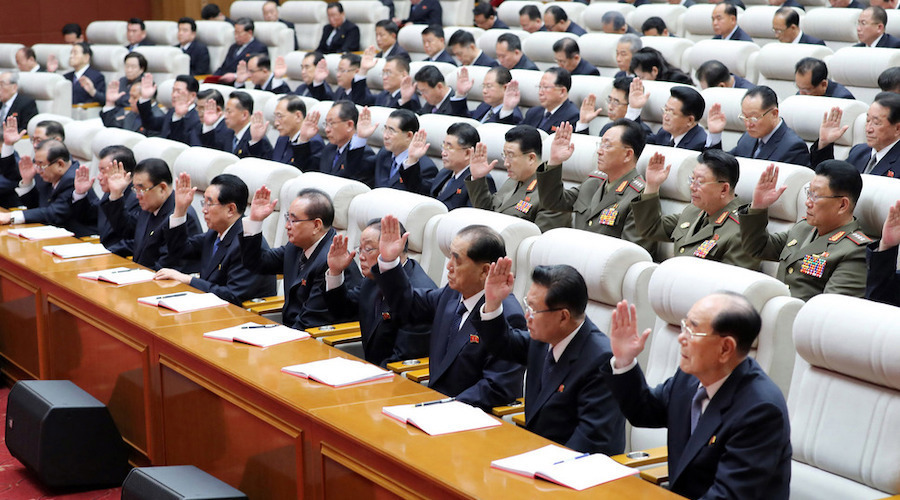 So, if things take a bad turn, and if the COVID-19 gets into the mansions and gated communities of the North Korean elites, we are likely to see the emergence of some new people who will replace those who have died from the outbreak. The epidemic will merely speed up the unavoidable generational change within the North Korean elite. Of course, things might get ugly and unpredictable if Kim Jong Un himself falls victim to the disease. The Supreme Leader is quite young, but he is overweight and has had a stressful life. The chances of the Supreme Leader succumbing to the disease if he gets it are low but real –and, if this happens, all bets are off. It’s for this reason that North Korea’s “competent authorities” are taking the utmost precautions to reduce the chances of Kim getting the disease and, most likely, these efforts will be successful. However, as this author has argued, the ongoing COVID-19 crisis is also likely to have an indirect influence on the situation: the ongoing turmoil will deliver an additional blow to the already struggling North Korean economy. So far, the major indicators of North Korea’s economic performance – grain and fuel retail prices – have remained relatively stable. The introduction of quarantine and stricter control on officially-approved smuggling across the Chinese border in early February initially resulted in the increase of prices. But the North Korean government appears to have sorted the situation out. Some cross-border smuggling to and from China continues, helping the DPRK government avoid dramatic problems. Of course, a much longer quarantine will likely provoke a serious deterioration of the situation. Nonetheless, the COVID-19 epidemic, even if it gets out of control, will not constitute a massive and immediate threat to the regime stability. Edited by Oliver Hotham © Korea Risk Group. All rights reserved. |


 SHARE
SHARE COPY LINK
 X
X MASTODON

Recent Stories