
|
Columns What to expect next at Mount Kumgang after the coronavirus delayThe Wuhan virus outbreak has only postponed demolition - it remains to be seen what Seoul can salvage from the dispute
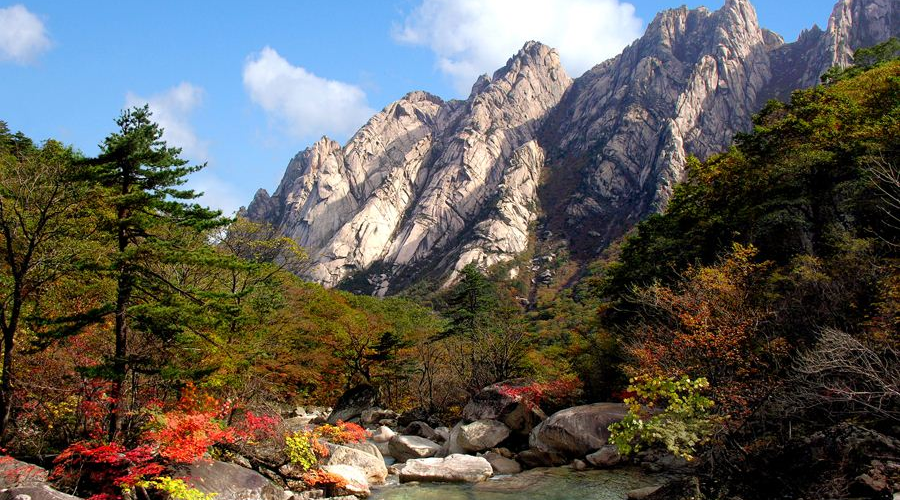 Views expressed in Opinion articles are exclusively the authors’ own and do not represent the views of NK News. This article is the third in an occasional series – more intermittent than I had intended: sorry, dear readers – about the Mount Kumgang tourist resort on North Korea’s east coast. Or the fourth, if you include my wistful personal memories of visiting this beautiful spot long ago. Why focus on Kumgang? To be sure, this is hardly as urgent a topic as Kim Jong Un’s weapons of mass destruction (WMD): whether it’s the nuclear bombs or the missiles to deliver them. Against many expectations – remember Pyongyang’s threatened “Christmas gift”? – all that noxious kit is as yet thankfully untested in 2020, so far. But key dates in the DPRK calendar, starting soon with Kim Jong Il’s birthday on February 16, may well bring the odd big bang. LESSONS TO BE LEARNED Mount Kumgang is important in a different way. The story of this failed inter-Korean venture is interesting in its own right. More importantly, it also holds vital lessons for understanding North Korea and the future (if any) of engaging with the Kim regime – especially for South Korea. Let’s recap the ground covered so far. This series began in late October, just after Kim Jong Un’s visit to Kumgang – which catapulted the long-shuttered, indeed moldering resort back into the headlines. The Supreme Leader was unimpressed, to put it mildly. In a radical U-turn from Pyongyang’s stance hitherto that this joint venture should be reopened, he now “called for removing all the unpleasant-looking facilities of the south side.” Seoul was stunned by this, and still is.
So our first article was background: explaining how important Mount Kumgang tourism was in advancing inter-Korean relations, and what’s at stake now. In a word, why this all matters. Part two described how this project came into being. Credit goes to an unlikely pair. Two of Korea’s greatest sons in the peninsula’s recent history, with little else in common – dissident-turned-President (and Nobel Peace Prize laureate) Kim Dae-jung, and Chung Ju-yung, the peasant lad born near Kumgang who founded the Hyundai conglomerate and became one of the ROK’s richest men – had a shared vision and found common ground at Kumgang. That’s just for starters; there is still much to tell. Meanwhile, others here at NK News have been helpfully filling in the picture, on two different fronts. In the here and now, Oliver Hotham, and earlier Dagyum Ji, have tracked the ongoing inter-Korean spat sparked by Kim Jong Un’s drastic command. I would just add two comments.  SERIOUSLY UNSERIOUS First, the North’s attitude is absolutely unreasonable, in concept and execution alike. Kim’s abrupt and total policy U-turn – Let’s reopen Mount Kumgang together! No, actually, let’s tear it down and kick out the South! – utterly undermines North-South relations. It’s also a very revealing shift with important policy implications, as I shall discuss in a future article. That volte-face was bad enough. But at least Kim said removal should be done by “agreement with the relevant unit of the south side.” And yet, bizarrely and unconscionably, Pyongyang has refused point-blank to discuss Kumgang’s future with any South Koreans in the only way that makes sense, namely face-to-face meetings. This stance is beyond perverse. The idea that something so complex and contentious as this could be settled by batting faxes back and forth is too ridiculous for words. As John McEnroe would say: You cannot be serious. If they wanted to do this in an at least half-responsible manner, then meeting on-site as the South proposed was the obvious way to go about it. But second, thankfully all this is now on hold – at least for the time being. In perhaps the only good outcome from the Wuhan coronavirus, which is scaring both North and South Korea – though not enough for the former to actually cooperate constructively with the latter, sadly – Pyongyang told Seoul on January 30 that demolition work at Kumgang, previously threatened for February after various ultimatums, will be postponed. No new date was given. The reason is clear. In a super-tight complete national lockdown, the DPRK has closed all its borders. So right now the last thing it wants is South Koreans coming in and wandering about at Mount Kumgang. Perhaps this may also serve as a face-saving device to retreat; we shall see.  THREE FURTHER TASKS That is the immediate situation: on hold. This gives us a breathing space to return to the wider picture and resume our series. Having laid out the background and origins of the Kumgang venture in earlier articles, three major tasks remain for future consideration. First, as signaled in my last article, we need to recount and assess the decade-long history – also a decade old, now – of South Korean tourism to Mount Kumgang. That will be the theme of our next installment. Meanwhile, I’m delighted to see that someone else here has got in and done part of the job already. Thank you, Jumin Lee! Please read his excellent take here. Secondly, we must evaluate Kim Jong Un’s new line on Mount Kumgang. This turns out to be more interesting than I thought at first glance. One may even sympathize with his specifically aesthetic comments. For sure, the site has become a rotting mess. Something must be done. On the other hand, Kim’s unilateral rewriting of the terms of engagement (so to say) bodes very ill for inter-Korean ties going forward. In a word: If this sort of thing can happen, what basis does Seoul have to ever trust Pyongyang again? The question may seem academic right now, with North-South relations all but non-existent. But it will arise again in time. Finally, where do we go from here? The current South Korean government has tied its colors firmly to the Mount Kumgang mast. Moon Jae-in appears desperately keen to revive this project. There is even talk of individual (rather than group) South Korean tourism, as a way – supposedly – to get around UN sanctions. Does any of this make sense? Can South Korean tourism to Mount Kumgang really have a future, or only a past? That question – and a firm answer – will conclude our series. Edited by James Fretwell © Korea Risk Group. All rights reserved. |


 SHARE
SHARE COPY LINK
 X
X MASTODON


Recent Stories