
|
Opinion Why North Korea still falls short in providing for the basic needs of its peopleDPRK must stop crackdowns on market activity and guarantee its citizens' rights, UN official writes
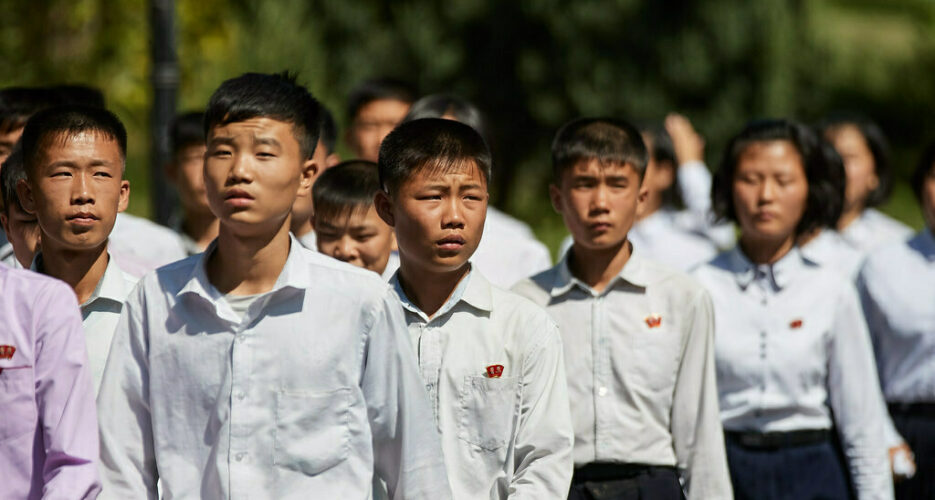 The following is an op-ed contributed by the UN’s Office of the United Nations High Commissioner for Human Rights (OHCHR) to mark the May 28 release of their report: “The Price is Rights: The violation of the right to an adequate standard of living in the Democratic People’s Republic of Korea.” The legitimacy of any government rests on its ability to fulfill the basic needs of the people it governs. This includes ensuring enough nutritious food to eat, clean water to drink, and clothes to stay warm in. International human rights law does not insist on any particular economic system to achieve this; what it does insist on is that the state manages and distributes its resources in a way that meets these basic needs. A report released by OHCHR’s Seoul office today presents a picture of a government in the Democratic People’s Republic of Korea (DPRK) failing on two fronts: to provide the basic needs of the people through the state apparatus, and to ensure a safe environment where people can access these needs through their own endeavors to produce, buy and sell goods. Up until the 1980s, the DPRK government was able to provide basic necessities directly through a state public distribution system (PDS). However, following the end of the cold war, this system collapsed, culminating in a devastating famine in the mid-1990s that reportedly left up to one million people dead.
International human rights law recognizes that events occur outside of a government’s control which impact their ability to ensure an adequate standard of living. In the case of the failed public distribution system, events such as the collapse of the Soviet Union and the resulting loss of loans, cheap oil, subsidized technology, and bilateral aid, as well as the floods of 1995 and 1996, had an obviously detrimental effect on the government’s capacities.  What international human rights law focuses on are the steps that governments take in response to these external eventualities. The 2014 Commission of Inquiry set up by the United Nations found that the government had, during the time of the mid-1990s famine, allocated “disproportional amounts of resources on its military, on the personality cult of the Supreme Leader, related glorification events and the purchase of luxury goods for the elites.” In response to the collapse of the public distribution system, people increasingly engaged in market activity. This came with a realization that, in the future, the state could not be relied upon to provide for life’s basic essentials. Escapees interviewed by OHCHR explained that, at the time, there was simply no alternative: “People had to engage in commercial activities to make money to buy food.” Today, it is estimated that around three-quarters of the population depends partly or solely on private market activity to survive. However, as OHCHR’s report highlights, the government has not introduced the necessary legal and policy reforms to support and protect people’s coping behaviors, instead prioritizing other concerns such as the preservation of oppressive controls over the population and military spending. People in the informal sector subsequently find themselves operating in an uncertain legal environment. The country’s criminal code is worded in such a way that virtually all activity associated with independent economic initiative is potentially criminal, including freedom of movement within the country and abroad. Moreover, basic human rights protection together with an independent and impartial judiciary do not exist, denying the people underlying institutional safeguards against the misuse and abuse of state power.
People are therefore confronted with the threat of arrest and prosecution in their effort to survive, which leads to a range of further human rights violations as they are subjected to inhumane conditions and treatment in the country’s prisons. Armed with the threat of arrest and prosecution, state officials have a powerful means to extort money and other favors from a vulnerable population. OHCHR interviews with over 200 escapees over a two-year period reveal the endemic nature of corruption in the DPRK today. Witness accounts reveal a system of bribes paid to police and security officials to avoid arrest and detention for market activity, to state-enterprises requiring mandatory and often unpaid work, and to officials at checkpoints regulating freedom of movement.  The net effect of this is that people continue to be hungry in the DPRK. According to UN agencies operating in the DPRK, around 10.9 million people, over 43 percent of the total population, are undernourished and suffer from food insecurity; almost 10 million people do not have access to safe drinking water.
Things are worse for those living in rural areas and the north-eastern provinces, including children. For instance, 24.4 percent of children in rural areas are stunted due to lack of nutritious food compared to 15.6 percent in urban areas. And in the north-eastern province of Ryanggang, stunting stands at 32 percent compared to 10 percent in Pyongyang. Under the international human rights treaties which the DPRK has voluntarily ratified, the government is required to take specific steps to address this state of affairs. It must ensure that resources are managed and spent in a way that ensures people’s basic needs are met, rather than on other areas such as disproportionate military spending. It must ensure that people can enjoy an adequate standard of living without discrimination, and that vulnerable populations are protected. And it must ensure that people are not arbitrarily arrested, detained, prosecuted, or subjected to extortion as they take legitimate steps to attain an adequate standard of living outside of the failed public distribution system. Addressing these issues can also be a gateway to tackling the wider range of human rights concerns that exist in the DPRK today. Edited by Oliver Hotham © Korea Risk Group. All rights reserved. |


 SHARE
SHARE COPY LINK
 X
X MASTODON

Recent Stories