
|
Opinion Why it makes sense to deploy THAAD in South KoreaWhile there are several arguments against the deployment, many of them are inconsistent
 After five months of bilateral consultations, South Korea and the U.S. have announced the planned deployment of a THAAD (Terminal High-Altitude Area Defense) battery to South Korea. Under the agreement, the U.S. will provide the hardware and equipment, and South Korea will provide the land for the battery, which will be located at Seongju, North Gyeongsang Province, about 25-30 km from the City of Daegu. The location will be outside the range of North Korea’s long-range artillery and the battery will be able to provide protection to Camp Humphreys in Pyeongtaek as well as Kunsan Airbase and several South Korean military facilities, including the Gyeryongdae military complex and headquarters near the City of Daejeon. The announcement triggered protests and condemnation from South Korean politicians, South Korean civic groups, North Korea, the Chinese government, Russian officials, and others. But while there are several arguments against the deployment, many of them are inconsistent. Most importantly, most critics fail to see the utility of THAAD in the context of a crisis whereby North Korea would have a basket of asymmetric capabilities in a coercive bargaining game against South Korea and its American ally. In sum, bowing to pressures to cancel the deployment would undermine the ability of the U.S. to fulfill its commitments under the U.S.-ROK Mutual Defense Treaty, and it would be a serious strategic blunder for South Korea with long-term consequences. Before explaining those consequences and the utility of THAAD in more detail, I would like to address some of the criticisms against THAAD in South Korea.  LOGICALLY INCONSISTENT Some critics argue that THAAD is ineffective against North Korean missiles and that the deployment will only cause political problems and raise inter-Korean tensions, in addition to worsening relations with Beijing and Moscow. Some even argue that the deployment will only cause regional or global instability. Oddly enough, some critics make both arguments despite the logical inconsistency. If the system is completely ineffective, how can it antagonize North Korea or other countries in the region? Why would Beijing, Pyongyang, Moscow, and others be upset about the deployment of a useless system? To the contrary, adversaries should be happy about such a deployment due to the opportunity costs incurred by the U.S. and South Korea.
The arguments against the effectiveness of THAAD fall into three basic categories: 1) THAAD cannot intercept very short-range rockets or saturation salvos; 2) the North Korean threat is exaggerated and THAAD exceeds South Korea’s defense needs; and 3) given the opportunity cost of THAAD, deterrence could be strengthened through other options such as the redeployment of U.S. tactical nuclear weapons to South Korea, or Seoul acquiring its own nuclear deterrent.  REAL REASONS? Another set of arguments are based on the assertion that THAAD is really aimed at China and possibly Russia. THAAD interceptors are not the problem; they could only intercept missiles in the terminal phase at an altitude of about 40-150 km over South Korean territory. Beijing complains about the AN/TPY-2 X-Band radar, asserting that it could begin tracking Chinese ICBMs early in their boost phase and the data could then be queued into U.S. command centers for mid-course interceptors at Fort Greely, Alaska and Vandenberg Air Force Base, California. While technically this is true, the U.S. does not need a radar in South Korea to acquire and track Chinese ICBMs early in flight. There are two X-Band radars deployed in Japan, and sea-based tracking radars on Aegis ships are in the region as well. Furthermore, U.S. space-based early warning systems would detect a Chinese ICBM almost immediately after it was launched.
 REGIONAL RETALIATION Another set of criticisms is focused on South Korean fears of Chinese retaliation and/or being ensnared in China-U.S. rivalry. These arguments are based on the assumption that THAAD is aimed at China, along with Seoul’s fear of entrapment due to its bilateral alliance with the U.S. For its part, South Korea’s greatest immediate fear is that China will use its economic power to punish Seoul for THAAD deployment. China is South Korea’s largest export partner, accounting for more than twice the exports to the U.S., which is the second largest export market. Veiled threats of economic retaliation are floating in the press, and Seoul still remembers Chinese retaliation during the “garlic trade war” that began in 2000 before Beijing had joined the WTO.
South Korea is also a major trading and investment partner for China. South Korea is the fourth largest market for Chinese exports and the largest source of imports. The two countries have considerable foreign direct investment and their firms are linked in global supply chains that are important to both economies. China’s market size makes South Korea more vulnerable to economic countermeasures; however, retaliation would hurt Chinese firms as Chinese economic growth is slowing, which make Beijing’s economic threats less credible. China also has threatened South Korea with a military attack if THAAD is deployed. On 11 July, Yin Zhuo, a retired PLA Navy admiral, said that if a war breaks out in Northeast Asia, the first target for a PLA military attack will be the THAAD facility in South Korea. One Chinese researcher said a THAAD deployment in South Korea would have a “destructive impact more serious than even the nuclear threat from North Korea.” This type of rhetoric is extremely irresponsible and counterproductive. First, it reveals Beijing’s likely intentions in the case of an inter-Korean crisis, and second, it strongly encourages South Koreans who insist that Seoul must acquire its own nuclear deterrent. Many critics fail to appreciate the role THAAD plays in reassuring Seoul in the shadow of Pyongyang’s growing nuclear capabilities. There is strong support in South Korea for nuclear breakout, it almost certainly would occur if not for the U.S.-ROK alliance. If South Korea were to seek a nuclear deterrent, it seems implausible that Japan would not follow. This scenario is not in the interest of China, Russia, the U.S., or any nation with the exception of North Korea. Some South Koreans are critical of THAAD because it will provide protection for U.S. military facilities but no protection for Seoul. THAAD will not provide missile defense for Seoul and no protection against thousands of artillery tubes aimed the Seoul-Incheon metropolitan area. However, the survivability of U.S. and ROK military facilities in the middle and southern part of the country is critical for the execution of a counter-strike against a North Korean attack. Without that survivability, deterrence would be undermined and the leadership in Pyongyang might decide that military adventurism would further its strategic goals, which are completing the revolution in the South and unifying Korea under the leadership of the Korean Workers Party.  NO COURSE OF ACTION? South Korean society is split over the THAAD deployment. The Saenuri Party, which holds 129 seats in the National Assembly, supports the deployment, and the Minjoo Party, with 121 seats, is split on the issue. The People’s Party (38 seats) is opposed.
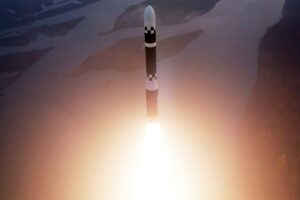
However, South Korea is a presidential system with strong executive powers, especially in the realm of national security policy. The deployment does not need legislative approval, and the National Assembly cannot block the deployment through legislative actions such as budgetary measures. In years past, many South Koreans protested against the expansion and building of military bases at Pyeongtaek and on Jeju Island. Ultimately, the Supreme Court ruled that the construction of the naval base on Jeju was constitutional. Therefore, activists and citizens have no recourse except public protests, but they cannot block the deployment.  STRATEGIC SOLUTION THAAD is not infallible. It does not provide perfect air defense against ballistic missiles. Critics cite this as a decisive flaw. What critics fail to realize is that the greatest benefit of THAAD would be in its non-use. This is counter-intuitive for those who evaluate THAAD in a vacuum with various types of simulated attacks. “It can’t work against artillery. It can’t work against short-range rockets. It could be susceptible to counter-measures. It can’t intercept a submarine-launched ballistic missile that fires outside of the tracking radar azimuth.” However, this micro-analysis does not consider the broader concept of strategic interaction and attempted coercion in a crisis. The North Korean leadership has strategic goals, and it will utilize all of its instruments of national power to achieve those goals. Given the relative decline of the Korean People’s Army (KPA) in its conventional forces, Pyongyang increasingly relies upon its asymmetric capabilities including cyber, long-range artillery, special operations forces (SOF), ballistic missiles, nuclear weapons, and chemical weapons. In a crisis, North Korea would threaten or use the asymmetric tools that Pyongyang views as advantageous. To counter North Korean coercive threats, the national command authorities in Seoul and Washington, and the combatant commanders will need a range of tools to counter and deter North Korean coercive threats, and if deterrence fails, take action to restore deterrence as soon as possible. THAAD is one of those tools, but others include cyber-security and resiliency, civil defense, anti-submarine warfare, and counter-strike capabilities, for example. In sum, THAAD is not a panacea but one tool that the USFK commander believes is necessary for the U.S. to maintain the Armistice and fulfill its commitments under the mutual defense treaty. Finally, if South Korea were to reverse the decision under domestic pressure or Chinese intimidation, it could have dangerous consequences. Acquiescence to such demands would be perceived as South Korean weakness and lack resolve. Caving in to the current threats would only embolden those who might consider more lethal threats, such as a nuclear attack. Critics might argue that North Korean nuclear blackmail would not be credible. However, setting a precedent for appeasement would encourage more attempts at coercion. If we face a serious crisis in the coming years, such as the Korean version of the Cuban missile crisis, why would we want Pyongyang to think it could exploit Seoul’s lack of resolve? Main picture: Lockheed Martin © Korea Risk Group. All rights reserved. |


 SHARE
SHARE COPY LINK
 X
X MASTODON

Recent Stories