
|
Evergreen The improbable tale of the Russian tiger hunters recruited to kill Kim Il SungThe Yankovsky family fled the Russian Revolution only to get wrapped up in the rise of the North Korean state
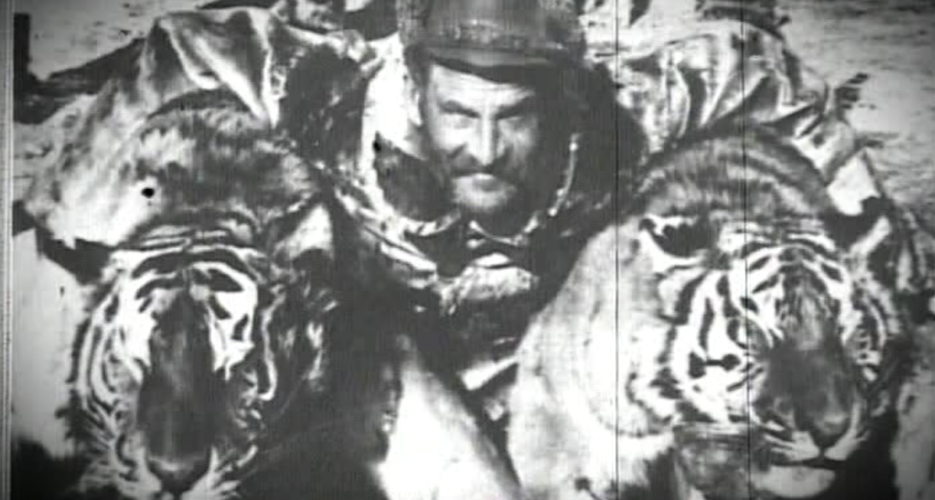 The Russian émigré Valery Yankovsky had been living in the northern half of the Korean Peninsula for the better part of two decades when a Japanese official asked the skilled tiger hunter to take down an unusual big-game target — the communist guerilla fighter Kim Il Sung. Valery didn’t take the opportunity to change the course of history by killing the future North Korean leader, one of the 20th century’s most notorious tyrants, and skepticism surrounds his account of the episode. But the tall tale is just the improbable tip of the iceberg when it comes to the Yankovsky family’s role in the turbulent series of events that led to the creation of the North Korean state, spanning from the Russian Revolution and Japanese military expansion to the Korean War. Along the way, Yankovsky family members came face to face with the nascent Kim regime and even played a role in U.S. efforts to keep tabs on the DPRK, all while remaining a part of the peninsula’s history that North Korea preserves even to this day. 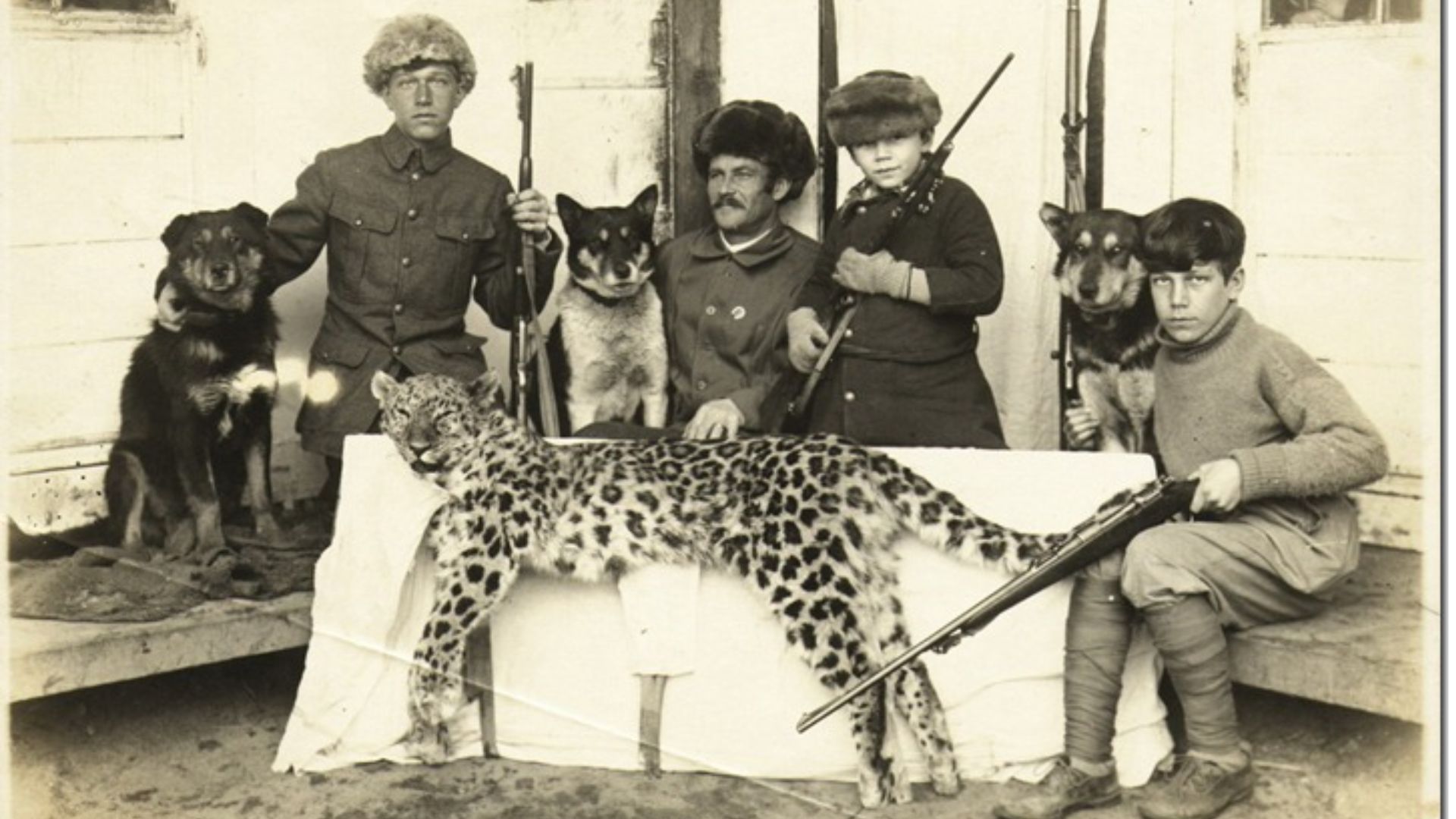


EN ROUTE TO KOREA The Yankovsky family traces its origins to Polish nobility, and patriarch Michal took part in the failed 1863 uprising against the Russian czar. He was arrested and exiled to Siberia, like thousands of political prisoners. After receiving amnesty five years later, Michal amassed a fortune in gold mines and became a landlord, entrepreneur, scientist, hunter, explorer and zoologist in Vladivostok. 


He settled on a peninsula near the Korean border and built a prosperous estate centered on deer breeding, cattle raising and hunting. Local Korean settlers nicknamed him “four eyes” (넷눈이) for his ability to ride a horse and shoot tigers and Chinese bandits behind him without looking over his shoulder. Following Michal’s death in 1912, his son Yuri took over the business, after having previously traveled to Texas to procure horses that the family later crossbred to develop what is now known as the Yankovsky horse. But the success wasn’t built to last. The Russian Revolution of 1917 and subsequent civil war soon put the family in the position of defending their peninsula estate with arms against bandits and Red partisans.  Yuri’s son Valery recalled in a documentary that his father was “a fatalist” who waited until 1922 to flee. With the Reds already at Vladivostok’s doorstep, he finally packed up his family and around 70 employees onto a steamboat and sailed for Korea, where they were forced to survive by hard labor in an unfamiliar land. “Our horses were used to carry timber to a match factory, and several mares died,” Valery recalled in the documentary. “When we opened their bellies, we found sand. Our mom said the horses committed suicide because they were forced to do this kind of hard work.” COLLABORATION? Life at their new home Novina, just down the coast from the port city of Chongjin, wasn’t without its upsides. The location near the sea and forests gave them ample opportunities to hunt, breed deer and even establish one of the first Western-style resorts in Korea. A Chosun Ilbo reporter who visited Novina in 1938 wrote that it wasn’t “luxurious” but was far from lacking. He described deer antlers, an alleged aphrodisiac, as a “prized specialty” of the Yankovsky estate, attracting buyers from across the region.  “Everyone naturally wishes for long life and lasting youth,” the reporter wrote, “but watching the visitors at Novina at this time makes one feel even more acutely the value of vitality and vigor.” The Yankovskys’ good relations with the colonial Japanese authorities likely contributed to the resort’s prosperity, Donald Clark wrote in “Living Dangerously in Korea,” noting that Yuri’s success in securing a meat supply deal with the Japanese army ensured steady income after resettlement. Andrei Lankov, a professor at Kookmin University and director of Korea Risk Group, said the family’s ties with the Japanese weren’t surprising, as Tokyo welcomed White Russian aristocrats who had been persecuted by the Bolsheviks to Korea on the principle of “the enemy of my enemy is my friend.” Even before their exile, the Yankovskys maintained decent relations with the Japanese corps who joined U.S. troops to prevent the advancement of the Red Army in the Far East, explained Natalia Zinina, a guide with the Russian tour company Vostok Intur that organizes trips to Yankovsky family sites in North Korea. The family’s Novina estate, near modern-day Kyongsong, and its beachside retreat Lukomorye boasted of a Russian Orthodox chapel overseen by a priest dispatched from Harbin, as well as a private home theater, according to Clark’s book. 


The theater became a magnet for aristocratic émigrés from across the region, many of whom traveled from Harbin or Shanghai to vacation with the Yankovskys. Notable guests included famed Russian singer Alexander Vertinsky and Yul Brynner (née Briner), who would go on to have a dazzling Hollywood career in which he won an Oscar for “The King and I” and starred in the epic film “The Ten Commandements.” THE PAEKTUSAN TIGER Conflict ramped up in Asia with Japan’s invasion of Manchuria in 1931 and China in 1937, and it was during this time of rising militarism that a Japanese policeman approached the son Valery, who had established a reputation as a skilled tiger hunter, with an unusual request. In his memoir from “From The Crusades to Gulag and Beyond,” Valery recalled that he had received a permit for hunting near Paektusan, an area “rich in wildlife but notorious as a stronghold of Korean partisans led by their famous commander.” 


With the permit, the officer also handed him a photo. “Of course, I knew” it was Kim Il Sung in the picture, Valery later wrote in his memoir. The Japanese officer allegedly promised a bounty of some 10,000 golden yen for the future founding leader of North Korea, triple the price Valery could get for a tiger. But the Russian émigré turned him down, according to a 2003 documentary about his family. “Excuse me, but we only hunt four-legged beasts,” Valery answered. In his book, he elaborated on his reason for rejecting the request to kill one of the leaders of the anti-Japanese guerilla fighters: “Deep down, we sympathized with them.” While a compelling story, there are questions around the reliability of Valery’s account. Lankov, who met Valery at the turn of the century, explained that the Japanese were ruling Korea with an iron fist and that it would have likely been difficult to turn down such a request. “The story raises suspicions, because Kim Il Sung was a class enemy to the Yankovskys, and refusing to cooperate with the Japanese would have been tantamount to saying no to the Russian FSB or Soviet KGB,” he told NK News. But true or not, the expert said the tale appears to reflect the Yankovskys’ skill at navigating powerful interests and multiple challenges on the peninsula at the time. THE GULAG The Yankovskys’ peaceful life was shaken up in 1945, when the Soviet Army entered the Korean Peninsula and drove out Japanese colonial forces. Longing for their motherland and believing Red propaganda, brothers Valery and Yuri joined the Soviet military, serving as interpreters in Chinese Yanji and Pyongyang. It was in this role that Valery came face-to-face with the very “Paektusan tiger” that he said the Japanese police once asked him to hunt. At a historic rally on Oct. 14, 1945, he saw Kim Il Sung in a “brown civilian suit with the [Soviet] Order of the Red Banner on his lapel,” delivering a “well-rehearsed speech” on Pyongyang’s Moranbong Hill.  Valery’s job was to blend in with the crowd and listen to the spectators’ reactions as the North was introduced to its new leader, he wrote in his memoir. Serving in a “special unit” of the 25th Army, the two brothers enjoyed a lavish lifestyle of dining at officers’ canteens and spending evenings “in the company of cheerful Korean geishas,” according to Valery. But the good times wouldn’t last. Along with their cousin Tatiana and their father, they were branded as traitors to the motherland and sent to serve long sentences in the gulag in 1946. Yuri’s father died in a camp near Taishet, and the brothers spent nearly a decade in the system before finally being rehabilitated in the 1950s. SPY FAMILY Fearing imprisonment, Valery’s younger brother Arseny, along with Valery’s wife Irma and their newborn son, fled across the 38th parallel in 1946. Irma and her son eventually became Canadian citizens, while his sisters Muza and Viktoria ended up in the U.S. Arseny himself “naturally” joined U.S. intelligence in the South, Valery claimed in his book, stating that his brother later rose to a senior position at Japan’s Mitsubishi Corporation. He died under unclear circumstances in San Francisco in 1978 at the age of 64. Valery speculated that Soviet agents may have been involved, claiming that while still in prison, the KGB attempted to use him to lure Arseny into the USSR as the two maintained secret correspondence.  While with the CIA, Arseny was reportedly tasked with recruiting and training agents to infiltrate North Korea after the Korean War broke out in June 1950, according to David Wise’s book “Molehunt.” But under suspicious circumstances, all of his operatives inside the DPRK were lost, triggering an internal investigation into his activities. Forced to resign, Arseny later worked for the now-defunct U.S. aerospace firm TRW as a public relations officer for the Far East, maintaining homes in Tokyo and San Francisco. NK News uncovered a declassified CIA file from 1960 mentioning Arseny Yankovsky and his wife were among the “closest associates” of Valentin Hahn, a CIA employee in Tokyo who doubled as a Soviet agent. The Japanese connection appears to run deeper. Valery’s cousin Tatiana, who had also lived in Novina, admitted in a later interview with Russian journalists that she cooperated with Japanese military authorities by monitoring Soviet radio broadcasts as early as 1943. She said she agreed to help after learning that her male cousins and other relatives had already been doing the same for the Japanese. Valery expressed outrage at Tatiana’s interview and another article alleging that the CIA recruited Arseny: “No, he went for it voluntarily. I think he was avenging all of us.” LEGACY LIVES ON Russian tourists who traveled to Kyongsong over the past year have given conflicting reports about what’s left of the Yankovskys’ estate. Some claimed that none of the original buildings remain intact, while others said they found an original “tenement house” that belonged to the family. Most likely the house is the one that Russian Ambassador to the DPRK Alexander Matsegora linked to the family in 2017, claiming that local residents were still preserving their memory.  Korean studies scholar Tatiana Simbirtseva, who has researched the family, expressed doubt over the claim at the time, citing the Yankovskys’ bourgeois, foreign background as at odds with the values of Kim Il Sung’s regime. Lankov also noted that the family’s cooperation with Japanese authorities made it unlikely that Pyongyang would go out of its way to preserve the Yankovsky legacy. Even so, Novina’s scenic setting, nestled between mountains, hot springs and the sea, has caught the attention of DPRK authorities. Massive resorts and hotels are currently under construction, with leader Kim Jong Un visiting Kyongsong as recently as March to inspect the facilities. 


The tour guide Zinina, who visited the area last April, said the “landscape precisely matches the photos the Yankovskys took in the 1930s.” She suggested that the house linked to the family was likely one that the family used to rent out as part of their resort estate. As for the Yankovskys’ memory, she stressed that it lives on in the deer breeding park that’s now home to some 700 animals, with the North Koreans still using the machine for cutting deer antlers developed by Yuri. “They remember about them for one simple reason: He taught them a technique on how to obtain antlers without hurting deer. Before, they used to kill them to cut off antlers.” Valery died in 2010 at the age of 99, and a monument to his grandfather still stands in Vladivostok, greeting tourists who come to explore the remnants of the Yankovsky estate — and perhaps inspiring them to take a tour to the DPRK to seek out what remains, if anything, of the Novina resort. 


Edited by Bryan Betts © Korea Risk Group. All rights reserved. |


 SHARE
SHARE COPY LINK
 X
X MASTODON


Recent Stories