

|
News North Korea carries out controlled burns at main airport as fires rage in SouthAviation expert calls DPRK approach to managing vegetation ‘extreme,’ but NASA data suggests wildfire situation stable
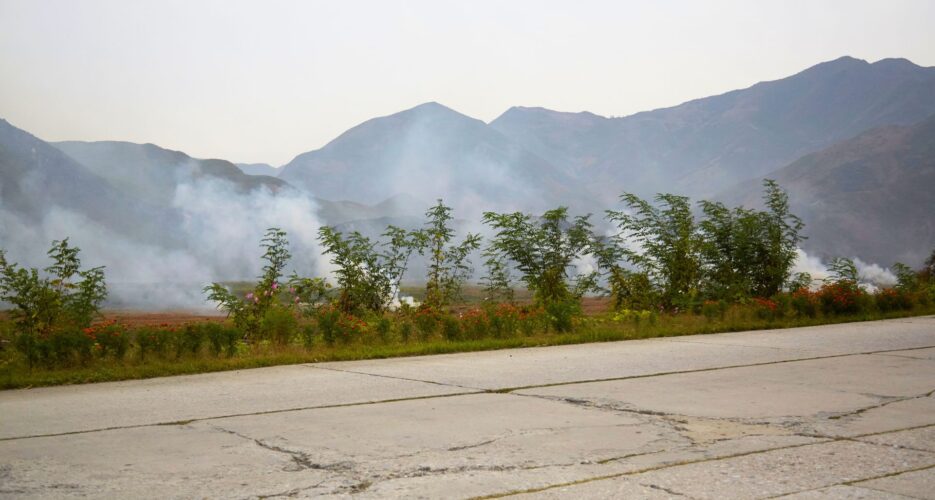 North Korea carried out large-scale controlled burns at its main airport in recent days to remove dry vegetation, likely looking to reduce fire risks and potential dangers to aircraft as massive forest fires rage in the South. The grassy areas around the runways of Pyongyang Sunan International Airport turned charcoal dark on Sunday, Planet Labs satellite imagery shows, pointing to regular controlled burning that followed the borders of the airport. The fires burned hot enough that NASA’s Fire Information for Resource Management System (FIRMS) marked the area as a hot spot on a wildfire activity map. North Korea regularly conducts controlled burns at major airfields, and DPRK authorities burned old grass around Sunan in March 2021, 2022 and 2024, while apparently skipping 2023. 


Ed Condit, a retired United Airlines pilot and aviation consultant, called it overkill to burn grass at airports but emphasized that it is necessary to manage vegetation growth. “Cutting grass nearby taxiways and runways is essential in order to prevent foreign object debris, which can especially damage aircraft engines when ingested,” he told NK News, but “this is normally achieved by persistent mowing.” Condit said controlled burning would require authorities to “close off affected taxiways and runways,” calling this approach “remote and extreme.” He noted that the Pyongyang airport receives limited air traffic, explaining that “nearby controlled burns would be of little consequence and constitute a low threat.” But at the same time, the expert raised concerns about airport authorities’ ability to respond if things go wrong. “Unknown is the airport fire capability, response and equipment necessary to combat a large grass or wildland fire within the airport boundary as opposed to a general response to an aircraft crash.” The controlled burning came as the ROK has been grappling with massive wildfires in the southern part of the country, claiming the lives of at least four, injuring nearly a dozen and forcing thousands of citizens to evacuate. But FIRMS, which relies on temperature data from NASA satellites, suggests that the wildfire situation in North Korea remains relatively stable, with no major fires and only limited controlled burning in agricultural farmland. North Korea experiences wildfires across the country during the spring dry season, normally from March to May, with NK Pro analysis of thermal anomalies showing that major hotspots typically concentrated in the country’s northeast in recent years. Experts previously told NK Pro that widespread slash-and-burn farming practices pose significant wildfire risks during this time, particularly since the DPRK has limited resources to combat large-scale fires. Meanwhile, Planet Labs satellite imagery of the Pyongyang airport shows that North Korea’s new airborne early warning aircraft has been moved from its regular parking spot to a location near the tarmac on at least four occasions this month, in a sign of continuing development and possibly testing. 


Edited by Bryan Betts © Korea Risk Group. All rights reserved. |


 SHARE
SHARE COPY LINK
 X
X MASTODON


Recent Stories