
|
Investigations Major Chechen construction firm likely behind new North Korea-Russia car bridgeNK News investigation suggests small company that Moscow tasked with $100M project is a front for bigger firm
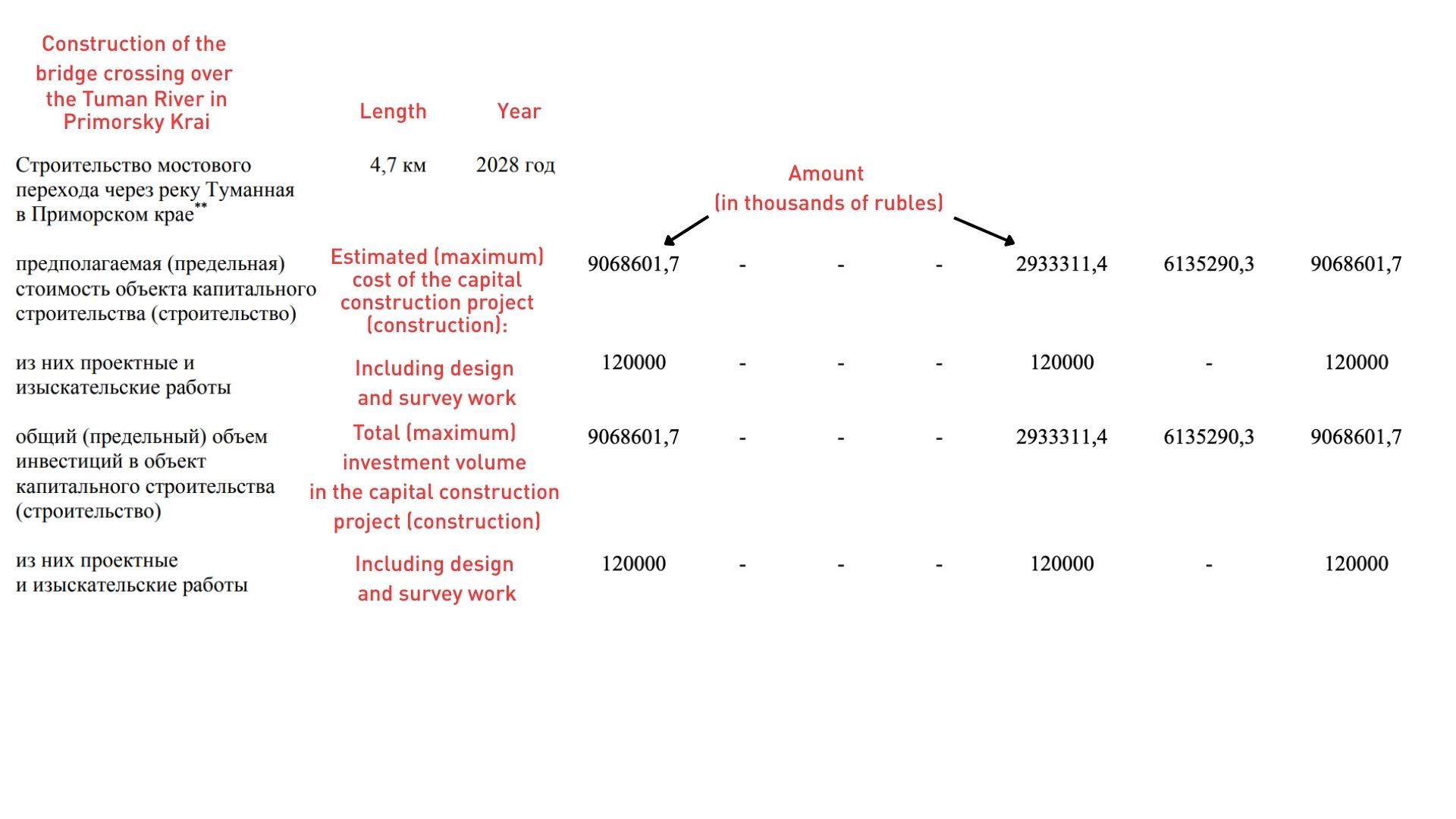
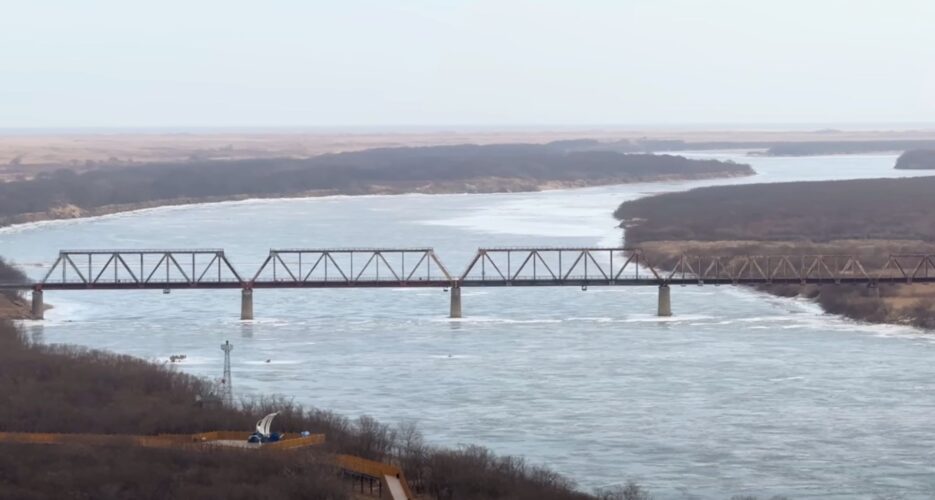 A major Russian construction company with ties to a notorious Chechen strongman appears to be behind a new $100 million vehicle bridge meant to connect Russia’s Far East and North Korea, an NK News investigation has found, after Moscow tasked the project to an obscure firm with little relevant experience. Questions about the viability of the project arose shortly after Russian Prime Minister Mikhail Mishustin signed a decree in February entrusting the tiny Sochi-based company TonnelYuzhStroi with designing and carrying out the construction of the new bridge across the Tumen River by the end of 2026. The company must shoulder at least 60% of the project independently, while the rest of the work can be done by hired subcontractors, according to Mishustin’s decree. He also signed off on another directive approving the project’s budget of nearly $100 million and specifying the length of the crossing as 4.7 km (2.92 miles). But with just four employees as of 2023, reported financial losses, a defunct website and practically no history of successful projects, TonnelYuzhStroi appeared to be a far cry from a competent contractor capable of handling such a high-level project personally agreed to by leaders Vladimir Putin and Kim Jong Un. 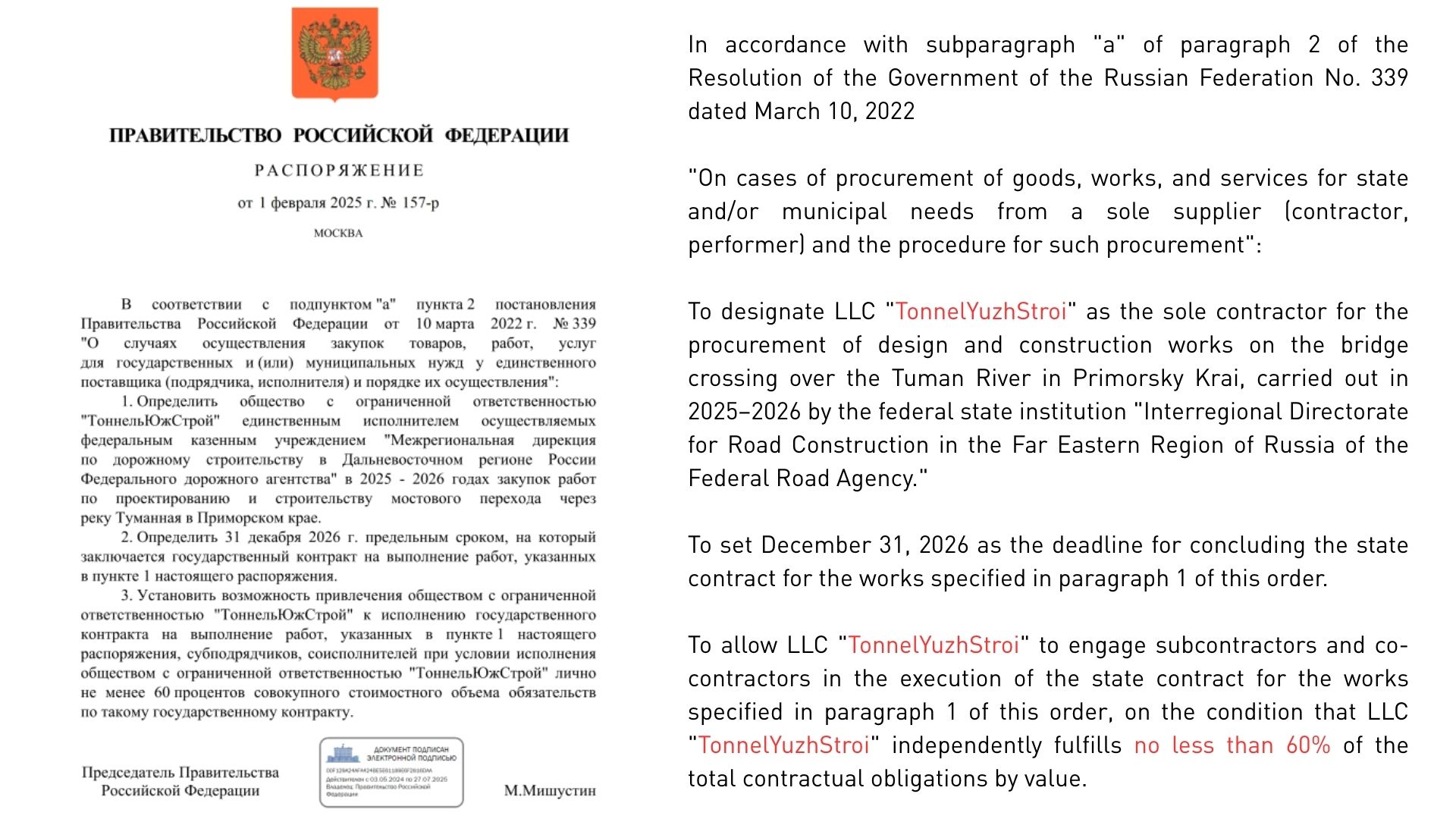
Sergei Ezhov, an investigative journalist with The Insider, was the first to report that TonnelYuzhStroi is a front for the real contractor and beneficiary of the project — the BTS-Most company run by the Chechen business mogul Ruslan Baisarov, a confidant of the region’s head Ramzan Kadyrov. When asked about his findings, Ezhov explained that the scheme “looked suspicious” all the way through when this “major contract wasn’t handed directly to BTS but to a company registered under frontmen.” “That’s what raises the possibility of embezzlement, and in that case, the real beneficiaries could avoid responsibility,” he told NK News, adding that this situation isn’t uncommon for Russia, especially when “it’s clear from the start that a project is risky because of its corrupt nature.” BTS FRONT? NK News analysis of Russian records reveals multiple personal and business connections between TonnelYuzhStroi and BTS-Most, which taken together suggest that the contractor for the Russia-DPRK bridge is strongly influenced — if not secretly controlled — by the Chechen firm. TonnelYuzhStroi is run by two individuals, according to Russia’s Unified State Register of Legal Entities:
The names of both men disappeared from the firm’s records with the register in February, shortly after NK News reported on their involvement in the bridge project. 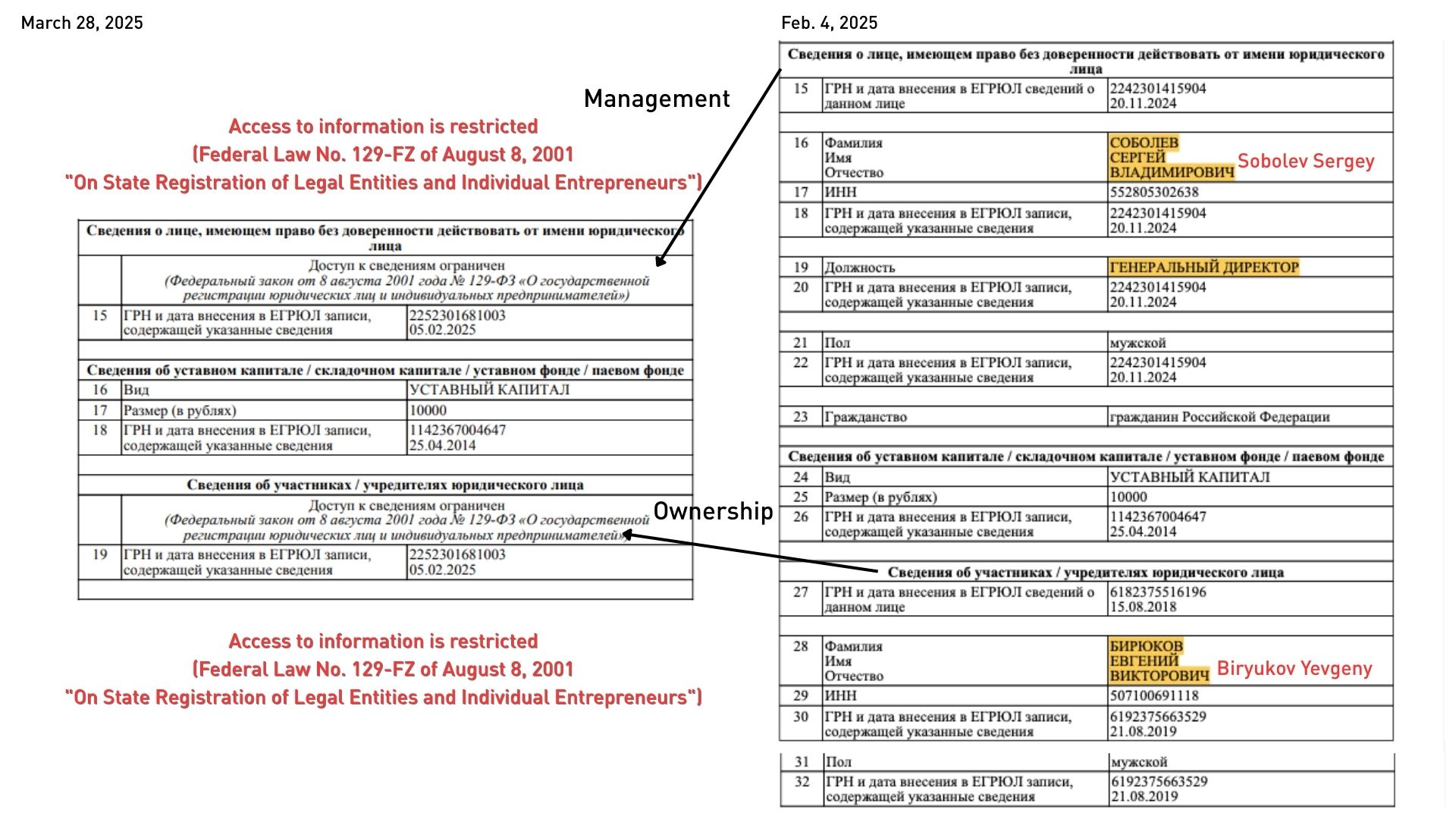
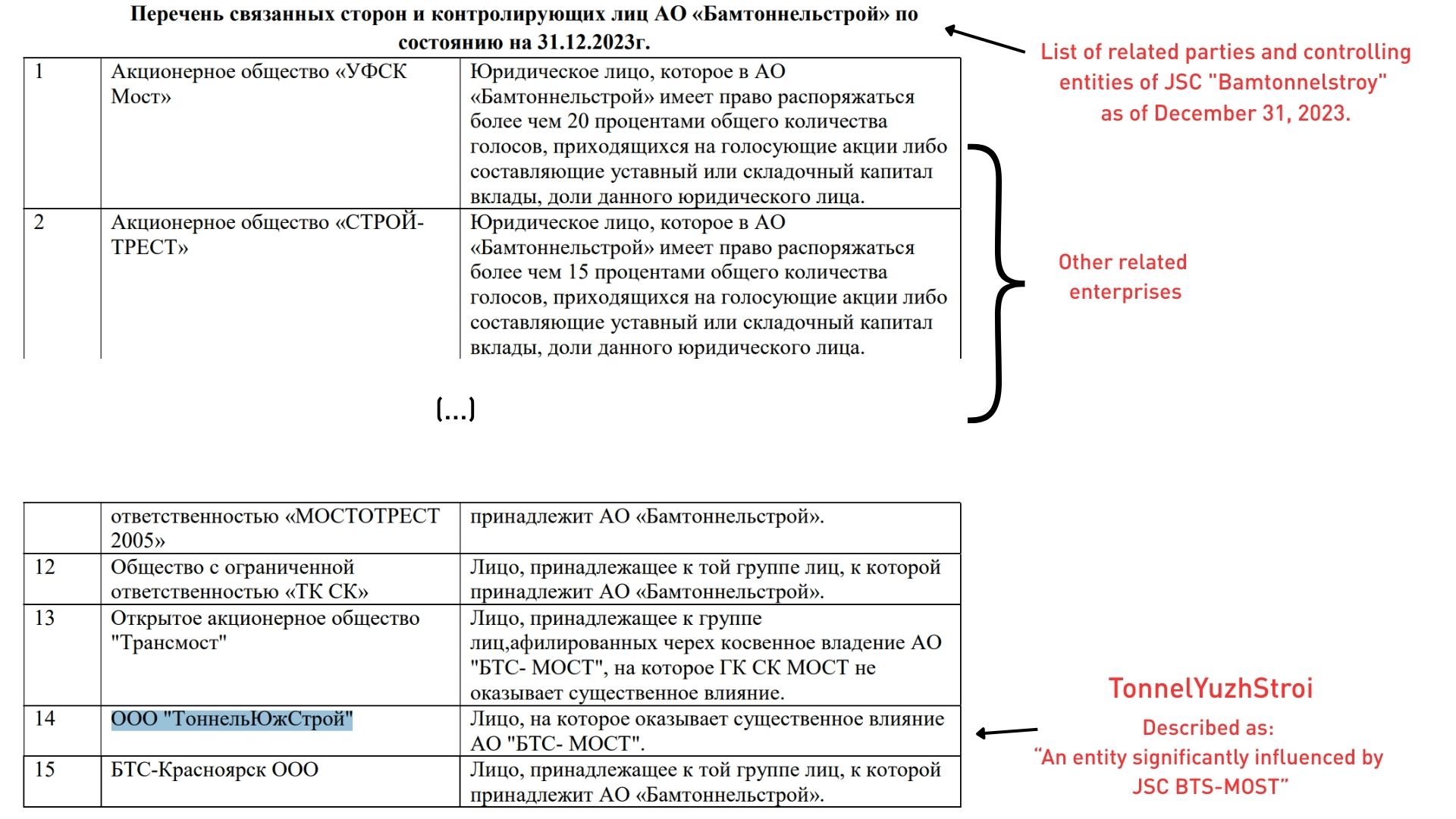
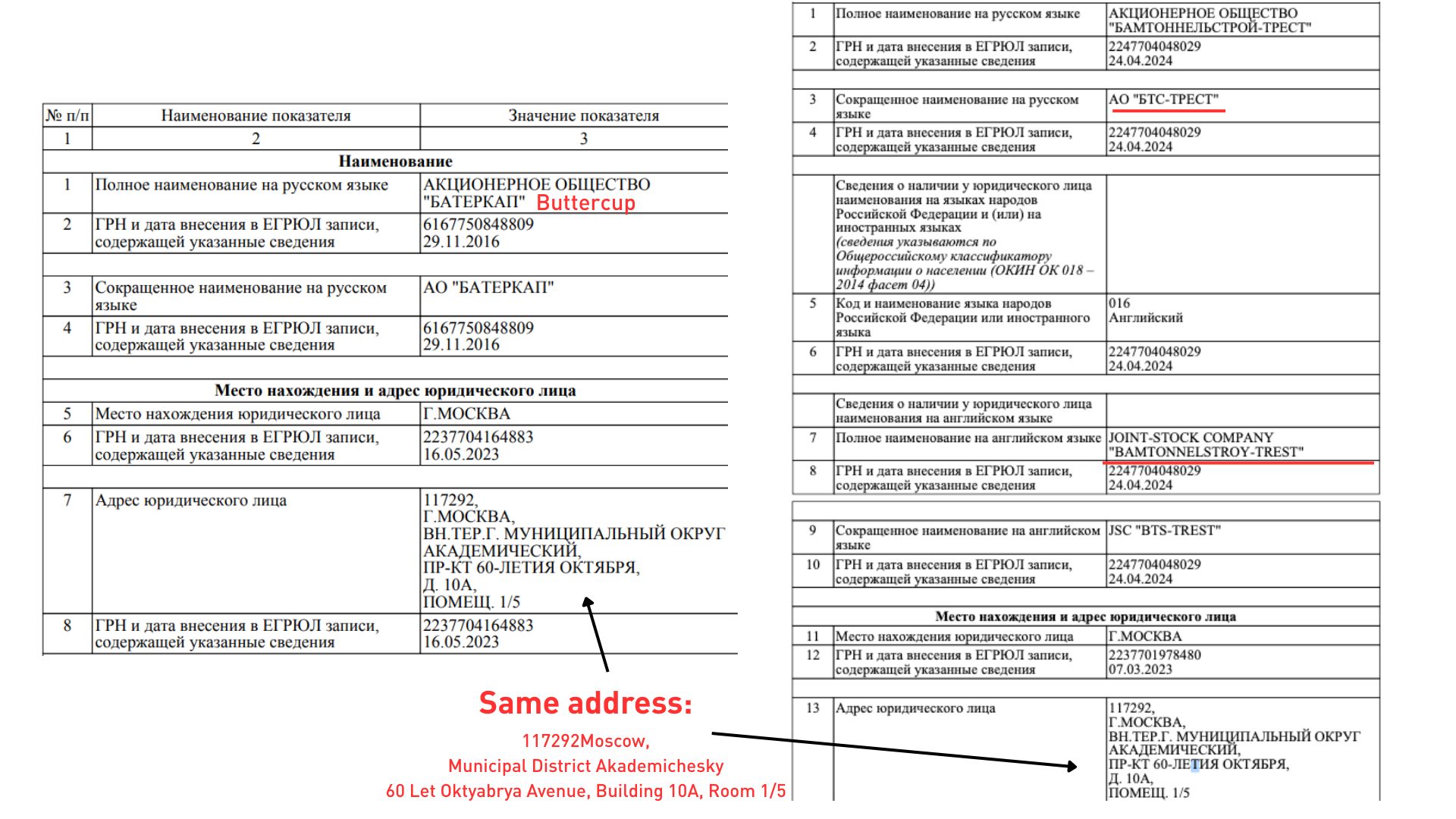
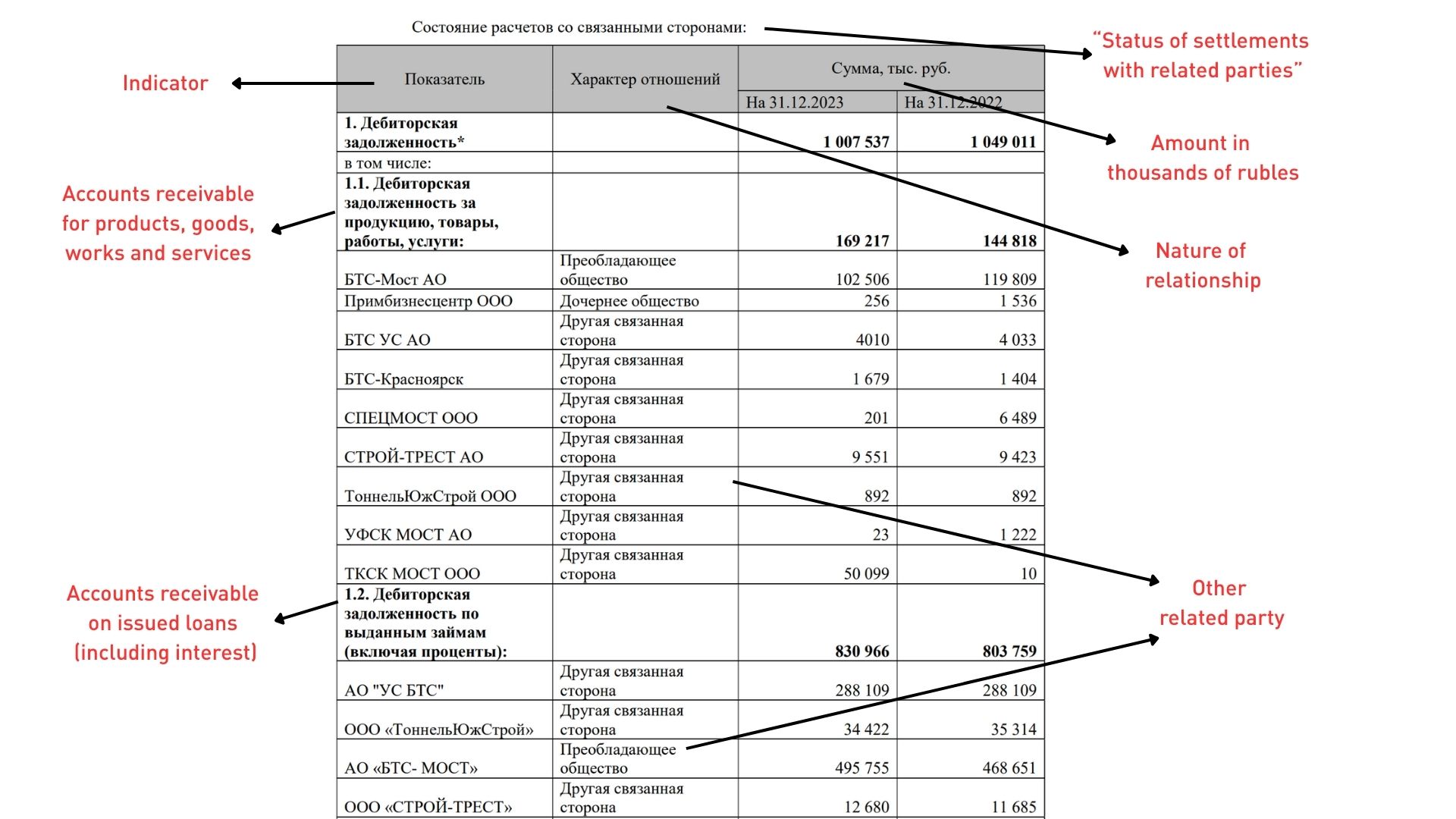
While little is known about Sobolev, his partner Biryukov has been connected to several businesses linking him to Chechnya and the mogul Baisarov. Russian legal entity records archived by the website Companium show that Biryukov previously ran the now-disbanded companies PK-8 and PK-9, both of which were incorporated by Baisarov. From 2018-2019, he also served as the CEO of the firm Sorbus, which is based in the Chechen village of Alkhazurovo and was originally founded by Baisarov, according to Ezhov’s findings corroborated by public records. Most significantly, Biryukov has since 2019 been CEO of the firm Buttercup (Baterkap in Russian) — a company that shares an address and office in Moscow with BTS-Most and its subsidiary BTS-Trest. While it’s not clear how Buttercup is affiliated with BTS-Most, their proximity taken together with Biryukov’s past record of working for entities tied to Baisarov suggests a strong connection. In addition, BTS-Most’s own financial papers explicitly establish the business relationship with Biryukov’s other company, with a 2023 report listing TonnelYuzhStroi as an “entity under significant influence” of BTS-Most. The same report specifies that BTS-Most lent large sums of money to TonnelYuzhStroi, and the company pledged its own assets as collateral to cover TonnelYuzhStroi’s tax debts in 2021, with the collateral released the following year, possibly after the smaller firm settled its debt obligations. The connections between the two companies likely explains why Russian authorities would give TonnelYuzhStroi responsibility for the new bridge to North Korea. BTS-Most prides itself on being Russia’s “largest enterprise” specializing in the construction of tunnels, bridges, railways and other infrastructure, according to its website. Among its projects, the company lists a bridge connecting Vladivostok and Russky Island and its work at metro stations in Moscow, St. Petersburg and Krasnoyarsk. Baisarov, who has the controlling stake in BTS-Most and currently serves as chairman of the firm’s supervisory board, has also personally briefed Russian President Vladimir Putin on his company’s nationwide construction projects, suggesting he is someone that the Kremlin trusts. The Russian project Important Stories previously identified Baisarov as a close friend of Kadyrov in their investigation into the Chechen leader’s inner circles based on the C4ADS Dubai Property Database. With a net worth of $500 million, the construction mogul was among the top 200 wealthiest entrepreneurs in Russia in 2019, according to a Forbes rating. BRIDGE BOONDOGGLE? While the project might be a product of corruption and embezzlement, the likely involvement of BTS-Most suggests that TonnelYuzhStroi will succeed in building the bridge despite its limited track record. Chris Monday, a Russia researcher at Dongseo University, told NK News that BTS-Most using a front to cover its activities represents a “typical set-up” of construction business in modern Russia. “Under Putin and the return of the KGB, this shadow corporate structure became dominant,” the expert said, adding that Baisarov’s involvement will likely help the project. “Few will defy Baisarov, so the construction will get done. The financing will depend on oral agreements and ‘understandings,’” he said, while explaining that the convoluted arrangement “shows that big business in Russia is reluctant to be connected to North Korea.” But Monday said one thing remains certain about BTS-Most’s apparent involvement in the bridge project: “No one will be headed to Grozny to ask any questions so the story will die off.” A time-lapse video showing the construction progress on Tumen and its river banks in Nov.-March, 2025 | Image: Planet Labs Russian Ambassador Alexander Matsegora said in an interview this week that the two countries haven’t started full-scale construction on the bridge yet, focusing on “preparatory work, finalizing design documentation and assembling construction crews and equipment.” But he said it won’t be too long until the groundbreaking for the “most significant and practically important project of bilateral cooperation in recent decades.” NK News analysis of satellite imagery confirms that Russia and North Korea have already begun preparatory works for the motorway bridge, with signs of activity like land clearing visible on both sides of the Tumen River. Planet Labs satellite imagery shows that a structure that appeared on the Russian side earlier this year is no longer visible, possibly disappearing below the river’s surface around March 11-13. Ryo Hinata-Yamaguchi, an associate professor at Tokyo International University’s Institute for International Strategy, emphasized the symbolism of the bridge as a link between the two states. “It’s hard to read exactly how the bridge will be used, and its impact, but it nonetheless does show commitment by North Korea and Russia,” he told NK News. “This could also lead to greater security cooperation between Pyongyang and Moscow to protect their shared infrastructures.”  Edited by Bryan Betts © Korea Risk Group. All rights reserved. |


 SHARE
SHARE COPY LINK
 X
X MASTODON


Recent Stories