
|
COVID-19 UN official sounds the alarm on North Korean human rights amid COVID-19Tomás Ojea Quintana raised concerns over the "drastic reduction" of North Korean defectors entering the South this year
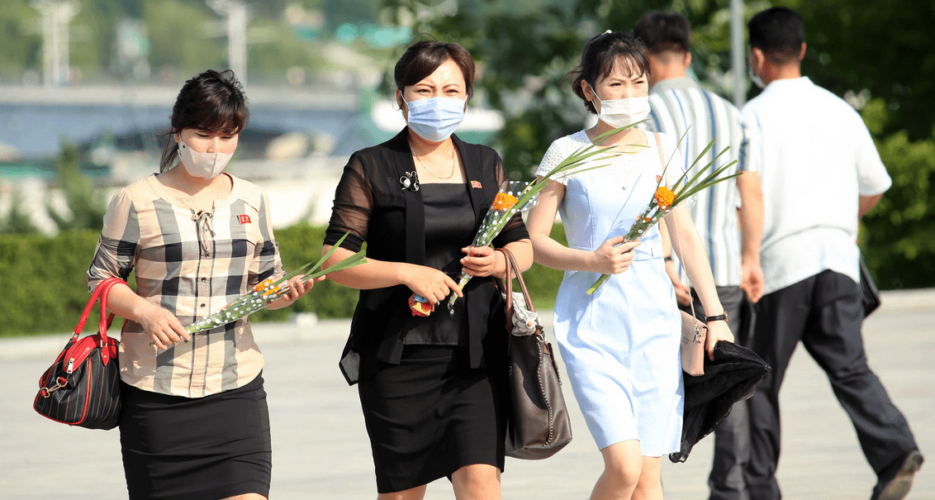 A top U.N. human rights official sounded the alarm over isolation and hindered aid deliveries as North Korea’s borders remain closed over COVID-19. Tomás Ojea Quintana, the U.N. special rapporteur on the situation of human rights in North Korea, urged the outside world to pursue “collaboration and solidarity among states” in fighting COVID-19 and coaxing the DPRK to open up to outside help. “We should not underestimate where North Korea seems to be going with regards to isolation, and we should invest all our wisdom to see how to open up North Korea,” Quintana said during an Aug. 28 webinar. He added that the number of defectors leaving the DPRK and arriving in South Korea has dramatically decreased under the global pandemic. “We have a drastic reduction of people escaping from North Korea. According to the statistics from the Ministry of Unification, only 135 people escaped in the first six months of this year, compared to more than one thousand from last year,” Quintana said. The U.N. special rapporteur also stated that he and the U.N. High Commissioner for Refugees (UNHCR) have been “pushing for more engagement with the Chinese government” on North Korean escapees, since many are found hiding in China and are then force repatriated to the DPRK, where they may face dire consequences. “I have even been asked [by the Chinese government] not to mention the issue of escapees being held in China” Quintana said.  North Korea’s borders have been closed since January due to COVID-19, which means that humanitarian aid and trade — as well as sanctions-violating income sources — are all at least partly interrupted. That in combination with natural disasters could be putting average North Koreans at serious risk, especially considering that more than half of the country is already believed to be food insecure. Simply put, fewer defections also mean that fewer people are escaping these hardships. “It is of the utmost concern to look into this issue precisely because of the history of North Korea in the 1990s, with the famine that killed a large number of people in the country,” Quintana said. “The international community should be very aware about the conditions at the moment.” Then there’s also the threat of the COVID-19 virus itself, which could easily overwhelm the DPRK’s medical system, which is known to chronically lack supplies. “The prospects of the major outbreak of COVID-19 in North Korea could be a disaster for the ordinary people,” he said. “The whole situation has changed and the United Nations should not maintain a system of sanctions which was meant to be implemented in other circumstances.” Greg Scarlatoiu, the executive director of the Committee for Human Rights in North Korea (HRNK) who moderated the webinar, said that it’s difficult to intervene and provide help to the DPRK because of the country’s lack of transparency. “In order to provide supplies, you need to know what you’re dealing with,” Scarlatoiu told NK News. “COVID-19 is all about health status and vulnerability. There is a need to collect statistical data on vulnerabilities.” Edited by Kelly Kasulis © Korea Risk Group. All rights reserved. |


 SHARE
SHARE COPY LINK
 X
X MASTODON

Recent Stories