
|
COVID-19 Why North Korea’s healthcare sector is better equipped than many believeThe DPRK is able to strictly enforce quarantine measures and has a large number of doctors in the population
 Views expressed in Opinion articles are exclusively the authors’ own and do not represent those of NK News. “But the North Korean healthcare system is poorly equipped to deal with the coronavirus outbreak, isn’t it?” This is a question I have heard many times recently while talking to foreign journalists about the potential for an outbreak of the novel coronavirus (COVID-19) in the DPRK. Indeed, most of them see this as a purely rhetorical question with a self-evident answer, and are sometimes taken aback when they encounter a resolute “no, it is not!” as a reply. It is not widely understood that the North Korean health care system is actually quite efficient when compared with the health care systems of other countries with roughly the same GDP per capita. In other words, if we compare North Korea not to Japan, or Switzerland, or Germany but with countries like Botswana or Laos, we discover that the North Korean healthcare system is actually well above what can be seen as the worldwide average for such poor nations. Most of my media friends are surprised by this reply, which contradicts universal stereotypes about North Korea, and it is little wonder that my occasional paeans to the country’s public healthcare system have seldom, if ever, made it into articles in which I am quoted. For journalists, such statements do not sound right, even though they are entirely correct. 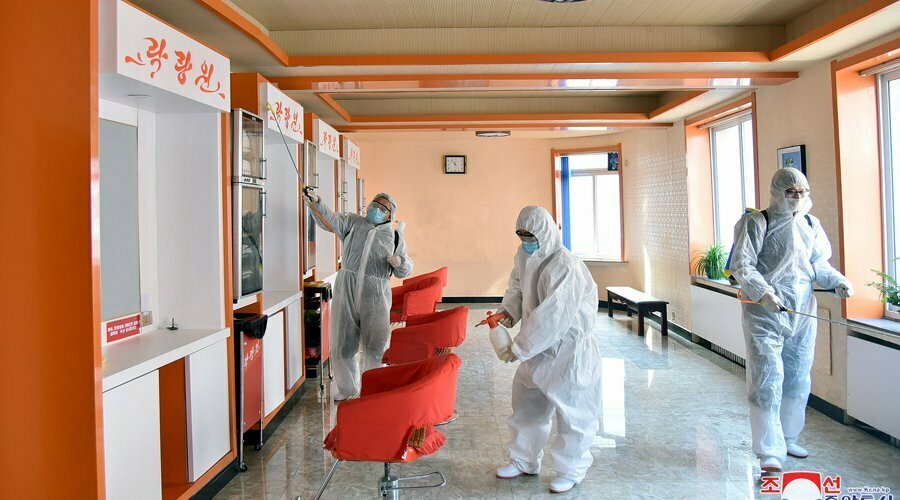 The political, social, and economic system that has existed in North Korea for decades — which, for want of a better term, can be described as “national Stalinism” — has plenty of serious shortcomings. Even pushing aside its extreme brutality and repressiveness, one cannot overlook the fact that, in general, it has been quite bad for the economy. This system is, to a large extent, responsible for the transformation of North Korea, once the most industrially advanced part of East Asia outside of Japan, into the present-day basket case we know so well. However, these obvious and undeniable shortcomings do not mean that this system is bad in everything it tries to do. There are some areas where it works remarkably well, and public healthcare — or, at least some areas related to public healthcare — seems to be one such area. Before the disastrous famine of the 1990s destroyed the country’s economy, life expectancy in the North was quite high. According to the World Bank and the World Health Organization, in 1985 it reached a level of 67.9 years. This did not differ much from life expectancy in the far more prosperous South Korea (68.8 years). During the “Arduous March,” life expectancy decreased to 64.5 years. But then the situation began to improve, and in 2016 the average life expectancy in the DPRK was 71.7 years. To see what this means, one should compare North Korea with countries that have similar per capita GDP per capita — that is, $1200 (this is the DPRK’s nominal GDP per capita according to its own official estimates). Such countries include Tanzania, with a life expectancy of 65 years, Nepal (67.7), Kyrgyzstan (66.3), and Myanmar (66.9). As we can clearly see, virtually all countries with a similar GDP are actually lagging behind North Korea in terms of life expectancy. According to World Bank data, in 2016 the infant mortality rate in the DPRK was 15.1 cases per 1000 births. This is almost two times higher than China (8.5 cases), and five times the level of South Korea (2.9), but still lower than in the majority of developing countries. In India, for example, the infant mortality rate in 2016 was two times higher than the DPRK (33.9 cases versus 15.1) — and North Korea’s GDP per capita was merely half that of India’s. In 1987, when North Korea was three to four times behind the South in terms of GDP per capita, its infant mortality rate was only slightly higher (27.7 against 20.5 cases per 1000 births).
What are the reasons behind North Korea’s surprising success? North Korea has chosen a model of public healthcare that is different from the model currently used in the developed West. As one can easily guess, this model was first developed in the Soviet Union and then copied by the North Koreans. The major difference is probably a different attitude towards medical doctors. In the West, medical doctors are highly skilled professionals who spend about a decade or so in intensive training. They are extremely well paid (perhaps, we should say, “seriously overpaid”). Predictably, the combination of high income and high social prestige makes these jobs very attractive for ambitious and bright young men and women. Therefore, they have a pool of the best students who are going to medical schools and who are willing to work very hard to complete an extremely demanding course. In North Korea, as well as in other countries that once copied the Soviet model (including, for example, Cuba), things are run differently. North Korean doctors are not particularly well paid. In terms of income and social prestige, they are seen as regular white-collar workers, not much different from office clerks. Their training is still quite rigorous, but is seemingly inferior to what is common in countries of the “Western healthcare model.” On average, a medical student in North Korea spends five or six years in training — minus a significant amount of time spent doing obligatory work in the rice paddy fields and equally obligatory political study sessions. North Korean doctors tend to be less well prepared than their Western or, for that matter, their South Korean and Japanese peers. However, the North Korean system has one major advantage: doctors cost very little because their salaries are very low. 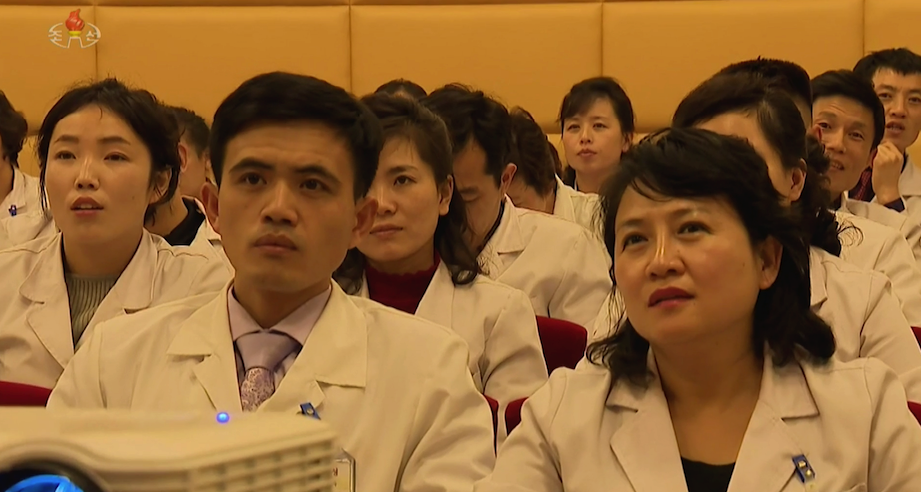 This allows North Korea, as well as other countries that adopted the Soviet model of healthcare, to maintain a remarkably large number of doctors. This might be a revelation for the average reader: based on its number of medical doctors per every 10,000 people, North Korea is roughly equal to France and significantly exceeds the U.S. Indeed, according to the World Health Organization, in 2016 there were 37 doctors in the DPRK per 10 thousand people. In the U.S. there were 26 doctors and France 32 doctors per 10 thousand people. Countries with roughly the same level of economic development also are lag well behind the DPRK. In Myanmar there are merely six doctors per 10 thousand people, while Nepal can boast seven. One could argue that these doctors are poorly trained and are thus are no match to their western colleagues. This is, of course, true — but only in part. Needless to say, these doctors are not well prepared to deal with complicated and unusual cases or rare diseases. Neither are they good at dealing with modern equipment which, at any rate, is not available in the vast majority of North Korean hospitals. However, in most cases, the major threats to human life and long-term health come not from rare diseases but from rather simple ailments that can be cured by these “slightly underskilled” doctors with little difficulty — assuming, of course, they have access to basic medicine and equipment, which is not always the case. In other words, until people turn 70 or so, they are much more likely to die because of complications caused by appendicitis or a broken limb than some complicated coronary disease. Therefore, it matters that a doctor is available close by, and this is the case in North Korea. The DPRK system emphasizes quantity over quality, and in many cases this works, as the above-cited figures indicate.
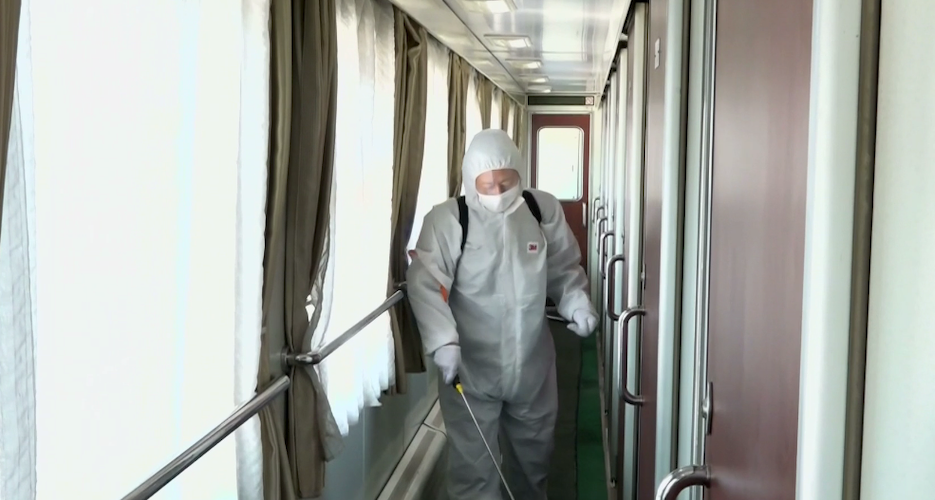
Another hidden and surprising advantage of the Soviet/North Korean model of healthcare is that these systems operate in a police state. It means that such measures as, say, quarantines or obligatory health checks can be enforced with ease, which would be unthinkable in a more democratic and/or less controlled society. The North Korean authorities can easily force on their citizens sets of measures that make their lives not merely uncomfortable, but highly dangerous. And, since they don’t care about voter sentiment, they can be remarkably harsh. This means that the North Korean government, if it makes such a decision, can easily introduce and systematically enforce very efficient quarantine measures, completely cutting off the areas where the coronavirus outbreak occurred. In many cases, these areas are likely to be regions of little political significance, so it’s quite easy to assume that the entire population in those regions (maybe assisted by a handful of doctors) will be left to their fate and completely ignored until the necessary period of isolation is over. Even though the machinery of the North Korean state has become somewhat rusty, we have seen many times that Pyongyang still can ensure what it really considers necessary. On top of that, the North Korean authorities have always been remarkably good at sanitary control. Of course, when we say this, we again have to keep in mind that we are talking about a very poor country. Nonetheless, if you compare public hygiene in North Korea to other countries of the same economic level, you will see that in most cases the North Korean situation is superior — and this somewhat better standard of sanitation helps to fight diseases, too. However, the Soviet healthcare model has some structural disadvantages. To start with, as life expectancy increases, people tend to suffer from more complicated and rarer diseases that can only be efficiently treated by highly skilled and well-equipped doctors. North Korea cannot afford to provide such drugs and equipment for the vast majority of its population. Therefore, only the North Korean elite, the top 0.1% of the total population, have access to a handful of well-equipped clinics that are roughly the same level as an average small Western hospital. Needless to say, such health care centers are completely off-limits to the vast majority of the population. 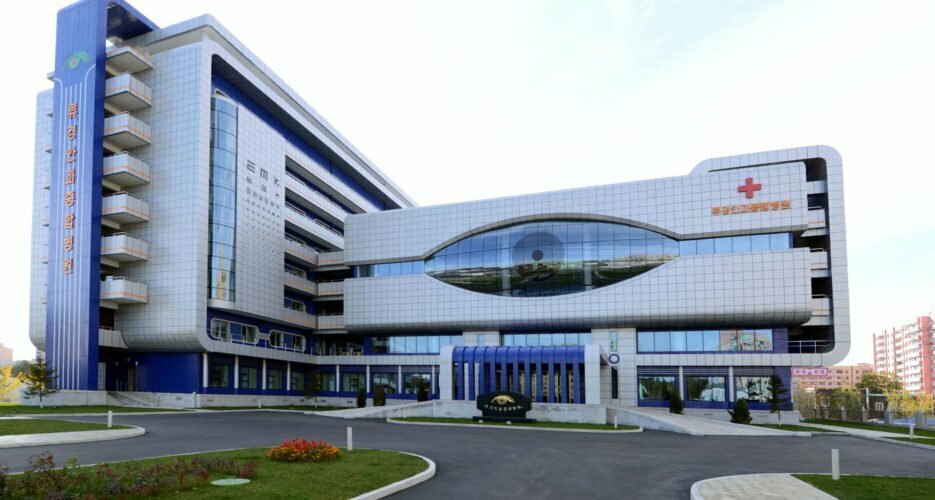 How can such a system deal with a possible outbreak of the coronavirus? On the one hand, one can expect that quarantine and other social isolation measures will be spectacularly efficient in North Korea. These measures are universally believed to slow down the spread of the coronavirus and greatly cushion the hit to the public health system. The presence of a large number of medical doctors will also help to ameliorate the problems and suffering of the vast majority of people that will be infected by the coronavirus, since patients seldom develop complicated life-threatening conditions and can normally can be treated with relative ease. On the other hand, a sorry fate awaits the small minority of people who are likely to develop pneumonia or other serious complications. The vast majority of these people will have no chance of being treated with the use of sophisticated equipment, like lung ventilation, since such equipment is almost absent in North Korea. The handful of medical centers that have a few pieces of this equipment are not going to accept common patients. The limited existing resources will be completely dedicated to the treatment of a small number of highly privileged individuals, senior in both senses of the word (that is, people of high position and advanced age). Actually, in North Korean history, we have already seen a precedent for such an attitude: in the early 1950s, during the Korean War, the official policy line stipulated that medical services at hospitals should never be provided to civilians, no matter what. Only military personnel could be treated for any kind of disease. This is likely to happen again, albeit in a somewhat mitigated form. To sum up, the North Korean system is likely to be very efficient at slowing down the spread of the coronavirus. It will probably provide reasonable — at least, by Third World standards — care to the majority of patients who will suffer from the “standard” light form of the disease. And it will leave nearly all those who develop a complicated form of the coronavirus infection to die. Edited by James Fretwell and Oliver Hotham © Korea Risk Group. All rights reserved. |


 SHARE
SHARE COPY LINK
 X
X MASTODON

Recent Stories