
|
COVID-19 North Korea partially relaxes quarantine restrictions on resident diplomatsNew rules a "relief," though diplomatic work remains severely limited, Russian embassy says
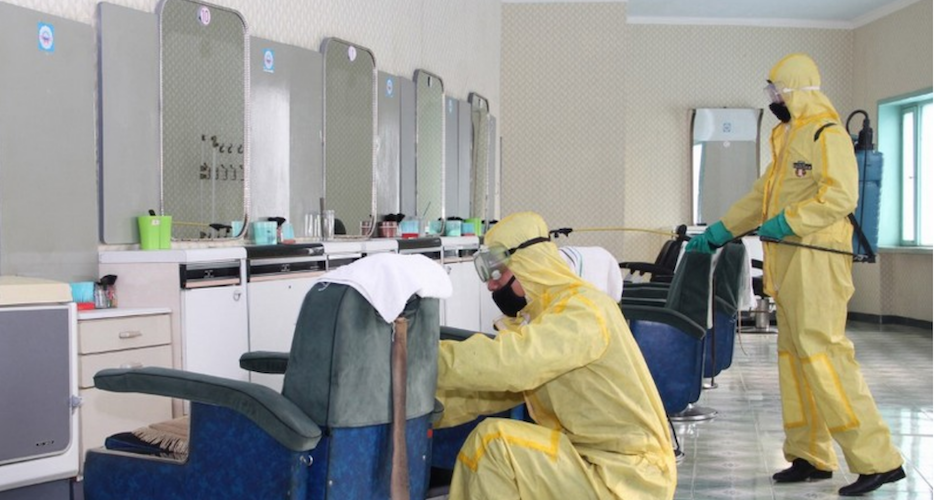 North Korean authorities have partially relaxed regulations on diplomats resident in the country’s capital aimed at preventing the spread of the novel coronavirus (COVID-19), Russia’s embassy to the DPRK said Thursday, though strict rules remain in place restricting freedom of movement for foreign envoys. The new rules, reportedly conveyed by the DPRK’s Ministry of Foreign Affairs (MFA) to embassies in Pyongyang, now allow resident foreigners to travel outside their compounds and visit the Daesong and Ragwon department stores, as well as other select locations in the North Korean capital. “According to the provisions of this document, as well as additional explanations received, at present, Embassy employees and their family members can travel and go to the city on foot outside the diplomatic mission (wearing masks is mandatory),” the embassy said in a note on its official Facebook page, adding that “the capital’s parks are open to us.” “At the same time, you should avoid mass gatherings of people, exclude the use of public transport, and visits to places that are not included in the list of allowed places,” it added. “Consumer services companies are also open for use in all tourist hotels, with the exception of Yangakdo and Sosan.” Diplomats are also able to request “one-time permission” to visit the Pyongyang veterinary clinic, as well as the offices of North Korea mobile provider Koryolink and the diplomatic corps service department. They remain prohibited from leaving Pyongyang. The new rules represent a significant relaxation of measures in place up until March 3, following a high-impact 30-day quarantine imposed on foreign residents of the DPRK capital that saw diplomats placed under effective house arrest. Diplomats formally protested these restrictions, with Russian ambassador to the DPRK Alexander Matsegora having last month written that they were making the embassy’s day-to-day work impossible. The embassy, he added, had been forced to demand that authorities “immediately” rectify quarantine facilities in Rason, where two Russian workers had reportedly been placed in a cold room “with no hot water.” At least one other country with diplomatic representation in Pyongyang lodged a complaint with DPRK authorities over the treatment of its in-country staff, NK News understands.  And while saying the new rules this week represented a “relief” for Russian diplomats in Pyongyang, the embassy said Thursday that the relaxing of restrictions had resulted in “no real positive changes for diplomatic work” and that it would continue to lobby for greater freedom of movement. “According to the note, meetings with representatives of North Korean departments on important issues are formally allowed, but we have not yet organized any such conversations,” it said. “Protocol events are allowed, but the maximum number of participants is five.” The restrictions also mean that the two countries will have to call off a planned event intended to mark the anniversary of the signing of the Agreement on Economic and Cultural Cooperation between the USSR and the DPRK — the first bilateral agreement between the two — on March 17, it added. News that Pyongyang has relaxed some measures intended to stem a potential outbreak of COVID-19 comes amid moves suggesting that the DPRK is increasingly confident that the threat is under control — at least for the time being. State media reported this week that the country has now released a total of 3650 people from “medical observation” and isolation, with 1020 patients in Kangwon Province and 2630 in Jagang Province now free. The DPRK also on Monday gave the go-ahead to the first flight out of the country in over a month, permitting some 80 foreigners — including many foreign diplomats and aid workers — to leave the country. Despite this, state media has also hinted at challenges in enforcing its strict new restrictions, reporting this week that measures risk “huge economic loss” and complaining that some citizens are defying state orders. The country has also hinted that it expects these rules to remain in place for several months at least, with organizers having yesterday told NK News that the annual Pyongyang International Film Festival (PIFF) had been postponed until October. The Russian embassy on Thursday also reported that the DPRK’s “extraordinary anti-epidemic measures” would stay in place for the time being, with authorities having emphasized that state organizations are “obliged to comply” with the rules. Travel into and out of the country remains restricted, the note said, and “travel to countries and regions where the disease is detected is prohibited or restricted.” The DPRK has also extended the winter school vacation, it continued, as well as “suspended collective activities and public meetings.” North Korea is yet to report any cases of the novel coronavirus within its territory. Edited by James Fretwell © Korea Risk Group. All rights reserved. |


 SHARE
SHARE COPY LINK
 X
X MASTODON

Recent Stories