
|
Border Controls In fight against COVID-19, North Korea gambles its long-term economic stabilityPyongyang's draconian response to the coronavirus outbreak stands to do much more damage than the virus ever could
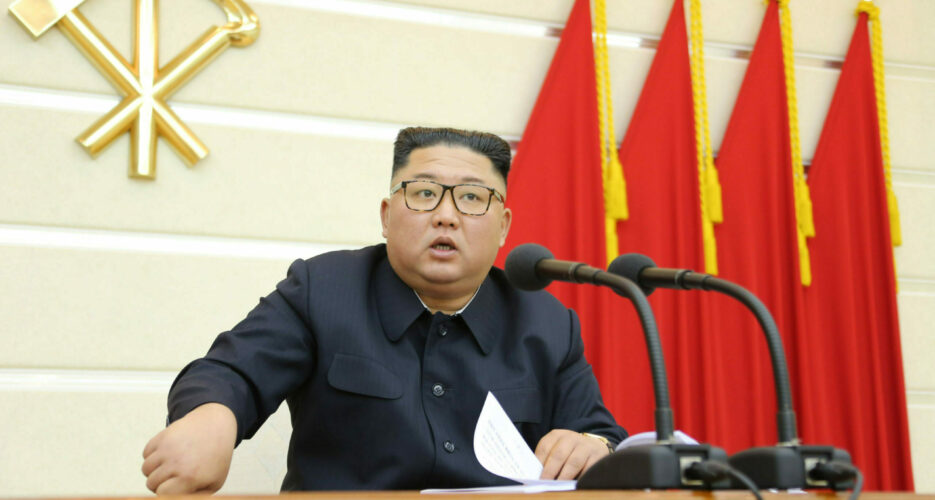 Views expressed in Opinion articles are exclusively the authors’ own and do not represent those of NK News. One must admit: the first years of Kim Jong Un’s rule, roughly between 2012 and 2016, can in hindsight be described as a time of remarkable economic success. Perhaps, even, as a minor economic boom. In the best years of the mid-2010s, the North Korean economy grew at a speed which, if optimistic assumptions are to be believed, may have been as high as 7%. Most observers provided lower estimates, closer to 4-5%, but this is still a respectable growth rate, even if one takes into account the very low base it started from. This growth was not merely the result of good luck. A decisive role in bringing this – largely unnoticed – economic boom was played by Kim Jong Un’s new market-oriented economic policies. The young sovereign showed himself to be a surprisingly pro-market politician who quietly, but persistently, was introducing to North Korea the same system which has for decades worked remarkably well in China and Vietnam. Not unexpectedly, such policies began to work equally well in North Korea, too. However, the events of the last two or three years likely indicate that this short era of economic reform and reform-driven growth is over – at least for the time being. At any rate, for the last three years or so, North Korean leaders have not been particularly interested in introducing new reform measures. This unwillingness, combined with outside pressure, has brought back economic stagnation – and at that moment, the North Korean economy received another mighty hit: the coronavirus epidemic. It remains to be seen whether we are dealing with a complete reversal of policies or merely a hiatus. But if the former is true, and Kim Jong Un has indeed abandoned his pro-market reform plans, it’s likely to have political consequences.  In the long run, the survival of North Korea as a state, as well as the survival of the Kim family regime, will be unachievable without maintaining economic growth. One can speculate that the decision to put reforms on hold was largely driven by unfavorable changes in the country’s international environment. In 2016, Kim Jong Un seemingly decided to make the final breakthrough on his country’s long way to the Holy Grail of the North Korean generals and strategists: achieving the ability to strike any U.S. city with a nuclear warhead. However, he was not very lucky. This long-hoped-for breakthrough came at the same time that U.S. voters elected a very unconventional President, and Donald Trump reacted to the ICBM tests by dramatically increasing the level of tension on the Korean peninsula. The jury is still out on whether Donald Trump was (and is) actually willing to risk a major military confrontation with a half-baked nuclear power in order to stop the further advancement of the North Korean nuclear and missile programs. But he did succeed in pushing a set of tough economic sanctions through the UN Security Council — truly unprecedented measures that are in some cases close to a full embargo on North Korea’s foreign trade and international economic activities.
China, after a brief period of supporting the U.S.’s hardline stance, soon changed its position and, starting from early 2018, began to tolerate or even quietly encourage smuggling and other illegal and semi-legal economic exchanges with North Korea. However, these activities cannot fully compensate for the damage that is being inflicted by UN sanctions. At the same time, the new situation resulted in a dramatic increase in North Korea’s dependence on Chinese aid and, significantly, smuggling across the border with China. Facing a massive economic crisis, the North Korean leadership has seemingly decided to play it safe and put a freeze on all economic experiments — few countries would undertake dramatic restructuring while facing an acute foreign threat. However, in early 2020, North Korea was hit by another – and totally unexpected – crisis, which further aggravated the already existing problems: the crisis of the coronavirus. Little is known about the situation inside the country – even though rumors abound, as usual. Nonetheless, there is little doubt that the North Korean government enforces the strictest possible quarantine measures, doing what it can to keep borders closed. Since the first reports about the outbreak, foreign residents of Pyongyang found themselves completely cut from North Korean society. Foreign tourists are banned, the few international flights which connect North Korea to the outside world have been suspended, and many events, including politically-significant gatherings, have been canceled. There have even been reports about mid-ranking North Korean officials who were allegedly shot because they neglected the travel ban and went to China on business. Like many other rumors-based reports, these messages should be taken with a grain of salt. But there are other indirect but very reliable data that confirms that the North Korean leadership is indeed enforcing very harsh quarantine measures on the border.  The prices of grain and fuel have begun to increase since mid-February, and increased by some 25% within one month. Almost definitely, this suggests that the North Korean government, which for the last year or two has actively encouraged smuggling operations with China, decided to put a stop to this activity which is, of course, vital for keeping the North Korean economy above water.
It conforms well with rumors about executed officials, most of whom were essentially guilty of running such smuggling activities. It is possible that in the long run this draconian quarantine policy will be seen as a major mistake – from the point of the regime, at least. North Korean decision-makers have chosen to fight what appears to be a real but exaggerated threat by taking measures that can bring far greater damage to the country – both in terms of lost revenues and lost human lives (hunger in a poor country is more deadly than any disease). This may be a case where the cure is actually more harmful than the disease itself. One can wonder why the North Korean top leaders have decided to act with such severity. The country’s public health experts likely understand that the new epidemic is not as deadly as sensationalist Western media loves to claim. Being more cynical, they are likely expecting that the new rules will largely hit people whose survival has never been high on the regime agenda: the chronically malnourished population of remote rural areas. However, the political choices made by the North Korean political elite again confirm what has been generally known for a while: the movers and shakers of the DPRK don’t just read Western media very carefully, they also tend to take foreign media reports seriously. The worldwide panic, no matter how unreasonable and inflated, has brought about a North Korean overreaction, and this overreaction seems to be delivering another blow to its struggling economy. The experience of recent weeks also shows that the North Korean government is still very much in control of its borders. While many powerful people have vested interests in keeping smuggling operations going, most of them, as data indicates, chose to stop this activity when ordered by the government. It shows that the government machinery in North Korea is not rusty – at least, some vital parts of it can work under significant stress. In a sense, it reminds me of the same coronavirus which seldom, if ever, kills very healthy individuals, but is dangerous for the malnourished, weak, and old.  The North Korean economy, by world standards, is a malnourished creature that is of course exceptionally vulnerable to the negative impacts of the “quarantine panic.” If the coronavirus epidemic lasts for more than a few more weeks, the impact will begin to be felt on a large scale. We are probably going to see prices for food, fuel, and other necessities increasing 1.5-2 times, and such an increase will mean that a noticeable part of the poorer North Korean population will suffer from acute hunger. Some will end up dying as a result of these measures. Of course, the people who will suffer the most are not the privileged people of Pyongyang or other major urban centers. Nor are they members of the military, police, and security forces — that is, people whose loyalty is vital for the regime’s survival. Nonetheless, the damage might be significant and will probably have some political consequences. The decision to stop reforms, whatever the reasons behind it, is being further aggravated by the impact of the coronavirus overreaction, and this will undermine the stability of the North Korean government in the medium- to long-term. If the coronavirus scare lasts long enough, it alone could push the North Korean economy towards the second Arduous March, in conditions which are different from what we saw in the late 1990s. It means that we are going to see our opportunities to slowly and peacefully sort out the North Korean problem getting thinner. It also means that the chances of the country facing some outbreak of violent instability are increasing. Of course, the growing likelihood of a political crisis is bad for Kim Jong Un and his people, as well as for the North Korean elite. It is also not good for North Korea’s neighbors — since nobody wants to see chaos and anarchy in a nuclear-armed country. And of course South Koreans, no matter what they are officially supposed to think, have good reasons to be afraid of unification-by-absorption, which is one of the most likely outcomes of such a crisis. Perhaps the collapsist vision of North Korea’s future, which has gone out of fashion in recent years, may start to be taken seriously again, and contingency plans should be dusted off and rewritten by the interested parties. We are talking probabilities here, not certainties, but this is still a piece of bad news. One can only hope that the coronavirus panic will last weeks, not months – and also that Kim Jong Un and his advisers will finally choose to resume the reform policy that was so successfully implemented recently. Edited by James Fretwell and Oliver Hotham © Korea Risk Group. All rights reserved. |


 SHARE
SHARE COPY LINK
 X
X MASTODON

Recent Stories