|
News UNSC draft resolution to limit hiring of N. Korean workers, ban coal exportsThe resolution, still in draft form, also bans seafood exports, adds new restrictions on shipping
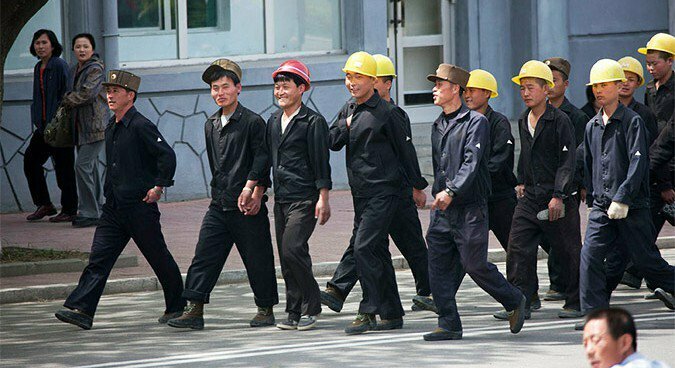 A draft resolution of new United Nations Security Council (UNSC) measures against North Korea will seek to ban the hiring and paying of additional North Korean overseas workers by member states, as well as prohibit seafood, lead, coal, iron and iron ore exports from the DPRK. The resolution, seen by NK News, expresses concern that North Korean workers are being sent abroad for the purposes of generating funds for Pyongyang’s nuclear and missile programs. Diplomats have told media that the UNSC will vote at 3 pm local time today on the new measures. “…Member States shall not exceed on any date after the date of adoption of this resolution the total number of work authorizations for DPRK nationals provided in their jurisdictions,” the draft reads. It is estimated that more than 50,000 North Korean workers are employed throughout Asia, the Middle East, Europe, and Africa. The vast majority are currently employed in China and Russia, according to a report by Marzuki Darusman, former UN Special Rapporteur on North Korean human rights. The draft measures also propose strict new measures on the export by North Korea of several key commodities and ban the establishing of new joint ventures with DPRK companies. “The DPRK shall not supply, sell or transfer, directly or indirectly, from its territory or by its nationals or using its flag vessels or aircraft, coal, iron, and iron ore,” the draft reads. While UN Resolution 2321, which passed in November last year and is the most recent UNSC resolution against North Korea, capped the DPRK’s exports of coal to all UN Member States at either $400,870,01 or 7.5 million metric tons, the draft resolution seeks a full ban. China banned all North Korean coal imports in February, but North Korea’s iron trade, which is subject to humanitarian exemptions under Resolutions 2270 and 2321, has seen steady growth. North Korea exported as much iron to China in first five months of 2017 as it did in the entirety of the previous year, figures from Chinese customs showed in July. Member states will have 30 days from the adoption of the resolution, after which they are required to cease imports of these raw materials. New restrictions are also placed on North Korea’s export of seafood, which is popular in China and is estimated to earn traders millions of dollars a month. “The DPRK shall not supply, sell or transfer, directly or indirectly, from its territory or by its nationals or using its flag vessels or aircraft, seafood (including fish, crustaceans, mollusks, and other aquatic invertebrates in all forms),” it adds. The measures also take aim at North Korea’s international shipping networks, prohibiting port calls by designated vessels tied to illicit activities, with a clause allowing entry “in the case of emergency.” The draft measures also include a clause “prohibiting use of chemical weapons” – a potential reference to North Korea’s alleged involvement in the murder with VX gas of Kim Jong Nam in Malaysia, and calls on the DPRK to “fully comply” with its obligations under the Vienna Convention. The Vienna Convention governs the use of overseas embassies by member states, and North Koreans embassies have been consistently accused of breaking these rules, particularly as they relate to the use of embassy property for commercial purposes. In July, a report by NK News‘s sister company NK Pro revealed that the DPRK embassy in Poland was renting out its property to local companies – something North Korean diplomatic missions have reported to be doing from Beijing to Berlin. Resolution 2321 called upon member states to pay closer attention to the activities of North Korean diplomatic personnel and asks them to downsize DPRK embassies. The draft also reaffirms that UNSC measures are “not intended to have adverse humanitarian consequences for the civilian population of the DPRK” and expresses regret at the “grave hardship” of life for the North Korean people. It also places new travel bans and asset freezes on several North Korean individuals, blacklisting representatives of the Ilsim International Bank, the Foreign Trade Bank, Korea Mining Development Corporation (KOMID), and the Tangun Trading Corporation branch, among others. The draft requires member states to report to the Security Council within 90 days on measures that they have taken to implement the new sanctions. Former member of the United Nations panel of experts William Newcombe told NK News that he was “surprised by China’s signing off on this” and that the new measures were “pretty tough.” “Expansion of export prohibition, if enforced, would pinch earnings hard,” he said. “Seafood would be difficult to enforce because of smuggling by small craft.” “Measure dealing with workers abroad is clever and probably does not impinge on Russian and Chinese equities,” he added. “Note that workers remittances still could grow if employed at a higher pay scale.” U.S. Ambassador to the UN Nikki Haley said in May that the U.S. was preparing another resolution, and the first launch by North Korea of the Hwasong-14 intercontinental ballistic missile (ICBM) saw Washington call for much tougher measures against Pyongyang. North Korea conducted its second test of the Hwasong-14 last Friday, and Kim Jong Un has said his country will continue to send what it calls “gift packages” to the U.S. if Washington does not give up its policy of aggression towards the DPRK. Any new measures from the United Nations will likely see strong opposition from Pyongyang, which maintains that missile and nuclear development are its legitimate right as a sovereign state. An article published this week by NK News by a researcher from a think tank under the DPRK Ministry of Foreign Affairs claimed that while international sanctions have failed to stop North Korea’s ballistic missile and nuclear development, their economic measures harmed regular citizens. It also said that the U.S. was “making an issue” of overseas laborers, and warned that countries which supported sanctions “injure themselves by their own hands.” Featured image: Eric Lafforgue © Korea Risk Group. All rights reserved. |

October 21, 2026Oct 21, 2026


 SHARE
 COPY LINK
 X
 MASTODON