
|
Analysis How the Pyeongchang Olympics could impact inter-Korean relationsIn panel discussion, four experts discuss potential impact of 2018 Olympics on North-South dialogue
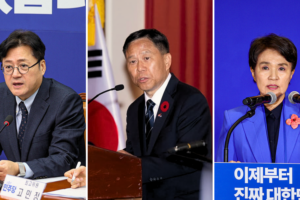
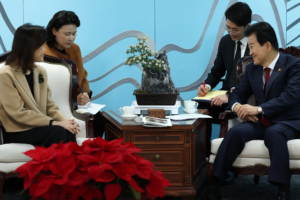
 The 2018 Pyeongchang Winter Olympics are South Korea’s first in three decades, but so far they haven’t attracted much interest from the public. Worse yet, the event’s image has been tainted by a nation-wide scandal concerning the relationship of the now-impeached former President Park Geun-hye with her close friend and confidant Choi Soon-sil. But Gangwon Province – which is hosting the event – and the game’s organizing committee are trying hard to revitalize the public’s interest in the Olympics. North Korea’s participation is thought to potentially be something that could galvanize interest, as it was with the 2014 Asian Games. Hoping to tease out what it might all mean for inter-Korean relations, the Korean Council for Reconciliation and Cooperation (KCRC), a civil organization which promotes unification, held a panel discussion in February on whether the Pyeongchang Olympics could improve dialogue between the North and the South. The panel featured:
 Kim Yong-hyun: There is now one year left until the opening of Pyeongchang Winter Olympics 2018. With everything so unclear in inter-Korean relations, some argue that Pyeongchang Olympics could provide a breakthrough: sports exchanges, after all, have been a helpful catalyst for inter-Korean relations in the past. Kim Dong-sun: Sports exchanges can certainly play a catalytic role in the currently strained North-South relationship. But we need to keep in mind two principles to maintain exchanges: the first principle is ‘easy things first, hard things later.’ Start with recreational, non-competitive sports first and then move on to competitive ones. The second principle is to begin exchanges first and think about gains later. With these principles in mind, inter-Korean sports exchanges could contribute to a strengthening of national identity. Lee Yun-young: The motto of the Olympics is “peace and prosperity,” and the same goes with Pyeongchang: sports could be a means to improve inter-Korean relations. North Korea first entered the Winter Olympics in 1964 and has earned only two medals from eight games it qualified for out of total 14 games. If North Korea manages to enter the Pyeongchang Olympics, its participation alone is meaningful. However, North Korea’s competence in winter sports is an issue here. Infrastructure is very important – especially in winter sports – which North Korea, unfortunately, lacks. Regarding its poor infrastructure, it is hard to expect North Korea to qualify for the Olympics. Meanwhile, sports exchange has one serious advantage than other means of inter-Korean exchange: sports already have their own international rules, so a sports exchange between two Koreas won’t require the sometimes tiresome discussions regarding rules that other interactions would.
Kim Tae-dong: While some call for sending out a unified Korean team, consisting of both North and South Korean athletes, organizing a unified team without inter-Korean cooperation would prove harmful. There would also be a backlash from South Korean athletes, as a unified team means fewer slots for them. That being said, a unified supporter group could be easily organized. Some have even called for joint hosting of the Olympics, but this won’t be easy unless there are some political compromises. Kim Dong-sun: I know that the organizing committee and the people of Gangwon province want North Korea’s participation, which would certainly contribute to the event’s success, but it looks like the chances are very small considering the circumstances. There may, however, be another way around this: the IOC, for example, could give an ‘extra ticket’ to North Korea. North Korea has some competence in female ice hockey, speed skating, and figure skating, so it might prove useful to let North Korea participate in these events.  Kim Yong-hyun: During the Sochi Olympics 2014, the President of the Presidium of the Supreme People’s Assembly Kim Yong Nam visited the games, and in the same year North Korean figures like Hwang Pyeong So, Choe Ryong Hae and Kim Yang Gon visited Incheon during the Asian Games event. Maybe it’s a good idea for North Korean high officials to visit Pyeongchang, and having South Korean athletes training in North Korean facilities would also be a good idea. Whatever way it may be, I think we should show the world our efforts to overcome national division on occasions like this. Kim Tae-dong: The current situation is difficult for the hosts in Gangwon Province. The 2014 Asian Games in Incheon was very successful, partly due to North Korea’s participation. Though the Pyeongchang organizing committee is putting a great deal of effort into arranging it, only the government has final say, and there has to be discussions between Seoul, Pyongyang, and the IOC. The idea of an extra ticket sounds good, as does the idea of joint training, but cooperation between governments is essential.
Lee Yun-young: While it is true that sports facilitated inter-Korean relations, it is also true that sports have been used for political purposes. In order to make sports exchange tangible, there has to be inter-Korean consent. In light of various circumstances, the most realistic approach to North Korean participation is an extra event in addition to regular events. But even this extra event would require a political decision. Kim Yong-hyun: How do you assess the possibility of North Korea participating in the Pyeongchang Olympics? Kim Tae-dong: I still think it’s quite possible. North Korea seems to have a lot of interest in the Winter Olympics. Pyongyang established a dedicated sports channel and is trying hard to promote the Masikryong ski resort. Kim Dong-sun: It still remains to be seen. There have been lots of occasions when Pyongyang has changed its position suddenly, including in the case of the Incheon Asian Games. In the case of North Korean supporters visiting the South, they only came when their expenses were paid by Inter-Korean Cooperation Fund, and about $1400 per person was paid in the case of Incheon Asian Games. North Korea may not visit the South this time if their expenses are not covered. What I’d like to emphasize additionally is that North Korean participation should not be part of some political agenda.  Kim Yong-hyun: There might be an opportunity when the 2018 AFC Women’s Asian Cup qualification begins in Pyongyang in April this year. What your opinion on the impact of cooperation in non-political fields? Kim Dong-sun: Sports exchange is a relatively easy approach, and it can also help in creating a unified national identity. It can also serve as a preliminary process of social integration. For this, we need to start with recreational sports exchange. School physical education is one thing that should be taken care of: the physical development gap between the North and South is very wide, and an educational physical activity exchange could contribute to narrowing this gap. After these sort of exchanges have been done, there can be elite sports exchange, I think. Kim Tae-dong: Putting a private approach before a government one is important. Of course, as Professor Kim said, starting with a simpler objective is also important.
Lee Yun-young: The Pyeongchang Olympics could definitely be a turning point in inter-Korean relations, but developing a mutual objective and concession is a prerequisite. In a realistic approach, a ‘joint admittance’ could also be a chance for improving inter-Korean relations. I remember entering a stadium with North Korean athletes during the 2007 Changchun Asian Winter Games with a Unification Flag in hand, which gave me a great sense of sense of national unity.  Kim Yong-hyun: Meanwhile from the perspective of Gangwon Province, continuous support from the government is required for the province to vitalize inter-Korean exchanges at a provincial level – not to mention more autonomy for inter-Korean exchanges at a provincial level. Kim Dong-sun: The International Youth Soccer Tournament is a good example. Gyeonggi and Gangwon Provinces carried out some great cooperation with the KCRC’s endorsement. Gangwon Province may not be big among local governments, but it already has enough groundwork to do something. If the next administration is more liberal on North Korea policy, Gangwon Province will have a chance to carry out entry-level recreational sports exchange. It already has a strong geographical advantage: it’s close to the North and has access to ports. Gangwon could play a leading role in inter-Korean relations.
 Kim Yong-hyun: I wonder how North Korea could improve its performance in winter sports. What could the South offer North Korea in terms of sports exchanges? Lee Yun-young: So far, North Korea has won only two medals from Winter Olympics: one silver and one bronze. Records show that North Korea had some competence until the 70s, but since the 90s, North Korea’s winter sports performances began to plummet. The South Korean female ice hockey team had its very first match against the North Korean team in 2003, and the South was beaten by 10:0. However, in their fifth match in 2016, South Korean won by 4:1. While South Korea was able to have a world-class coaching system, the North couldn’t. South Korea may contribute to the North’s winter sports capacity in equipment operation and sports science.
 Kim Yong-hyun: Let’s close the discussion with your comments on what can be done to make the Pyeongchang Olympics a success, especially with regard to inter-Korean relations. Kim Dong-sun: The nation’s attention on Pyeongchang Olympics is pretty low. A nation-wide promotion campaign for the Olympics is needed. The KCRC could contribute to this as it did with the International Youth Soccer Tournaments. I hope to see a civil, private organization leading inter-Korean exchanges. Kim Tae-dong: A more active promotion for the Olympics is necessary indeed. Gangwon Province might do something with a civil organization like the KCRC for a successful hosting of the Olympics. Lee Yun-young: We need a strategy which can bring North Korea into the events and can also achieve something for South Korea. So far there has been a lot of discussion regarding joint hosting and joint training between the two Koreas, but I doubt there was any kind of practical strategy, a good cause aside, to achieve them. We are now in the finalizing stage of the event but I don’t think it is too late to put forward some strategy for not only a cause but also a practical achievement. Kim Yong-hyun: The best way to promote the Pyeongchang Olympics is to have North Korea participate in the games. It’s too early to say what level of participation we can get but at least we can suggest a joint admittance. With the opening ceremony in less than a year, Seoul needs to think about bringing Pyongyang to the table on this. Above is a translated version of an article from National Reconciliation, KCRC’s bi-monthly publication. Edited by Oliver Hotham Featured image: Korean Culture and Information Service © Korea Risk Group. All rights reserved. |


 SHARE
 COPY LINK
 X
 MASTODON



Recent Stories