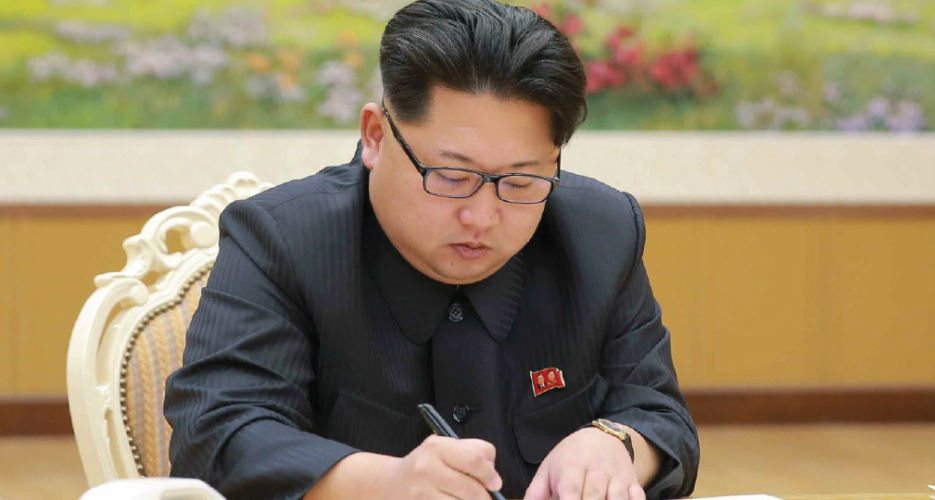

Pyongyang’s offer to have military talks with Seoul at the end of May or early June was most likely done as the part of North Korea’s “peace offensive.” However, unlike what some South Koreans are saying, this offer was not the result of Pyongyang not being able to “resist” South Korean propaganda speakers’ broadcasts. Honestly, this kind of wishful thinking on North Korea does not help in resolving any inter-Korean matters.
Pyongyang already announced during the Seventh Congress of Worker’s Party of Korea (WPK) that they will knock on Washington’s door with the help of Seoul. Pyongyang right now has no clue of who the next U.S. president will be and the Obama administration has remained not so responsive toward Pyongyang. So in order to win leverage for future discussions, Pyongyang is now knocking on Seoul’s door so that they can later tell Beijing and Moscow that Pyongyang “tried,” but their efforts were turned down by Seoul, who did not wish to talk peace with them.
Specifically announcing the end of May and early June as the time for military talks was also part of North Korea’s carefully calculated tactics. Why? Because around that time would be when the UN members’ national implementation reports – published based on UN Security Council Resolution 2270 – are gathered and discussed. Most likely, Kim Jong Un and his policy advisors already know that Seoul would not accept Pyongyang’s suggestion for dialogue. Then why are they bothering?
GAME OF CARDS: PYONGYANG
Recent attempts for dialogue with Seoul will work as a straw poll for Pyongyang, in which Pyongyang can use Seoul’s reaction to decide which direction the country should go next. If Seoul accepts the offer for dialogue, Pyongyang will again pick on the upcoming Ulchi-Freedom Guardian (UFG) joint ROK-U.S. military training this year, urging for the prevention of an armed clash between military forces. If Seoul doesn’t accept the offer, it at least provides Pyongyang with cause to say that they gestured for peace only to be turned down.
Keep your eye on the fact that 38 North – the website that diligently reported on North Korea’s preparation for the fifth nuclear test during February to March – is now remaining calm. Pyongyang once displayed readiness for the next nuclear test, but now the country is slowly backing off from conducting the next test. I am not saying that 38 North was bluffing; they fell for Pyongyang’s trickery, and were used by them just as many others were.
Pyongyang once displayed readiness for the next nuclear test, but now the country is slowly backing off from conducting the next test
Why would North Korea back off from the fifth nuclear test? The reason is quite simple, as I wrote previously: the fifth nuclear test is more of a dilemma, the card that is not always favorable toward Pyongyang’s cause. Due to the limitations of their underground installations, it will not be easy for Pyongyang to show a remarkable improvement in the power of their fifth nuclear test. Also, Washington and Seoul might just claim that Pyongyang’s future claims of a fifth nuclear are “bluffing,” as the sources of information on the test would be very limited. In the worst case, it might drive Chinese leader Xi Jinping completely mad, leading to Beijing’s interference even in the economic activities between two countries, which now remain untouched.
Under this circumstance, what the self-styled “Eastern nuclear power house,” the Pyongyang government, wants to say to Washington and Seoul would be similar to this:
“We are the part of the world powers armed with nuclear weapons. So, Washington … come out quickly, and let’s discusses the peace treaty and nuclear disarmament.”
“Despite your all assorted provocations (like the Key Resolve and Foal Eagle training) against us in past, we have refrained from further nuclear tests, so you should come out to the talks when we are talking of peace.
“We will review the official announcement of a moratorium on further tests and a nuclear freeze if you show willingness to talk with us. This military talks between Pyongyang and Seoul are the first key to open the doors toward this final goal.”
IF THE NORTH’S MESSAGE IS IGNORED
If their offer for the dialogue is ignored, after the adaptation of national implementation reports, Beijing and Moscow will carefully suggest paralleling “dialogue and sanctions” on Pyongyang, and Pyongyang will take another step urging for dialogue. Around this time, there is a high chance that organizations like 38 North or others will report about the “omens” of an imminent fifth nuclear test. China, even in this case will still maintain its pressure on North Korea, but it will gradually express its annoyance toward South Korea and the U.S., maybe like this: “What? Do you – Seoul and Washington – really want to completely win over Pyongyang? They are asking for a conversation, what’s the problem with you taking up their offer for dialogue?”
If Seoul and Washington are still adamant against Pyongyang, they will most likely conduct their fifth nuclear test around this time
If Seoul and Washington are still adamant against Pyongyang, they will most likely conduct their fifth nuclear test around this time. Of course, the political effect of this detonation won’t be as fatal as Pyongyang might wish them to be, but it will certainly be effective enough to arouse the subtle cooperation between the nations towards dialogue.
Around this time, the U.S. presidential nominees from both the Republican and the Democratic Parties will be decided, and Obama – in order to help Clinton – may try to serve as a stepping stone toward conversation with Pyongyang for the sake of the next U.S. administration.
But there is a variable called Donald Trump.
In some ways Kim Jong Un might want to grind Trump to dust for speaking of his urge to have direct talks with him, as the more Trump speaks of this agenda, the less the chances that the Obama administration would come up with the option of actually having conversations with the North. However, there is also the chance of Obama’s administration pursuing dialogue with Pyongyang – with Hillary supporting it – in order to counter Trump’s voice on this issue.
Now what South Korea has to think of is how we would play this game.
Generally speaking, there are three options for South Korea.
1) The worst: “Oh! they are scared and now are calling for a conversation!”
2) Mediocre: ignoring their offer
3) The best: publicly turning down the offer for dialogue while taking preemptive action that Pyongyang or the surrounding nations can’t oppose.
Well, at least we avoided making the worst choice by deciding to ignore Pyongyang’s offer. But the problem we face is that the current tactic might not work during Pyongyang’s second phase of the peace offensive. The most promising outcome for Seoul would be accepting Pyongyang’s offer for working-level group talks, and urging Pyongyang to promise to “stop all tactical provocations using conventional arms and strategic provocations with nuclear weapons and missiles,” as the precondition for the main dialogue. This would be a more elaborate strategy compared to just ignoring Pyongyang’s call for peace.
Of course, North Korea won’t accept such a suggestion, as they have made clear in the past that they will not talk of matters of nuclear weapons with the South. However, there is nothing for Seoul to lose in making such suggestions and being turned down by Pyongyang, as the surrounding nations are also opposing North Korea’s additional nuclear tests or missile launches.
If one really wants to corner Kim Jong Un and bring changes in how Pyongyang acts, commencing “average” tactics against Pyongyang would only lead to the boring repetition of tensions and peace offensives from Pyongyang.
Are we, the South, giving serious thoughts as to our next move?
A version of this originally appeared on Cha’s Facebook page.
Translation by JH Ahn
Featured image: NK News
Join the influential community of members who rely on NK News original news and in-depth reporting.
Subscribe to read the remaining 1348 words of this article.
EXISTING MEMBER?


');
newWindow.document.write('
');
newWindow.document.write('